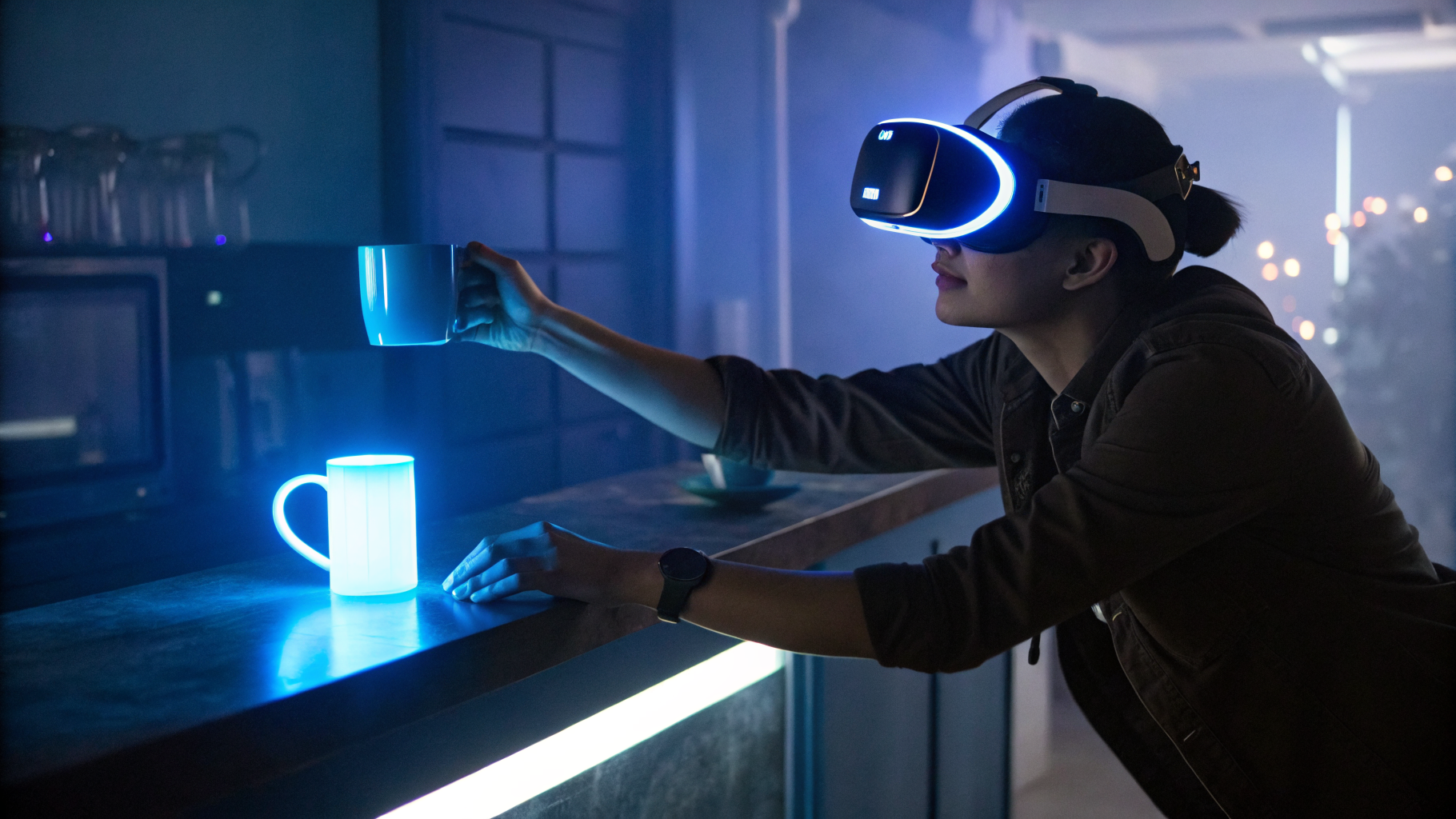
Let’s be honest for a second. VR in 2025 is not the world we were promised back in 2016. We were sold on living rooms full of people taking turns on a Vive, on metaverse office meetings that never quite happened, on a seamless blend of real and virtual that still feels a generation away. But here’s the thing that nobody talks about enough: the games. The actual, honest-to-god games that launched alongside the Oculus Rift and HTC Vive a decade ago are not just still playable — they’re still essential. And that’s weird, right? In an industry that moves at the speed of hype, the fact that these years classics still matter says something profound about where VR actually succeeded, and where it got distracted.
In most media, a ten-year-old game is a museum piece. A curiosity. Something you boot up for a YouTube retrospective, then put back on the shelf. But VR moves differently. The hardware has evolved, sure — lighter headsets, better tracking, inside-out cameras that don’t require you to bolt sensors to your walls. Yet the software from 2016? A lot of it hasn’t been surpassed. Some of it hasn’t even been properly imitated. And that should make us ask an uncomfortable question: have we actually been standing still while chasing the next shiny object? I’ll get to the list in a minute. But first, let’s talk about why these games matter now, and why the industry’s obsession with “the next big thing” has left some of its best work gathering dust in the Steam library of your mind.
The 2016 Class: A Lineup That Shouldn’t Have Worked
Think back to early 2016. The Rift launched in March. The Vive followed in April. Every review, every hands-on, every breathless YouTube first-impression video was about the possibility of VR. What could it become? Where would it go? Nobody was asking whether the launch lineup would hold up a decade later. They were just relieved it existed at all.
And yet, somehow, that first wave of titles didn’t just work — they defined the medium. Job Simulator was a joke that turned into a manifesto. Space Pirate Trainer was a wave shooter that felt like the future of arcades. The Lab was Valve’s quiet masterclass in interaction design. None of them had photorealistic graphics. None of them had sprawling open worlds. What they had was a deep, almost intuitive understanding of what makes VR different from flat-screen gaming. They understood that presence isn’t about polygon counts — it’s about feeling like you’re there. And that’s why these years classics still matter in 2025. They remind us that the core magic of VR was never about fidelity. It was about agency.
Why These Games Haven’t Aged (And Why That’s Actually a Problem)
Let’s take a specific example. Superhot VR launched in late 2016, and it remains the single best argument for VR as a medium. You know why? Because it’s not a game about shooting enemies. It’s a game about time. Time moves when you move. Stand still, and the world freezes. Dodge a bullet in slow motion, and you feel like Neo. The genius of Superhot VR is that it turns your physical body into the controller. No joystick, no button mashing — just you, in a room, solving violent puzzles with your actual limbs. Ten years later, no game has matched that elegance. Not one.
Then there’s Beat Saber, which technically came out in 2018 but feels like a spiritual successor to the 2016 ethos. It’s simple. It’s physical. It’s addictive. And it’s still the game I show to people who’ve never tried VR. Why? Because it doesn’t need a tutorial. You see the blocks, you swing the sabers, you feel like a Jedi. That immediacy — that frictionless onboarding — is something the industry forgot how to do. Every new VR game now wants to be a 40-hour RPG with skill trees and crafting systems. Meanwhile, Beat Saber just lets you slice blocks to music. And it’s still more fun than 90% of what’s released today.
But here’s the uncomfortable truth: the fact that these games haven’t been surpassed is a sign of stagnation. We should have moved past them. We should have built on their foundations. Instead, the VR industry spent the last five years chasing social platforms, fitness apps, and enterprise solutions. Not that those are bad — but they pulled attention away from the one thing that made VR magical in the first place: pure, unadulterated gameplay. The years classics still matter precisely because nothing better came along to replace them. That’s not a compliment to the classics. That’s a critique of everything that followed.
The Three Games That Define the Decade
If I had to pick a Mount Rushmore of VR classics from that first wave, I’d narrow it down to three titles. Not because others aren’t great, but because these three represent different pillars of what VR can do.
1. Half-Life: Alyx (2020) — The Late Bloomer
Okay, technically this came out in 2020, but it’s built on the DNA of 2016. Valve took everything they learned from The Lab and turned it into a full-length narrative experience. Alyx is the game that proved VR could do story, atmosphere, and tension as well as any flat-screen blockbuster. The moment you catch a grenade out of the air and throw it back? That’s not a scripted sequence. That’s you, using your actual hands, in real time. It’s a decade of VR design distilled into a single, flawless campaign. If you own a headset and haven’t played it, I don’t know what to tell you. You’re missing the point.
2. Lone Echo (2017) — The Zero-G Masterpiece
Ready at Dawn’s space adventure is still the best example of locomotion done right. You’re a robot in zero gravity, pushing off walls and grabbing handholds to float through a space station. No teleporting. No snap turning. Just pure, physics-based movement that feels as natural as swimming. The story is decent, the graphics hold up, but the real star is the movement system. Every VR game that tries to do zero-G after this one just feels like a pale imitation. Lone Echo understood that VR isn’t about simulating reality — it’s about simulating experiences you can’t have in real life.
3. Job Simulator (2016) — The Accidental Manifesto
I know, I know. It’s a silly game where you make soup and throw paper at a boss. But Job Simulator is secretly the most important VR game ever made. It’s the one that taught millions of people how to interact with virtual objects. Grab a mug? You reach out and grab it. Throw a donut? You wind up and let go. It’s the game that proved VR doesn’t need complex controls — just physics and curiosity. Every time you see someone in a new VR title picking up an object and inspecting it naturally, that’s Job Simulator’s legacy. It’s the grammar of VR interaction.
What We Lost in the Shuffle
So if these games are so good, why aren’t we talking about them more? Partly because the industry moved on. The narrative shifted from “VR is a new way to play games” to “VR is a platform for social connection and productivity.” And look, I’m not here to hate on Horizon Workrooms or VRChat. They have their place. But the obsession with the metaverse — that vague, corporate version of VR where you attend virtual concerts and buy digital real estate — distracted us from the fact that the best VR experiences are still the ones that make you feel like a kid in a playground.
We also lost the physicality. Early VR games demanded you move. You ducked, you dodged, you reached. Modern VR games, especially the ones designed for standalone headsets like the Quest, have optimized for comfort over engagement. Teleportation became the default. Snap turning became standard. And while that made VR more accessible, it also made it less intense. The years classics still matter because they remind us that VR should be a workout for your body and your brain, not just your thumbs.
There’s also the issue of discovery. Back in 2016, the VR library was small enough that you played everything. You knew the names of every launch title. You had opinions on Budget Cuts versus Raw Data. Today, there are thousands of VR games. Most of them are fine. Some are great. But the signal-to-noise ratio is terrible. You can spend hours scrolling through the Quest store and still miss the gems. The classics from 2016 are like old friends — you know exactly what you’re getting, and you know it’s going to be good.
- years classics still matter : point clé à retenir
- Fonctionnement et avantages concrets
- Conseils pratiques et mise en œuvre
- Erreurs fréquentes à éviter
The Verdict: These Years Classics Still Matter — And That’s Both Good and Bad
I’m not going to pretend that the 2016 VR games are perfect. They’re not. The graphics are dated. The tracking can be janky by modern standards. Some of the design choices — like the Vive wands’ trackpad — feel archaic. But the ideas behind them are timeless. The focus on physical presence. The commitment to intuitive interaction. The willingness to experiment with mechanics that don’t translate to flat screens. Those ideas are what made VR exciting in the first place, and they’re still what makes it exciting today.
So here’s my hot take for 2025: if you’re new to VR, don’t start with the latest hyped release. Start with the classics. Play The Lab to understand how Valve thinks about interaction. Play Space Pirate Trainer to feel the raw joy of arcade VR. Play Superhot VR to understand why time manipulation is the perfect VR mechanic. And then, after you’ve absorbed those lessons, go play the new stuff. You’ll notice the difference. You’ll see where modern VR builds on those foundations — and where it completely ignores them.
Because here’s the thing: the years classics still matter not because they’re old, but because they’re foundational. They’re the grammar of VR. The vocabulary. The building blocks that every new experience should be built on. And if the industry ever wants to move past the “trough of disillusionment” and into the mainstream, it needs to remember what made those early games work. It needs to stop chasing the metaverse and start chasing the feeling of being somewhere else. Of being someone else. Of reaching out and touching a virtual world with your actual hands. That’s the promise of VR. And it was delivered — ten years ago. We just forgot to keep unwrapping the gift.