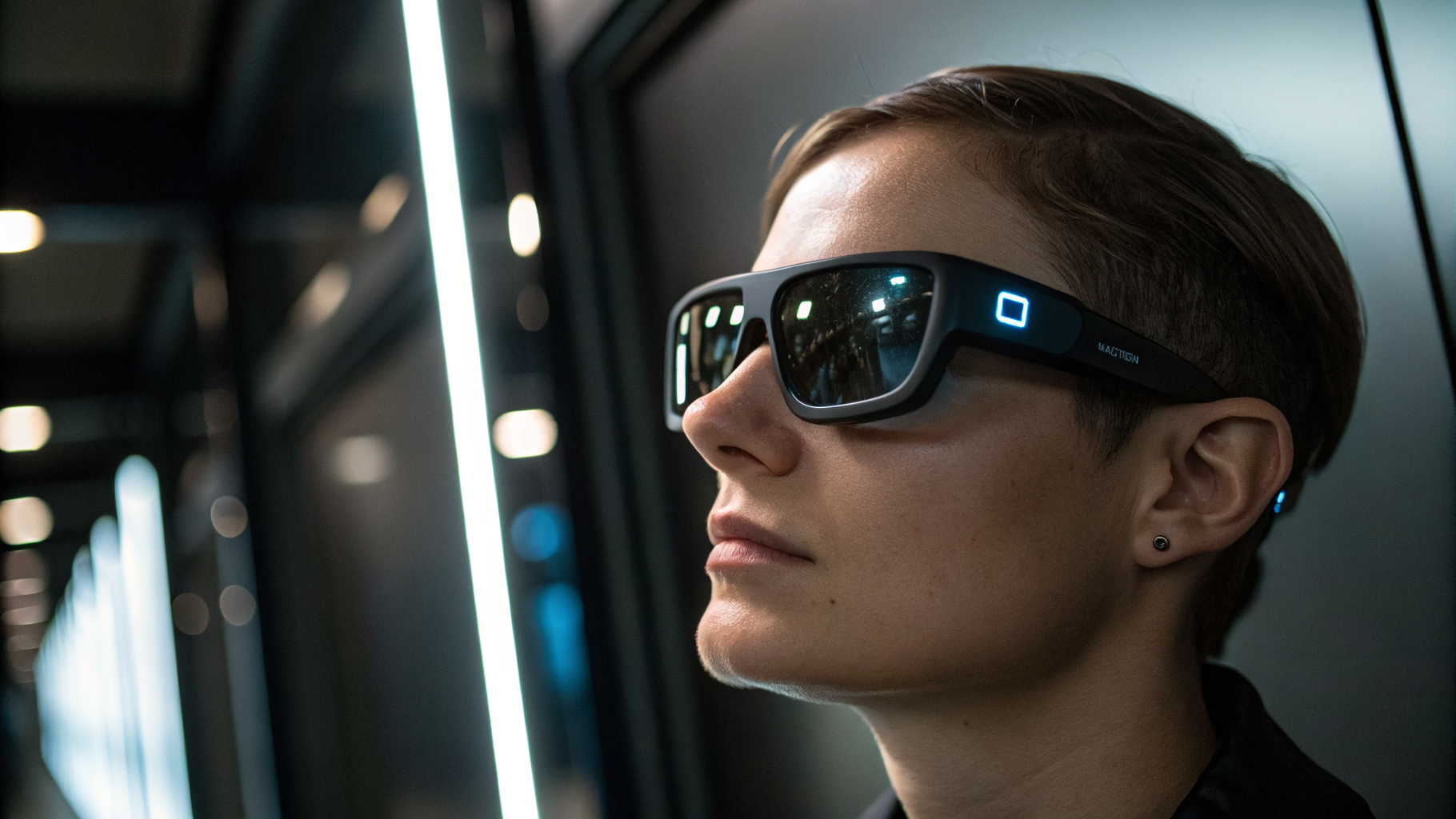
So the ROG XREAL R1 is finally up for pre-order. ASUS Republic of Gamers and XREAL flipped the switch today, and you can now throw $850 at a pair of microOLED AR glasses that promise a 240Hz refresh rate. I’ve been watching this thing since CES 2026, when it first appeared in a haze of neon and hype. Now it’s real. Or at least, real enough to put money down on.
Let me be clear: these are not VR headsets. They are not the metaverse goggles that Mark Zuckerberg keeps trying to will into existence. The R1 is a pair of glasses — emphasis on glasses — designed to display traditional content from a tethered device. Your phone. Your Steam Deck. Your laptop. Whatever you can plug in via USB-C. The idea is that you get a massive virtual screen floating in front of your face, with a buttery 240Hz refresh rate for gaming.
And I have to say: that part intrigues me.
What You’re Actually Buying
The specs are, on paper, impressive. Two Sony microOLED panels, each doing 1920×1080. That’s per eye, so you’re looking at a combined 3840×1080 resolution across a 57-degree field of view. The refresh rate is the headline: 240Hz. That’s higher than most gaming monitors. Higher than any VR headset on the market right now. And it’s done with a variable refresh rate that can drop to 120Hz or 90Hz to save battery or match your source content.
But here’s the rub: field of view. 57 degrees is not wide. The XREAL Air 2 Pro, which I reviewed last year, had about 46 degrees. So this is a step up, sure. But compare it to a Quest 3 at 110 degrees, or a Bigscreen Beyond at 100 degrees, and you’ll feel like you’re watching a movie through a letterbox. The R1 is not trying to envelop you in a virtual world. It’s trying to be a pair of sunglasses that double as a monitor. And for that use case, 57 degrees might be fine. Might be.
I think what bothers me is the price. $850. That’s more than a Quest 3. More than a PlayStation VR2. More than a decent 4K monitor and a good pair of headphones combined. You are paying for the form factor — the fact that it’s a pair of glasses, not a bulky headset. And for the 240Hz refresh rate, which is genuinely rare in this category. But is it worth it? I’m not convinced yet.
The 240Hz Question
Let’s talk about that refresh rate, because it’s the main event. 240Hz is fast. Faster than the human eye can really perceive in terms of flicker, but not faster than the brain can process motion clarity. Competitive gamers swear by high refresh rates for a reason: lower latency, smoother motion, better tracking in fast-paced shooters like Valorant or Overwatch.
But here’s the thing: the R1 is tethered. You need a device that can actually push 240 frames per second to those glasses. Most phones can’t. Most laptops can’t, unless you’re running a high-end gaming rig. Even the Steam Deck, which is a natural companion for these glasses, struggles to hit 60fps in modern titles, let alone 240. So what are you actually going to run at 240Hz? Old games? Esports titles on low settings? A desktop screen?
ROG and XREAL are betting that you’ll use the R1 for a mix of gaming and productivity. The glasses support 3DoF (three degrees of freedom) tracking, meaning you can pin a virtual screen in space and move your head around it. That’s nice for watching movies or working in a coffee shop. But it’s not the full 6DoF you get with proper VR. You can’t walk around a virtual room. You can’t reach out and grab things. This is a display, not a world.
And that’s fine. Not everything needs to be a metaverse killer. What bothers me is the marketing language that tries to make these sound like the next evolution of gaming. They’re not. They’re a very expensive, very niche accessory for people who want a lightweight, high-refresh-rate monitor strapped to their face.
Build Quality and Comfort
I haven’t held the final retail unit yet, but I did get my hands on a prototype at CES. The build is typical ROG: angular, gamer-aesthetic, with a matte black finish and some tasteful RGB lighting on the temples. They’re not subtle. You will look like a cyborg who just stepped out of a cyberpunk anime. But they’re light — around 85 grams, according to the spec sheet. That’s lighter than most glasses. The XREAL Air 2 Pro was about 80 grams, so this is in the same ballpark.
The nose pads are adjustable. The temples fold. The lenses have a built-in electrochromic dimming feature, which lets you darken the lenses for outdoor use. That’s a nice touch. I remember reviewing the original XREAL Air and squinting in bright sunlight. The dimming solves that, though it adds a tiny bit of weight.
One thing I appreciate: they include a prescription lens insert. If you wear glasses, you can order custom lenses from a partner and snap them in. That’s not new — XREAL has offered this for years — but it’s still a welcome feature. Nothing kills the immersion like having to jam your regular glasses under a headset.
Content and Compatibility
The R1 works with any device that supports DisplayPort over USB-C. That includes most modern Android phones, iPhones 15 and later, the Steam Deck, the ROG Ally, and any laptop with a USB-C port that supports video output. You plug it in, and you get a virtual screen. Simple.
But “simple” also means limited. There’s no built-in processor. No standalone apps. No hand tracking. No inside-out cameras. This is a display, period. You can’t play native AR games on it. You can’t browse the web without a tethered device. You’re essentially buying a very fancy external monitor that happens to strap to your head.
Is that a bad thing? Not necessarily. I’ve used the XREAL Air 2 Pro for months, and I found it useful for watching movies on planes and playing casual games on my Steam Deck. The R1 improves on that formula with a higher refresh rate and better dimming. But if you were hoping for a standalone AR device, you’ll be disappointed.
What struck me here is the positioning. ASUS ROG is a gaming brand. They make laptops, motherboards, peripherals. XREAL is an AR company. The partnership makes sense on paper: ROG brings the gaming cred, XREAL brings the optics. But the result is a product that doesn’t fully satisfy either camp. Gamers will want more immersion and lower latency. AR enthusiasts will want more interactivity and a wider field of view.
Who is this for, exactly?
The Use Case That Works
I think the R1 is for a very specific person: the person who travels a lot, owns a Steam Deck or ROG Ally, and wants a bigger screen without carrying a portable monitor. That person exists. I’ve met them at airports. They’re the ones hunched over a tiny handheld screen, squinting at Elden Ring. The R1 gives them a 130-inch virtual display. At 240Hz, it’ll be smoother than any laptop screen.
But even that use case has caveats. You need a stable surface to sit. You need to be comfortable wearing glasses for hours. And you need to accept that other people will stare at you. These glasses are not discreet. They look like prop goggles from a sci-fi film. You will not blend in.
There’s also the battery issue. The R1 doesn’t have a battery — it draws power from the tethered device. That means your phone or handheld will drain faster. Expect maybe an hour or two of gaming before you need to recharge. Not ideal for long flights.
Competition and Context
The AR glasses market is small but growing. XREAL has been the leader for a while, with the Air series. Then there’s Viture, which offers similar specs with a slightly wider field of view. TCL has the RayNeo line. Even Meta has the Ray-Ban Stories, though those are more about audio and cameras than displays.
The R1 is the first to hit 240Hz, which is a genuine differentiator. But I wonder how much that matters. Most content is 60fps. Movies are 24fps. Even high-end gaming rarely pushes past 120fps unless you’re on a desktop rig. 240Hz is future-proofing, I suppose. Or marketing. Probably both.
One competitor worth watching is the Bigscreen Beyond, which is a proper VR headset that’s smaller than most. It costs more — $999 — but it offers full 6DoF, SteamVR tracking, and a higher resolution. The trade-off is that it’s tethered to a PC and requires base stations. The R1 is simpler and more portable. Different tool for different jobs.
If I had to choose between the R1 and a Quest 3 for gaming, I’d take the Quest 3 every time. It’s cheaper, more versatile, and has a massive library of games. But if I wanted a lightweight display for my phone or handheld, the R1 is the best option right now. It’s a niche within a niche.
Should You Pre-Order?
I’m not going to tell you to rush out and pre-order. $850 is a lot of money for a pair of glasses that do one thing. If you’re a competitive gamer who needs the highest refresh rate possible and you travel constantly, maybe it’s worth it. If you’re a casual user who wants to watch Netflix in bed, save your money and get the XREAL Air 2 Pro for $200 less.
What I will say is this: the R1 represents a step forward in display technology. MicroOLED panels are gorgeous — deep blacks, vibrant colors, no ghosting. The 240Hz refresh rate is genuinely impressive, even if the content to take advantage of it is scarce right now. And the form factor is getting closer to what we’ve been promised for years: glasses that can replace a monitor.
But we’re not there yet. The field of view is too narrow. The tethered requirement is limiting. The price is too high. The R1 is a glimpse of the future, but it’s not the future itself. It’s a prototype for early adopters with deep pockets and a tolerance for looking ridiculous in public.
I’ll probably buy one. Because I’m that person. I want to see what 240Hz looks like on a plane. I want to test the dimming in direct sunlight. I want to write a follow-up review that tells you whether it’s actually worth the hype. But I’ll wait until I see real-world battery life and compatibility. Pre-orders are live now, shipping in a few months. I’ll be watching the reviews closely.
And if you do pre-order, let me know. I’m curious who else is crazy enough to spend $850 on a pair of glasses that can’t even run Tetris on their own.
Further Reading
Read the original announcement on Road to VR.
Original source: read the full article