Another AR Startup, Another Funding Round. But This One Might Actually Matter.
Let’s be honest: the augmented reality space has become a graveyard of good ideas and bad timelines. Every few months, some startup with a slick render and a press release raises a few million, promises to “democratize” reality, and then quietly fades into the uncanny valley. So when I saw the headline that LetinAR — a South Korean AR lens startup backed by LG — had raised $18.5 million ahead of a planned IPO next year, my first instinct was a heavy sigh. Another one?
But then I read the details. And I started paying attention.
LetinAR isn’t selling another pair of clunky smart glasses that look like a prop from a 2010 sci-fi movie. They’re making the optics. Specifically, they’re making the lenses that could finally make AR glasses look like, well, glasses. That matters. Because the single biggest barrier to consumer AR adoption isn’t battery life, processing power, or even killer apps. It’s the fact that almost every AR device on the market right now makes you look like a cyborg extra. People don’t want to wear that. They want to wear something that doesn’t scream “I’m about to scan your face for metadata.”
What struck me here is the timing. Raising $18.5 million isn’t huge by Silicon Valley standards — that’s a solid Series B, not a moonshot. But when you combine it with a planned IPO next year, the story shifts. This isn’t a startup burning cash to figure out product-market fit. This is a company saying, “We’re ready to manufacture at scale, and we need the public markets to believe us.”
The Pinpoint Lens Tech That Could Change the Game (Sorry, I Had to Say It)
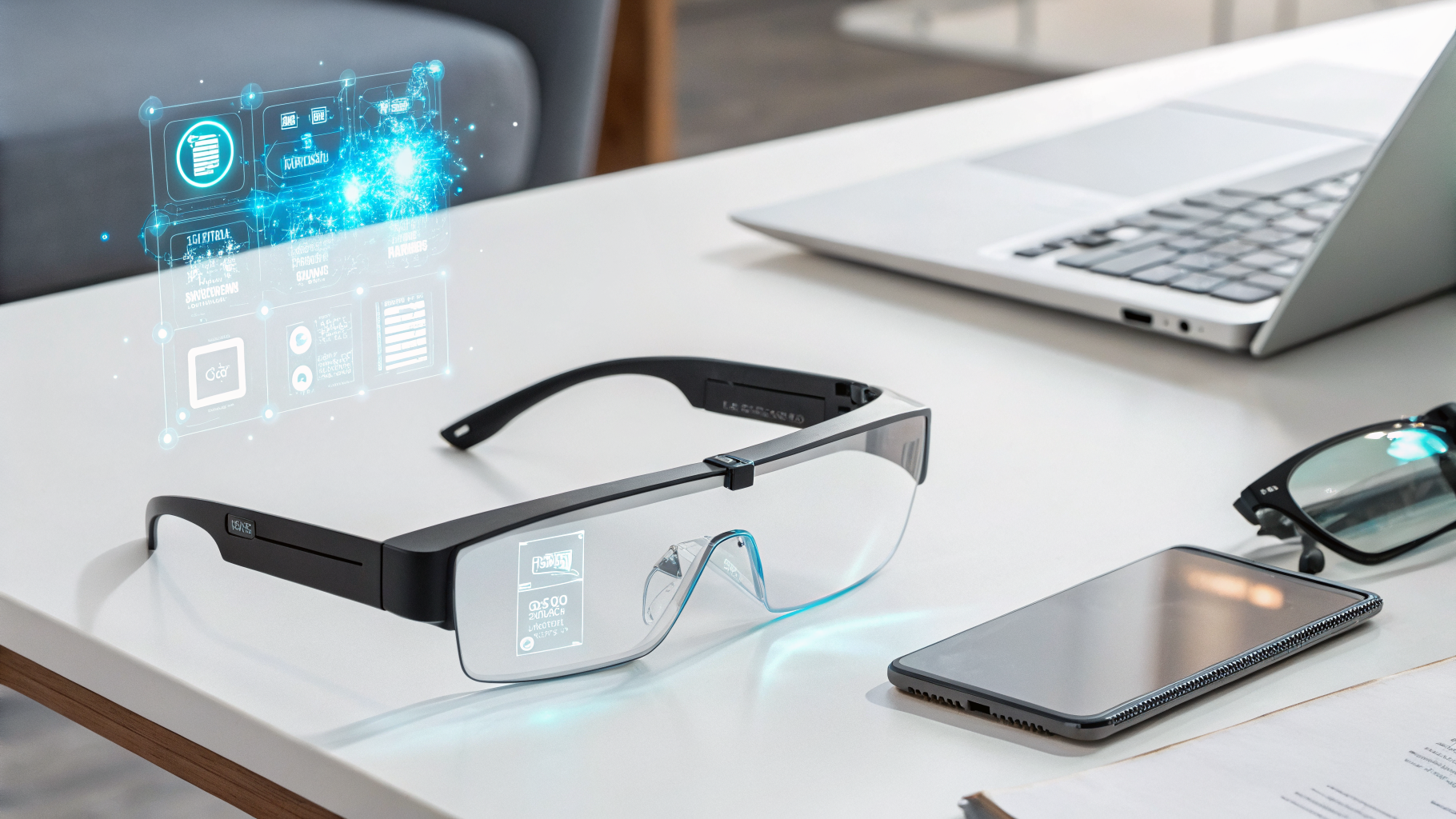
LetinAR’s secret sauce is something they call the “Pinpoint Lens.” The name sounds like a golf term, but the tech is genuinely interesting. Most AR optics today use birdbath designs or waveguides — both of which have trade-offs in size, brightness, field of view, and cost. LetinAR’s approach uses a micro-OLED display and a proprietary lens array that projects images directly onto the retina. The result? A much smaller and thinner lens profile. In plain English: the glasses don’t look like you’re wearing a pair of binoculars strapped to your forehead.
I’ve seen demos of similar tech from other companies. Some are impressive. Some are hot garbage. What makes LetinAR stand out is that they’ve already been working with LG, which is both an investor and a potential manufacturing partner. LG knows how to make screens. They know supply chains. They know how to scale. If LetinAR can piggyback on that infrastructure, they might actually ship something that doesn’t cost $3,000 and require a tethered compute puck.
In my view, the biggest question isn’t whether the tech works — it’s whether the market is ready. And I don’t mean the enterprise market. I mean regular people. Consumers. The ones who abandoned Google Glass before it even had a chance. The ones who look at Meta’s Ray-Ban Stories and think, “Cool, but why?” LetinAR is betting that if the glasses look normal and the price is right, people will buy them. That’s a bet that has burned a lot of investors before.
The IPO Timeline: Smart or Desperate?
LetinAR plans to go public next year. That’s ambitious. The IPO market has been in a weird place — not quite frozen, but not exactly hot either. Tech IPOs have been hit-or-miss. Some companies, like Arm, did fine. Others, like Instacart, had a rough ride. For a hardware startup that hasn’t yet proven massive consumer demand, going public feels like a gamble.
But I actually think it’s smart. Here’s why: AR is entering a phase where the incumbents — Apple, Meta, Google — are all throwing billions at the problem. A small startup can’t compete with that kind of spending. But it can compete by being the component supplier. Think of it as the “Intel Inside” strategy for AR. If LetinAR can become the go-to lens maker for a dozen different headset manufacturers, they don’t need to win the consumer battle. They just need to be in every device.
An IPO would give them the capital to build that manufacturing capacity. It would also give them visibility. And in a market where trust is low and hype cycles are short, being a public company can signal stability. Or at least, it can signal that you’ve survived the due diligence of an underwriter — which is more than some of these “decentralized reality” scams can say.
Still, I have to wonder: is the AR market actually ready for an IPO? The numbers are growing, sure. But we’re still in the early adopter phase. The “smart glasses” category, including audio-only devices, sold maybe a few million units last year. Compare that to smartphones, which sell over a billion. We’re talking about a market that’s a rounding error. Going public now means you’re betting that the hockey stick is coming. And if it doesn’t arrive within a couple of quarters, your stock gets hammered.
The Investor Lineup: Korea Development Bank and Lotte Ventures
The lead investor in this round is Korea Development Bank (KDB), a state-owned bank. That alone tells you something about the strategic importance South Korea places on AR. The country has been trying to position itself as a leader in next-gen display technologies, and LetinAR fits neatly into that narrative. Lotte Ventures, the investment arm of the Lotte conglomerate, also participated. Lotte is a massive company — retail, chemicals, food — and their involvement suggests they see AR as a platform for commerce and advertising. Imagine walking through a Lotte department store, and your glasses overlay product info or discounts. That’s the vision.
What’s missing from the investor list is a big U.S. name. No Google Ventures. No a16z. No Sequoia. That could be a red flag to some. But I think it’s a reflection of where the AR supply chain is actually being built. It’s not in Silicon Valley. It’s in East Asia. The display fabs are in Korea, Japan, and Taiwan. The precision manufacturing is in China. The venture capital in San Francisco might be writing checks, but the real money — the industrial money — is in Seoul.
For LetinAR, that might be an advantage. They don’t need to fly to Palo Alto to pitch. They can walk down the street to LG’s headquarters.
What This Means for the AR Industry (and You)
I’ve been covering this space for over a decade. I’ve seen the rise and fall of Magic Leap. I’ve watched Microsoft’s HoloLens pivot from a consumer dream to an enterprise tool. I’ve tried on headsets that cost $5,000 and made me nauseous in ten minutes. And I’ve seen a thousand press releases claiming that “this time, AR is real.”
Is this time different? Maybe. The key difference is that the technology is finally getting small enough and cheap enough to fit into something that doesn’t look ridiculous. The Pinpoint Lens approach isn’t magic — it’s just clever engineering. And clever engineering, combined with a real manufacturing partner, can actually ship products.
But I still have my doubts. The biggest one: content. Even if LetinAR makes the perfect lens, what are people going to look at through it? AR needs a reason to exist beyond “it’s cool.” Navigation overlays are nice. Notifications on your glasses are convenient. But those aren’t enough to drive mass adoption. Apple’s Vision Pro is trying to solve this by creating a whole new computing paradigm — but that device costs $3,500 and looks like a diving mask. LetinAR’s approach is more modest. They’re aiming for a smaller, cheaper, less ambitious device. That might be the right call. But it also means they’re relying on someone else — app developers, content creators — to make the glasses worth wearing.
Rhetorical question: How many AR apps do you use regularly? If you’re like most people, the answer is zero. That’s the problem LetinAR can’t solve with a lens.
The Bottom Line: Cautiously Optimistic, With a Side of Skepticism
LetinAR’s $18.5 million raise is good news for anyone who wants AR to succeed. It’s a sign that the supply chain is maturing. It’s a sign that serious industrial players like LG and KDB are putting real money behind the technology. And it’s a sign that an IPO might actually happen — which would give the whole sector a much-needed credibility boost.
But let’s not get carried away. This is a pre-IPO round, not a revenue announcement. LetinAR hasn’t told us how many units they’ve shipped. They haven’t named a single consumer product that uses their lenses. They’ve raised money to scale production, but scaling production for a product that hasn’t proven demand is a risky move. It’s the classic hardware startup trap: build the factory before you build the market.
In my view, the next twelve months will be decisive. If LetinAR can announce a major partnership — say, a consumer electronics brand that commits to using their lenses in a shipping product — then the IPO will be a success. If not, the public markets will be brutal. They don’t have patience for visionaries. They want revenue.
I’ll be watching. And I’ll be writing. For now, I’m giving LetinAR the benefit of the doubt. They’ve got the tech, the backing, and the timing. But in this industry, that’s never been enough.
Further Reading
Read the original story on Road to VR.
Original source: read the full article