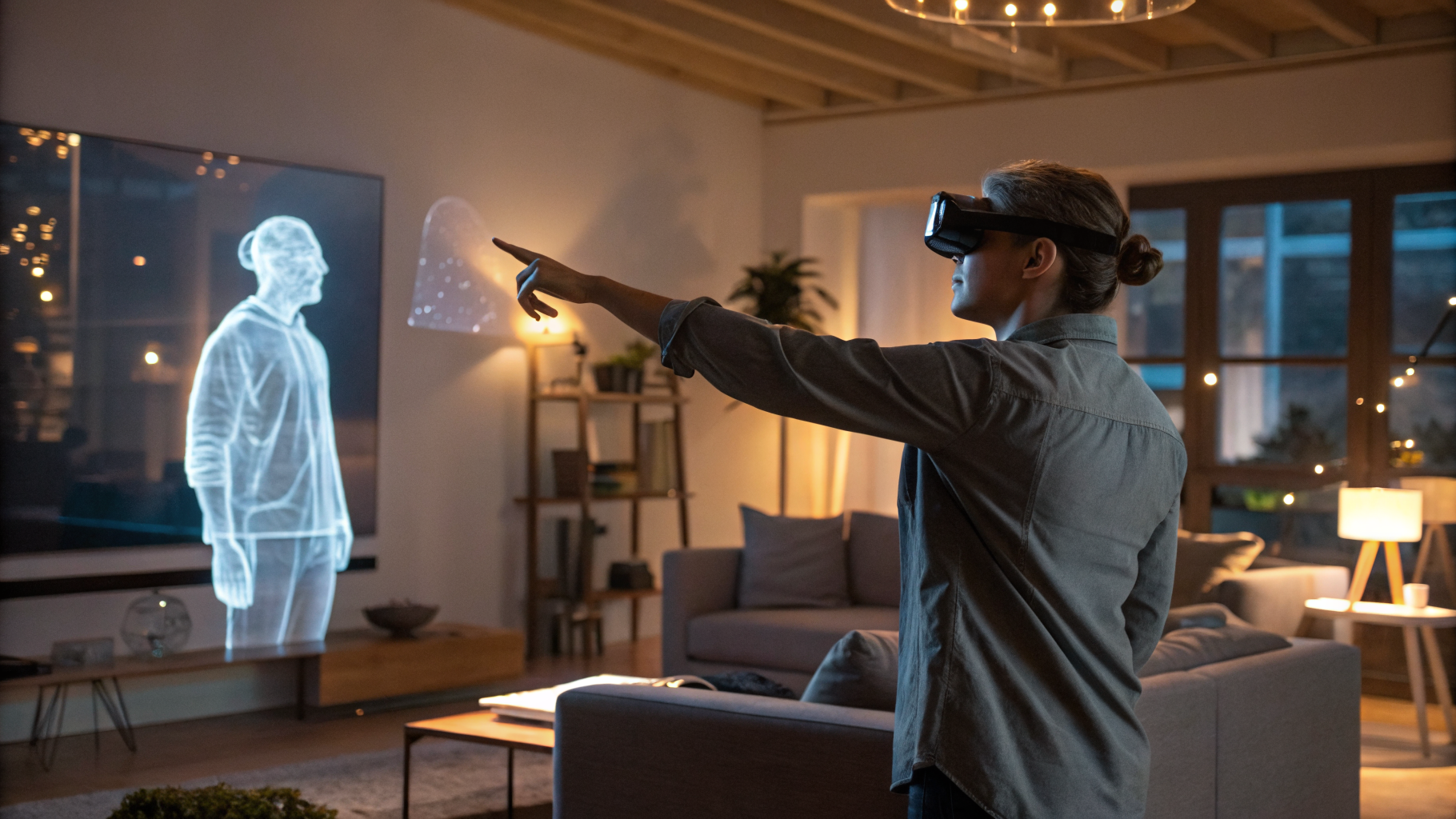
Apple did it again. Quietly, efficiently, with the kind of discretion that would make a spy blush, the Cupertino giant has scooped up the key talent and patents behind Animato, a Bay Area startup that built AI avatars. The news surfaced via an EU filing, because of course it did — Apple isn’t exactly throwing press conferences for these things.
Animato was the brains behind Call Annie, a now-defunct AI video calling app that paired 3D avatars with large language models for tutoring and language learning. Think of it as a friendly face on the other end of a video call, except that face was generated by code and the brain was a chatbot. It was charming, a little uncanny, and ultimately, it vanished. Now we know why.
I’ve been covering this space long enough to recognize the pattern. Apple doesn’t buy startups to keep them running. It buys them for parts. The talent. The patents. The secret sauce. Animato’s technology will likely be stripped down, repackaged, and embedded into something much larger — probably Vision Pro’s Personas, or whatever comes next.
The Ghost in the Machine
Let’s talk about Call Annie for a moment, because it matters. The app wasn’t just another chatbot. It gave you a face — a 3D avatar that moved its mouth, blinked, and looked you in the eye while it answered your questions. For language learners, it was a patient, tireless tutor. For lonely people, it was something more.
I downloaded it back in 2023, curious. The avatar was good. Not perfect — the eyes had that dead-fish stare if you looked too closely — but good enough that after five minutes, I forgot I was talking to a simulation. That’s the line Apple wants to cross.
Vision Pro already has Personas, those digital doppelgängers that track your face and hands in real time. They’re impressive in a technical sense, but let’s be honest: they still look like you’re FaceTiming from inside a video game from 2015. The eyes don’t track naturally. The expressions lag. It’s close, but not close enough.
Animato’s technology could change that. The startup was working on real-time AI-driven avatars that respond to your voice, your tone, your pauses. That’s not just a cosmetic upgrade. That’s a fundamental shift in how we interact with machines.
What Did Apple Actually Buy?
The EU filing is thin on details — typical. But Apple Insider spotted it, and the gist is this: Apple acquired “key talent and patents” from Animato. Not the whole company, necessarily. Not the product. Just the brains and the blueprints.
This is a classic Apple move. They don’t need another video calling app. They need the underlying tech that makes avatars feel alive. Animato had patents on facial animation driven by natural language processing, on real-time lip-syncing, on emotional expression mapping. Those patents are now Apple’s.
What struck me here is the timing. The EU filing is recent, but the acquisition likely happened months ago. Apple is playing the long game, as always. They’re assembling a puzzle, piece by piece, and we only get to see the picture when they’re ready.
I think this is about more than just Vision Pro. Think about Siri. Think about the rumored Apple home robot. Think about an AI that doesn’t just talk to you but shows you a face — a face that reacts, that reads your emotions, that builds rapport. That’s the endgame.
Personas 2.0: A Glimpse of the Future?
Let me paint you a picture. It’s 2026. You put on your Vision Pro (or whatever they call the cheaper version). You join a meeting. Your colleagues see not a floating head, but a full upper body that moves naturally, that gestures when you talk, that smiles when you make a joke. The avatar is indistinguishable from a video feed — maybe better, because it’s not affected by bad lighting or a shaky webcam.
That’s the promise of Animato’s tech, combined with Apple’s silicon and spatial computing. But I’m cautious. Apple’s track record with AI-driven features is mixed. Siri is still playing catch-up. The Photos app has smart search, but it’s not exactly sentient. Apple is a hardware company that happens to do software — not an AI-first company.
And yet, they keep buying AI startups. In the last five years, Apple has acquired at least two dozen AI-related companies. They’re hoarding talent like a dragon hoards gold. At some point, they have to spend it.
What Does This Mean for the Metaverse?
I know, I know — the metaverse is supposedly dead. Or at least on life support. But I’ve been hearing that since 2022, and Apple keeps building. Vision Pro is not a metaverse device in the Zuckerberg sense, but it is a gateway to persistent digital presence. And presence requires avatars.
If Apple can crack the avatar problem — make them truly lifelike, emotionally responsive, and easy to create — they could own the next generation of communication. Not just for VR, but for everything: FaceTime, Zoom, gaming, online dating, customer service. Every screen becomes a portal to a person, real or synthetic.
There’s a darker side, of course. Deepfakes. Impersonation. The erosion of trust in what we see. Apple knows this, which is why they’re also investing heavily in privacy and authentication. But the technology is a double-edged sword, and it’s already sharp.
I’m not here to fearmonger. I’m just saying: the same algorithms that make an AI avatar blink naturally can also make a politician say something they never said. Apple’s walled garden might keep the bad actors out, but it won’t stop the technology from existing elsewhere.
The End of the Uncanny Valley?
For years, the uncanny valley has been the graveyard of digital humans. Too real, and they creep us out. Not real enough, and we reject them. Animato’s approach was different: they didn’t try to mimic reality exactly. They built avatars that were stylized but expressive, like a Pixar character that can hold a conversation.
That’s a smart bet. People accept a cartoon face more readily than a failed attempt at photorealism. Apple already learned this with Memoji. Now imagine Memoji with real-time AI, voice synthesis, and emotional intelligence. That’s not a toy. That’s a product.
I remember reviewing the first generation of AI avatars in 2020. They were terrible. Robotic voices, frozen faces, responses that made no sense. We’ve come a long way. The models are better, the hardware is faster, and the training data is vast. But we’re still early. Apple’s acquisition of Animato suggests they believe the curve is about to steepen.
Why This Matters for Developers
If you’re building for the Apple ecosystem, pay attention. The patents Apple acquired could become part of ARKit, RealityKit, or a new framework entirely. Developers might get access to tools that let them create AI avatars with minimal effort. Imagine an API where you feed in a script and out comes a fully animated character that can improvise.
That’s not science fiction. That’s what Animato was doing. And now Apple owns it.
I’ve talked to developers who worked with Call Annie’s SDK. They said it was surprisingly easy to integrate. The hard part was the real-time rendering and the AI orchestration. Apple excels at both. They have the GPUs, the neural engines, and the machine learning frameworks. They just needed the missing piece — the avatar itself.
Now they have it.
The Bigger Picture
Apple’s acquisition strategy is often described as “acqui-hiring,” but that sells it short. They’re not just hiring people. They’re buying years of research, failed experiments, and hard-won insights. Animato probably burned through millions of dollars before running out of runway. Apple gets the salvage rights.
It’s a smart move, but it’s also a sad one for the startup ecosystem. Another independent voice absorbed into the machine. Another innovative product that will never see the light of day as originally intended. Call Annie is gone. What replaces it will be polished, integrated, and locked inside Apple’s garden.
Is that a good thing? I’m not sure. We get better avatars, but we lose the wild experimentation that happens when startups are free to try anything. Apple’s version will be safer, more controlled, and probably more reliable. But will it surprise us? Will it delight us the way Call Annie did, with all its quirks and rough edges?
Probably not. But it will work. And in the end, that might be enough.
What’s Next?
I expect to see the first fruits of this acquisition within two years. Vision Pro 2, or a software update, will introduce Personas that are significantly more lifelike. Siri will get a face — or at least a more expressive one. And Apple will quietly update its privacy policies to reassure us that our avatars are generated on-device, not in the cloud.
They’ll say it’s about connection, about presence, about bringing people together. And they’ll mean it. But they’ll also mean: we own the pipeline from your face to the digital world, and we’re not sharing.
That’s Apple. That’s always been Apple. And as long as the avatars are good enough, we’ll keep using them.
I’m not complaining. I’m just watching. And taking notes.
Further Reading
Read the original scoop on Road to VR: Apple Acquires Key Talent & Patents Behind AI Avatar Company ‘Animato’
Original source: read the full article