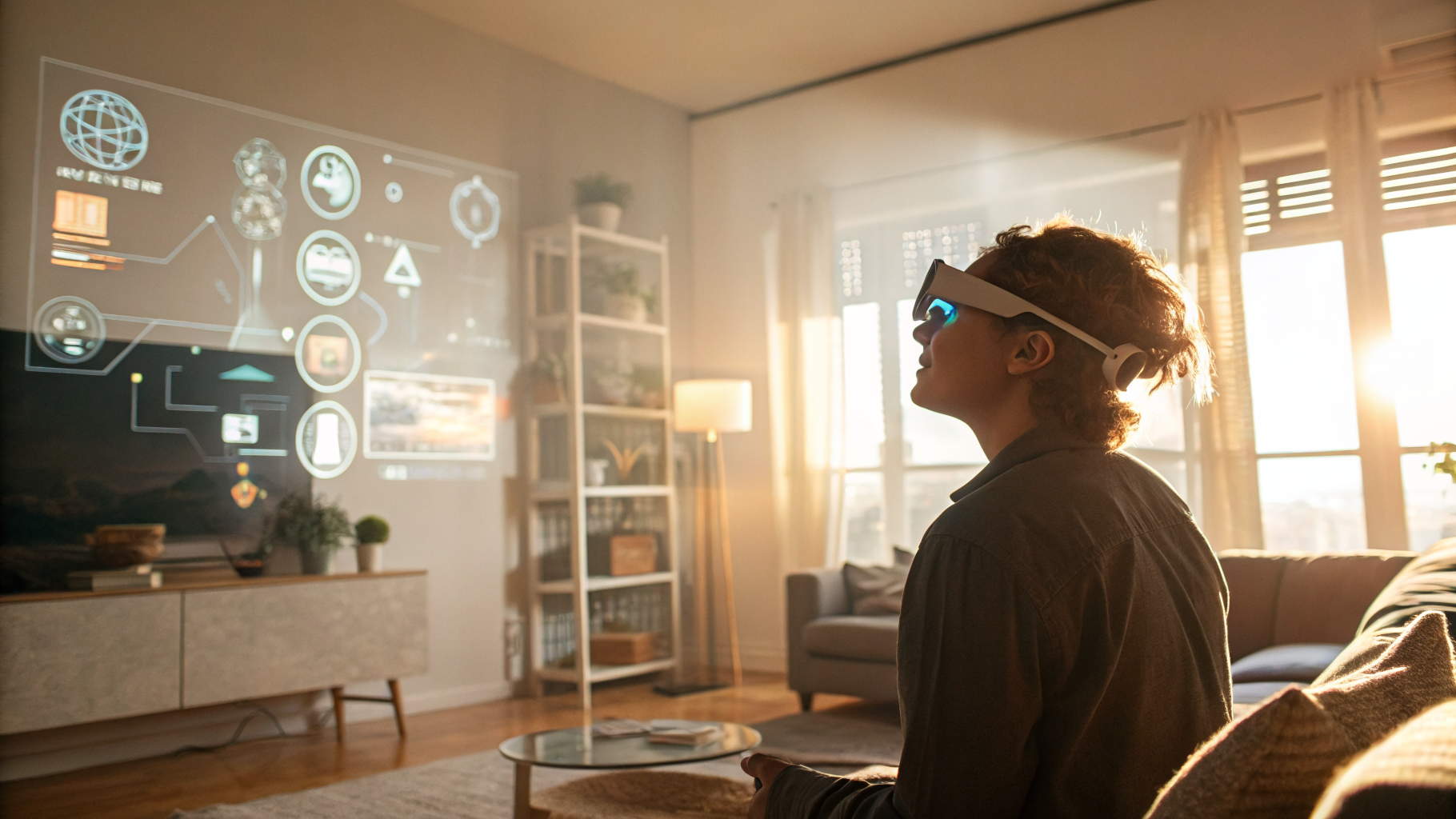
So here we are again. Another pair of augmented reality glasses. Another price tag that makes you blink twice. Another announcement that the future is just around the corner, and it costs roughly the same as a used Honda Civic.
According to a report from veteran tech journalist Alex Heath, Snap is planning to launch its long-rumored true AR glasses — reportedly called Snap Specs — this fall, for somewhere in the ballpark of $2,500. Let that number sink in for a moment. Two thousand five hundred dollars. For glasses that, I suspect, will look about as subtle as strapping a pair of GoPros to your face.
Now, I’ve been covering this space for over a decade. I’ve watched Google Glass come and go (and come back as an enterprise tool). I’ve seen Magic Leap burn through billions like it was kindling. I’ve worn headsets that made me look like a cyborg and others that made me look like a confused tourist. And through it all, one question keeps nagging at me: who actually wants to wear these things in public?
Snap is betting that the answer is, at least for now, developers, early adopters, and a small army of creators who will build the use cases that the rest of us will eventually take for granted. That’s not a crazy bet. But at $2,500, it’s a very expensive bet.
The Specs Game
Let’s talk about what we actually know. The Snap Specs are described as « standalone true AR glasses. » That means no phone tether, no external puck, no backpack PC. Everything — the processors, the battery, the optics, the sensors — is crammed into a frame that’s supposed to sit on your nose without giving you a headache after twenty minutes.
If Snap pulls that off, it’s genuinely impressive. The engineering challenge here is absurd. You’re trying to pack the computing power of a smartphone into a package that weighs less than a pair of thick-rimmed Ray-Bans. You need waveguides or birdbath optics or some other wizardry to project digital objects into your field of view without making the world look like you’re peering through a dirty aquarium. And you need enough battery life to make it through a coffee run, let alone a day of work.
Snap has been at this for a while. The company’s earlier Spectacles were basically smart cameras for your face — fun, but limited. They recorded snippets of your life and uploaded them to Snapchat. They were a novelty. These new Specs are something else entirely. They’re a full augmented reality platform, designed to overlay digital objects onto the real world, track your hands, map your environment, and let you interact with virtual content as if it’s actually there.
I’ve seen demos of similar tech from other companies. They’re impressive in controlled environments. You put on the headset, and suddenly there’s a virtual chessboard on your coffee table. A dinosaur walks across your carpet. A video call floats in the air next to your bookshelf. It’s the kind of thing that makes you feel like you’re living in a sci-fi movie from the 90s. But the moment you step outside, or the lighting changes, or you move too fast, the illusion shatters.
The question is whether Snap has solved enough of those problems to justify that price tag.
Two and a Half Grand
Let’s be blunt about the cost. $2,500 is not consumer pricing. That’s prosumer pricing. That’s « I need this for my job » pricing. That’s « I have more money than sense » pricing, depending on who you ask.
Apple’s Vision Pro launched at $3,499, and everyone — including me — spent months debating whether it was a revolutionary device or a very expensive demo. (Spoiler: it’s both.) Snap is undercutting Apple by about a thousand bucks, but they’re also a much smaller company with a much less established hardware track record. Apple can afford to sell a few hundred thousand Vision Pros and call it a success. Snap needs a hit.
But here’s the thing: Snap doesn’t need to sell millions of these things right away. The company’s strategy, as far as I can tell, is to seed the market. Get the devices into the hands of developers and creators. Let them build the killer apps. Then, in a few years, release a cheaper, lighter, more polished version that the rest of us might actually buy.
It’s a strategy that worked for smartphones, sort of. It worked for VR, after a fashion. But it’s a strategy that also killed Google Glass. The question is whether Snap has the patience — and the cash — to see it through.
What You Get for Your Money
Based on the report and previous leaks, here’s what we can reasonably expect from the Snap Specs:
- True AR optics with a wide enough field of view to actually be useful, not just a tiny rectangle floating in your peripheral vision.
- Hand tracking and gesture recognition, so you can tap, swipe, and grab virtual objects without needing a controller.
- Spatial mapping that understands your environment — tables, walls, floors — so digital objects can sit on surfaces and occlude behind real objects.
- Standalone processing, likely powered by a Qualcomm chip designed specifically for AR.
- Snap’s software ecosystem, which means integration with Snapchat, Lens Studio, and whatever developer tools they’ve been cooking up.
That’s a solid spec sheet. But specs don’t tell you how it feels to wear the thing for an hour. They don’t tell you if the battery lasts longer than a single episode of a Netflix show. They don’t tell you if the thing makes you look like a dork — and let’s be honest, most AR glasses still make you look like a dork.
The Fashion Problem
I’ve written about this before, and I’ll write about it again: the biggest barrier to mainstream AR adoption isn’t technology. It’s fashion. It’s social acceptability. It’s the fact that most people don’t want to walk around with a bulky headset strapped to their face, no matter how cool the digital dinosaurs are.
Snap understands this better than most. The company’s original Spectacles were designed to look like sunglasses. They came in fun colors. They were relatively unobtrusive. They didn’t scream « I am wearing a computer. » And yet, they still never really caught on outside of a niche audience.
The Snap Specs are reportedly more advanced, which probably means they’re also bulkier. You can’t pack all that hardware into a slim frame — not yet, anyway. So the question is: how much are people willing to compromise on looks for the sake of functionality?
I think the answer, for now, is « not much. » We’ve seen this play out with every generation of wearable tech. Smartwatches only became mainstream when they started looking like regular watches. Bluetooth headsets only became acceptable when they got small enough to hide. AR glasses will follow the same trajectory. The first versions will be ugly and clunky. The ones that succeed will be the ones that disappear.
What Snap Has That Others Don’t
Despite my skepticism, I think Snap has a few genuine advantages here. First, they have a developer ecosystem that’s already built for AR. Lens Studio has been around for years. Millions of people have created AR filters for Snapchat. Those creators already understand the platform’s tools and aesthetics. They’re not starting from scratch.
Second, Snap has a younger user base. Gen Z and younger millennials are already comfortable with AR in the form of face filters and world lenses. They’re more likely to experiment with new hardware, especially if it integrates with the apps they already use. They’re also more tolerant of imperfection — early adopter energy, if you will.
Third, Snap isn’t trying to build a general-purpose computer. They’re building a social device. The Snap Specs aren’t meant to replace your laptop or your phone. They’re meant to enhance your social interactions — to let you share experiences, play games, and create content in ways that feel natural and spontaneous. That’s a much narrower use case than what Apple or Meta are chasing, but it’s also a more focused one. And focus, in this industry, is rare.
But focus alone won’t sell $2,500 glasses. What will sell them is a compelling use case that makes people feel like they’re missing out if they don’t have them. I haven’t seen that use case yet. Maybe Snap has one up its sleeve. Maybe it’s something as simple as « you can watch a movie on a virtual screen the size of your living room wall. » Or maybe it’s something more creative, like shared AR experiences that let you and your friends paint the world together in real time.
I don’t know. But I’m watching closely.
The Meta Factor
We can’t talk about Snap’s AR ambitions without mentioning Meta. Mark Zuckerberg has made it clear that he sees AR glasses as the next major computing platform. Meta has been pouring billions into its Reality Labs division, and the company has already released a pair of smart glasses in collaboration with Ray-Ban. Those glasses don’t do true AR — they have cameras, speakers, and a microphone, but no display — but they’re a stepping stone.
Meta’s true AR glasses, codenamed Orion, are reportedly in development and could arrive sometime in the next couple of years. They’re likely to be expensive too. But Meta has the advantage of scale: it can afford to lose money on hardware for years, subsidizing the cost to get devices into people’s hands. Snap doesn’t have that luxury.
So Snap needs to move fast. They need to get the Specs out the door, get developers excited, and prove that there’s a market for standalone AR before Meta and Apple squeeze them out. It’s a tall order. But it’s not impossible.
A Personal Note
I’ve been to enough AR demos to know that the technology is genuinely impressive in short bursts. I’ve played AR chess on a tabletop. I’ve watched a virtual whale breach through a gym floor. I’ve seen a digital reconstruction of a human heart floating in midair, beating in real time. These are moments of genuine wonder.
But I’ve also worn enough headsets to know that the wonder fades quickly when the device gets hot, or the battery dies, or the tracking glitches out, or you realize you’ve been standing in the middle of your living room for an hour, talking to yourself. AR is still a technology in search of a daily habit. Snap’s Specs might be the thing that finally creates that habit. Or they might be another expensive curiosity that ends up in a drawer.
I honestly don’t know which way it’ll go. But I do know this: at $2,500, the Snap Specs need to be more than a demo. They need to be a device that people actually want to use, every day, for things that matter to them. That’s a high bar. And I’m not sure Snap has cleared it yet.
But I’m willing to be proven wrong. That’s the fun part of this job.
The Bottom Line
Snap is about to do something bold. They’re launching a premium AR headset into a market that has, so far, rejected every attempt at mainstream AR glasses. They’re pricing it at a level that ensures only the most dedicated enthusiasts and developers will buy it. They’re betting that those early adopters will build the ecosystem that makes AR a real thing, not just a tech demo.
It could work. It could also fail spectacularly. Either way, it’s going to be interesting to watch.
I’ll be there, probably wearing a pair of regular glasses, taking notes. And if the Snap Specs turn out to be as good as the rumors suggest, I might even buy a pair. But I’m going to wait for the reviews first. And maybe a price drop.
Further Reading
Read the original report on UploadVR: Snap Specs True AR Glasses Reportedly Launch This Fall For Around $2500
Original source: read the full article