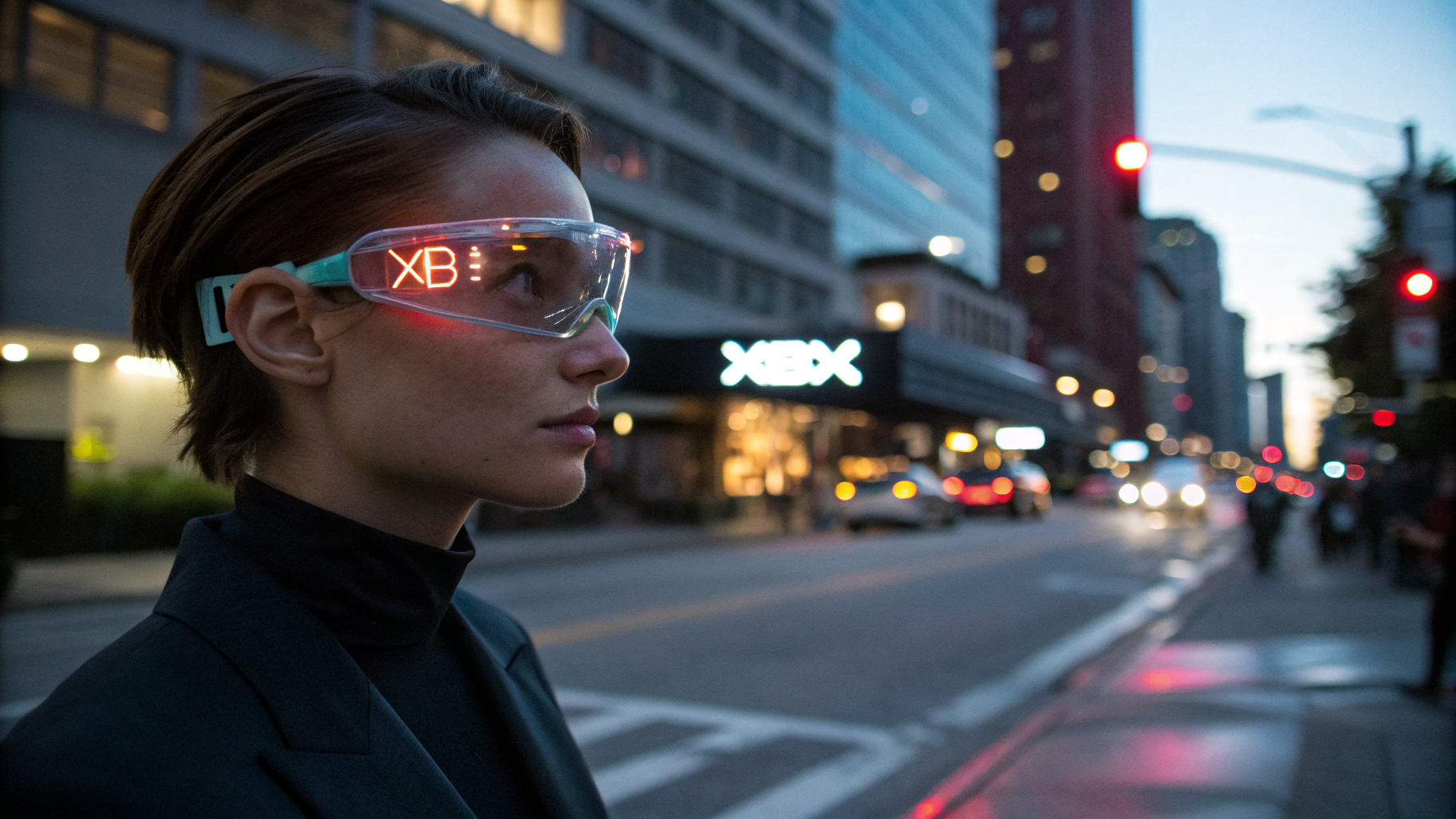
I’ve been covering this beat long enough to remember when XREAL was still called Nreal. And I remember the trademark headache that came with that name — a legal scuffle with Epic Games that forced a rebrand just as the company was gaining traction stateside. So when I saw the news that XREAL is launching a sub-brand in China called XBX, my first thought wasn’t about specs or field-of-view. It was: « Oh no, here we go again. »
Let me be clear: the hardware itself looks interesting. The XBX A01, released this week in China, is XREAL’s cheapest pair of AR glasses yet. At a rumored price point well under the company’s flagship models, it’s clearly aimed at the mass market — the kind of device you might actually see on a subway or in a coffee shop, not just at CES in a glass case. The specs are respectable for the price: a 50° field-of-view, HDR10 support, and real-time SDR-to-HDR conversion. That last bit is actually clever. Most budget AR glasses wash out colors in bright environments, and dynamic tone mapping can make a real difference in perceived image quality.
But here’s the thing. The name XBX is almost certainly going to cause problems if XREAL tries to sell these things outside of China. And I think they will. The company has been aggressively expanding westward for years. They’ve got a U.S. office, partnerships with Qualcomm and BMW, and a growing retail presence. You don’t build all that infrastructure just to keep your cheapest product locked in the domestic market.
So why would XREAL pick a name that sounds like a typo of Xbox? I’m not a trademark lawyer — I just play one on the internet — but even I know that Microsoft has a history of defending its gaming brand with the ferocity of a mother bear. The term « Xbox » is one of the most recognizable trademarks in consumer electronics. Slapping an « XBX » label on a competing device, even if it’s not a console, feels like asking for a cease-and-desist letter. It’s the kind of move that makes you wonder whether XREAL’s marketing team and legal department are on speaking terms.
The Price Is Right, But the Name Is Wrong
Let’s talk about the actual product for a moment, because the XBX A01 deserves more than just a trademark rant. What struck me here is the pricing strategy. XREAL has been positioning its glasses as premium accessories — the XREAL Air 2 Ultra costs around $700, which puts it in the same conversation as the Meta Quest 3, except without the compute. That’s a tough sell. You’re asking people to pay high-end VR prices for a device that requires a phone or PC to do anything.
The XBX A01 seems designed to fix that disconnect. By dropping the price significantly — we’re talking maybe $300 or less — XREAL is trying to capture the impulse buyer. The person who thinks « sure, I’ll try those weird glasses for the price of a pair of AirPods Max. » It’s a smart play. The AR market has been stuck in a chicken-and-egg problem: nobody buys the hardware because there’s no killer app, and nobody builds the app because there’s no installed base. Cheaper hardware could break that cycle.
But the name. The name, the name, the name. It’s like they went to a branding workshop and left with the first thing scribbled on a napkin. XBX. Three letters. No vowels. Sounds like a satellite radio station or a low-cost airline in Southeast Asia. It doesn’t say « augmented reality » or « spatial computing. » It says « generic electronics brand from 2004. »
I’m not saying the product will fail because of the name. But in a market where every point of differentiation matters, why handicap yourself? Especially when you’ve already been through the wringer with a trademark dispute. It’s like getting rear-ended at a stoplight and then immediately backing into the same car again.
What the XBX A01 Actually Does (and Doesn’t Do)
Let’s dig into the specs a bit more, because there’s some genuine innovation here — and some clear compromises. The 50° field-of-view is solid for a budget AR device. For context, the XREAL Air 2 Ultra offers about 52°, so you’re not losing much. The HDR10 support is nice, but the real star is the real-time SDR-to-HDR conversion. This is the kind of feature that sounds like marketing fluff until you actually use it. Most video content today is still standard dynamic range. If the glasses can intelligently upscale that to HDR on the fly, it makes everything look better — Netflix, YouTube, that random TikTok of a cat falling off a table.
What the XBX A01 doesn’t do, as far as I can tell, is include any onboard cameras for hand tracking or spatial mapping. That’s a significant omission. These are essentially display glasses with a processing puck, not a standalone AR headset. You can watch movies, mirror your phone screen, and maybe run some lightweight AR apps that rely on phone-based tracking. But you’re not going to be placing virtual furniture in your living room or playing immersive AR games. That’s fine for the price, but it means the XBX A01 is competing more with a portable monitor than with the Apple Vision Pro or Meta Quest 3.
And that’s actually a smarter market than you might think. There’s a growing segment of people who want a private, portable display for working on a laptop in a coffee shop, or watching movies on a plane without holding a tablet. The XBX A01 could be a great product for that use case — if the comfort and resolution hold up. I haven’t tried it yet, but XREAL has a decent track record with ergonomics. Their glasses tend to be lighter than most competitors.
The Trademark Trap: A History Lesson XREAL Should Have Learned
I want to linger on the trademark issue, because I think it reveals something about XREAL’s corporate culture. The original Nreal-to-XREAL rebrand was forced by a lawsuit from Epic Games, which claimed the name « Nreal » was too close to « Unreal » (as in Unreal Engine). That case was settled, but it cost the company time, money, and brand equity. You’d think after that experience, the legal team would have a zero-tolerance policy for anything that even sniffs like a potential conflict.
And yet here we are. XBX. The name isn’t identical to Xbox, but it’s close enough that a judge might find « consumer confusion » plausible. Both are three-letter brands starting with X and ending with B. Both are used for gaming-adjacent hardware. Both target a young, tech-savvy audience. If Microsoft’s lawyers aren’t already drafting a letter, they’re not doing their jobs.
There’s also the question of whether XBX could be confused with other brands. What about the Sony Xperia XB series? Or the various « XB » model numbers used by audio equipment makers? The AR/VR space is already crowded with alphabet soup — Apple’s VP, Meta’s Quest, HTC’s Vive. Adding another three-letter acronym feels lazy. It’s like naming your restaurant « McDonalds » and hoping nobody notices the missing « o. »
Is This a China-Only Brand?
Maybe XREAL plans to keep the XBX brand exclusively in China. That would be the safe bet. Chinese trademark law is different, and the risk of a Microsoft lawsuit might be lower in a market where the Xbox brand, while present, isn’t as culturally dominant. But I doubt it. XREAL has shown time and again that it wants to be a global player. The company’s press releases are in English. They exhibit at CES and MWC. They court Western developers and enterprise customers.
If the XBX A01 sells well in China — and the low price suggests it could — the pressure to bring it to the U.S. and Europe will be enormous. At that point, XREAL will have a choice: rebrand the product (again), or fight a legal battle it might not win. Neither option is cheap. Neither option is good for momentum. It’s the kind of avoidable mistake that makes you question the leadership’s strategic judgment.
The Bigger Picture: AR Glasses Are Still Looking for a Reason to Exist
I don’t want to get too bogged down in the trademark drama, because there’s a larger question here that the XBX A01 raises: Who actually wants AR glasses in 2025?
I ask this as someone who has owned and used half a dozen AR headsets over the past decade. The technology has improved dramatically. The screens are brighter, the tracking is better, the designs are sleeker. But the fundamental problem remains: AR glasses are a solution in search of a problem for most people. They don’t replace your phone. They don’t replace your laptop. They don’t replace your TV. They’re an accessory that you have to remember to charge, carry around, and connect to another device just to get basic functionality.
The XBX A01 tries to solve this by being cheap enough that you don’t have to justify the purchase. It’s the « why not » price point. And that might work. The Quest 2 sold millions of units largely because it was $299, not because everyone suddenly wanted VR. Price elasticity is real.
But cheap hardware alone won’t create a sustainable ecosystem. You need software, and software requires developers, and developers require users, and users require a reason to keep using the device after the novelty wears off. That’s the loop that neither Meta nor Apple has fully cracked, and I don’t see XREAL solving it with a budget pair of glasses and a risky brand name.
The Competition Is Getting Fierce
It’s worth noting that XREAL isn’t the only company pushing cheaper AR glasses. TCL’s RayNeo line has been making inroads. Rokid has a loyal following. Even Meta is rumored to be working on a pair of lightweight AR glasses that could arrive within the next year. The window for XREAL to establish itself as the default brand is closing. Every misstep — every trademark dispute, every confusing product line, every delayed feature — chips away at the momentum.
In that context, launching a sub-brand with a name that practically begs for litigation feels less like a bold strategic move and more like a self-inflicted wound. I want XREAL to succeed. The company makes decent hardware, and the AR industry needs more players, not fewer. But I also want them to stop shooting themselves in the foot.
Final Thoughts: Watch This Space, But Watch the Lawyers Too
The XBX A01 is likely a solid product at a compelling price. I’d love to test it and see if the HDR conversion lives up to the hype. But I can’t shake the feeling that the name will overshadow the hardware. If Microsoft comes knocking, the headlines will be about the lawsuit, not the field-of-view. And in a niche market like AR, bad press can be fatal.
XREAL has a choice. Either keep XBX in China and let the brand die on the vine, or bring it westward and risk another costly legal fight. I hope they pick a third option — rename it to something less collision-prone before it ships globally. Something that doesn’t sound like a knockoff console from a late-night infomercial.
But hey, what do I know? I’m just a journalist who’s been wrong before. Maybe XBX will be a smash hit and I’ll look like a fool for doubting it. I’d honestly be happy to be wrong. The AR market needs a win. Just please, XREAL — talk to your lawyers before you print the boxes.
Further Reading
Original source: read the full article