The Boxes Are Here. Finally.
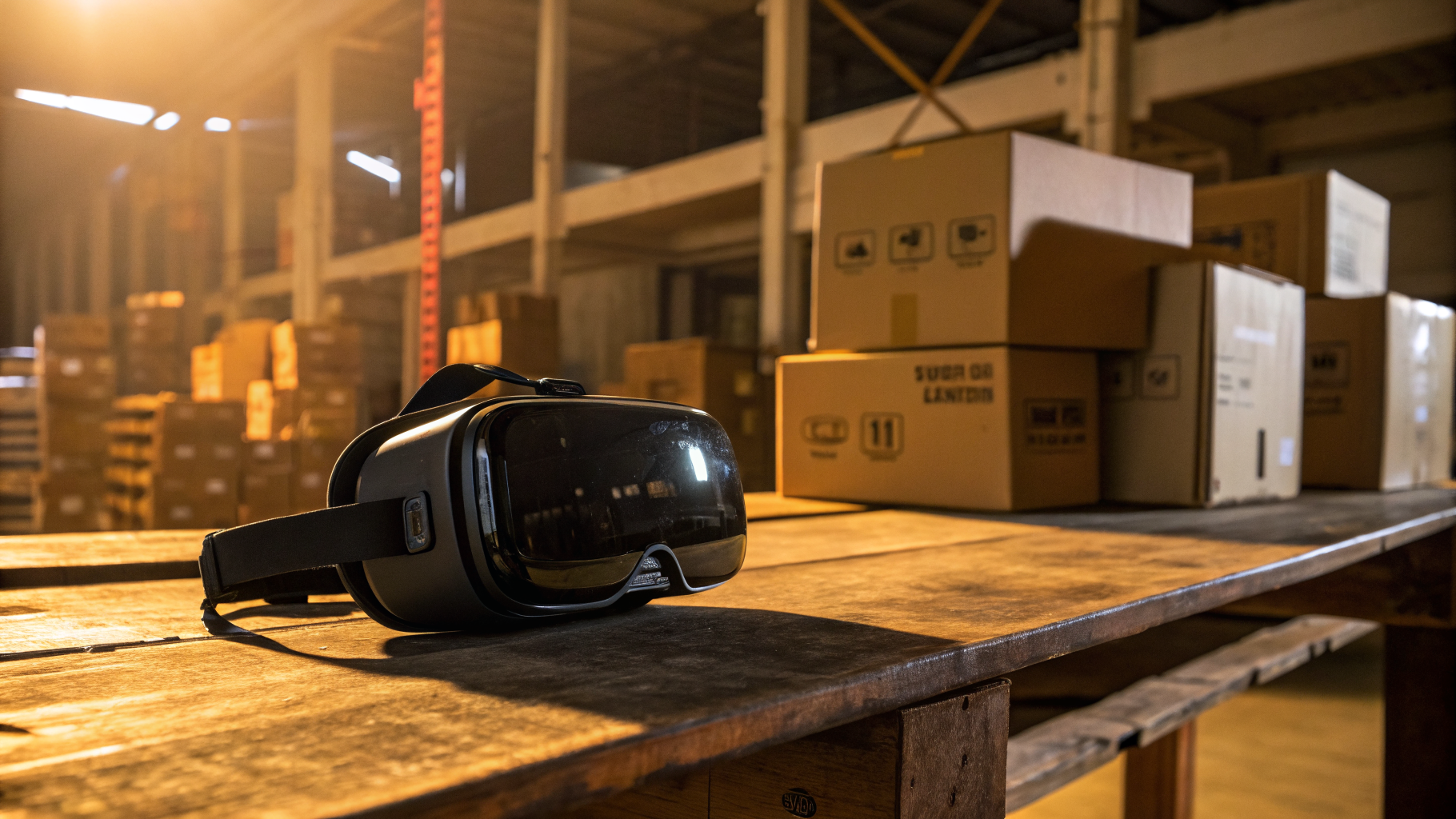
Import records don’t lie. According to a sharp-eyed XR analyst named Brad Lynch, Valve has shipped a significant number of “virtual reality devices” to its US warehouses. And if you’ve been watching this space as long as I have, you know exactly what that means: the Steam Frame is coming. Not next year. Not in a vague press release. Now.
I’ll be honest: I’ve been burned before by Valve hardware rumors. Remember the Steam Machine? The Steam Controller? Both were interesting, neither changed the world. But this feels different. The Steam Frame isn’t a weird experiment in living-room Linux. It’s a standalone VR headset aimed directly at Meta’s Quest lineup. And Valve has a track record of entering markets late, then quietly owning them.
What struck me here was the sheer scale of the import. We’re not talking about a handful of developer kits. This is a commercial shipment. Units that will end up in your hands, or at least in the hands of the early adopters who’ve been refreshing the SteamVR page every Tuesday for the past eighteen months.
So yes, the Steam Frame is poised for launch. The question is: will it live up to the decade of hype?
A Decade of Waiting, A Decade of Change
Let’s rewind a bit. When Valve first started talking seriously about standalone VR—back when the HTC Vive was still the hot thing—the landscape was completely different. Facebook (now Meta) was still figuring out social VR. The Quest didn’t exist. And wireless, inside-out tracking seemed like science fiction.
Now? The Quest 3 is a mature, mass-market device. Apple has thrown its hat into the ring with the Vision Pro, albeit at a price point that makes most people wince. And Sony’s PSVR2 is a niche success for the PlayStation faithful. Where does Valve fit in?
In my view, Valve has one massive advantage that nobody else can touch: Steam. Not just the store, but the ecosystem. The library. The mods. The community. If the Steam Frame offers seamless access to your existing SteamVR library—without the tether, without the base stations—then it’s already more compelling than any Quest exclusive. I’ve spent hundreds of hours in Half-Life: Alyx. The idea of playing that in a standalone headset, with no wires, is genuinely exciting.
But there’s a catch. Actually, there are several.
The Wireless Problem
Standalone VR is a compromise. The Quest 3 manages it by using mobile-derived chipsets and aggressive foveated rendering. It works. But it’s not the same as a wired PC headset. The visuals are softer. The draw distances are shorter. The physics simulations are simpler.
Can Valve, with its deep engineering talent and access to custom silicon, beat that compromise? Or will the Steam Frame be another expensive niche toy that only the faithful buy?
I don’t have the specs yet—nobody does, officially—but the rumors suggest a custom AMD chip, inside-out tracking that rivals the Quest 3, and a price point that undercuts the Vision Pro while still being premium. That’s a tough balancing act.
The Meta of It All
Let’s talk about the elephant in the room. Or rather, the elephant in the virtual room. Meta has owned the standalone VR market for years. The Quest line is everywhere. It’s in schools, in living rooms, in enterprise training programs. Meta has spent billions building a walled garden, and it’s working. Developers make games for Quest first, PCVR second—if at all.
Valve’s response? Open the garden. The Steam Frame will likely be a portal to the open PC ecosystem. No account required. No Meta-style data collection. Just a headset that connects to your Steam account and lets you play what you already own.
That’s a powerful message. But is it enough? Meta’s advantage isn’t just hardware—it’s software. It’s the social features, the fitness apps, the regular updates. Valve doesn’t have a great track record with software support. Remember SteamOS? Remember the Steam Link app? Both were abandoned or left to wither. If Valve treats the Steam Frame like a hardware hobby, it will fail.
What I want to see is a commitment. A roadmap. A clear promise that the Steam Frame will get regular updates, new features, and—most importantly—games that take advantage of its unique capabilities. And I want to see Valve communicate that directly, not through cryptic Reddit posts or accidentally leaked firmware files.
What the Competition Is Doing Wrong
If you look at the current VR landscape, there’s a pattern: every major player is making the same mistake. They’re building hardware without a clear vision for what people should do with it. Meta wants you to work out, socialize, and watch movies in VR. Apple wants you to replace your monitor with a spatial computer. Sony wants you to play Horizon Call of the Mountain and then put the headset back in its box.
Valve has the opportunity to do something simpler and smarter: let people play games. Real games. The kind that make you forget you’re wearing a headset. Half-Life: Alyx proved that Valve understands VR game design better than almost anyone. The question is whether they can translate that understanding into a hardware platform that attracts other developers.
I think they can. But only if they get the price right. If the Steam Frame costs more than $600, it’s going to be a hard sell. At $500, it starts to get interesting. At $400, it’s a direct threat to the Quest 3. And if Valve can bundle it with Half-Life: Alyx or a new flagship title? Watch out.
The Developer Question
Here’s where I get skeptical. Valve is famously a flat organization. Developers there can work on whatever they want. That’s great for creativity, but it’s terrible for deadlines and consistent product support. The Steam Deck was a success because Valve actually committed to it—they released updates, fixed bugs, and worked with game studios to improve compatibility.
Can they do the same for the Steam Frame? VR is more complex than a handheld PC. The drivers, the tracking, the rendering pipeline—everything has to work in perfect harmony. One bad update could break the entire experience. And if Valve treats the Steam Frame like a side project, the same way they treated the Steam Controller, it will end up in the same place: a curiosity that enthusiasts love, but that never reaches the mainstream.
I want to be wrong. I really do. Because the VR industry needs competition. Meta has gotten complacent. Apple is too expensive. Pico is struggling. The market is crying out for a third option that takes VR seriously as a gaming platform, not just a fitness tracker or a productivity tool.
Valve is the only company that can fill that gap. But they have to show up. They have to treat the Steam Frame as a core product, not an experiment. And they have to ship it with a killer app. Half-Life: Alyx is almost five years old now. We need something new. Something that makes people say, “I need to buy this headset just to play that game.”
A Personal Confession
I’ve been covering VR since the Oculus DK1 days. I’ve seen dozens of headsets come and go. I’ve written obituaries for the industry more times than I can count. And every time, something pulls it back from the brink. The Quest 2. The PSVR. Beat Saber. Alyx.
The Steam Frame feels like one of those moments. But it also feels like a last chance. If Valve can’t make standalone VR work—if the Steam Frame launches to mediocre reviews and tepid sales—then I think the window for high-end, PC-driven VR closes. Meta will own the low end, Apple will own the high end, and the middle will be a graveyard of forgotten hardware.
I don’t want that. You don’t want that. And I suspect Valve doesn’t want that either. The import records are real. The boxes are in warehouses. Now all we need is a launch date, a price, and a reason to care.
Valve, the ball is in your court. Don’t drop it.
Further Reading
Read the original scoop at Road to VR.
Original source: read the full article