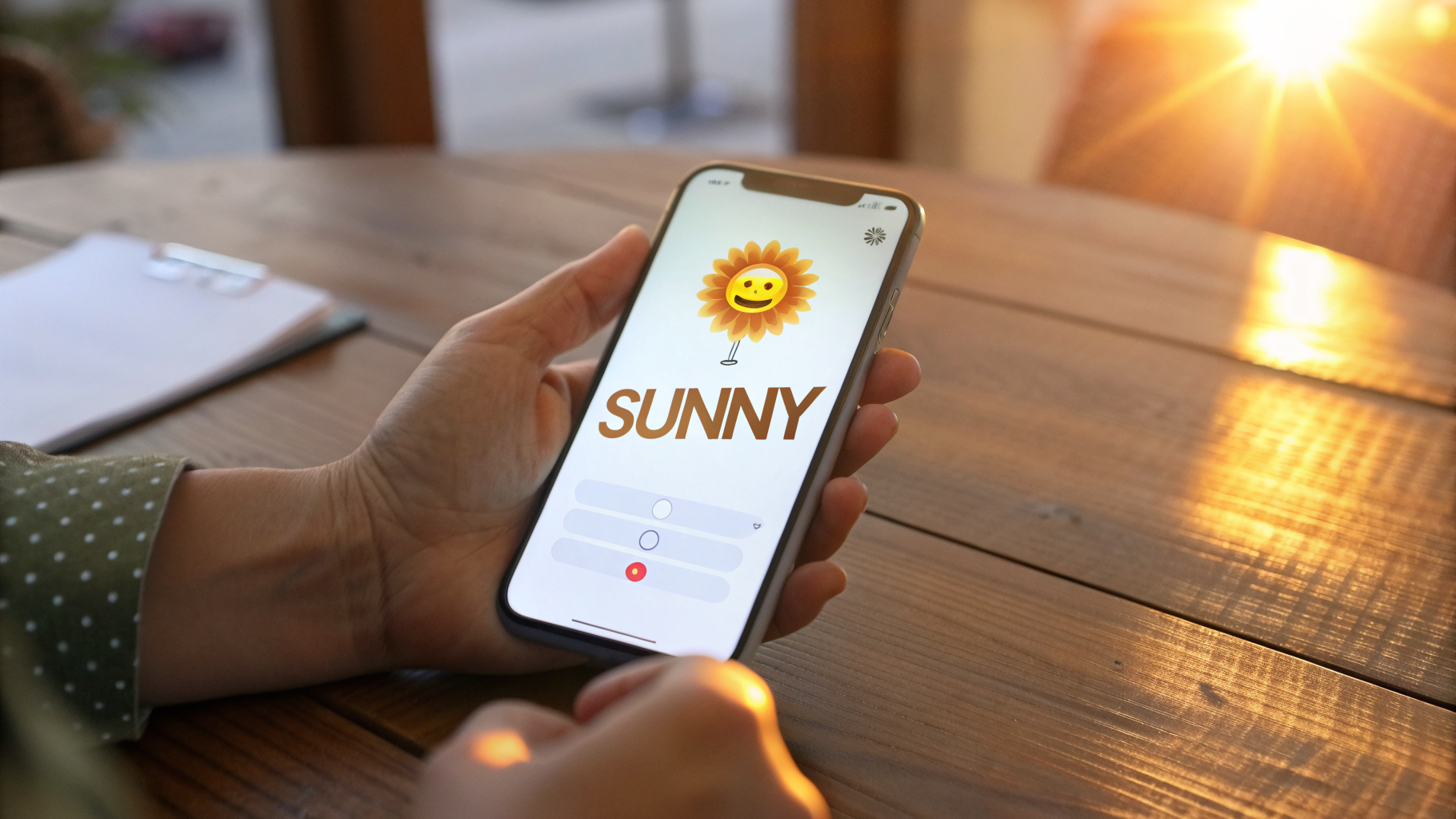
I have been watching the augmented reality space long enough to remember when every startup was promising to put digital dinosaurs on your coffee table. That was a decade ago. The dinosaurs are still not here. But something else is creeping in — quietly, maybe even usefully — and it is called Pixi.
Pixi, a name that sounds like a cross between a fairy and a failed social app from 2014, just launched an iOS app that turns text messages into interactive AR experiences. No, you do not need a headset. No, you do not need to scan a QR code with a second device. You just type a message, hit send, and the recipient can tap to open a 3D scene in their camera view. Stickers, GIFs, emoji reactions? Pixi says those are old news. The next evolution of messaging is interactive augmented reality.
Maybe. Or maybe it is just another way to make your friends roll their eyes at your phone.
The pitch: words that leap off the screen
Here is how it works. You download the Pixi app, link it to your iMessage account, and then start typing normally. When you want to add an AR layer — say, a virtual sunflower blooming out of the word “sunny” — you tap a button and Pixi parses your message. It matches keywords to pre-built 3D scenes. “Party” triggers a confetti storm. “Beach” summons a gentle wave and a sandcastle. “Sorry” spawns a sad little cartoon cloud that rains on a tiny umbrella.
Is it gimmicky? Absolutely. But here is the thing: I typed “hello” and Pixi offered me a floating, pastel-coloured 3D hand waving. It was oddly charming. Not useful. Not necessary. But charming. And that might be enough to hook a certain kind of user — the kind who still sends Snapstreaks and decorates their Instagram stories with stickers of frogs holding boba tea.
What struck me here is the simplicity. Pixi does not require you to become a 3D modeler. You are not learning Blender to send a birthday greeting. The app does all the heavy lifting. It has a library of around 200 AR objects and scenes, designed by a small internal team and a handful of freelancers. You cannot upload your own assets — at least not yet. That is a deliberate choice. Pixi wants to keep the barrier to entry low, the experience smooth, and the quality consistent.
But that also means you are limited to their curated vocabulary. If you type “quantum entanglement” or “existential dread”, Pixi just shrugs. Maybe that is for the best.
AR messaging: a graveyard of good ideas
Let me be honest. The history of AR in messaging is not pretty. Remember GIPHY World? It let you place animated GIFs in the real world via ARKit. It died. Remember Facebook’s AR Studio? It was quietly folded into Spark AR, which is now mostly used for filters, not messages. Remember Snapchat’s AR lenses that you could attach to a snap? Those are still around, but they are not exactly transforming how we talk to each other.
So why does Pixi think it can succeed where others stumbled? Two reasons, I think. First, timing. ARKit and ARCore have matured. Phones are faster. The average user now understands — vaguely — what AR is, thanks to years of Pokémon GO and Instagram filters. The technology is no longer a party trick. It is a platform feature people expect.
Second, Pixi is not trying to replace texting. It is layering on top of it. You do not need to convince someone to download a new messaging app. Pixi works inside iMessage. The AR content is delivered as a link that opens in the Pixi app — but the message itself is just a text. Your grandma can receive a Pixi AR scene without knowing what AR stands for. She just taps a link and sees a virtual cat on her kitchen table. Then she takes a screenshot and sends it back to you. The loop is simple.
Still, I have my doubts. The app requires both parties to have Pixi installed for the full interactive experience. Without it, the recipient sees a static image or a video preview. That is a hard sell in a world where iMessage already has a thousand ways to express yourself without downloading anything extra.
The business model: not as scary as it sounds
Pixi is free to download. The company plans to make money through a subscription tier — Pixi Pro — that unlocks exclusive AR scenes, early access to new features, and the ability to create custom scenes from your own photos. There is also a brand partnership angle: imagine sending a friend a virtual Starbucks cup that says “meet me for coffee?” and when they tap it, they see a coupon for a free latte. That kind of thing.
Is that advertising? Yes. But done well, it could feel more like a gift than a commercial. The key is restraint. If every third message is a sponsored AR object from a fast-food chain, users will bounce fast. Pixi’s founder told me they plan to limit branded content to one per day per user, and only when the user explicitly opts in. I want to believe that. I really do.
What it feels like to use
I spent a week testing Pixi with a colleague who is famously sceptical of anything that requires a second app. Here is what we found:
- Onboarding: Painless. Two minutes. You grant access to iMessage and the app scans your contacts to see who else is using Pixi. No account creation needed if you have Apple ID.
- Discovery: The app shows you a carousel of suggested AR scenes based on your message. Sometimes it nails it. Sometimes it offers a cactus for the word “thirsty”. Not bad, not great.
- Interaction: You can rotate, scale, and move the AR object with your fingers. It tracks to surfaces reasonably well — even on my older iPhone 12, it did not drift too much. The lighting is a bit fake, but that is a minor quibble.
- Social friction: My colleague did not have Pixi installed at first. She received a static image of a dancing taco when I sent “lunch”. She texted back: “Is this a virus?”. After she installed the app, she sent me a virtual bouquet of flowers that exploded into butterflies when I tapped it. She laughed. That counts as a win.
But here is the catch: we used it for three days, then stopped. The novelty wore off. We went back to sending memes and voice notes. Pixi became a toy we pulled out when we were bored, not a tool we reached for naturally. That is the challenge for any AR messaging product: how do you make it sticky without being annoying?
The bigger picture: AR as a communication layer
I think Pixi is onto something, even if the current execution feels more like a proof of concept than a finished product. The idea that AR can be a layer of expression — as basic as bold text or italics — is compelling. We already communicate with emoji, which are essentially tiny pictograms. Why not 3D objects? Why not scenes you can walk around?
The technology is there. The cultural readiness is there. The missing piece is habit. We have trained ourselves to reach for a GIF when words fail. Can we train ourselves to reach for an AR scene? Maybe. But it will take more than a library of 200 objects. It will take a sense of timing, of emotional intelligence, of knowing when a virtual firework display is actually better than a simple “congratulations”.
Pixi is launching at a moment when the metaverse hype has cooled, and that might actually help it. No one is promising a digital utopia anymore. They are just promising a better way to say “I am thinking of you”. That is smaller. But it is also more real.
The competition is already here
Pixi is not alone. Apple has been quietly building AR experiences into Messages — remember Memoji? That is AR, baby. Snapchat has its own AR messaging features buried inside the app. Meta is working on something similar for WhatsApp, though it has not shipped yet. Even Google has dabbled with AR in Google Messages.
What Pixi has that the giants do not is focus. Apple, Snap, and Meta are building platforms. Pixi is building a feature. That means they can iterate faster, take risks, and pivot without breaking a billion-user ecosystem. But it also means they have less leverage. If Apple decides to add native AR messaging to iMessage tomorrow, Pixi is toast. No one wants two apps to send a message.
That is the existential threat hanging over every third-party messaging tool. The platform holders always win in the end. Just ask the makers of those cute sticker apps from 2016. They are all gone now.
Should you care?
If you are a tech enthusiast, yes. Pixi is a fun glimpse of a possible future. If you are a normal person with a normal phone and a normal desire to just tell your friend you are running late, honestly, you can skip it. It is not going to change your life. It might make you smile for a few days. Then you will forget about it.
But here is what I keep coming back to: the best AR experiences are the ones that feel inevitable, not forced. Pixi’s sunflower popping out of the word “sunny” does not feel inevitable yet. It feels like a demo. But it is a demo with good bones. If they keep adding scenes, improve the AI that matches words to objects, and maybe — just maybe — let users create their own AR messages from scratch, they could have something that sticks.
For now, I am keeping the app on my phone. Not because I need it. But because I want to see where it goes. And because, once in a while, sending a virtual cat that meows when you tap it is exactly the right thing to do.
Further Reading
Read the original source on TechCrunch: Pixi’s new iOS app turns text messages into interactive AR experiences
Original source: read the full article