The Hype Cycle Comes for Your Job—Again
Let me tell you a story. I’ve been covering robotics since before the Roomba was considered smart. I’ve sat through countless demos where a humanoid robot took a wobbly step, picked up a cup, and the audience gasped like it had just solved climate change. Every time, the headline was the same: “Robots are coming for your job.” Every time, the robots didn’t show up.
But something is different now. Not because the hardware suddenly got cheap—it didn’t. Not because the VCs suddenly got patient—they never do. What struck me reading a recent deep dive from top robotics researchers and founders on Ars Technica is that the missing piece—general-purpose autonomy—might finally be within reach. And it’s AI that’s doing the heavy lifting, not better servos or cheaper lidar.
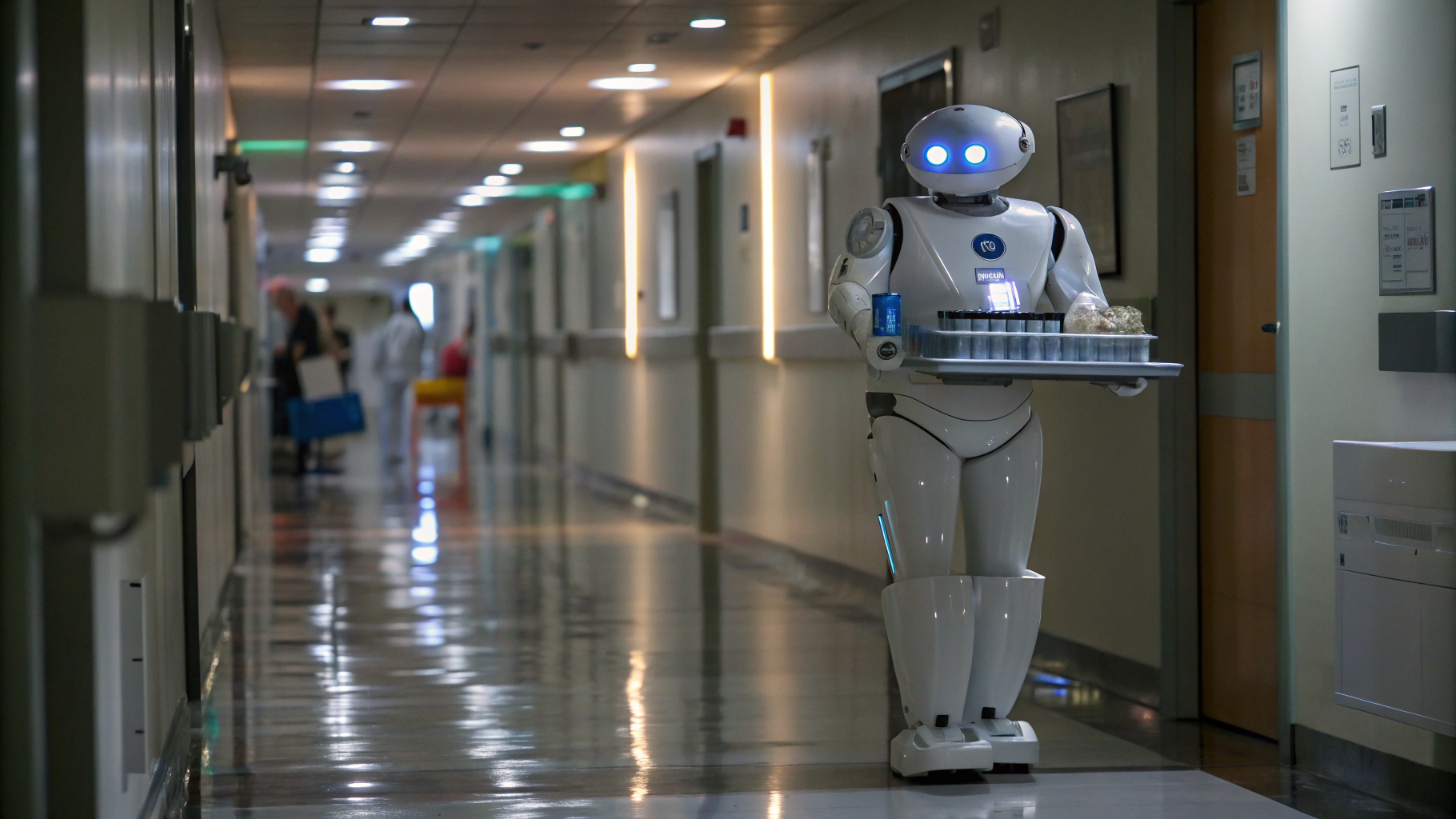
We’re not talking about factory arms that weld the same car door for a decade. We’re talking about a robot that can wander into a hospital, figure out where the linen closet is, and restock shelves without someone programming every inch of its path. That’s the dream. That’s also the part where I start to get skeptical.
What “Autonomy” Actually Means Here
Let’s get the definitions straight before the marketing department gets hold of them. When a robotics CEO says “autonomous,” they usually mean: the robot can move from point A to point B without hitting a wall, as long as someone painted a line on the floor. That’s not autonomy. That’s a very expensive Roomba.
What the researchers I spoke with are chasing is something far harder: situational understanding. A robot that sees a cluttered kitchen, a wet floor, a child’s toy in the middle of the path, and a coffee mug that needs washing—and then decides what to do first, without a human telling it.
Here’s where AI enters the picture. Large language models and multimodal vision systems are starting to give robots a kind of common sense. Not the full, messy common sense of a human, but enough to recognize that a spilled bag of rice is not a structural obstacle—it’s a mess to be cleaned. That distinction matters.
- Perception: AI helps the robot identify objects even if they’re partially hidden or oddly lit.
- Reasoning: LLMs let the robot parse natural language commands like “take this to the blue room” without needing a coordinate map.
- Adaptation: Reinforcement learning means the robot can try, fail, and adjust its approach without a programmer rewriting code.
That’s the theory, anyway. In practice, the robots I’ve seen still get confused by a reflective floor or a door that opens inward instead of outward. But the trajectory is real.
The Workplace: Where the Money Is
Unsurprisingly, the first wave of truly autonomous robots won’t be folding your laundry. They’ll be in warehouses, hospitals, and maybe construction sites—places where the ROI is clear and the environment is semi-structured.
One founder I’ve followed for years told me his company’s robot can now navigate a hospital corridor, take an elevator, and deliver lab samples to the correct floor. It does this using a combination of visual SLAM and a lightweight AI model that runs on the robot itself—no cloud dependency. That’s important, because if the WiFi drops, the robot shouldn’t just stop and cry.
What’s changed? The AI models got smaller and more efficient. You can now run a decent vision transformer on an edge device that costs under a thousand dollars. Two years ago, you needed a GPU the size of a suitcase.
But here’s the catch: these robots are still specialized generalists. They can do multiple tasks within a narrow domain—say, restocking shelves and taking inventory—but they can’t suddenly switch to washing windows. That level of versatility is still a research problem, not a product.
Why the Home Is Harder
I get asked all the time: “When will I have a robot that cleans my house without me having to move the furniture?” The answer is: not for a while, and maybe never at a price most people can afford.
Homes are chaos. Every home is different. The lighting changes, the floor plan shifts when you rearrange the couch, and pets are basically moving obstacles with fur. A robot that can handle that reliably is a robot that needs near-human perception and reasoning. We’re not there yet.
The Ars Technica piece highlights a key insight: the home environment is what researchers call “open-world.” That means the robot will encounter things it has never seen before—a new type of vacuum cleaner cable, a dropped earring, a puddle of something sticky. Handling the unknown without breaking things is the holy grail, and it’s still years away.
That said, I think we’ll see limited home robots sooner than you’d expect. Not humanoids. Think of a mobile base with a robotic arm that can pick up toys, open doors, and maybe load a dishwasher. It won’t be cheap, and it won’t be perfect, but it will exist. Probably in the homes of people who can afford a second car.
The Real Bottleneck Isn’t AI—It’s Trust
Let me step back and say something that might annoy the true believers. The technology is advancing fast. But the biggest barrier to robot workers in workplaces—and homes—isn’t technical. It’s trust.
Would you let a robot unsupervised in a hospital room with a patient? What if it misinterprets a command and drops a vial of blood? What if it bumps into an elderly person and knocks them over?
These aren’t edge cases. They’re the central challenge of deploying autonomous systems in human spaces. The researchers I’ve talked to are painfully aware of this. They talk about “safety envelopes” and “graceful failure modes,” but in the real world, a robot that fails is a robot that gets unplugged and never turned back on.
One founder put it bluntly: “The first time a robot hurts someone in a way that makes the news, the entire industry will suffer a setback of years.” He’s right. The public’s tolerance for robot mistakes is zero. We forgive humans for spilling coffee. We won’t forgive a machine.
What I Think Will Happen (and What Won’t)
I’ve been wrong before. I thought VR would be mainstream by now. I thought the metaverse would be more than a digital mall. So take this with the appropriate grain of salt.
Here’s what I think is realistic: within five years, we’ll see autonomous robots working in logistics, healthcare, and possibly agriculture at scale. They’ll be expensive, but they’ll pay for themselves in labor savings. They’ll be supervised by humans who handle the edge cases. Think of it as a co-pilot model, not a pilotless one.
What I don’t think will happen: a general-purpose home robot that does everything. Not in a decade. The economics don’t work. A robot that can fold laundry, wash dishes, and mop floors would need to cost less than a year of a housekeeper’s salary, and it would need to be dead reliable. That’s a stretch.
But I’ve also learned never to bet against scaling. If the AI keeps improving at the current rate, and if hardware costs keep dropping, the timeline could accelerate. I’m not predicting a robot in every home by 2030. But I wouldn’t be shocked if we see a robot in every hospital by then.
The Bottom Line for My Readers
You didn’t come here for hype. You came because you want to know what’s real and what’s vaporware. So here’s my take: autonomous robot workers are coming for specific, high-value tasks. They’re not coming for your job tomorrow, and they’re not coming for your laundry room this decade.
But the AI advances that enable them—smaller models, better vision, cheaper compute—are real. They’re happening now. And they’ll reshape how we think about labor, safety, and the boundary between human and machine work.
I’ll be watching. You should too. Just don’t expect a robot to make you coffee anytime soon. At least, not without spilling half of it.
Original source: read the full article