The Ghost of Oculus Past
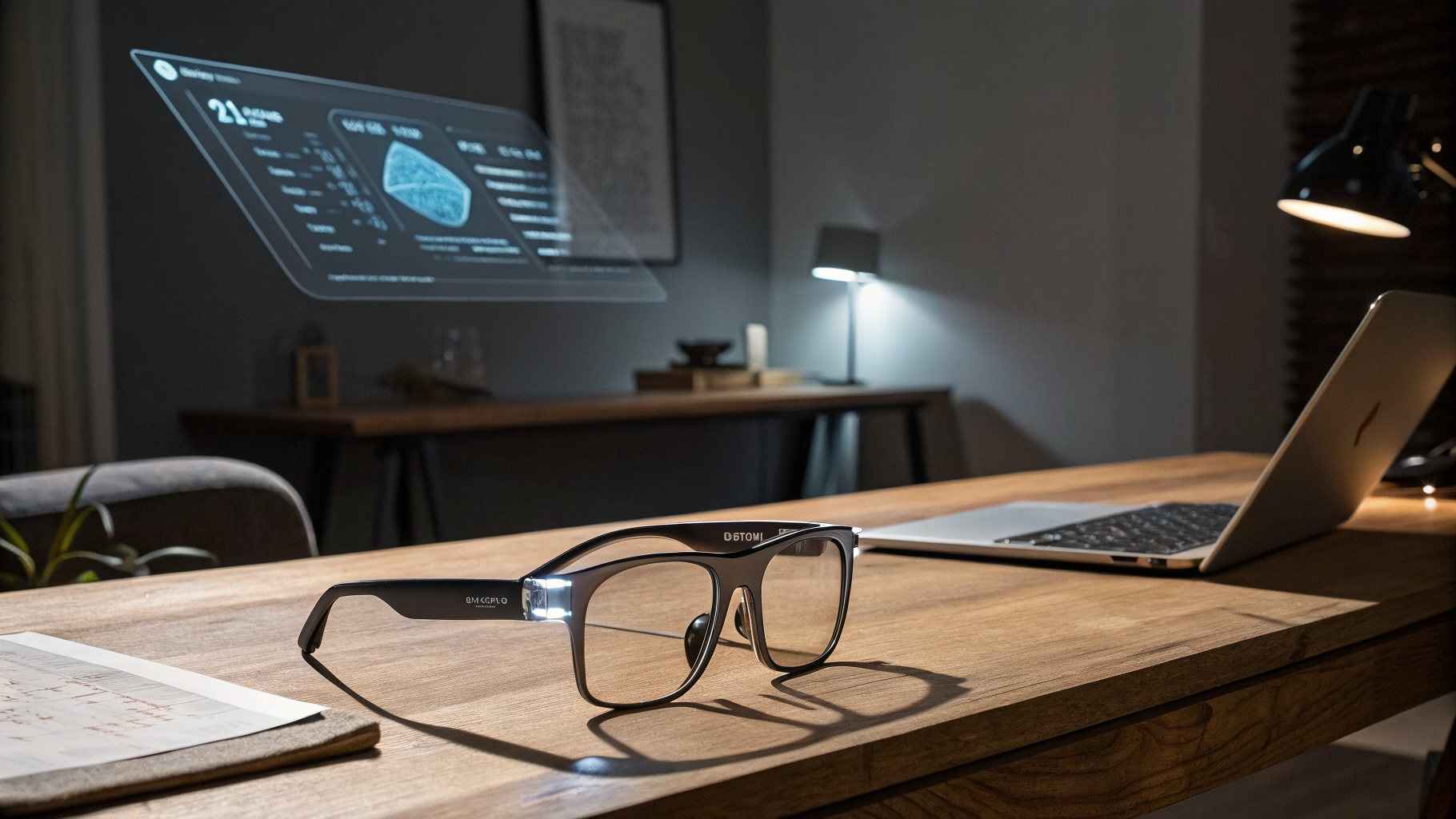
Palmer Luckey does not do quiet. The man who sold Oculus to Facebook for $2 billion, then went on to build a military tech empire with Anduril, has a talent for making headlines. But this time, the tease was almost shy. A photo. A few words. A pair of glasses that look like they belong in a 90s sci-fi movie—if that movie was directed by someone on a strict diet of minimalism and carbon fiber.
What struck me here is the sheer audacity. Luckey posted an image of what he claims are full augmented reality glasses, not mere smart specs. They are compact. Alarmingly so. We’re talking about a device that seems to defy the laws of physics—or at least the laws of battery life and processing power. The frames are thin, the lenses are clear, and there is no visible chunky module attached to the side. If you squint, they could pass for Ray-Bans. But Luckey says they do full AR. That’s a claim that should make any seasoned VR/AR journalist raise an eyebrow.
I’ve been covering this space since the days of the DK1. I’ve seen vaporware, hype cycles, and more “revolutionary” headsets than I care to count. So when a guy who literally kickstarted the modern VR revolution whispers about compact AR glasses, I don’t just nod. I ask: How? And more importantly: Why now?
The Hard Problem of Compact AR
Let’s get one thing straight: making AR glasses that are both small and capable is the holy grail. It’s also a nightmare. The physics are brutal. You need a display that can project bright, high-resolution images onto the real world. You need optics that don’t distort your view or give you a headache. You need a battery that lasts more than 20 minutes. And you need a processor that can run simultaneous localization and mapping (SLAM) without turning your face into a toaster.
Most companies solve this by cheating. They make “AR glasses” that are really just notification displays—like Google Glass 2.0. Or they go the other way and build bulky headsets like the HoloLens 2 or Apple’s Vision Pro, which are more like face computers than glasses. Luckey claims his device is neither. He says it’s a full AR system in a package that looks like reading glasses. That’s a bold statement.
I’ve tested almost every AR device on the market. The closest anyone has come to this form factor is with waveguide optics, but even those require side modules for projectors. The fact that Luckey’s glasses appear to have no such modules suggests either a breakthrough in micro-LED or laser scanning technology—or a very clever optical design that hides the components in the frame. Or, you know, a really good Photoshop job. I’m not saying Luckey is bluffing. But I’ve been burned before.
What Anduril Brings to the Table
Anduril is not a consumer electronics company. They make drones, surveillance systems, and AI-powered defense tools for the U.S. military. So why would they build AR glasses? The answer is obvious: battlefield awareness. Imagine a soldier who can see enemy positions, navigation data, and threat assessments floating in their field of view, without looking down at a screen. That’s the killer app for military AR. And if you can make the glasses small and rugged enough, you could replace the clunky heads-up displays used in special ops today.
But Luckey is also a showman. He knows that teasing a consumer-friendly AR device generates buzz for his company, which is already valued at over $8 billion. It also puts pressure on competitors like Meta, Apple, and Snap, who are all racing to ship their own AR glasses. Snap just announced the latest version of its Spectacles, which are still too bulky for everyday wear. Apple’s Vision Pro is a masterpiece of engineering, but it’s a headset, not glasses. Meta’s Ray-Ban Stories are smart glasses, not AR. So Luckey’s tease is a flex: “You can’t do this. But I can.”
I’m not sure if that’s arrogance or confidence. Probably both. But it’s worth noting that Luckey has a track record of delivering on seemingly impossible promises. The original Oculus Rift was a duct-taped prototype that changed the industry. The Quest 2 is still the best-selling VR headset. So when he says he’s built compact AR glasses, I don’t dismiss it. I just want to see the actual product, not a photo.
The Skeptic’s View
Let me play devil’s advocate for a moment. Every few months, some startup or billionaire teases “the smallest AR glasses ever.” They show a render, the press goes wild, and then… nothing. The product never ships, or it ships with compromises that make it useless. Remember North? They made sleek AR glasses that were basically a heads-up display for your phone. They got bought by Google and disappeared. Remember Magic Leap? They promised a lightweight AR headset that could project dinosaurs into your living room. They shipped a $2,300 brick that nobody bought.
So forgive me if I’m a little jaded. The difference here is that Luckey has skin in the game. Anduril is not a startup looking for a quick exit. It’s a serious defense contractor with deep pockets and a clear use case. But that doesn’t mean the glasses will ever hit the consumer market. They might remain a military prototype, locked away in a Nevada bunker. Or they might be released as a developer kit, like Oculus did, to build an ecosystem before going mainstream.
What worries me is the privacy angle. AR glasses with cameras and sensors are a surveillance nightmare. The military doesn’t care about that. But consumers do. If Luckey’s glasses ever come to the public, they’ll face the same backlash that Google Glass did—except worse, because these will actually work. Imagine walking into a bar and seeing someone wearing glasses that can record everything and overlay digital information on your face. That’s not a future I want to live in, unless there are strict regulations and transparency features.
What’s Inside the Frame?
Since Luckey didn’t share specs, I’ll speculate based on what’s possible today. To achieve full AR in a compact form factor, you need a few key components:
- Micro-LED or laser beam scanning display: These are tiny, bright, and power-efficient. Companies like QD Laser and Olightek are working on this, but mass production is still tricky.
- Waveguide optics: These use diffraction gratings to pipe light from a projector into your eye. They’re thin, but they usually require a side module. Luckey might have integrated the projector into the bridge or the temples.
- Custom silicon: A dedicated AR chip that handles SLAM, rendering, and connectivity without overheating. Qualcomm has the Snapdragon AR2 platform, but it’s not tiny enough for glasses this small.
- Battery: The biggest challenge. You can’t fit a large battery in thin frames. Maybe Luckey is using a separate battery pack, like a necklace or a pocket module. Or maybe he’s using a new solid-state battery tech. Or maybe the glasses only work for 30 minutes. That would be useless for soldiers, but fine for demos.
I’m leaning toward the idea that this is a tethered device—not physically tethered, but wirelessly connected to a smartphone or a puck. That would offload processing and battery, allowing the glasses to be thin. It’s a compromise, but a smart one. Apple is reportedly doing the same thing with its upcoming AR glasses, which are expected to rely on the iPhone for compute.
The Bigger Picture: AR’s Tipping Point
We’ve been hearing about “the year of AR” for a decade. It never arrives. But something feels different now. Apple is all in. Meta is spending billions. Snap is iterating. And now Anduril—a defense company—is teasing a breakthrough. That’s a sign that the technology is maturing. The pieces are falling into place: better optics, smaller displays, more efficient chips. The only missing piece is the killer app.
For consumers, that app might be navigation, translation, or social filters. For the military, it’s situational awareness. For Luckey, it might be something else entirely. He’s hinted at using AR for gaming, training, and even telepresence. Remember, this is the guy who built a VR headset in his parents’ garage. He thinks big. But he also has a tendency to overpromise and underdeliver on timelines. The Oculus Rift was delayed. The Quest Pro was overpriced. So I’m cautious.
What excites me most about this tease is not the glasses themselves, but the competition it will spark. If Luckey can make compact AR glasses work, Meta and Apple will have to accelerate their own plans. That means better products for everyone, faster. And if he can’t? Well, at least he’ll have given the industry a wake-up call.
Final Thoughts: A Tease Worth Watching
I’m not going to call these glasses a game-changer. That word is dead to me. But I will say this: Palmer Luckey has my attention. He’s one of the few people in tech who has actually changed an industry, and he’s doing it again, this time from the shadows of defense contracting. The fact that he’s willing to show even a glimpse of his AR work suggests that Anduril is serious about this. Whether it’s a product for soldiers or for you and me remains to be seen.
For now, I’ll file this under “intriguing but unproven.” I’ll watch for leaks, patents, and developer kits. And I’ll keep my expectations in check. Because in the world of AR, seeing is believing. And so far, all I’ve seen is a photo.
Original source: read the full article