The Empire Strikes Back—Again
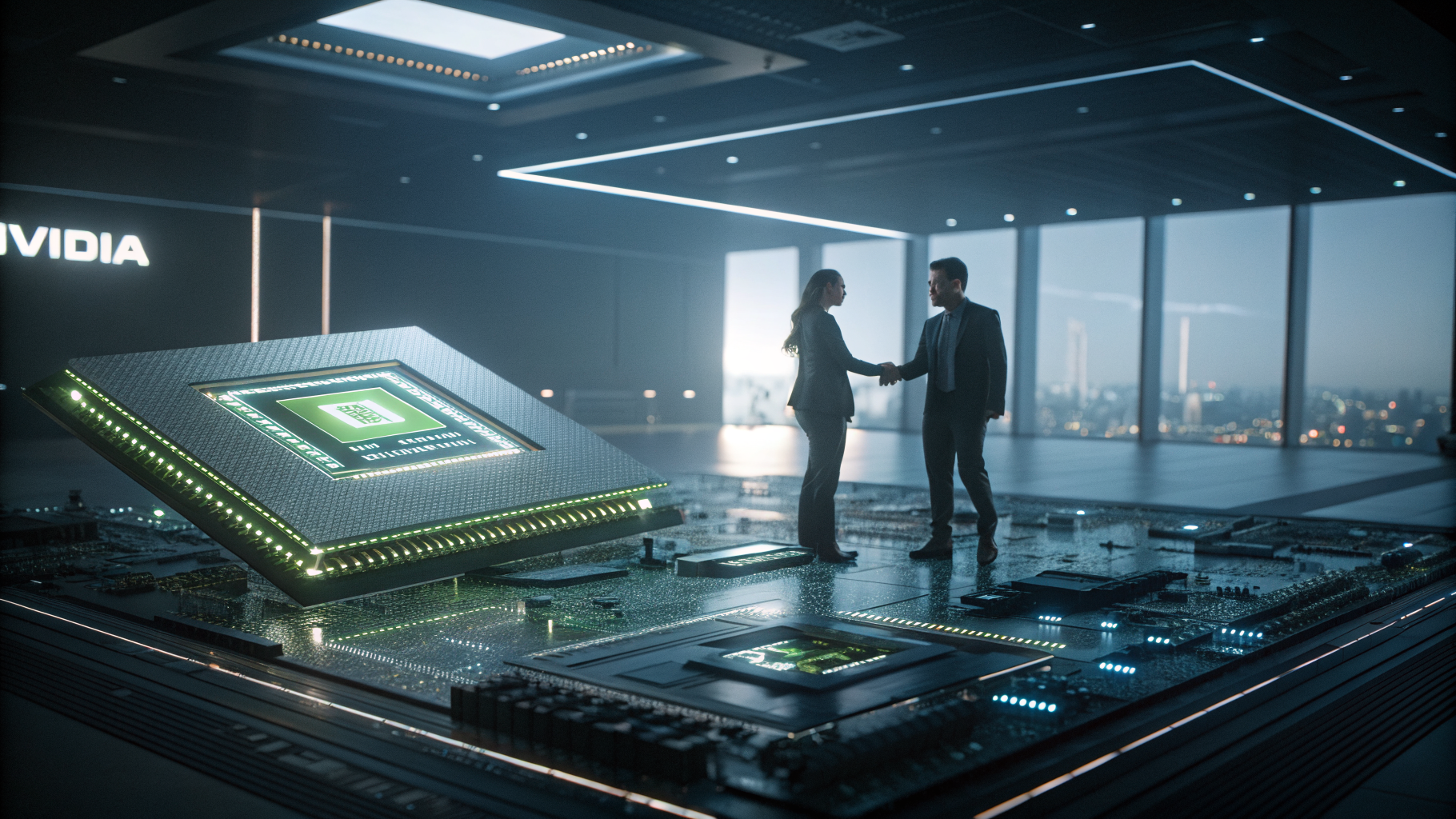
So Nvidia is reportedly buying Hugging Face for $13 billion. Let that sink in. The company that made its bones selling GPUs to gamers and, later, to every AI lab on the planet is now buying the digital town square where AI models go to hang out. If you’ve been covering this space as long as I have, you know the pattern: Nvidia doesn’t buy for the technology. It buys for the pipeline. And Hugging Face is the ultimate pipeline—not for chips, but for the very thing chips process.
The report, which surfaced via Ars Technica, isn’t official yet. But in the world of AI M&A, where a rumor can move markets and a denial usually means the lawyers are still drafting, this one has the ring of truth. I’ve seen Nvidia acquire Mellanox for $6.9 billion and ARM (though that fell apart). I’ve watched them buy Cumulus Networks, and quietly absorb a dozen startups you’ve never heard of. But Hugging Face is different. It’s not a piece of hardware or a networking stack. It’s a community, a hub, a repository of tens of thousands of open models—and arguably the last neutral ground in AI.
Let’s not mince words: this is a land grab. And it’s a smart one, even if it makes me uneasy.
What Hugging Face Actually Is (and Why It Matters)
If you’re not deep in the AI weeds, Hugging Face might sound like a cute startup that makes cuddly emoji bots. In reality, it’s the GitHub of machine learning. It hosts models like Llama, Mistral, Stable Diffusion, and thousands of fine-tuned variants. It’s where researchers go to share weights, where startups go to test open-source alternatives to OpenAI, and where enterprises go to deploy private models without giving everything to a cloud giant.
But it’s more than just storage. Hugging Face has built an entire ecosystem: the Transformers library, the Spaces app hosting, the datasets, the leaderboards, the community forums. It’s the connective tissue of the open model movement. And that movement is the one thing that keeps AI from being a three-horse race between Microsoft, Google, and, well, Nvidia’s own partners.
So when you hear “Nvidia acquires Hugging Face,” you have to understand that they’re not buying a website. They’re buying the place where the future of AI is being discussed, tested, and shipped. That’s worth more than any single model.
What struck me here is the timing. The AI boom has cooled slightly from its 2023 frenzy, but interest in open models is surging. Every enterprise I talk to wants to fine-tune an open model on their own data, because they don’t want to send their IP to a public API. Hugging Face is the default place to do that. Nvidia sees that, and they’re paying a premium to own the front door.
The $13 Billion Question
Is $13 billion too much? Let’s do some quick math. Hugging Face was valued at $4.5 billion in 2023, after a $235 million Series D. That’s nearly triple in two years. For a company that reportedly makes around $100 million in annual recurring revenue—though I’ve heard numbers both higher and lower—that’s a steep multiple. But M&A is not about current revenue; it’s about strategic necessity. And Nvidia has the cash: over $30 billion in the bank, and a market cap that has made them the most valuable chip company on Earth.
The real question is not whether they can afford it. It’s whether they can integrate it without destroying the very thing that makes Hugging Face valuable: its neutrality. Think about it. Hugging Face is a Switzerland. It hosts models from Meta, Google, Microsoft, and a hundred independent labs. Those competitors use Hugging Face as a distribution channel. If Nvidia owns it, will Meta still post their latest Llama there? Will Google? Or will they retreat to their own repositories, leaving Nvidia with a glorified ghost town?
That’s the risk. And I don’t think Nvidia is naive to it. They’ve been careful to position themselves as the “arms dealer” of AI, not a competitor. Buying Hugging Face could be seen as a move to control the infrastructure for model distribution, not to favor one model over another. But in practice, infrastructure owners always have levers. They can prioritize certain models in search, they can throttle downloads, they can change the terms of service. Even if they don’t, the perception alone could drive some communities away.
I can already hear the counterargument: “Nvidia is a hardware company, they won’t mess with the platform.” Tell that to anyone who trusted Red Hat after IBM bought them—not that IBM wrecked Red Hat, but the culture shifted. And Hugging Face has a culture that is deeply anti-corporate, in a good way. The founders have been vocal about open source, and the community has a strong belief that AI should be democratized. Can that survive inside a company that sells $30,000 GPUs to the very same giants that want to control AI?
The Open Model Paradox
Here’s the paradox that makes this acquisition so fascinating: Nvidia benefits enormously from open models. Open models like Llama and Mistral drive demand for Nvidia’s GPUs, because anyone can run them locally or on their own cloud. If open models vanished tomorrow, everything would run through OpenAI and Anthropic, and those companies would eventually build their own custom chips (OpenAI is already working on that). Nvidia needs the open ecosystem to keep the market fragmented. Hugging Face is the center of that ecosystem. So buying it is a way to protect their own moat.
But here’s the twist: if Nvidia owns the center, they might inadvertently kill the fragmentation. Because if the open community no longer trusts the hub, they’ll go elsewhere. There’s already talk of decentralized alternatives, of federated repositories, of peer-to-peer model sharing. The genie is out of the bottle. You can’t own a community—you can only host it. And communities are fickle.
I’ve been to Hugging Face’s office in Paris, and it feels like a startup from a different era—whiteboards, beanbags, engineers arguing about tokenizers. It’s not a corporate stronghold. And Nvidia, for all its engineering brilliance, is a corporate stronghold. The culture clash alone could be the biggest hurdle. But Nvidia has shown they can acquire and integrate—they did it with Mellanox, and they’ve kept that team largely intact and successful. Maybe they’ll do the same here. But Mellanox didn’t have a community that could fork overnight.
What This Means for Developers and Startups
If you’re a developer who uses Hugging Face daily—and I know many of you do—you’re probably feeling a bit queasy. I get it. This is like finding out your favorite indie coffee shop is being bought by Starbucks. The coffee might stay the same, but the vibe will change. Here’s what I think will happen in the short term:
- Nothing will change immediately. Nvidia is smart enough to keep Hugging Face’s leadership in place and promise “operational independence.” They’ll say all the right things.
- Over time, you’ll see tighter integration with Nvidia’s hardware and software stack. Maybe free GPU hours for popular models. Maybe preferential treatment for models that run best on Nvidia chips. That’s not evil; it’s business.
- But the real risk is for alternative hardware. Hugging Face has been hardware-agnostic—you can run models on AMD, Apple Silicon, even CPUs. Will that continue? I’d bet on yes at first, but the pressure will be there to optimize for CUDA.
For startups, this is a double-edged sword. On one hand, Nvidia’s resources could make Hugging Face more reliable, more scalable, and more accessible. They might finally fix that search feature that’s been clunky for years. On the other hand, if you’re building a company that depends on Hugging Face as a neutral distribution point, you now have one more reason to diversify. Smart startups will start mirroring their models elsewhere, just in case.
But let me play devil’s advocate for a moment. Is this actually a good thing for open source? Nvidia has been a strong supporter of open models—they’ve released their own open models (Nemotron), they contribute to PyTorch, they sponsor countless research projects. They have no incentive to lock down the ecosystem. If anything, they want more open models because that drives more chip sales. So maybe this acquisition will mean more investment in the community, not less. Maybe Hugging Face will get the engineering talent it needs to build better tools.
I’m not naive. I’ve seen too many acquisitions where the acquiring company promised to “preserve the magic” and then slowly suffocated it. But I’ve also seen acquisitions where the independent company thrived because the parent company gave them air cover and didn’t micromanage. The difference is usually the founders. Clem Delangue and Thomas Wolf are still at the helm, and they’ve been public about their desire to keep Hugging Face independent. If Nvidia is smart, they’ll keep them happy and let them run the show. If they do that, there’s a real chance this works.
The Bigger Picture: Nvidia’s Endgame
Let’s zoom out. Nvidia is not just buying Hugging Face for fun. They’re building the full stack: hardware (GPUs), software (CUDA, frameworks), and now distribution (Hugging Face). They already have their own cloud service, DGX Cloud. They have AI enterprise suites. The only missing piece was the community layer—the place where models are born and shared. With Hugging Face, they get that. In one move, they become the AI equivalent of what Microsoft is in operating systems: the default platform.
But here’s the irony: Microsoft is also a major investor in OpenAI and has its own GitHub. So the AI landscape is shaping up to be a battle between Microsoft’s stack (Azure + OpenAI + GitHub) and Nvidia’s stack (GPUs + CUDA + Hugging Face). Google is trying to wedge in with its custom TPUs and DeepMind. But for now, Nvidia and Microsoft are the two giants, and they’re circling each other. A few years ago, they were partners. Now they’re frenemies.
What does this mean for the rest of us? It means that the open model movement, which was supposed to be the democratic counterweight to closed AI, is now becoming a pawn in a corporate chess game. That’s not necessarily bad—corporate support can bring resources—but it’s a change. The era of innocent open source is over. Now it’s about strategic positioning.
I keep coming back to the same rhetorical question: can you really own openness? The answer is probably no. But you can try to bottle it, and that’s what Nvidia is doing. They’re buying the bottle, not the genie. The genie—the community, the developers, the spirit of sharing—is not for sale. It can move to another host in a weekend. So Nvidia’s real challenge is to make sure the bottle is so good that no one wants to leave.
And that’s where the $13 billion makes sense. It’s not paying for the code or the models. It’s paying for the network effects, the trust, and the default position. Those are hard to value, but they’re priceless in a market where every major tech company is fighting for AI dominance.
Will it work? I don’t have a crystal ball. But I’ll be watching closely. If Nvidia can pull this off without alienating the community, they’ll be unstoppable. If they fumble, we’ll see the first great fork of the AI era—and that might be the healthiest thing for the open ecosystem anyway.
The Bottom Line
We’re still in the rumor stage, but the direction is clear. Nvidia wants to own the entire AI lifecycle, from training to deployment to sharing. Hugging Face is the missing piece. It’s a bold move, and I have to admit, I’m impressed by the audacity. This isn’t a defensive acquisition; it’s an offensive one. They’re not waiting for the market to come to them. They’re going out and buying the market’s heart.
But I’m also a realist. I’ve seen too many acquisitions that looked brilliant on paper and then crumbled under the weight of culture and complexity. The next 12 months will tell us whether this is a marriage made in heaven or a hostile takeover in disguise. If you’re a Hugging Face user, I’d say this: don’t panic, but do have a backup plan. The open web is resilient, and if this goes south, you’ll have options.
For now, I’m going to keep my ear to the ground. And maybe start a list of alternative model repositories—just in case. Because in the world of AI, the only constant is change, and the only thing you can rely on is your own ability to adapt.
Nvidia just bought the biggest slice of the open model pie. The question is, will they share it—or eat it all themselves?
Original source: read the full article