OpenAI Wants to Dress You Now
I’ve been covering virtual try-on tech since the days when it meant awkwardly overlaying a 2D shirt on a webcam feed. Remember those? They looked like you’d been attacked by a sticker book. So when TechCrunch dropped the news that ChatGPT is rolling out virtual try-on for clothes and accessories, my first reaction was a tired sigh. Another giant stomping into a space that startups have been grinding away at for years.
But then I read the details. And I’ll admit: this one’s different. Not because the tech is revolutionary—it’s not—but because of the distribution. OpenAI is putting virtual try-on inside the app that hundreds of millions of people already use to write emails and cheat on their homework. That’s not a feature. That’s a land grab.
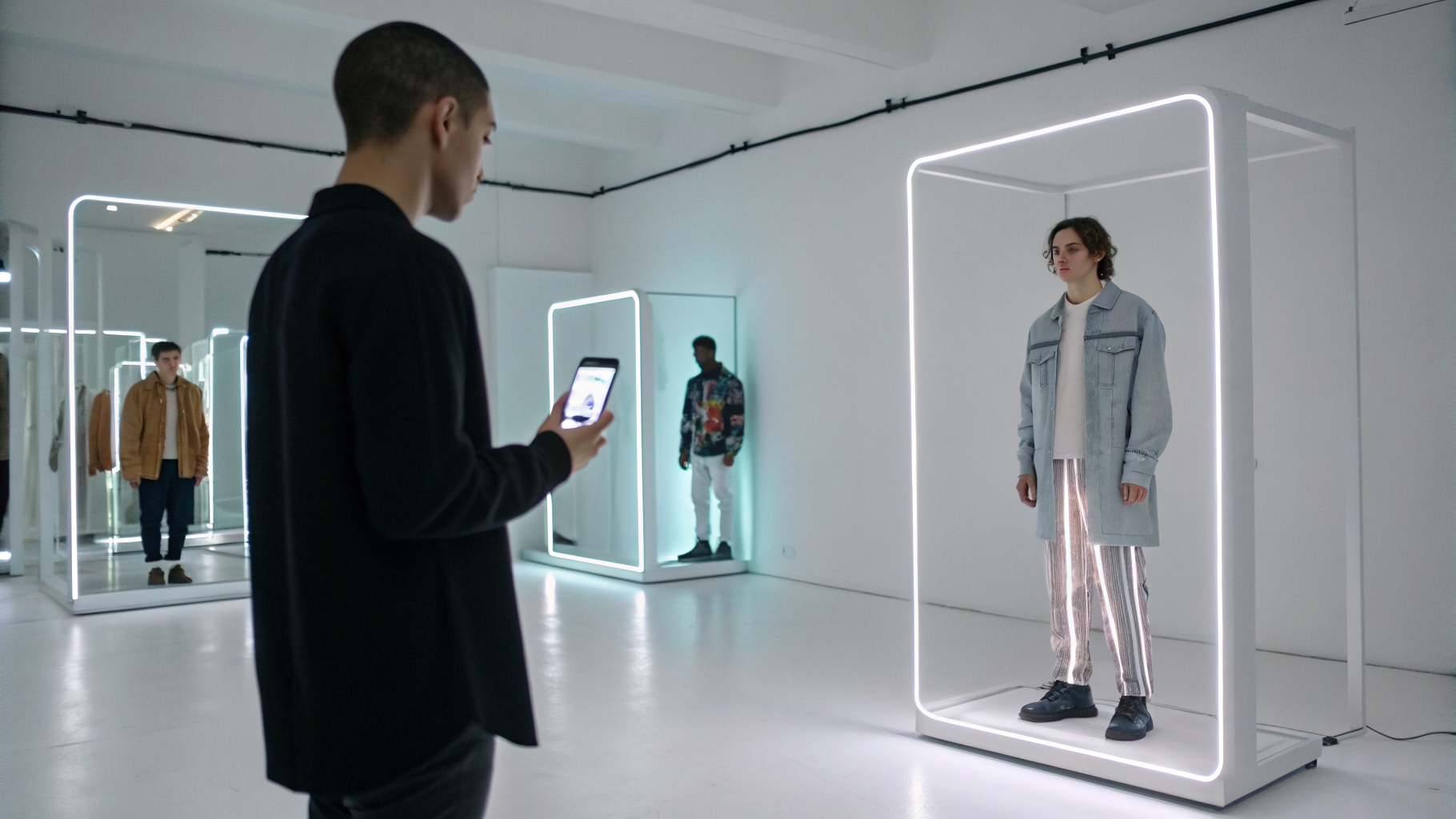
Here’s what’s happening: you upload a photo of yourself, and ChatGPT generates images of you wearing clothing and accessories. You can save the ones you like to a Favorites library. That’s it. No fancy AR overlays, no 3D body scanning, no real-time mirror. Just good old-fashioned generative AI doing what it does best—making stuff up that looks real enough to fool your group chat.
Why This Actually Matters (And Why It Doesn’t)
Let’s separate the signal from the noise. The signal: virtual try-on has been a solution in search of a problem for years. Fashion retailers love the idea because it promises fewer returns and higher conversion. But every implementation I’ve tested has been clunky, slow, or just plain weird. You end up looking like a melting wax figure. Not exactly the confidence boost you need before dropping $200 on a jacket.
Generative AI changes that equation. Instead of trying to map a 3D garment onto a 3D body in real time, ChatGPT just… draws a picture. It’s a cheat code. And honestly? It might be good enough. Most people don’t need pixel-perfect accuracy. They need a vibe check. Does this color work with my skin tone? Does this silhouette make me look like I’m wearing a potato sack? A generated image answers those questions in seconds.
The noise: this isn’t real try-on. It’s approximation. And there’s a dangerous gap between « this looks good in a generated image » and « this will look good on my actual body. » AI has a well-documented habit of making everyone look like they just stepped out of a skincare ad. It smooths, slims, and flatters in ways that reality simply doesn’t. So if you’re using this to decide whether to buy that dress, you might be setting yourself up for disappointment.
The Privacy Elephant in the Fitting Room
Now let’s talk about the thing nobody at OpenAI wants to talk about: your photos. You’re uploading pictures of yourself—full-body pictures, presumably—to a company that has already been fined for data protection violations in multiple countries. What happens to those images? How long are they stored? Are they used for training? Can you delete them? The TechCrunch piece doesn’t say, and OpenAI’s announcement is predictably vague.
I’m not saying OpenAI is doing anything nefarious. But I’ve been around long enough to know that « trust us » is not a privacy policy. And the history of virtual try-on is littered with companies that treated user photos as free training data. Remember when Amazon acquired Body Labs and everyone freaked out? Or when various AR try-on apps were caught harvesting facial data? This is a pattern, not a one-off.
What struck me here is the timing. OpenAI is under immense pressure to monetize ChatGPT. Advertising, commerce, subscriptions—they’re throwing everything at the wall. Virtual try-on is a commerce play, pure and simple. It’s designed to shorten the distance between « I like that » and « I bought that. » And the Favorites library? That’s a wishlist. A wishlist that OpenAI can use to serve you targeted ads or recommend products. It’s clever. It’s also a little gross.
What the Fashion Industry Gets Wrong About AI
I’ve talked to dozens of fashion tech founders over the years. They all say the same thing: returns are killing them. Online clothing return rates hover around 20-30%, and each return costs retailers money. Virtual try-on is supposed to fix that. But here’s the thing—it won’t. Not really.
Because the problem isn’t that people can’t imagine what they’ll look like. The problem is that clothes fit differently. A medium in one brand is a large in another. Fabric drapes differently on different body types. And no AI-generated image can account for the fact that you just ate a burrito and your waistband is feeling tight. Virtual try-on is a marketing tool, not a fit solution. It might reduce returns slightly, but it won’t eliminate them. And if OpenAI oversells this, retailers are going to be disappointed.
What I do think is interesting is the potential for styling. If ChatGPT can remember your preferences—your favorite colors, your body type, your aesthetic—it could become a genuinely useful personal stylist. Imagine asking, « What should I wear to a fall wedding? » and getting curated outfit suggestions based on clothes you already own or can buy. That’s a real value proposition. But that’s not try-on. That’s recommendation. And OpenAI is conflating the two.
The Metaverse Angle Nobody Asked For
I have to mention this because I’ve been covering the metaverse since before it was a punchline. Virtual try-on was supposed to be the killer app for digital fashion. Remember all those metaverse fashion weeks? The NFT sneakers? The digital-only clothing that sold for thousands? The pitch was always: you’ll try on clothes in virtual reality, then buy them in real life. Or buy digital versions for your avatar.
That didn’t happen. The metaverse fizzled. Digital fashion is still a niche curiosity. And now ChatGPT is doing virtual try-on in a boring old chat interface. No VR headset required. No avatar. Just you, your photo, and a generated image. It’s almost funny. The metaverse promised us a revolution and delivered a ghost town. OpenAI is promising a feature and might actually deliver something people use.
But here’s the question: does virtual try-on need to be immersive to be useful? I don’t think so. The metaverse crowd always over-indexed on immersion. They thought you needed to feel like you were in the clothes. But most people just want to see if they look fat in horizontal stripes. A 2D image does that just fine. So maybe the metaverse was never the right container for this. Maybe a chatbot is.
What OpenAI Isn’t Saying
Let’s talk about the business model. Virtual try-on is free right now, presumably as a way to get users hooked. But OpenAI is bleeding money. They need revenue. How long before try-on becomes a premium feature? How long before the Favorites library starts showing sponsored products? How long before your generated images are used to train ad-targeting models?
I’m not a conspiracy theorist. I’m just a journalist who’s watched every major tech platform do the same thing: launch a free feature, build dependency, then monetize the hell out of it. Facebook did it with the News Feed. Instagram did it with filters. OpenAI will do it with commerce. The only question is how quickly.
And what about the creators? Fashion influencers, stylists, personal shoppers—they’ve built careers on helping people figure out what to wear. ChatGPT doesn’t replace them entirely, but it does commoditize the basic version of their work. Why pay a stylist for a consultation when ChatGPT can generate 20 outfit options for free? The answer, of course, is that the stylist brings taste and context and a human eye. But most people don’t care about that. They care about cheap and fast.
The Verdict: Useful, But Don’t Trust the Hype
So where do I land on this? I think virtual try-on in ChatGPT is a smart move for OpenAI and a potentially useful tool for consumers. It’s not revolutionary. It’s not going to change the world. But it might save you from buying a shirt that looks terrible on you. That’s not nothing.
What I object to is the framing. OpenAI is positioning this as a magical solution to the problem of online shopping. It’s not. It’s a fun toy with some practical applications. And like every other AI feature, it comes with trade-offs—privacy concerns, accuracy issues, and the slow creep of commercialization.
My advice? Use it. Enjoy it. But don’t upload photos you wouldn’t want floating around the internet. And don’t expect the generated images to match reality. Because AI, for all its magic, still can’t account for the fact that you’re a human being with a body that doesn’t fit neatly into a training dataset.
Oh, and one more thing: if you’re a fashion retailer betting your margins on this, I’ve got a bridge to sell you. Virtual try-on might reduce returns slightly, but it won’t fix your fundamental problem. People return clothes because they don’t fit. And no amount of AI-generated imagery changes that. Sorry.
What to Watch Next
Keep an eye on three things. First, how OpenAI handles privacy. If they announce a clear, user-friendly data deletion policy, that’s a good sign. If they stay vague, that’s a red flag. Second, whether they open this up to third-party retailers or keep it walled off. If it’s walled off, it’s a ChatGPT feature. If it’s open, it’s a platform play. Third, how quickly the Favorites library becomes monetized. That’ll tell you everything about OpenAI’s real intentions.
I’ll be watching. And I’ll be skeptical. That’s my job.
Original source: read the full article