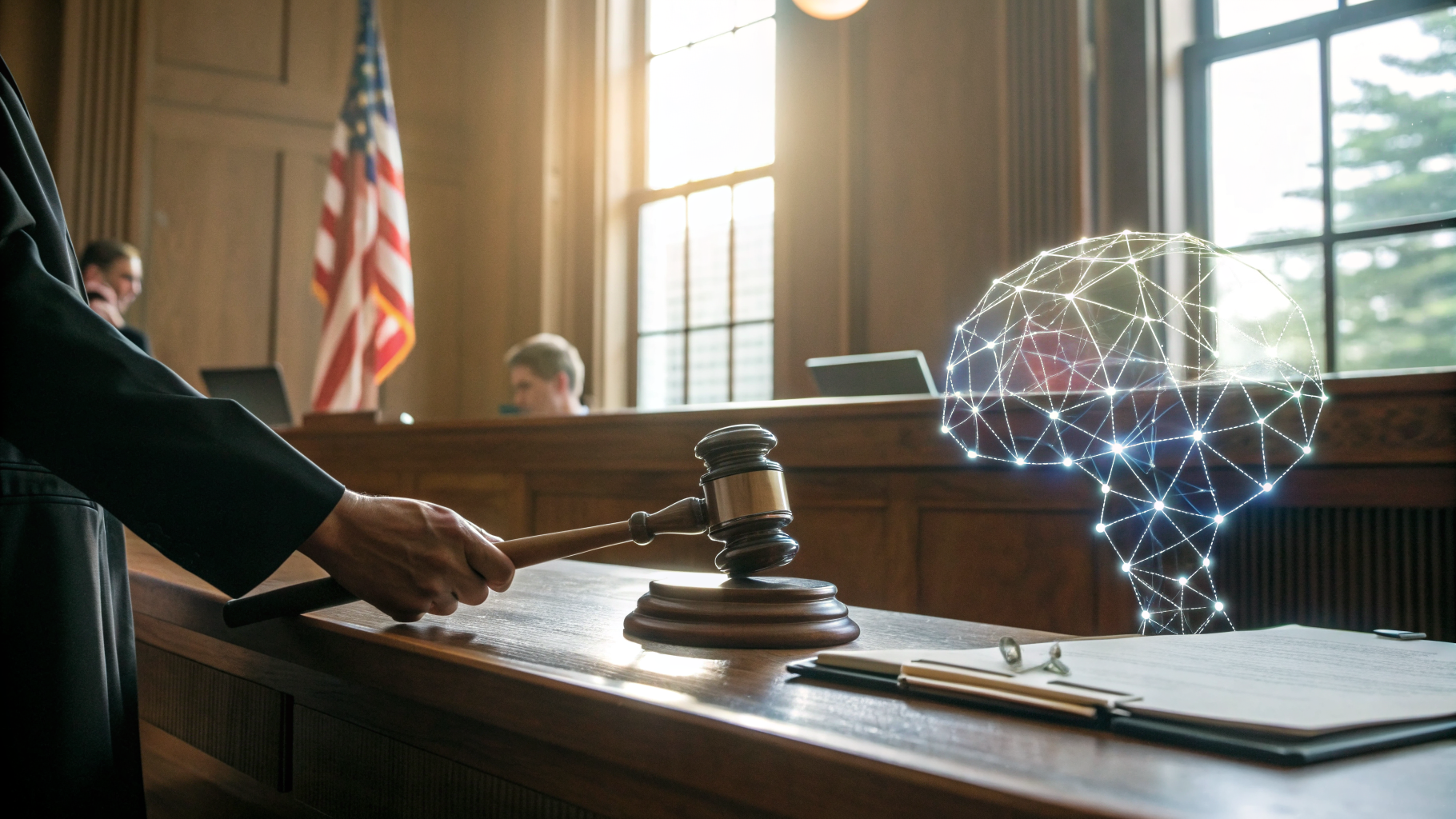
Four Nonprofits Walk Into a California Courtroom…
And no, this isn’t the setup for a bad joke. Four advocacy groups have filed suit in California demanding that OpenAI, Anthropic, Google, and other major AI developers hit the brakes on building stronger models. The claim? Their technology could cause catastrophic harm worldwide. I’ve been covering this space for over a decade, and I can’t remember a lawsuit quite like this one. It’s not about copyright infringement or data scraping. It’s about existential risk. And it’s asking a court to do something no regulator has dared: order a pause.
Let that sink in. A court order to stop training frontier models. We’re not talking about a voluntary pledge or a nice press release with a safety framework attached. This is a legal demand to freeze development. The groups behind it aren’t household names, but they’ve clearly had enough of the industry’s self-regulation theater.
The Case They’re Making
According to the Decrypt report, the four nonprofit advocacy groups allege that the technology being built by these companies could cause catastrophic harm worldwide. That’s the crux of it. Not hypothetical bias. Not job displacement. Catastrophic harm. The kind of language that makes venture capitalists nervous and safety researchers nod along.
I’ve read enough legal filings to know that proving catastrophic risk in court is a nightmare. You need evidence, expert testimony, and a judge willing to understand transformer architectures and scaling laws. But here’s the thing: the plaintiffs don’t need to win on day one. They need to shift the conversation. And they’ve already done that.
What struck me here is the timing. We’re in the middle of an arms race—OpenAI shipping new models, Anthropic pushing constitutional AI, Google integrating Gemini into everything short of my morning coffee. And now a lawsuit says: slow down. It’s a bold move. Maybe a reckless one. But it’s also the first real legal challenge to the assumption that AI development should proceed at maximum velocity.
Why This Lawsuit Feels Different
We’ve seen plenty of AI lawsuits lately. Authors suing over training data. Artists suing over style mimicry. That’s all about money and attribution. This one is about survival. Or at least the perception of it. The plaintiffs aren’t asking for royalties. They’re asking for a freeze. That’s a fundamentally different ask.
And let’s be honest: the track record of courts halting emerging tech is mixed. Judges are not technologists. They’re not equipped to evaluate whether GPT-5 could lead to a paperclip apocalypse. But they are equipped to evaluate evidence of imminent harm. The question is whether the plaintiffs can present that evidence in a way that doesn’t sound like science fiction.
I think the odds of an actual freeze are slim. Very slim. But the odds of this lawsuit forcing companies to disclose more about their safety testing? Much higher. And that might be the real goal here. Not a freeze, but transparency. A legal crowbar to pry open the black box.
The Industry’s Response (So Far)
Silence. Or at least nothing public yet. That’s typical. When you’re facing a lawsuit that accuses your product of potential global catastrophe, you don’t rush to the microphones. You call your lawyers. You craft a statement that says you take safety seriously. You emphasize your responsible scaling policies. You mention that you’ve voluntarily submitted to audits. And then you keep building.
But here’s the thing: the industry’s safety rhetoric is wearing thin. I’ve sat through countless keynotes where executives promise to ‘do the right thing’ while simultaneously cutting safety teams. The gap between words and actions has become a chasm. This lawsuit exploits that gap. It says: we don’t trust you to regulate yourselves. And honestly? Can you blame them?
What I find fascinating is that this isn’t coming from a rival company or a government agency. It’s coming from nonprofits. Grassroots advocacy. That’s a new front. And it’s one that the AI giants haven’t prepared for.
The California Factor
Why California? Because that’s where the money and the code live. OpenAI is headquartered in San Francisco. Anthropic too. Google is in Mountain View. If you want to sue AI companies, you file in California. The court system there is familiar with tech. But familiar doesn’t mean friendly. California judges have shown a willingness to entertain novel legal theories, especially when public safety is invoked.
Still, I’m skeptical. Courts move slowly. AI moves fast. By the time this case gets a hearing, the models in question might be obsolete. The companies will have shipped three new versions. The goalposts will have moved. That’s the fundamental mismatch here: legal time versus tech time. The law thinks in months. AI thinks in weeks.
Does that make the lawsuit pointless? No. It makes it symbolic. And symbols matter. They shape public opinion. They influence legislators. They give regulators cover to act. I’ve seen lawsuits that lost in court but won in the court of public opinion. This could be one of them.
What the Plaintiffs Actually Want
Let’s be clear: the groups behind this suit aren’t Luddites. They’re not asking to ban AI. They’re asking for a pause on stronger models until safety can be proven. That’s a nuanced position. It’s also a position that the industry will characterize as anti-progress. Expect the usual talking points: ‘innovation killer,’ ‘techlash,’ ‘fearmongering.’
But here’s a rhetorical question: if these companies truly believed their products were safe, why wouldn’t they welcome a pause? Why not prove it? The answer, of course, is competition. A pause is unilateral disarmament. No CEO is going to voluntarily stop while rivals keep building. That’s why the lawsuit is necessary—from the plaintiffs’ perspective. It’s the only way to make a pause collective.
I don’t envy the judge who has to weigh this. On one side: the future of a trillion-dollar industry. On the other: the possibility of catastrophic harm. That’s a lot to put on a single courtroom.
The Bigger Picture: A Reckoning for AI Hype
For years, the AI industry has sold a narrative of inevitability. AGI is coming. It will change everything. Get on board or get left behind. That narrative has been great for fundraising. It’s been less great for accountability. Because if you promise utopia, you also invite scrutiny when utopia doesn’t arrive.
This lawsuit is a symptom of that scrutiny. It’s what happens when the hype outpaces the guardrails. And it’s a warning shot. Not just to OpenAI and Anthropic and Google, but to every startup building on top of their models. The legal and regulatory environment is shifting. The era of ‘move fast and break things’ is colliding with the era of ‘prove it’s safe or don’t ship it.’
I’ve been covering VR, the metaverse, and Web3 long enough to recognize a pattern. The hype cycle peaks, then the backlash arrives. AI is in the backlash phase now. The question is whether the backlash will be proportionate or overcorrect. A court-ordered freeze would be an overcorrection. But a voluntary pause? That’s not going to happen without pressure. And this lawsuit is pressure.
What Happens Next
The case will proceed. There will be motions to dismiss. There will be amicus briefs from industry groups and safety organizations. There will be hearings that drag on for months. In the meantime, the AI giants will keep building. They have to. Their valuations depend on it.
But the conversation has changed. You can’t unring this bell. The idea that AI development might need a pause is now in the legal record. It’s in the news cycle. It’s in the minds of regulators. And that, more than any court order, might be the real victory for the plaintiffs.
I’ll be watching this one closely. Not because I think a freeze is likely, but because I think the lawsuit reveals something important: the public is no longer willing to take the AI industry’s safety promises at face value. And that’s a development worth paying attention to. The giants can ignore a blog post. They can’t ignore a subpoena.
The Final Word (For Now)
So here we are. Four nonprofits versus the most powerful AI companies on the planet. It’s a David-and-Goliath story, except Goliath has better lawyers and a bigger PR budget. Will it work? Probably not. But it doesn’t have to. It just has to make people think. And if there’s one thing I’ve learned in a decade of covering tech, it’s that ideas are harder to kill than models. The idea of an AI development freeze is now out there. Let’s see who picks it up.
Original source: read the full article