
Affordable VR Experiences: Your Guide to Exploring Immersive Worlds From Home
Introduction
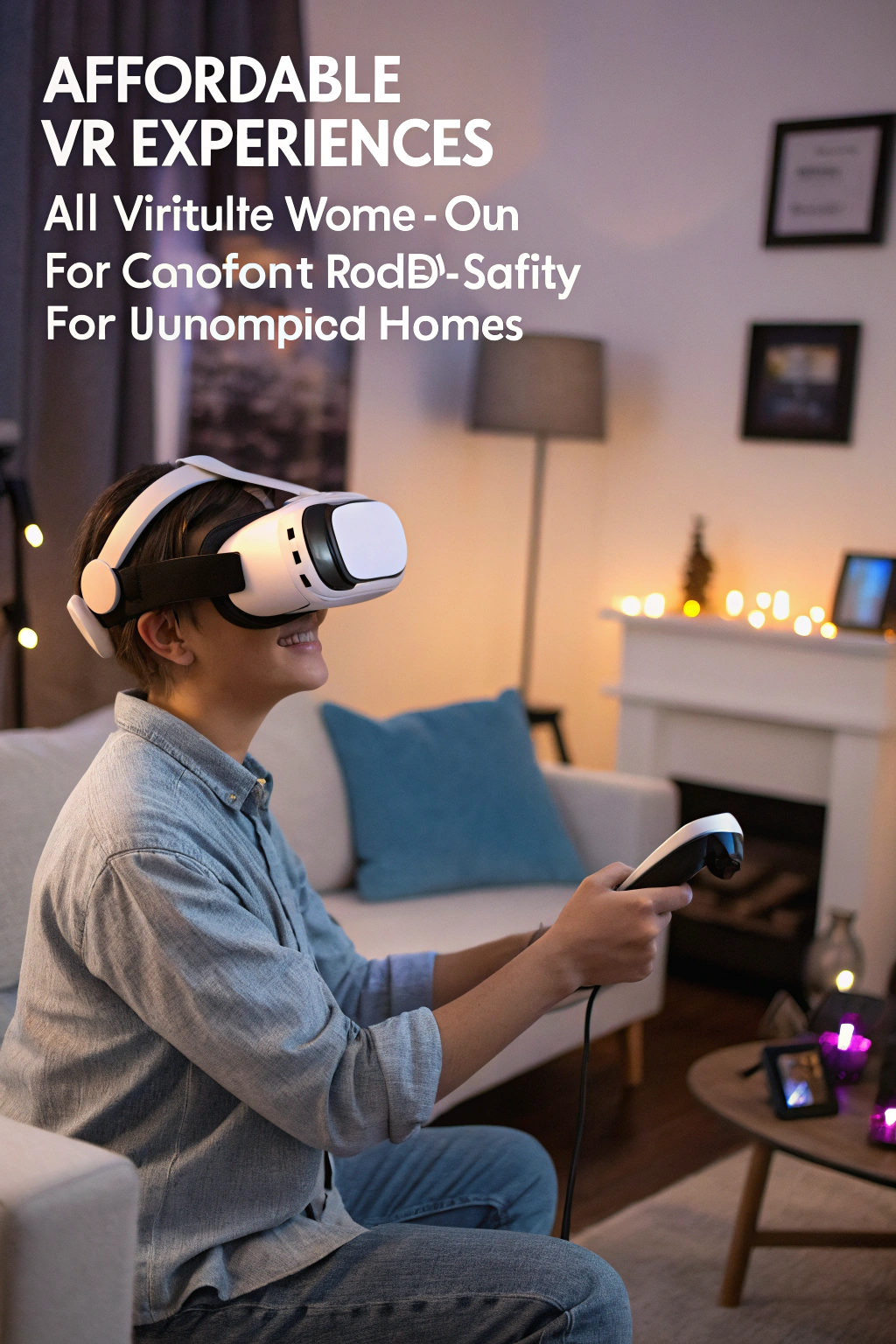
The dream of stepping into new realities is no longer confined to science fiction novels or blockbuster films. Thanks to rapid technological advancements, truly engaging and affordable VR experiences are now within reach, allowing anyone to explore vast immersive worlds directly from their living room. Forget the notion that virtual reality is a prohibitively expensive hobby; the landscape has shifted dramatically, making powerful home VR solutions more accessible than ever before. This guide will walk you through everything you need to know to start your journey into the digital frontier without breaking the bank.
The Evolution of Budget-Friendly VR
Virtual reality’s journey from a niche, high-cost technology to a mainstream consumer product has been remarkable. Early systems in the 1990s were clunky, astronomically expensive, and limited to research labs and military applications. The consumer VR revolution truly began with the Oculus Rift Kickstarter campaign in 2012, which reignited public imagination and sparked a new wave of innovation.
However, even early consumer models required powerful, expensive PCs, keeping the barrier to entry high. The real game-changer was the development of standalone headsets. Devices like the Meta Quest (formerly Oculus Quest) integrated processing, tracking, and displays into a single, untethered unit. This eliminated the need for an external computer or sensors, drastically cutting costs and complexity. As major tech publications have noted, this shift democratized access, paving the way for the current era of budget-friendly VR and turning the fantasy of accessible virtual worlds into a tangible reality for millions.
Practical Applications of Affordable VR Experiences at Home
Modern VR is far more than just a novelty. It has evolved into a versatile platform with practical applications that can entertain, educate, and improve our well-being. Here’s how you can leverage these powerful tools from home.
Immersive Gaming and Entertainment
Gaming remains the most popular gateway into virtual reality. The thrill of physically dodging projectiles in Superhot VR, slashing musical blocks in Beat Saber, or climbing epic mountains in The Climb 2 is an experience traditional gaming cannot replicate. The beauty of the current market is that many of the most popular titles are optimized for standalone headsets, meaning you don’t need a high-end PC to enjoy them. This focus on accessible performance has made budget-friendly VR gaming a vibrant and rapidly growing ecosystem.
Virtual Travel and Socializing
Ever wanted to walk the streets of Paris, explore the pyramids of Giza, or visit a space station? With apps like Wander or Brink Traveler, you can. These platforms use 360-degree imagery to let you explore real-world locations from the comfort of your home. Beyond solo exploration, social VR platforms like VRChat and Rec Room allow you to create custom avatars, meet people from around the globe, and participate in community-created games and events. These are true immersive worlds where the only limit is your imagination.
Fitness and Wellness
The idea of a “VR workout” has gone from a gimmick to a legitimate fitness category. Apps like Supernatural and FitXR transform exercise into an exhilarating game, with trainers guiding you through routines in breathtaking virtual locations. You can box, dance, or flow through a meditation session without ever feeling like you’re staring at the same four walls. These effective home VR solutions make it easier to stay motivated and consistent with your fitness goals, proving that VR can be good for both your mind and body.
Challenges and Ethical Considerations
As with any powerful technology, the rise of accessible VR brings a new set of challenges. User privacy is a major concern, as headsets and platforms can collect vast amounts of data, from physical movements to eye-tracking information. Ensuring this data is used ethically and transparently is crucial.
Digital safety is another key issue. In social VR, harassment and toxic behavior can feel intensely personal and invasive. Platform moderators and community standards are constantly evolving to combat this, but it remains a persistent problem. Furthermore, the potential for misinformation and manipulative “deepfake” environments raises ethical questions about reality and trust in the digital age. Creating safe, inclusive, and well-regulated virtual spaces is one of the most significant hurdles the industry faces.
What’s Next for Home VR Solutions?
The future of consumer VR is incredibly bright, with innovation accelerating on multiple fronts.
- Short-Term: Expect to see headsets become even lighter, more comfortable, and with higher-resolution displays that nearly eliminate the “screen-door effect.” Companies like Meta are continuously refining their standalone home VR solutions with enhanced passthrough cameras for better mixed reality experiences.
- Mid-Term: The lines between Virtual Reality (VR) and Augmented Reality (AR) will continue to blur. Devices like the Apple Vision Pro, though currently not a budget option, signal a future where we can seamlessly switch between fully immersive experiences and digital overlays on the real world.
- Long-Term: Look for breakthroughs in haptics and sensory feedback. Startups are developing full-body haptic suits, gloves that simulate touch, and even scent-generating devices to make immersive worlds feel indistinguishable from reality. Brain-computer interfaces (BCIs) may one day allow us to control virtual environments with our thoughts alone.
How to Get Involved and Explore Immersive Worlds
Jumping into VR is simpler than you think. Standalone headsets are the easiest starting point. Once you have your hardware, you can begin exploring free platforms to get a feel for what’s possible. Create an account on Rec Room or VRChat to socialize and play community games. Join online communities like the r/virtualreality subreddit to ask questions, discover new apps, and connect with fellow enthusiasts. For a deeper dive into the technologies and concepts shaping these digital frontiers, you can find a wealth of resources by exploring the metaverse and understanding its core components.
Debunking Common VR Myths
Let’s clear up a few misconceptions about modern virtual reality.
- Myth: VR is only for hardcore gamers. While gaming is a huge part of VR, it’s also a powerful tool for fitness, socializing, creative arts, virtual travel, and education. The use cases are expanding every day.
- Myth: You need a supercomputer and lots of space. This was true a decade ago. Today’s most popular headsets are completely standalone, requiring no PC. Many incredible experiences are designed to be played while seated or standing in one spot.
- Myth: The VR hardware is still too expensive. While high-end systems can cost thousands, excellent entry-level standalone headsets are now priced similarly to a new video game console, making affordable VR experiences a reality for the average consumer.
Top Tools & Resources for Your VR Journey
Ready to get started? Here are a few essential tools and platforms that offer the best value for newcomers.
- Meta Quest 3: Widely considered the gold standard for consumer VR, the Quest 3 offers an exceptional balance of performance, features, and price. Its color passthrough technology provides a fantastic mixed-reality experience, making it a versatile device for both VR and AR. It’s the quintessential example of budget-friendly VR without major compromises.
- SteamVR: This is a massive digital storefront and platform from Valve. While it caters to PC VR, it’s an essential resource for discovering the sheer breadth of available VR content. Many Quest users eventually connect their headset to a PC to access the vast SteamVR library.
- SideQuest: A community-driven platform that acts as an alternative app store for Quest headsets. It’s a treasure trove of indie games, experimental apps, and useful tools that haven’t made it to the official Meta Store. It dramatically expands what you can do with your headset.
Conclusion
The era of accessible virtual reality has arrived. Powerful, untethered, and increasingly affordable VR experiences are transforming how we play, connect, and learn. From thrilling games and virtual workouts to global social events, these immersive worlds offer endless opportunities for exploration and discovery. The technology is no longer a distant dream but a practical tool for enrichment and entertainment, ready for you to explore right now.
🔗 Discover more futuristic insights on our Pinterest!
FAQ
What is the best entry-level VR headset for beginners?
For most people starting, the Meta Quest 3 is the best choice. It offers an all-in-one package with no need for a computer, a large library of games and apps, and excellent tracking. The older Meta Quest 2 is also a fantastic, even more budget-friendly option if you can find it at a discount.
Can I use VR if I wear glasses?
Yes. Most modern VR headsets, including the Meta Quest series, come with a glasses spacer that adds extra room between the lenses and your face. For the most comfortable experience, you can also order custom prescription lens inserts that snap directly into the headset, eliminating the need to wear glasses at all.
How much space do I need for a home VR setup?
It depends on the experience. Many incredible games and apps can be enjoyed while seated or standing in a small, clear area of about 3 feet by 3 feet. For “room-scale” experiences, which allow you to walk around, a clear space of at least 6.5 feet by 6.5 feet is recommended. All modern home VR solutions have a “guardian” system that lets you draw a virtual boundary to prevent you from bumping into furniture.