
The Future of Learning: How AI-Driven Education is Revolutionizing Higher Education
Introduction
The traditional one-size-fits-all classroom model is rapidly becoming a relic of the past. In its place, a new paradigm is emerging, powered by sophisticated algorithms and machine learning. This revolution is centered on AI-driven education, personalized learning, intelligent tutors, and higher education reform. Instead of students adapting to a rigid curriculum, the curriculum now adapts to the student, creating a more effective, engaging, and equitable learning experience for everyone. This shift promises to unlock human potential on an unprecedented scale, moving beyond simple information recall to foster deep, lasting comprehension.
Background and Evolution
The concept of using technology for education is not new. From educational television in the 1950s to computer-based training in the 1980s, we have long sought ways to enhance learning. However, early iterations were often little more than digital textbooks—static, linear, and unable to adapt. The true game-changer has been the rise of artificial intelligence, particularly in the last decade. Advances in machine learning, natural language processing (NLP), and neural networks have transformed educational technology from a passive repository of information into an active participant in the learning process.
Early intelligent tutoring systems (ITS) laid the groundwork, but they were often limited to specific, rule-based domains like mathematics. Today’s AI can understand context, interpret complex student responses, generate human-like text, and even analyze emotional cues to gauge engagement. This evolution allows for dynamic learning environments that were once the exclusive domain of science fiction. As detailed by experts in the field, this technological leap is not just incremental; it represents a fundamental shift in how we approach knowledge acquisition and skill development, paving the way for truly adaptive systems. You can read more about how AI is changing the educational landscape and what it means for the future of pedagogy.
Practical Applications of AI-Driven Education
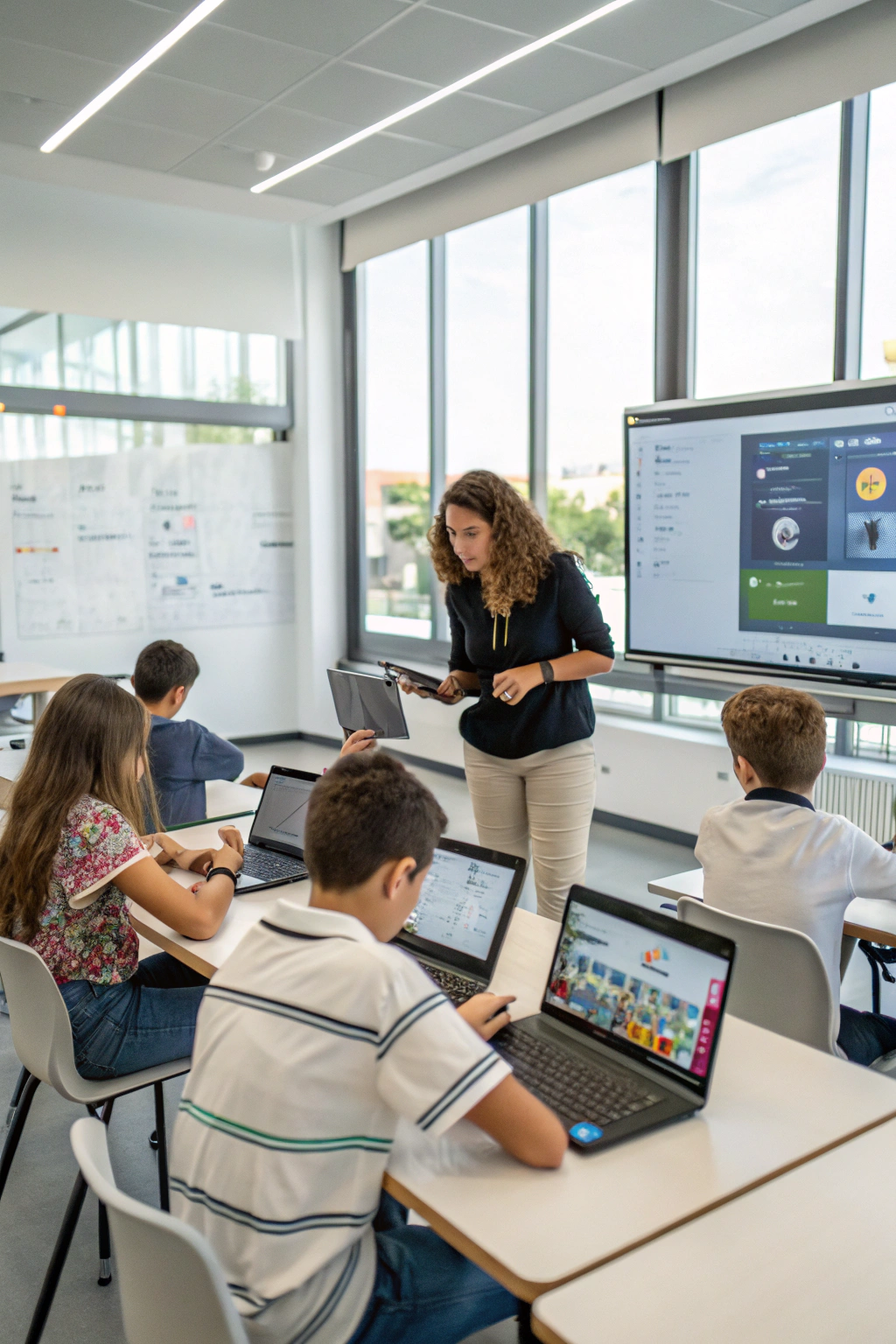
The theoretical promise of AI in education is already manifesting in practical, real-world applications that are reshaping how students learn and instructors teach, particularly within higher education.
Use Case 1: Adaptive Learning Platforms
Adaptive learning platforms are at the forefront of the personalized learning movement. These systems use AI algorithms to continuously assess a student’s performance and knowledge level in real-time. When a student struggles with a concept, the platform can automatically provide supplementary materials, such as a video tutorial, a different explanatory text, or practice problems. Conversely, if a student demonstrates mastery, the system can accelerate them to more advanced topics. This ensures that every learner is appropriately challenged, eliminating boredom for advanced students and reducing frustration for those who need more support. Platforms like Knewton and ALEKS are prime examples, creating unique learning pathways for millions of users.
Use Case 2: Intelligent Tutoring Systems (ITS)
Intelligent tutors take personalization a step further by simulating the benefits of one-on-one human tutoring. These sophisticated AI programs provide step-by-step guidance, ask probing questions, and offer tailored hints without simply giving away the answer. They are designed to understand not just whether an answer is correct, but *why* a student might have made a particular error. For subjects like computer programming, mathematics, and language learning, these systems offer scalable, 24/7 support. Carnegie Learning’s MATHia, for example, helps middle and high school students by adapting to their individual thought processes, fostering deeper conceptual understanding.
Use Case 3: Automated Assessment and Feedback
One of the most time-consuming tasks for educators is grading. AI is dramatically streamlining this process, especially for complex assignments like essays and reports. AI-powered tools like Gradescope can analyze written work, check for factual accuracy, evaluate argument structure, and provide instant, constructive feedback. This not only frees up valuable instructor time for more high-impact activities like mentoring and curriculum design but also provides students with immediate insights they can use to improve their work. This application of AI-driven education helps standardize grading and reduce potential human bias.
Challenges and Ethical Considerations
Despite its immense potential, the integration of AI in education is not without significant challenges. Navigating these ethical minefields is crucial for a successful and equitable implementation. AI bias is a primary concern; if algorithms are trained on data that reflects historical inequalities, they can perpetuate and even amplify those biases in educational settings. Student data privacy is another critical issue, as these platforms collect vast amounts of sensitive information about learning habits, performance, and behavior.
Furthermore, the digital divide creates a major barrier to access. Students without reliable internet or modern devices are left behind, exacerbating existing social and economic disparities. There is also the risk of over-automation, where a reliance on AI could diminish the development of critical thinking, creativity, and the vital social-emotional skills cultivated through human interaction. Ensuring that AI serves as a tool to augment, rather than replace, human educators is a delicate balancing act that requires careful policy and regulation.
What’s Next? The Future of Personalized Learning
The trajectory of AI-driven education points toward an even more integrated and immersive future. In the short-term, we can expect more sophisticated AI chatbots and intelligent tutors to become standard features within university learning management systems (LMS) like Canvas and Blackboard. Mid-term, we may see the rise of fully AI-generated curricula, where learning paths are created dynamically for each student based on their career goals, learning style, and existing knowledge base. Companies like Coursera are already using AI to recommend courses and build career-specific learning programs. Looking further ahead, the long-term vision involves AI-powered mentors in immersive virtual and augmented reality classrooms, creating highly realistic and interactive learning scenarios that are currently impossible to replicate.
How to Get Involved
Experiencing the benefits of AI in education is easier than ever. You can start by engaging with free platforms that leverage AI to enhance learning. Khan Academy’s AI-powered guide, Khanmigo, offers a glimpse into the future of tutoring. Language apps like Duolingo use adaptive algorithms to personalize vocabulary and grammar lessons. For those interested in the community and professional side, joining forums like Reddit’s r/EdTech or following thought leaders in the educational technology space on LinkedIn can provide valuable insights. For a deeper dive into how these technologies are shaping virtual worlds, explore the developments in the metaverse and their intersection with education.
Debunking Myths About AI in Learning
As with any transformative technology, several misconceptions have emerged around AI’s role in the classroom. Let’s clear up a few common ones:
Myth 1: AI will replace teachers.
Reality: The goal of AI in education is augmentation, not replacement. AI excels at repetitive tasks like grading and data analysis, freeing up teachers to focus on what they do best: mentoring, inspiring, and providing complex emotional and intellectual support.
Myth 2: AI is only useful for STEM subjects.
Reality: While early applications were concentrated in math and science, modern AI, especially with advancements in NLP, is incredibly effective for the humanities. It can analyze literature, provide feedback on argumentative essays, and facilitate language learning, making it a versatile tool across all disciplines.
Myth 3: Personalized learning just means students work at their own pace.
Reality: True personalized learning goes far beyond self-pacing. It involves adapting the actual content, the teaching modality (e.g., video, text, interactive simulation), and the assessment method to suit an individual student’s unique cognitive profile and learning preferences.
Top Tools & Resources
- Khanmigo: Developed by Khan Academy, this AI acts as both a Socratic-style tutor for students and a classroom assistant for teachers. It’s a leading example of how generative AI can be responsibly integrated into an educational framework.
- Gradescope: Now part of Turnitin, this tool uses AI to streamline grading for everything from bubble sheets to complex physics problems and code. Its ability to group similar answers allows for faster, more consistent feedback.
- Quizlet: A household name for flashcards, Quizlet has integrated AI to power its “Learn” and “Test” modes. It creates personalized study plans and question sequences based on a user’s confidence level with each term, optimizing memorization.
Conclusion
The integration of artificial intelligence is setting a new standard for what is possible in learning and development. Through AI-driven education, we are moving toward a future where every student in higher education and beyond can benefit from a curriculum tailored to their needs, supported by tireless intelligent tutors. While challenges in ethics and equity must be proactively addressed, the potential to unlock human intellect and foster a lifelong love of learning is undeniable. This is not just an upgrade to our existing systems; it is a fundamental reimagining of education itself.
🔗 Discover more futuristic insights on our Pinterest!
FAQ
What is an intelligent tutoring system (ITS)?
An intelligent tutoring system is a sophisticated computer program that uses AI to simulate a one-on-one human tutor. It provides personalized instruction, delivers targeted feedback, and guides a student through a learning process by adapting to their specific actions, mistakes, and knowledge level.
How does AI create a personalized learning experience?
AI achieves personalization by collecting and analyzing a vast array of data points as a student interacts with a learning platform. It tracks correct and incorrect answers, time spent on tasks, concepts that cause hesitation, and preferred content formats. Using this data, the AI algorithm identifies knowledge gaps and strengths to dynamically adjust the difficulty, sequence, and type of content presented to the learner.
Is AI-driven education accessible to everyone?
Currently, accessibility remains a significant challenge. The “digital divide”—disparities in access to high-speed internet and modern computing devices—prevents equitable distribution. The high cost of developing and implementing these advanced systems, along with the need for teacher training, are also major hurdles. However, open-source initiatives and scalable, lower-cost solutions are emerging to help bridge this gap.