
The Airborne Electric Motorcycle: Sky-High Hype or the Future of Travel?
Introduction
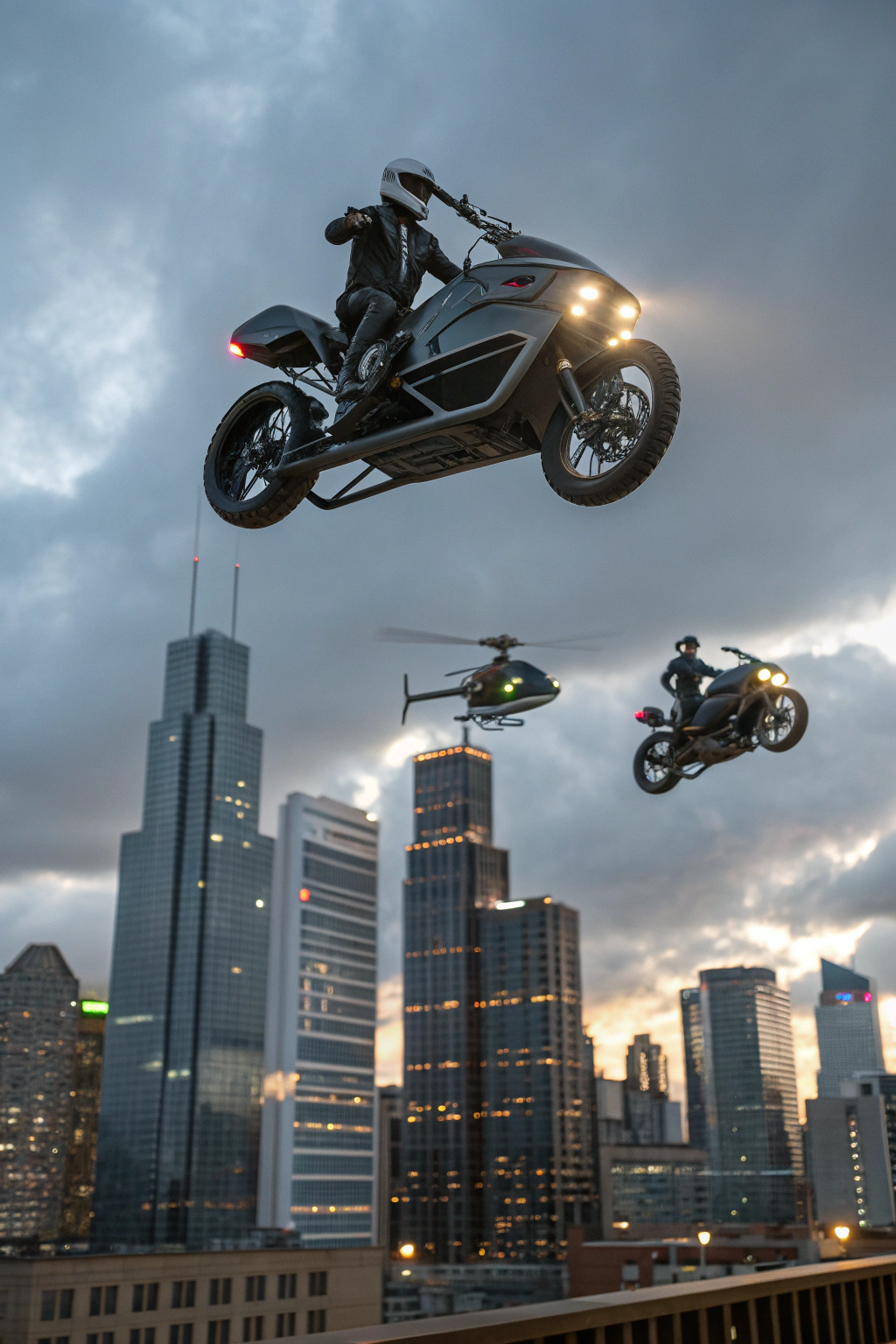
The dream of personal flight, once confined to science fiction, is rapidly approaching reality. Forget jetpacks and flying cars from vintage cartoons; the modern contender for this revolution is the airborne electric motorcycle. This new class of vehicle combines the agility of a motorcycle with the vertical takeoff capabilities of a drone, promising a new dimension of personal mobility. But as prototypes take to the skies, we must ask: are these flying electric bikes a revolutionary transport solution or an overhyped novelty for the ultra-rich?
Background and Evolution of Flying Bikes
The concept of an airborne electric motorcycle didn’t emerge from a vacuum. It stands on the shoulders of decades of technological advancement in three key areas: electric propulsion, battery technology, and autonomous flight systems. Early attempts at personal flying machines were often bulky, loud, and inefficient, relying on combustion engines. The game-changer was the maturation of drone technology.
The proliferation of commercial and hobbyist quadcopters proved the viability of distributed electric propulsion (DEP). Using multiple small, powerful electric motors and rotors offers superior stability, control, and redundancy compared to a single large engine. Concurrently, advancements in lithium-ion battery energy density made it possible to store enough power in a compact, lightweight form factor to lift a human. As detailed in numerous expert analyses of the eVTOL industry, these converging technologies created the perfect storm for developing personal aerial vehicles, with the hoverbike a leading form factor.
Practical Applications for the Airborne Electric Motorcycle
While the vision of skies bustling with flying motorcycles is still distant, several practical and high-impact applications are emerging as the most likely entry points for this technology.
Use Case 1: Emergency and First Response
In disaster scenarios like earthquakes, floods, or wildfires, ground infrastructure is often compromised, making it difficult for responders to reach victims. An airborne electric motorcycle could provide a single paramedic or scout with the ability to bypass impassable terrain, deliver critical medical supplies, and assess situations from the air long before larger vehicles or helicopters can be deployed. Its smaller footprint allows it to land in confined spaces inaccessible to traditional aircraft.
Use Case 2: Recreational and Adventure Tourism
Imagine flying over a pristine canyon, a dense rainforest, or a remote coastline without the noise and disruption of a helicopter tour. Flying electric bikes could unlock a new market for high-end, eco-conscious adventure tourism. Guided aerial tours in designated scenic areas would offer unparalleled experiences, giving riders a sense of freedom and a unique perspective on the natural world, all with a significantly lower carbon footprint than conventional aircraft.
Use Case 3: Niche Urban and Rural Mobility
For high-net-worth individuals or executives, an airborne electric motorcycle could serve as the ultimate solution for short-distance “air taxi” commutes, bypassing city traffic entirely. In rural settings, it could be a game-changer for ranchers checking on remote herds or for technicians accessing difficult-to-reach infrastructure like wind turbines or remote cell towers. This type of personal aerial vehicle would serve specific, high-value transit needs where time is of the essence.
Challenges and Ethical Considerations
The path to mainstream adoption is fraught with significant hurdles. The primary challenge is regulation. Airspace is already a complex, highly controlled environment. Integrating thousands of low-altitude personal vehicles requires a revolutionary approach to air traffic management, including sophisticated geofencing, collision avoidance systems, and standardized pilot licensing protocols.
Safety is paramount. What happens in the event of a battery failure, a motor malfunction, or a bird strike? While designs incorporate redundancy, the risk of a catastrophic failure at altitude is a serious concern that demands rigorous testing and certification. Noise pollution is another factor; a fleet of these vehicles could create a constant, unpleasant hum over urban areas. From an ethical standpoint, the potential for misuse in surveillance or bypassing security perimeters raises significant privacy and security questions that society has yet to address.
What’s Next? The Future of Aerial Mobility
The journey of the airborne electric motorcycle is just beginning. Innovators are pushing the boundaries of what’s possible, moving from concept to tangible prototype.
- Short-Term (1-3 years): We will see more advanced and refined prototypes from companies like Jetson, Lazareth, and Mayman Aerospace. These will primarily be used for flight testing, public demonstrations, and securing regulatory approvals within controlled “sandbox” environments.
- Mid-Term (4-8 years): The first commercial applications will likely launch in highly controlled settings. Expect to see them offered as recreational experiences in places like Dubai or Las Vegas, or used for specific industrial purposes. They will remain an ultra-niche, high-cost product.
- Long-Term (10+ years): If the technology proves safe and scalable, and if regulatory frameworks can be established, the airborne electric motorcycle could become a small but significant part of the wider Urban Air Mobility (UAM) ecosystem. However, it’s more likely to remain a specialist vehicle rather than a replacement for cars.
How to Get Involved and Learn More
The development of personal aerial vehicles is a fascinating field to follow. You don’t need to be an aerospace engineer to stay informed. Online communities are buzzing with news and discussions about the latest breakthroughs. Platforms like the r/eVTOL subreddit, the Vertical Flight Society forums, and various drone enthusiast groups are excellent places to watch this technology evolve in real time. To see how this fits into the bigger picture, you can explore the future of technology and its impact on our world.
Debunking Common Myths About Flying Motorcycles
As with any futuristic technology, the hype surrounding the airborne electric motorcycle has generated a few persistent myths.
- Myth: They will be everywhere next year.
Reality: The technological, regulatory, and financial barriers are immense. Widespread public adoption is at least a decade away, if not more. Early models will be prohibitively expensive and restricted to specific use cases.
- Myth: Anyone can fly one with no training.
Reality: These are sophisticated aircraft. Operating one will undoubtedly require a new class of pilot’s license, involving extensive theoretical knowledge, simulator training, and practical flight assessments to ensure safety.
- Myth: They are silent because they’re electric.
Reality: While quieter than a helicopter, the sound of multiple high-RPM propellers moving vast amounts of air is substantial. The acoustic signature will be a major design and regulatory consideration, especially in urban areas.
Top Tools & Resources for eVTOL Enthusiasts
- The Vertical Flight Society’s World eVTOL Aircraft Directory: This is the most comprehensive database available for tracking every known electric vertical takeoff and landing aircraft project, from major corporations to small startups. It’s an invaluable resource for separating real engineering from press releases.
- Flight Simulators (X-Plane 12, Microsoft Flight Simulator): Many developers are creating eVTOL and flying bike add-ons for major flight simulators. These provide an accessible way to understand the unique flight dynamics and control challenges of these vehicles.
- B4UFLY App: Developed in partnership with the FAA, this app is essential for any drone pilot and provides a glimpse into the future of airspace management. It shows no-fly zones and other restrictions, which will be critical for any personal aerial vehicle operator.
Conclusion
The airborne electric motorcycle represents a thrilling convergence of design and technology, embodying our long-held desire for personal freedom in three dimensions. While it faces a turbulent journey through regulatory, safety, and economic challenges, its potential in specialized applications is undeniable. It may not be the flying car in every garage that science fiction promised, but the evolution of the hoverbike is a powerful symbol of human innovation reaching for the sky. It is a tangible step toward a future where our mobility is no longer bound to the ground.
🔗 Discover more futuristic insights on our Pinterest!
Frequently Asked Questions (FAQ)
How much does an airborne electric motorcycle cost?
Currently, the first consumer-oriented models entering the market, such as the Jetson ONE, are priced around $98,000. However, this is for an experimental kit vehicle. More advanced, certified models in the future will likely cost significantly more, placing them firmly in the luxury vehicle or specialist equipment category for the foreseeable future.
Are flying motorcycles like these legal to fly?
As of now, they operate in a legal gray area. In the United States, some lightweight models may fall under FAA Part 103 ultralight regulations, which don’t require a pilot’s license but restrict flight to uncongested areas. However, this is not a long-term solution. Comprehensive regulations for licensing, vehicle certification, and airspace integration are currently being developed but do not yet exist for widespread public use.
What is the difference between an eVTOL and an airborne electric motorcycle?
eVTOL (electric Vertical Takeoff and Landing) is a broad category of aircraft that includes everything from large air taxis designed to carry multiple passengers to unmanned delivery drones. An airborne electric motorcycle is a specific *type* of personal eVTOL, characterized by its motorcycle-like form factor, single-occupant design, and “ride-on” posture. It’s one of the most popular concepts within the personal eVTOL space.