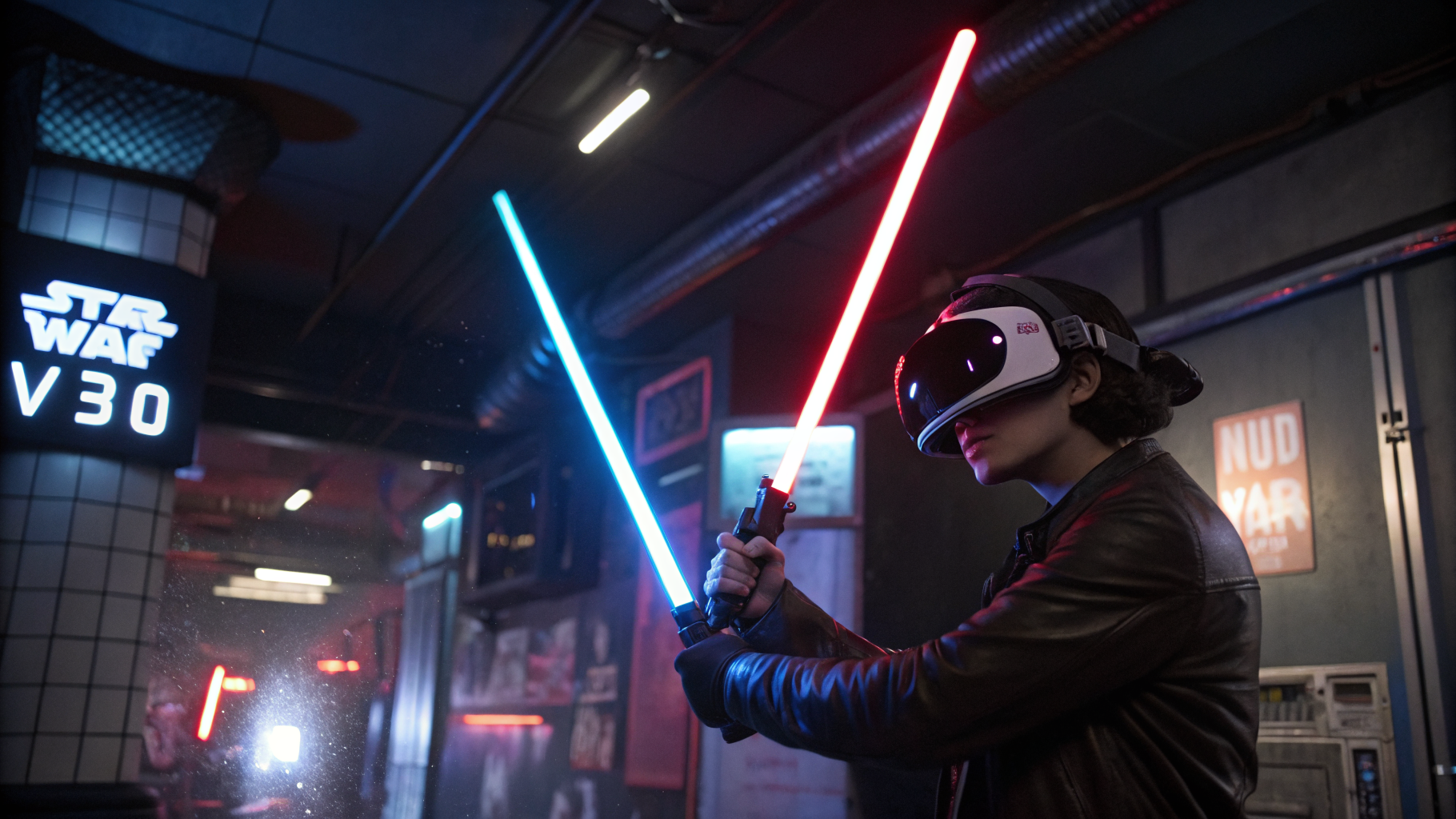
I’ll be honest: when I first strapped on a PlayStation VR headset in 2018 and watched those neon blocks come flying at my face in Beat Saber, I thought it was a fun party trick. A clever gimmick. Something you’d show your friends at a holiday gathering, then never touch again.
Eight years later, here we are. Beat Saber is still the undisputed heavyweight champion of VR gaming, and Meta just tossed out three free tracks to celebrate its birthday. The update, live now on Quest and SteamVR, includes ‘Phantom Fangs’ from Zakka G, ‘KILLSHOT’ from Boom Kitty x MDK, and another track from Astral that I’ll get to in a moment.
Let’s not kid ourselves: three songs is not a content drop that moves markets. But it’s a gesture. And in the weird, stop-start world of VR — where hardware gets axed, metaverse pivots happen quarterly, and every company seems desperate to find the next Pokémon Go — a gesture of consistency actually means something.
The Tracks: More Tech-Dance Bass, Because Of Course
Zakka G’s ‘Phantom Fangs’ is the kind of track that makes you feel like you’re slicing through a cyberpunk fever dream. It’s fast, it’s bass-heavy, and the beat mapping is tight enough that you’ll probably curse the first time you miss a downward red block in the chorus. Boom Kitty and MDK’s ‘KILLSHOT’ is, as the name suggests, more aggressive. Think dubstep meets industrial — the kind of thing you’d hear in a trailer for a dystopian Netflix anime.
Astral’s contribution rounds out the trio. I won’t pretend I’d listen to any of these on my morning commute. But that’s not the point. Beat Saber tracks are designed for one thing: making you feel like a Jedi who also really loves EDM. And on that front, these three deliver.
What struck me here is how little the formula has changed. The blocks still come in red and blue. You still swing with two lightsabers. The scoring system still rewards precise wrist-flicking over wild arm flailing. Eight years, and the core loop is almost untouched. In an industry obsessed with reinvention, there’s something quietly radical about that.
Eight Years in VR Time Is a Lifetime
Think about what else was happening in VR back in 2018. The Oculus Go was still a thing. HTC Vive was selling for a thousand dollars. PlayStation VR had just hit two million units and everyone called that a triumph. The original Half-Life: Alyx was still a rumour. And the word “metaverse” meant something people in Second Life forums muttered to each other.
Since then, we’ve watched Google shut down Daydream. We’ve seen Microsoft abandon Windows Mixed Reality. We’ve endured the great crypto-metaverse gold rush of 2021–2022 — a period I’d rather not revisit, but one that left a lot of burned investors and broken promises. Through all of that, Beat Saber just kept selling. Quietly. Relentlessly.
I think that’s worth pausing over. A lot of VR’s narrative has been about failure: too expensive, too niche, too isolating. And sure, those critiques have merit. But Beat Saber is the counterargument that won’t shut up. It’s the game that survived the hype cycle because it never needed the hype. It just needed you to swing.
Meta knows this. They bought Beat Games in 2019, and since then they’ve been careful not to mess with the formula too much. There have been DLC packs — from Linkin Park to Lady Gaga — and the occasional multiplayer update. But the core experience is sacred. You don’t fix what isn’t broken, especially when what isn’t broken is the single most popular VR game of all time.
The Elephant in the Room: Meta’s VR Strategy
I can’t write about Beat Saber’s eighth anniversary without acknowledging the context. Meta has spent billions on VR and AR, and the returns have been… complicated. The Quest 2 was a genuine success — maybe the most successful VR headset ever — but the Quest Pro flopped. Horizon Worlds is still a punchline. And the company’s pivot toward “mixed reality” feels like an admission that pure VR might not have the mass-market legs they hoped for.
But Beat Saber remains. It’s the one thing in Meta’s VR portfolio that nobody questions. Not the gamers who complain about Facebook accounts. Not the developers who worry about platform lock-in. Not even the pundits who declared the metaverse dead six times before breakfast. You put someone in a headset, hand them two glowing sabers, and within thirty seconds they’re grinning like an idiot. That’s not a technology problem. That’s a miracle.
So when Meta drops three free tracks for an eight-year-old game, I don’t see it as a marketing stunt. I see it as a quiet acknowledgment: this is the thing that works. Keep it alive. Keep it healthy. Don’t let it become a footnote while you chase the next shiny object.
What the Update Actually Feels Like
I played through all three tracks on a Quest 3 last night. The first thing I noticed is how smooth the performance is. Eight years ago, playing Beat Saber on an original Oculus Rift meant occasional frame drops during dense note sequences. Now, on Quest 3, it’s buttery. The tracking is flawless. The haptics in the controllers are precise enough that you can feel the difference between a good cut and a perfect cut.
The difficulty curve on the new tracks is interesting. ‘Phantom Fangs’ starts deceptively simple — slow, almost gentle — before ramping into a chaotic second half that had me sweating. ‘KILLSHOT’ is more consistent; it’s fast from the first beat and stays there. I’d put it in the “expert” category, but not the “expert+” territory where you need to be part cyborg to survive.
Astral’s track is the most melodic of the three. It’s still electronic, but with more space between the beats. That actually makes it harder in a way — the gaps mess with your rhythm if you’re used to constant stimulation. I missed more notes on that track than the others, which is either a compliment to the design or an indictment of my reflexes. I’ll let you decide.
What I appreciate is that none of these tracks feel like filler. Free DLC often comes across as a half-hearted gesture — something tossed together to check a box. But these songs have real choreography behind them. You can tell someone spent time thinking about where the blocks should go, how they should flow, what kind of movement patterns they’d create. That’s craftsmanship. And in a world of AI-generated slop, craftsmanship is worth celebrating.
The Uncomfortable Truth About VR’s Killer App
Here’s something I don’t say often: Beat Saber might be the best thing that ever happened to VR, and also the worst. Best because it gave the medium a killer app — something that justifies the hardware purchase for millions of people. Worst because it set an impossible standard. Every new VR game gets compared to Beat Saber. And almost every one of them loses.
How do you compete with a game that costs twenty dollars, runs on everything, and makes anyone who plays it feel like a superhero? You don’t. You can’t. And so VR development has spent the last eight years trying to find other genres that work — shooters, puzzle games, social experiences — while Beat Saber sits at the top of the sales charts, unchallenged.
Is that healthy for the ecosystem? I’m not sure. On one hand, it’s a reliable anchor. Developers know that Quest owners have Beat Saber, so they can build experiences that complement it rather than compete with it. On the other hand, it creates a kind of creative monoculture. How many rhythm games have tried to dethrone Beat Saber? Synth Riders. Pistol Whip. Ragnarock. All good games. None of them came close.
Maybe that’s fine. Maybe VR doesn’t need a new killer app every year. Maybe it’s okay to have one game that just works, forever, and let everything else be niche. I don’t know. I go back and forth on this. But when I was playing ‘KILLSHOT’ last night, arms sore, grinning like I did in 2018, I stopped worrying about it.
The Broader Picture: What Eight Years Means
Eight years is a long time in consumer technology. The iPhone was only four years old when Beat Saber launched. Netflix was still mailing DVDs to some people. TikTok didn’t exist. If you told someone in 2018 that we’d still be talking about a VR rhythm game in 2026, they’d have laughed. VR was supposed to be a fad. A temporary amusement. A thing people tried once and forgot.
And yet here we are. Beat Saber has outlasted multiple console generations. It has outlasted the hype cycles of crypto, the metaverse, and AI-generated everything. It has outlasted the companies that tried to copy it. It’s still here, still getting updates, still making people happy.
I don’t think that’s because the technology is perfect. It’s not. Headsets are still too bulky, battery life is still too short, and the social stigma of wearing a brick on your face hasn’t fully faded. But Beat Saber succeeds because it doesn’t ask you to care about the technology. It asks you to care about the experience. And the experience is simple, immediate, and deeply satisfying.
In a tech industry that loves complexity — AI models, blockchain layers, spatial computing frameworks — Beat Saber is a reminder that simplicity wins. Not because it’s easy, but because it’s honest. The game doesn’t pretend to be more than it is. It’s a block-slashing rhythm game. That’s it. And it’s enough.
Final Thoughts: Should You Care About Three Free Tracks?
If you’ve never played Beat Saber, three free tracks won’t change your mind. Go buy the base game, play it for an hour, and you’ll understand why people are still talking about it. If you already own it, these tracks are a nice bonus — a birthday gift from a game that doesn’t need to give you anything but keeps giving anyway.
What I find remarkable is not the tracks themselves. It’s the fact that Beat Saber is still being actively developed eight years later. That’s almost unheard of in VR. Most games get abandoned after a year. Some don’t even make it that long. But Beat Saber keeps going, because it’s not just a game — it’s the foundation of an entire platform.
So happy birthday, Beat Saber. You’re the old reliable friend who never lets us down. And if Meta ever tries to ruin you with a subscription model or a blockchain integration, I swear I’ll write the angriest blog post this site has ever seen.
Until then, I’ll keep swinging.
Further Reading
Original coverage: ‘Beat Saber’ Turns 8, Bringing 3 New Free Tracks to VR’s Favorite Block-slashing Rhythm Game — Road to VR
Original source: read the full article