I’ll be honest with you: when I first heard that the blade runner dead daylight connection was real, I had to sit down for a second. Behaviour Interactive, the studio that made a fortune out of stabbing teenagers in the dark with Dead by Daylight, is now taking on Blade Runner. Let that sink in for a moment. The pairing feels either brilliantly inspired or completely unhinged — and honestly, I’m leaning toward intrigued. If you’d told me a year ago that the team behind a chaotic multiplayer horror game would be stepping into the rain-soaked, neon-lit world of Philip K. Dick’s dystopia, I’d have laughed. But here we are, and I’m genuinely curious to see if they can pull it off.
The announcement landed this week with the kind of corporate precision that makes a cynical journalist raise an eyebrow. Behaviour, Alcon Entertainment (the rights holders who actually know what to do with the IP, unlike some other studios I could name), and PHI Studio — the Montreal-based team behind the fairly impressive Space Explorers: THE INFINITE — are collaborating on a location-based VR experience set to hit “VR destinations” sometime next year. No, it’s not a game you can play at home on your Quest 3. Not yet, anyway. This is a destination experience. You know the drill: you put on a backpack PC, strap on a headset, and walk through a physical space that’s been mapped into a virtual one. Like The Void, if you remember that, but hopefully less vomit-inducing. I have questions. Lots of them. And I suspect you do too.
What We Actually Know — and What We Don’t
Let’s start with the facts, because they’re thin on the ground. Behaviour Interactive is developing the experience. Alcon is providing the IP. PHI Studio is co-producing, bringing their location-based VR expertise to the table. The experience will be “immersive,” which in 2024 means you’ll probably walk around, interact with objects, and maybe — if we’re lucky — feel like you’re actually in the rain-soaked, neon-drenched streets of Los Angeles, 2019. Or 2049. Or whenever this thing is set. The official press release is maddeningly vague on details like plot, characters, or whether we’ll get to play as a Blade Runner or just wander around looking at flying cars. I’m hoping for the former. I’ll settle for the latter if the atmosphere is right.
But here’s what gets me excited: the studio knows horror. Dead by Daylight is a masterclass in tension, in the slow build of dread, in the moment when you realize you’re being hunted. And Blade Runner is, at its core, a horror story. It’s about the fear of being replaced, the horror of not knowing if you’re real, the existential dread of a world that’s decaying around you. If Behaviour can translate that into a VR experience — if they can make you feel like you’re being stalked through the rain by a replicant, or like you’re the one doing the stalking — then we might have something special on our hands.
Why the Blade Runner Dead Daylight DNA Actually Makes Sense
Let me get into the blade runner dead daylight connection a bit more, because I think it’s the key to understanding why this might work. Dead by Daylight is all about asymmetry. One player is the killer, everyone else is the survivor. The power dynamic shifts constantly. You’re either running or chasing, and the tension comes from not knowing which role you’ll end up in. That’s Blade Runner to a T. Deckard is a hunter, but he’s also a hunted man. The replicants are prey, but they’re also predators. The whole movie is a game of cat and mouse where the lines blur. Who’s the real monster? Who’s the victim? That’s exactly the kind of moral ambiguity Behaviour excels at.
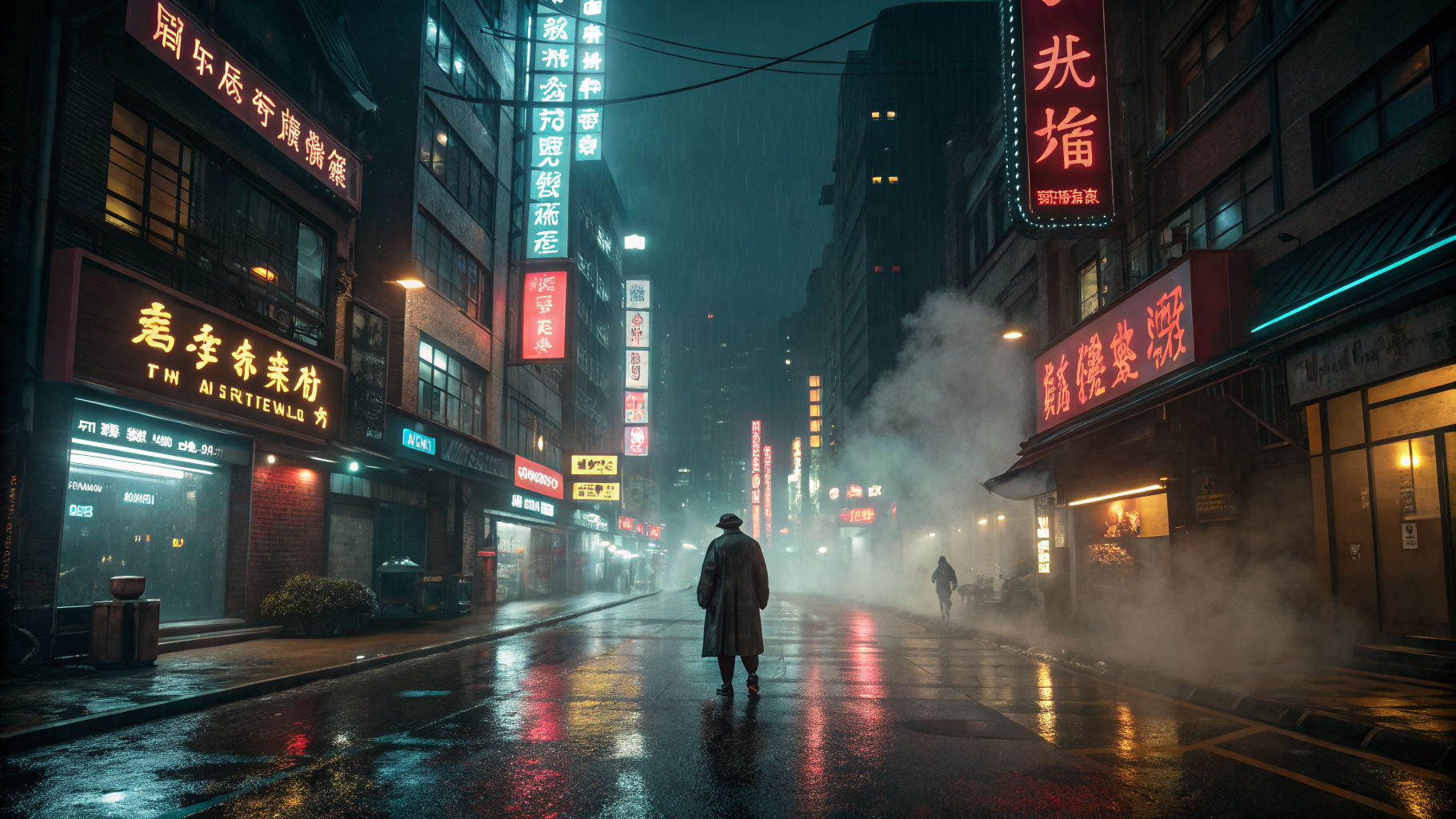
Plus, let’s talk about atmosphere. Dead by Daylight has some of the most oppressive, moody environments in gaming. The fog, the flickering lights, the sense that something is always lurking just out of sight. That’s basically Blade Runner in a nutshell. The movie is famous for its rain-slicked streets, its neon signs bleeding into the darkness, its claustrophobic interiors. If Behaviour can capture even a fraction of that in VR, we’re in for a treat. I’m imagining standing in a dimly lit alley, the sound of rain on concrete, a distant hovercar humming overhead, and then — footsteps. Heavy, deliberate footsteps. Coming closer. Your heart starts pounding. That’s the blade runner dead daylight magic I’m hoping for.
What About the Tech?
Location-based VR is a tricky beast. I’ve tried a few of these experiences over the years — The Void’s Star Wars thing, a zombie shooter in a warehouse — and they range from mind-blowing to nauseating. The good ones make you forget you’re wearing a backpack. The bad ones make you want to rip the headset off and find a bench. PHI Studio has a decent track record with Space Explorers, which was a beautiful, if slightly passive, tour of the International Space Station. But Blade Runner needs to be active. It needs to be tense. It needs to make you feel like you’re in danger, even though you’re just standing in a room with foam walls and a bunch of haptic vests.
The biggest challenge? Scale. Blade Runner is about a city that never sleeps, a sprawling metropolis of towering spires and crowded streets. Can a location-based experience, limited by physical space, really do that justice? Or will we be stuck in a single room, interacting with a few props and calling it a day? I’m cautiously optimistic. The team at Behaviour is smart. They know that immersion is about more than just graphics — it’s about sound, about lighting, about the way a space makes you feel. If they can nail that, I don’t care if I’m only walking through three rooms. I’ll believe I’m in LA.
The Big Question: Is This for Fans or Tourists?
Here’s where I get a little worried. Location-based VR experiences are expensive to produce and even more expensive to visit. We’re talking $30–$50 per person, per session, and you’ll probably need to travel to a specific city to try it. That’s a high barrier for entry. So who is this for? Hardcore Blade Runner fans who’ve memorized every line of dialogue and own three different versions of the movie? Or casual tourists looking for a cool thing to do on a weekend? The answer probably lies somewhere in the middle, but I hope Behaviour doesn’t dumb it down. I want deep cuts. I want references to the origami unicorn. I want to hear Roy Batty’s “tears in rain” speech echo through a virtual corridor. I want the experience to reward fans, not just serve as a theme park ride.
That said, if it’s done right, this could be a gateway for a whole new generation to discover Blade Runner. Imagine a 15-year-old putting on a headset, walking through a replicant’s apartment, and feeling that existential dread for the first time. They might go home and watch the movie. They might read the book. They might fall in love with cyberpunk noir the way I did when I first saw it on a grainy VHS tape in the ’90s. That’s powerful. That’s the kind of cultural impact VR needs.
- blade runner dead daylight : point clé à retenir
- Fonctionnement et avantages concrets
- Conseils pratiques et mise en œuvre
- Erreurs fréquentes à éviter
What I’m Actually Hoping For
Look, I’m a cynic by trade. I’ve seen too many IPs get butchered by studios who don’t understand the source material. But something about this feels different. Behaviour Interactive isn’t a AAA studio trying to cash in on nostalgia. They’re a mid-sized team with a track record of taking risks and making weird, memorable games. Dead by Daylight is still going strong after years because they listen to their community and they keep iterating. If they bring that same energy to Blade Runner, we could get something truly special.
I want to walk through the rain. I want to see a neon sign flicker and die. I want to hear the hum of an ESPER machine. I want to feel the weight of a blaster in my hand. I want to question whether the person I’m talking to is human or something else. I want that moment of silence before the chase begins. That’s the blade runner dead daylight promise — the tension between hunter and hunted, between reality and illusion, between light and shadow. If Behaviour can deliver that, I’ll be the first in line. Backpack PC and all.
So here’s my take: keep an eye on this one. It could be a disaster. It could be the best VR experience of the decade. But either way, it’s going to be interesting. And in a world of safe bets and endless sequels, interesting is exactly what we need.