The Hidden Cost of Our AI Obsession: Understanding Data Centers Impact Caché
Let me tell you about the moment I truly understood the data centers impact caché—the hidden cost of our tech obsession. I was sitting in a cramped coworking space, listening to a startup founder vent about his cloud bill. « We’re bleeding money on servers, » he said, rubbing his temples. « And every time we try to add an AI feature, the costs double. » I nodded, but inside, I was thinking about something else entirely. That morning, I’d read a report about a new data center complex being built in the middle of a drought-stricken region. The article mentioned water consumption in the millions of gallons per day—just to keep the servers cool. Suddenly, his cloud bill felt like the least of our problems. We’re all chasing the next big thing in AI, but nobody wants to talk about the physical infrastructure making it possible. That’s the data centers impact caché, and it’s time we pulled back the curtain.
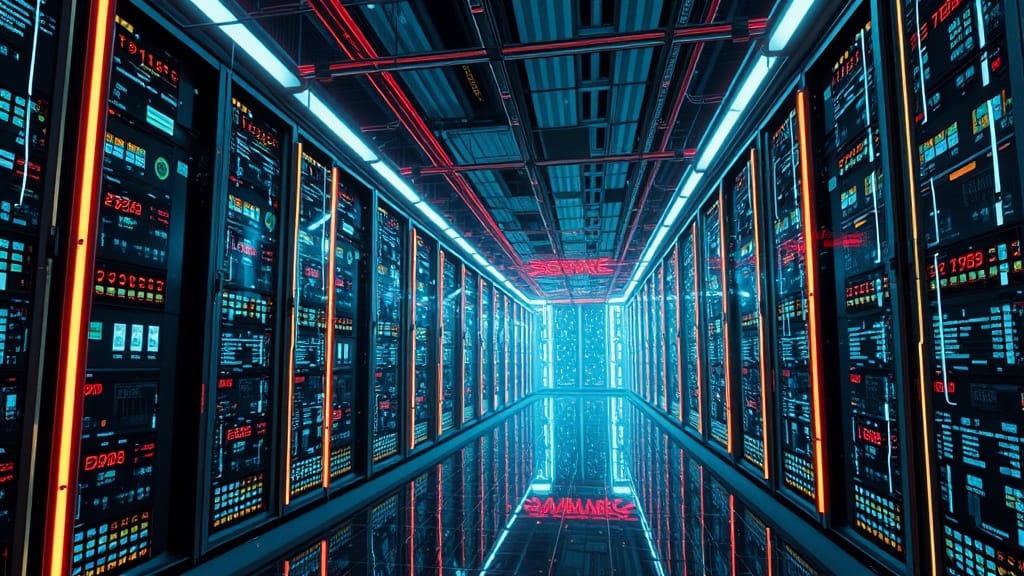
We treat the cloud like magic. You type a prompt, ChatGPT spits out a sonnet. You ask your smart speaker for the weather, and it answers like a helpful butler. But behind every AI interaction, there’s a warehouse filled with screaming servers. These data centers are the unsung workhorses of the digital age—and they’re hungry. Hungry for electricity, hungry for water, hungry for land. And as our appetite for AI grows, so does their footprint. We’re building « megacenters » the size of multiple football fields, housing tens of thousands of servers running 24/7. The data centers impact caché isn’t just about energy bills—it’s about the strain on local communities, the environmental toll, and the uncomfortable truth that our digital utopia has a very physical, very real downside. For a deeper dive into the broader implications, check out our article on sustainable metaverse infrastructure.
The AI Gold Rush Is a Power Grab
Let’s talk about electricity, because that’s where the data centers impact caché really hits home. A single AI training run can consume as much energy as hundreds of homes use in a year. And that’s for just one model. Now multiply that by thousands of companies building their own AI tools. The result? Data centers are projected to consume up to 8% of global electricity by 2030. That’s not a typo. We’re building power plants just to keep up with our ChatGPT queries. I remember visiting a facility in Virginia—the « Data Center Alley »—where the grid was so strained that local residents faced blackouts during peak hours. The irony? They couldn’t even stream Netflix while their neighborhood powered the cloud.
But here’s the kicker: most of this energy still comes from fossil fuels. Despite big promises from tech companies about renewables, the reality is messy. Solar farms take time to build. Wind isn’t always blowing. Data centers need constant, reliable power, so they fall back on natural gas and coal. The data centers impact caché means your AI-generated art might be burning coal in some distant plant. And the companies building these facilities are racing to secure energy deals, often outpacing local regulations. This isn’t just a tech problem—it’s a community problem. You can read more about the energy demands in our piece on virtual world energy consumption.
Water: The Thirsty Side of Data Centers Impact Caché
Here’s something most people don’t consider: data centers are thirsty. Really thirsty. They use massive amounts of water for cooling—evaporative cooling systems, cooling towers, and chilled water loops. In drought-prone areas like California or Arizona, this creates a direct conflict between digital progress and basic human needs. One large data center can use as much water as a small town. And when you factor in the AI boom, which requires more powerful, hotter-running chips, the water demand spikes even higher.
The data centers impact caché on local water supplies is often invisible to end users. We don’t see the reservoirs being drained or the wells running dry. But for communities living near these facilities, it’s a daily reality. Farmers lose irrigation rights. Residents face water restrictions. And all so we can have faster search results and smoother video calls. It’s a trade-off that rarely makes the headlines. Some companies are experimenting with liquid cooling and recycled water systems, but adoption is slow. The hidden cost here is not just environmental—it’s ethical. Are we comfortable sacrificing clean water for convenience?
- Energy drain: AI training runs can consume as much power as hundreds of homes annually.
- Water waste: A single large data center can use millions of gallons of water per day for cooling.
- Land use: Megacenters occupy acres of land, often in ecologically sensitive areas.
- E-waste: Servers are replaced every 3-5 years, creating mountains of electronic waste.
- Community strain: Local grids and water systems are pushed to the breaking point.
Land and E-Waste: The Physical Footprint
Data centers don’t just consume energy and water—they consume land. A typical hyperscale facility can cover 100,000 square feet or more. That’s land that could be used for housing, farming, or green spaces. Instead, it’s paved over for concrete buildings filled with humming servers. And once those servers reach the end of their life—usually within three to five years—they become e-waste. The data centers impact caché extends to the disposal of toxic materials like lead, mercury, and cadmium found in circuit boards and batteries.
I spoke with an e-waste recycler in Ohio who told me that data center servers are some of the hardest items to process. « They’re built for performance, not recyclability, » he said. « We have to manually dismantle them, and the profit margins are thin. » So much of this waste ends up in landfills or is shipped overseas, where it’s burned or dumped. The hidden cost of our digital lives is piling up in places we never see. And with AI accelerating the replacement cycle, the problem is only getting worse.
What Can We Do About the Data Centers Impact Caché?
This isn’t a hopeless story. There are steps we can take—as individuals, as companies, and as a society—to mitigate the data centers impact caché. First, we need transparency. Tech companies should disclose the energy and water usage of their data centers. Second, we need innovation. Liquid cooling, renewable energy microgrids, and AI-optimized server loads can reduce the footprint. Third, we need regulation. Governments must set standards for data center sustainability, just like they do for other industries.
As users, we can also make choices. Use AI tools sparingly. Opt for services that prioritize green hosting. Support policies that hold tech companies accountable. The data centers impact caché is real, but it’s not inevitable. We built this digital world, and we can rebuild it better. The next time you ask an AI assistant a question, remember: there’s a physical cost behind that digital answer. Let’s make sure it’s a cost we’re willing to pay.
Key Takeaways on Data Centers Impact Caché
- Energy: Data centers could use 8% of global electricity by 2030, much of it from fossil fuels.
- Water: Cooling systems strain local water supplies, especially in arid regions.
- Land and waste: Facilities take up huge spaces and generate tons of e-waste.
- Community impact: Local residents face blackouts, water shortages, and health risks.
- Solutions: Transparency, innovation, and regulation can reduce the hidden costs.
The data centers impact caché is the price we pay for our tech obsession. But by understanding it, we can start to change it. Let’s not wait until the next drought or blackout to pay attention. The servers are running, and the bill is due.