Finally, Google Shows Up to the AR Party — With Free Hardware
I’ve been covering this space long enough to remember when Google Glass felt like a punchline, not a product. So when Google stood up at I/O this week and announced the Android XR Developer Catalyst Program — complete with free AR glasses dev kits from partner Xreal — I’ll admit: I perked up. But I also reached for my skepticism, which is never far from reach.
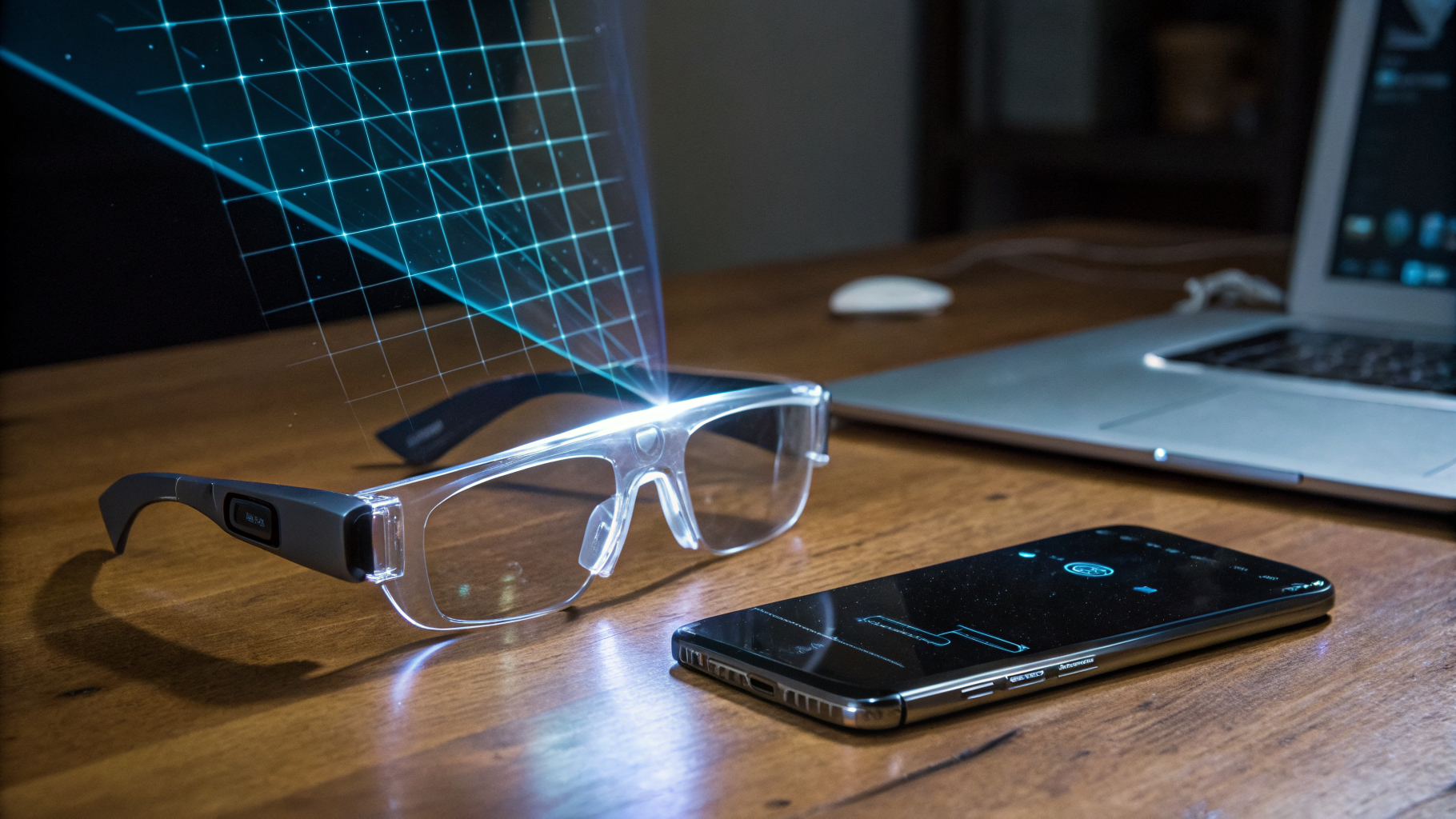
The pitch is straightforward: Google and Xreal are giving away Project Aura dev kits to select applicants. These are the upcoming AR glasses, rebranded from Xreal’s earlier prototypes, and they run Android XR — Google’s latest attempt to own the operating system layer for spatial computing. Developers get tools, resources, and presumably a direct line to the mothership. The goal? Seed the ecosystem before Apple or Meta locks down the narrative.
What struck me here is the timing. Google has been conspicuously quiet on XR since the Daydream fizzled and the ARCore updates became background noise. Meanwhile, Apple Vision Pro landed with a thud — expensive, impressive, but niche. Meta Quest 3 is selling like hotcakes to gamers, but Meta’s Ray-Ban Stories are still more curiosity than necessity. So Google sees an opening. And free hardware is a very loud way of saying “we’re serious.”
But is it enough? I’m not so sure.
What’s Actually in the Box?
Let’s talk about the hardware. Xreal — formerly known as Nreal — has been making AR glasses for a few years now. Their current consumer product, the Xreal Air 2, is a lightweight display accessory that plugs into your phone or laptop. It’s not a standalone device. It projects a floating screen in front of your eyes, like a personal cinema or monitor. That’s useful, but it’s not the HoloLens-style full-environment mapping that most people imagine when they hear “AR.”
Project Aura, the dev kit being given away, is supposed to be the next step. Details are thin — classic Google move — but the rumor mill suggests it will include outward-facing cameras for hand tracking and spatial mapping, plus a wider field of view. In other words, it might actually be a spatial computing device, not just a face-worn monitor.
Here’s the thing, though: Xreal has been promising this upgrade for over a year. The company announced Project Aura back in 2023, and we’ve seen little beyond concept videos. Google’s endorsement gives it credibility, but I’ve learned to wait for shipping hardware before getting excited.
Still, the developer program is a smart move. Apple’s biggest misstep with Vision Pro was the price tag — a $3,500 barrier to entry that kept even die-hard developers away. Meta’s Quest 3 is cheaper at $500, but it’s a VR headset with passthrough, not true AR glasses you can wear on the street without looking like a cyborg. If Google and Xreal can deliver a pair of glasses that look like, well, glasses, and cost under $1,000, they might actually have something.
The Developer Catch-22
Every platform faces the same chicken-and-egg problem: you need apps to sell hardware, but you need hardware to attract developers. Google is trying to crack this by giving away the hardware. Free dev kits are not new — Meta has loaned out Quest headsets, and Apple ran a Vision Pro developer lab program. But those were limited, invite-only, or tied to corporate partnerships. Google’s program sounds more open: any developer can apply through the Android XR website, and Xreal will ship kits to selected candidates.
That’s good. But I’ve been through this rodeo before. The first wave of AR apps will be ports of existing mobile apps — floating YouTube windows, 2D maps, notification mirrors. That’s fine for demos, but it won’t convince anyone to wear glasses all day. The real magic happens when developers build for spatial context: a recipe app that hovers over your stove, a navigation app that paints arrows on the actual street, a fitness app that overlays your heart rate on your running path.
And that kind of development is hard. It requires thinking in 3D, handling occlusion, respecting battery life, and designing for a tiny screen that sits inches from your eyeballs. Most mobile developers have never done any of this. Google’s tools — Android XR SDK, Unity integration, ARCore — will help, but they can’t teach spatial design intuition. That comes from iteration, and iteration requires wearing the damn glasses every day.
I wonder how many developers will actually stick with it after the initial novelty wears off. The ones who do will shape the platform. The ones who don’t will leave Google with another abandoned project.
Google’s Terrible Track Record
Let’s not sugarcoat it. Google has a habit of killing things. I still miss Google Reader. I still get annoyed when I remember Daydream. The company has launched and shuttered more messaging apps than I care to count, and its hardware ambitions have a whiff of impermanence. The Pixel phone survived, but the Pixelbook, the Nexus line, the Chromecast Audio — all gone.
So when Google says it’s investing in Android XR, my first thought is: for how long? The company has a fiduciary duty to shareholders, not to developers. If the platform doesn’t gain traction in two years, the plug gets pulled. That’s the reality of working with Google as a platform partner.
To be fair, Android itself was once a risky bet. Google invested heavily, stuck with it through early stumbles, and now it runs the world. But Android had the advantage of being the anti-iPhone — a flexible open alternative to Apple’s walled garden. In XR, the landscape is different. Apple is in the game with Vision Pro, Meta is dominating with Quest, and there are smaller players like Magic Leap and HoloLens still limping along. Google needs a clear differentiator. “Open” is one, but it wasn’t enough to save Daydream.
The difference this time might be Xreal. By partnering with a hardware company that already has a consumer product and a supply chain, Google avoids the capital-intensive work of designing and manufacturing glasses. That lowers the stakes. If Xreal fails, Google can pivot to another partner. If Xreal succeeds, Google gets the platform credit. It’s a hedge, not a home run swing.
What the Competition Is Doing
Meta is not sitting still. The company has been quietly iterating on its Ray-Ban Stories partnership, and the next generation — expected later this year — will reportedly include a camera and AI assistant. Meta’s advantage is social integration: if you’re wearing Meta glasses, you can stream live to Instagram, send a photo to a friend, or take a hands-free video call. That’s a use case Google can’t easily replicate without a popular social network.
Apple, meanwhile, is playing the long game. The Vision Pro is a first-gen product, expensive and heavy, but the technology inside it — micro-OLED displays, advanced eye tracking, spatial audio — is years ahead of anything in the consumer market. Apple is reportedly working on a cheaper version and a lighter pair of AR-only glasses, but those are probably three to five years out. The company can afford to wait.
Then there’s the wild card: Samsung. The company has been teasing its own XR headset for years, and it’s reportedly running a version of Android XR. That could be Google’s real play — not the Xreal glasses, but a Samsung-led device with the weight of the Galaxy brand behind it. Samsung has the manufacturing muscle and the global distribution that Xreal lacks. If Samsung launches a Galaxy XR headset later this year, the developer program starts to make a lot more sense.
A Modest Proposal
Here’s what I think Google should do, if anyone at the company is reading (they’re not). Stop treating AR like a phone accessory. The killer app for glasses is not a floating YouTube window. It’s context-aware assistance that disappears when you don’t need it. Imagine walking into a hardware store, and your glasses highlight the aisle for the specific screw size you need. Imagine sitting in a meeting, and your glasses silently transcribe and translate in real time. Imagine cooking a complex recipe, and your glasses project the steps onto your counter, tracking your progress with a glance.
That’s the vision. But it requires deep integration with Google’s core services — Maps, Lens, Translate, Assistant — and a willingness to push those services into the AR layer without making them feel intrusive. Google has all the pieces. The question is whether it can assemble them into a coherent product before the window closes.
I’m rooting for it, honestly. I want AR glasses to work. I want to live in a world where my digital life is layered on top of the physical one, not trapped in a rectangle in my pocket. But I’ve been burned before. Google has a history of getting 80% of the way there and then deciding the last 20% isn’t worth the effort. The Android XR Developer Catalyst Program is a good start. But it’s only a start.
Free dev kits are great. What matters is what comes next. Will Google support these developers for years, or will it pull the plug after two quarters of slow adoption? Will Xreal ship a product that people actually want to wear, or will it be another tech demo that collects dust on a shelf? I don’t have the answers. But I’ll be watching.
And I’ll be applying for a dev kit. Just in case.
Further Reading
Read the original announcement on Road to VR.
Original source: read the full article