Finally, Something Worth Hacking Into
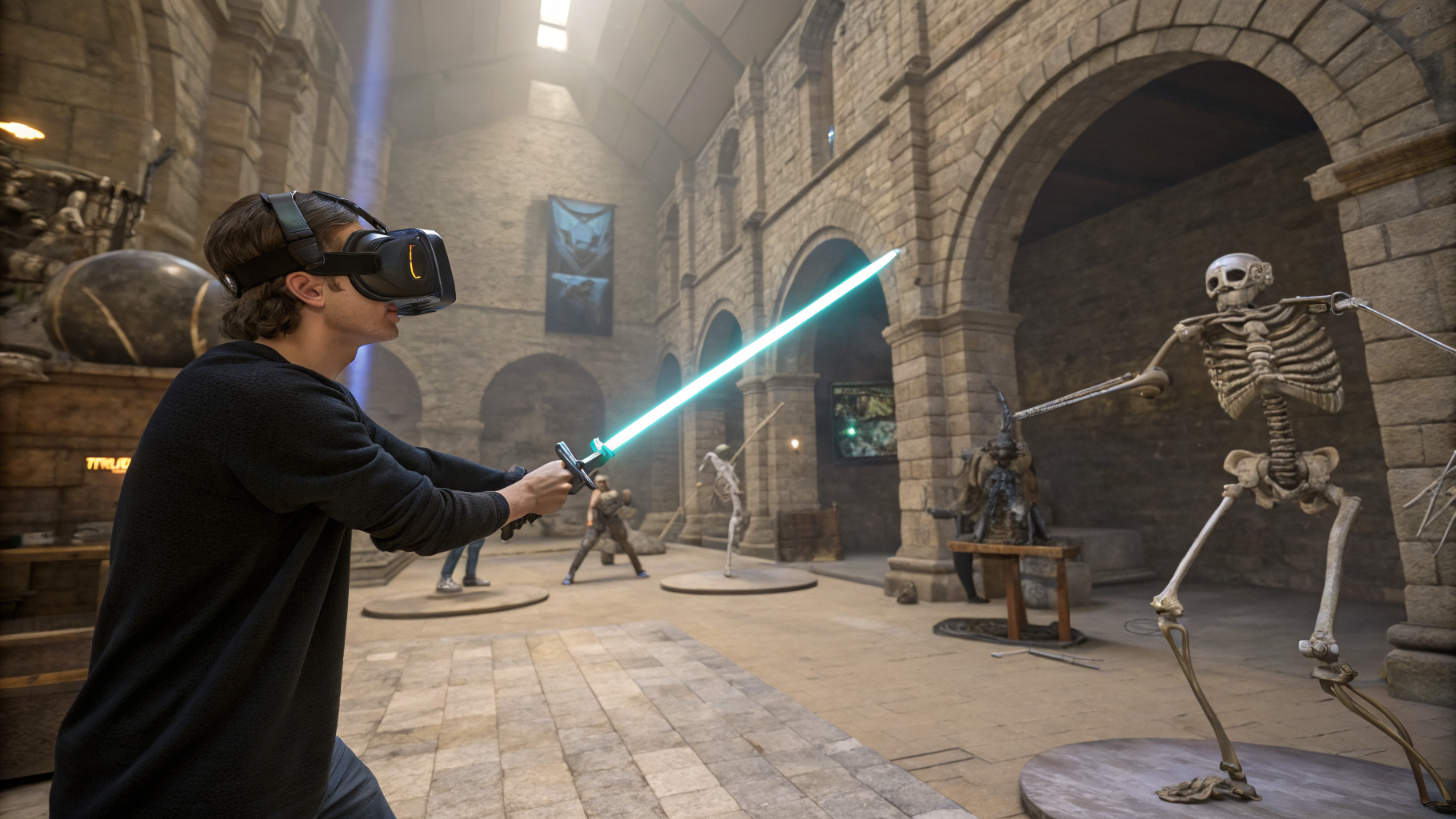
I’ve been watching Hellsplit: Arena from the sidelines for a while now. It’s one of those VR titles that does one thing beautifully—splatter physics—and then sort of shrugs when you ask for more. You get a medieval arena, some nasty skeletons, and a lot of gore. It’s fun for about an hour. Then you start wondering: is that it?
Well, Deep Type Games just answered that question. The studio announced this week that it plans to deliver a sandbox mode and open up mod support on Meta Quest before moving on to its next projects. That sounds like a small update, but trust me, it’s not. It’s the difference between a tech demo you show your friends and a game you actually keep installed.
Let’s be real: VR has a mod problem. Most developers treat modding like an afterthought, if they think about it at all. PC VR got a few notable exceptions—Blade & Sorcery, Bonelab—but on Quest? It’s practically a desert. So when a studio that’s already shipped a solid, if limited, combat sim says, « Hey, we’re opening the hood, » I pay attention.
What Sandbox Mode Actually Means
The headline says « sandbox mode, » but I’ve been burned by that phrase before. In some games, sandbox means you get a few extra options in a menu. In others, it’s a glorified photo mode. Deep Type Games seems to have something more substantial in mind. According to the announcement, players will be able to spawn enemies, modify their behavior, and tweak weapons on the fly. That’s not just a checkbox feature—that’s a creative toolkit.
What struck me here is the timing. Hellsplit: Arena has been out on Quest for a while. It’s not a new launch. Studios usually pile on features early to drive sales, then move on. Coming back to add a sandbox mode this late in the lifecycle suggests either a passionate dev team or a strategic play to keep the player base alive while they work on the next big thing. Probably both.
I think the sandbox mode matters most for the VR modding community. Right now, if you want to make custom content for Quest, you’re mostly stuck with sideloading janky APKs or praying for a native mod kit. Deep Type Games is promising to bake mod support into the core game. That’s the kind of move that turns a decent game into a platform.
Mod Support on Quest: The Elephant in the Room
Let’s talk about what mod support on Quest actually looks like. Meta’s ecosystem is famously locked down. You can’t just drop a .dll file into a folder and expect it to work. The Quest OS is a fork of Android, and it treats executable code like a security risk—which, to be fair, it is. So how does Deep Type Games plan to make mods work?
The studio hasn’t released full technical details yet, but I’ve seen a few approaches in the wild. Some games use a scripting layer—think Lua or Python—that can run safely inside a sandbox. Others use a curated mod repository, where players upload content and the developer vets it before it goes live. The smart play here is a combination: allow user-generated content through a safe scripting interface, with optional sideloading for advanced users who accept the risks.
I’ll be honest: I’m skeptical until I see it working. We’ve heard promises of Quest mod support before. Remember when a certain high-profile shooter said it would support mods? Still waiting. But Hellsplit: Arena has a smaller team and a more focused vision. That can work in its favor. Smaller studios are often more agile, and they don’t have to convince a board of directors that modding is worth the support cost.
Why Modders Should Care
If you’re a VR modder, you’ve probably been ignored by most Quest developers. The platform is treated like a console—walled garden, curated storefront, limited user control. That’s great for stability, terrible for creativity. Hellsplit: Arena mods could change that by proving there’s a market for user-generated content on standalone headsets.
Consider the potential: custom weapons, new enemy types, entire arenas designed by the community. The base game has solid melee combat and physics-based dismemberment. Add modding, and you get a long tail of content that keeps players coming back. I’ve seen it happen on PC with games like Garry’s Mod and Skyrim. VR needs that same energy, but it needs it on Quest, where most of the users actually are.
There’s also a financial angle. Modders often become developers. Several successful VR studios started as mod teams. If Deep Type Games builds a robust modding pipeline, they’re effectively incubating their own future competitors—or future collaborators. That’s a bet on the ecosystem, not just the game.
The Technical Challenges Nobody Talks About
I don’t want to paint this as all sunshine and dismemberment. Bringing mod support to Quest is hard. The hardware is constrained. You’re running on a mobile chip that already struggles with the base game’s physics. Add custom scripts and high-poly models, and you risk turning the headset into a pocket heater.
Then there’s the approval process. Meta’s store policies require all content to be reviewed. User-generated mods that aren’t curated could violate terms of service. Deep Type Games will need to figure out a moderation system that doesn’t kill the community’s momentum. That’s a delicate balance. Too strict, and nobody bothers. Too loose, and you get trolls uploading asset flips or worse.
I asked around a few VR developer friends, and the consensus is that scripting-based mods are the way to go. Limit the damage surface area. Allow custom behaviors but not custom code execution at the system level. That’s how games like VRChat handle it, and while it’s not perfect, it works well enough for millions of users.
What This Means for Deep Type Games’ Future
The announcement is framed as a send-off. The studio says it wants to deliver this update before moving on to its new projects. That worries me a little. Sandbox mode and mod support are complex features. If the team is already shifting focus to the next game, will this update get the polish it needs? I’ve seen too many « final updates » that felt half-baked.
But maybe that’s cynical. Maybe the studio has been working on this in parallel for months. The fact that they’re communicating publicly suggests confidence. If they pull it off, Hellsplit: Arena becomes a evergreen title—the kind of game you revisit every time a new mod drops. That’s valuable for a small studio. It keeps the revenue trickling in while they develop whatever comes next.
Speaking of next projects, I’m curious what Deep Type Games has in the pipeline. The studio has shown it can do visceral combat well. A sandbox mode with mod support could be a testing ground for their own future mechanics. Let the community experiment, see what sticks, then steal the best ideas. That’s not cynical—that’s smart R&D.
The Bigger Picture: VR Needs More Open Platforms
I’ve been covering this space for over a decade, and I’ve watched VR go from indie hobbyist experiments to corporate gatekeeping. Meta’s Quest store is the dominant distribution channel, and it’s tightly controlled. That’s not necessarily evil—it keeps malware out and quality up—but it stifles the kind of grassroots creativity that made PC gaming what it is.
Hellsplit: Arena mods represent a small crack in that wall. If it works, other developers will follow. We could see a future where Quest games routinely ship with modding APIs, community workshops, and user-generated content pipelines. That future is not guaranteed. It depends on execution, community adoption, and Meta’s willingness to allow it.
But I’m hopeful. Every time a developer chooses openness over control, the ecosystem gets a little healthier. Deep Type Games is making that choice. Now they just have to deliver.
What I’d Like to See in the Sandbox Mode
If I’m putting my wishlist together, here’s what would make this sandbox mode truly special:
- Enemy wave editor – Let me customize spawn patterns, enemy types, and difficulty curves. Don’t just give me sliders; give me a timeline.
- Weapon lab – Allow players to modify blade length, weight, and material properties. Physics-based combat lives and dies on feel.
- Arena builder – Place walls, traps, and environmental hazards. The base game’s arenas are fine, but community creations always surprise.
- Performance profiling tools – Since Quest is resource-limited, give modders a way to see how their creations affect frame rate and memory. That’s the kind of transparency that builds trust.
None of these are pipe dreams. Other games have implemented similar features on weaker hardware. Deep Type Games just needs the will and the time.
The Bottom Line
I’m not going to call this a game-changer. I hate that phrase. But I will say this: Hellsplit: Arena sandbox mode and mod support could be the most important update for Quest VR this year, if it’s done right. It’s not about the game itself—it’s about what it represents. A developer saying, « We trust our players to make something cool. »
In an industry that’s increasingly about walled gardens and subscription models, that trust is rare. And it’s valuable. I’ll be watching the rollout closely, and I hope the modding community does the same. Because if this works, it won’t just be Hellsplit: Arena that gets a second life. It could be the entire Quest modding scene.
Original source: read the full article