James Cameron just bought a 3D camera company. And if that sentence makes you yawn, you haven’t been paying attention. The man who made us all wear uncomfortable glasses in 2009 is back, and he’s not here to apologize.
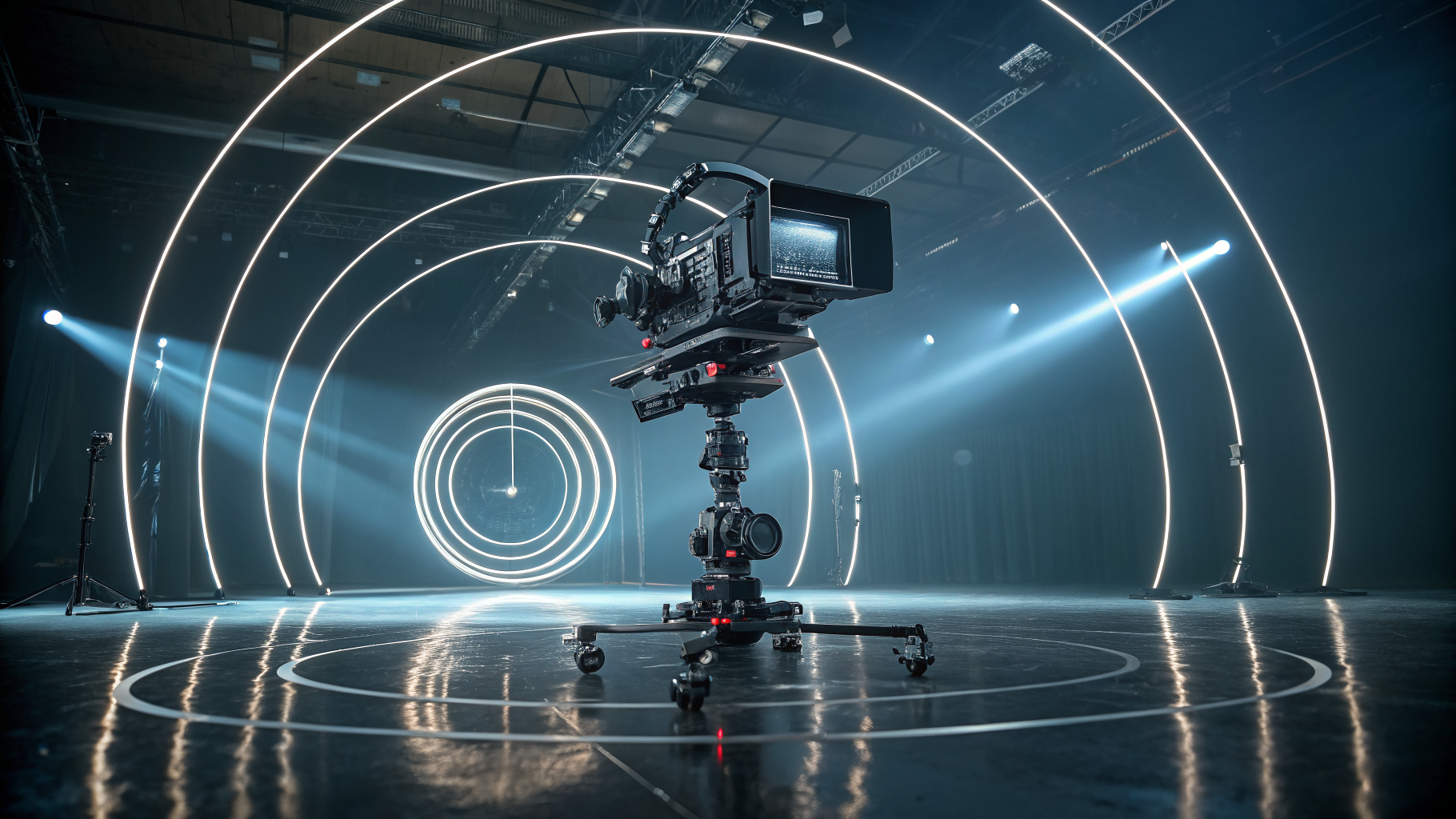
Lightstorm Vision, Cameron’s 3D production studio, has acquired STEREOTEC — a German company that builds the kind of high-end 3D camera rigs that actually make you forget you’re watching something in 3D. The kind of gear that powered Avatar: The Way of Water, sure, but also multi-camera immersive concerts and a bunch of films you probably didn’t realize were stereoscopic.
I’ll be honest: when I first saw the headline, I rolled my eyes a little. Another acquisition? Another promise that this time 3D will stick? But the more I dug into it, the more I realized this isn’t some desperate grab at a dying format. This is a man who has spent decades perfecting a craft, and he’s now buying the toolbox.
The Quiet Giant of 3D Cinema
STEREOTEC isn’t a household name. It shouldn’t be. They make the cameras, not the movies. But if you’ve watched a 3D film in the last fifteen years that didn’t make you want to claw your eyes out, there’s a decent chance STEREOTEC had something to do with it.
Their rigs are modular, precise, and — crucially — designed to be used by actual human camera operators. That last part matters more than you think. A lot of early 3D stuff was shot with clumsy, heavy rigs that required a team of engineers just to adjust the interaxial distance. STEREOTEC’s gear? It’s built for workflow. For speed. For the reality of a film set where the sun is setting and the director is screaming.
Cameron has used their stuff for years. This isn’t a stranger buying a random asset. It’s more like a master carpenter buying the sawmill.
What struck me here is the timing. We’re in a moment where every tech company is falling over itself to talk about AI-generated video, virtual production, and “volumetric capture.” 3D cinema, as a format, is often treated like that weird uncle who shows up at Thanksgiving and talks about his laser disc collection. But Cameron doesn’t care about trends. He cares about depth.
Literally. Stereoscopic depth.
What the Deal Actually Means
Details of the acquisition are under wraps — standard corporate stuff, probably a mix of cash and stock and handshakes in a boardroom. But Lightstorm Vision’s statement is telling: they want to integrate STEREOTEC’s technology “directly into its 3D production pipeline, enabling capture, processing, and delivery.”
Read that again. Capture. Processing. Delivery.
That’s not just buying a camera company. That’s buying a vertical slice of the entire 3D pipeline. Cameron isn’t just securing a supply of good rigs. He’s locking down the R&D, the software, the calibration tools, the post-production workflows. He’s making sure that when he wants to shoot something in 3D, there’s no middleman. No licensing headaches. No “sorry, that feature isn’t available yet.”
This is the move of someone who plans to keep making 3D films for a long, long time.
And let’s be real: if anyone can drag 3D back into the mainstream conversation, it’s Cameron. The man has a habit of betting against the consensus and winning. He bet on CGI when everyone said it was a gimmick. He bet on 3D when the industry had already written it off. He bet on four sequels to a blue alien movie, and the first one made $2.3 billion.
So yeah, I’m listening.
The Immersive Concert Angle Nobody’s Talking About
Here’s the part that made me sit up straight. STEREOTEC hasn’t just been powering Hollywood blockbusters. They’ve been doing multi-camera immersive concerts. Think about that: live events captured in 3D, from multiple angles, stitched together into something you can watch on a headset or a screen and feel like you’re actually there.
I’ve seen a few of these. Most are terrible. The camera placement is awkward, the stereoscopic depth is inconsistent, and you spend half the time fighting with the view to find the lead singer. But when it works — when the rigs are calibrated right and the director understands spatial storytelling — it’s genuinely transportive.
STEREOTEC’s gear is built for that. Their multi-camera setups are designed to work in sync, producing consistent stereo pairs across multiple viewpoints. That’s hard. Really hard. Most 3D rigs are built for a single primary camera. STEREOTEC’s approach treats the whole stage as a volumetric space.
I think Cameron sees where this is going. Not just cinema, but live events. Sports. Concerts. Theater. Anything where being physically present matters, but not everyone can be there. If you can capture it in high-quality 3D and deliver it to a headset or a giant screen in a cinema, you’re not just selling a ticket. You’re selling presence.
And presence, in my view, is the real killer app for immersive tech. Not the metaverse. Not digital avatars. Just the feeling of being somewhere else, right now, with other people.
But Is 3D Actually Coming Back?
Let me pause the hype train for a second. Because I’ve been burned before. We all have. 3D TVs were a disaster. The home 3D market collapsed faster than anyone predicted. Even cinemas have scaled back — fewer 3D screens, fewer 3D releases. The format has become synonymous with “dim, blurry, and overpriced.”
Cameron knows this. He’s the one who made Avatar the highest-grossing film of all time partly by making 3D look good. But even he couldn’t save the format from a tsunami of lazy post-conversions and studio greed. Remember Clash of the Titans? The 3D version was literally finished two weeks before release. It looked like garbage. And that garbage poisoned the well for everyone.
So no, I don’t think this acquisition means 3D is coming back to your living room. I don’t think it means every Marvel movie will suddenly switch to native stereo. What I think it means is that Cameron is building the infrastructure to make his own 3D films exactly the way he wants, without compromise. And if those films happen to be good enough to remind audiences what 3D can be, maybe — just maybe — it creates a halo effect for the whole format.
But that’s a big maybe. And I’ve been wrong before.
What This Means for the Rest of Us
If you’re a filmmaker, this acquisition is a signal. It tells you that one of the most commercially successful directors in history believes in stereoscopic capture as a core part of his process. That doesn’t mean you need to rush out and buy a 3D rig. But it does mean the technology isn’t going away. It’s being refined. It’s being consolidated.
If you’re a tech investor, this is probably a nothing burger. A small acquisition in a niche market. You won’t see a press release about it on CNBC. But if you’re paying attention to the long arc of immersive media, you should care. Because the tools that make good 3D are also the tools that make good VR, good AR, good spatial video. The pipeline isn’t just for cinema anymore. It’s for the whole spectrum of immersive experiences.
And if you’re just a fan of movies, or games, or live music, this might mean nothing to you today. But in five years, when you put on a headset and watch a concert from the front row, or see a film that actually uses depth as a storytelling tool instead of a gimmick, you might remember this deal.
Or you might not. And that’s fine too. Cameron isn’t doing this for the headlines. He’s doing it because he’s a nerd who loves the craft. And nerds who love the craft tend to make the best stuff.
The Long Game
Let me zoom out for a second. Cameron is 70 years old. He’s spent the last decade working on Avatar sequels. He could have retired, collected his billions, and sailed off into the sunset. Instead, he’s buying camera companies.
That tells me he’s not done. Not with 3D, not with immersive storytelling, not with pushing the technical boundaries of what cinema can do. The Avatar sequels are reportedly going to push into new territory — underwater performance capture, high frame rate, advanced stereoscopy. Having STEREOTEC inside the tent means he can iterate faster. Prototype new rigs. Solve problems that haven’t been solved yet.
I also wonder if this isn’t a defensive move. There’s a talent war going on in the immersive tech space. Apple is hiring everyone who’s ever touched a VR camera. Meta is burning cash on Reality Labs. If you’re Cameron, and you need the best 3D camera engineers on the planet, you don’t try to poach them one by one. You buy the whole company.
Smart. Expensive, but smart.
What I’m Watching For
So where do we go from here? I’ll be watching three things.
- First, the next Avatar film. If Fire and Ash (the third one, due in 2025) looks noticeably better in 3D than the second one, we’ll know the STEREOTEC integration is paying off. If it looks the same, this was just a supply chain play.
- Second, any announcements about live events. If Lightstorm Vision starts talking about 3D concert capture or sports broadcasts, that’s the signal that Cameron is expanding beyond cinema.
- Third, the price. If STEREOTEC’s tech starts showing up in consumer or prosumer gear, that would be a big deal. But I’m not holding my breath. Cameron’s MO is to build for the highest possible quality, then figure out how to scale later.
I’ll be honest: I’m not sure this acquisition changes the world. It might just be a rich guy buying a nice toy. But Cameron has earned the benefit of the doubt. He’s bet on depth before, and he’s won. I’m not ready to count him out.
And if nothing else, it’s nice to see someone in the tech world making a bet on actual hardware, on actual optics, on the physics of light and lenses — instead of just another AI model that generates cat videos. There’s something refreshing about that. Something real.
So here’s to James Cameron, the man who refuses to let 3D die quietly. Long may he shoot in stereo.
Further Reading
Original report: James Cameron’s 3D Studio Acquires 3D Camera Maker STEREOTEC — Road to VR
Original source: read the full article