Let’s be real for a second. Meta Connect 2026 same old story, just with a shinier pair of glasses to try and distract us. The company dropped the dates this week—September 23 and 24—and the press release reads like a bingo card of buzzwords: “the latest in VR, wearables, metaverse, and AI.” It’s the same carefully choreographed hype machine we’ve seen year after year. And honestly? I’m both excited and exhausted.
I’ve been covering tech long enough to remember when Google Glass was the future, when VR was going to replace your living room, and when Web3 was going to rewrite the internet. Now it’s all about AI, and Meta is leaning hard into that trend. But here’s the thing: Meta Connect has always been a masterclass in controlled messaging. They show you exactly what they want you to see—polished demos, a charismatic CEO, and a glimpse of something shiny—while the messy reality of user adoption and technical limitations stays hidden behind the curtain. So what’s actually new this year? Let’s dig in.
The Glasses Tease: A Familiar Shape in the Shadows
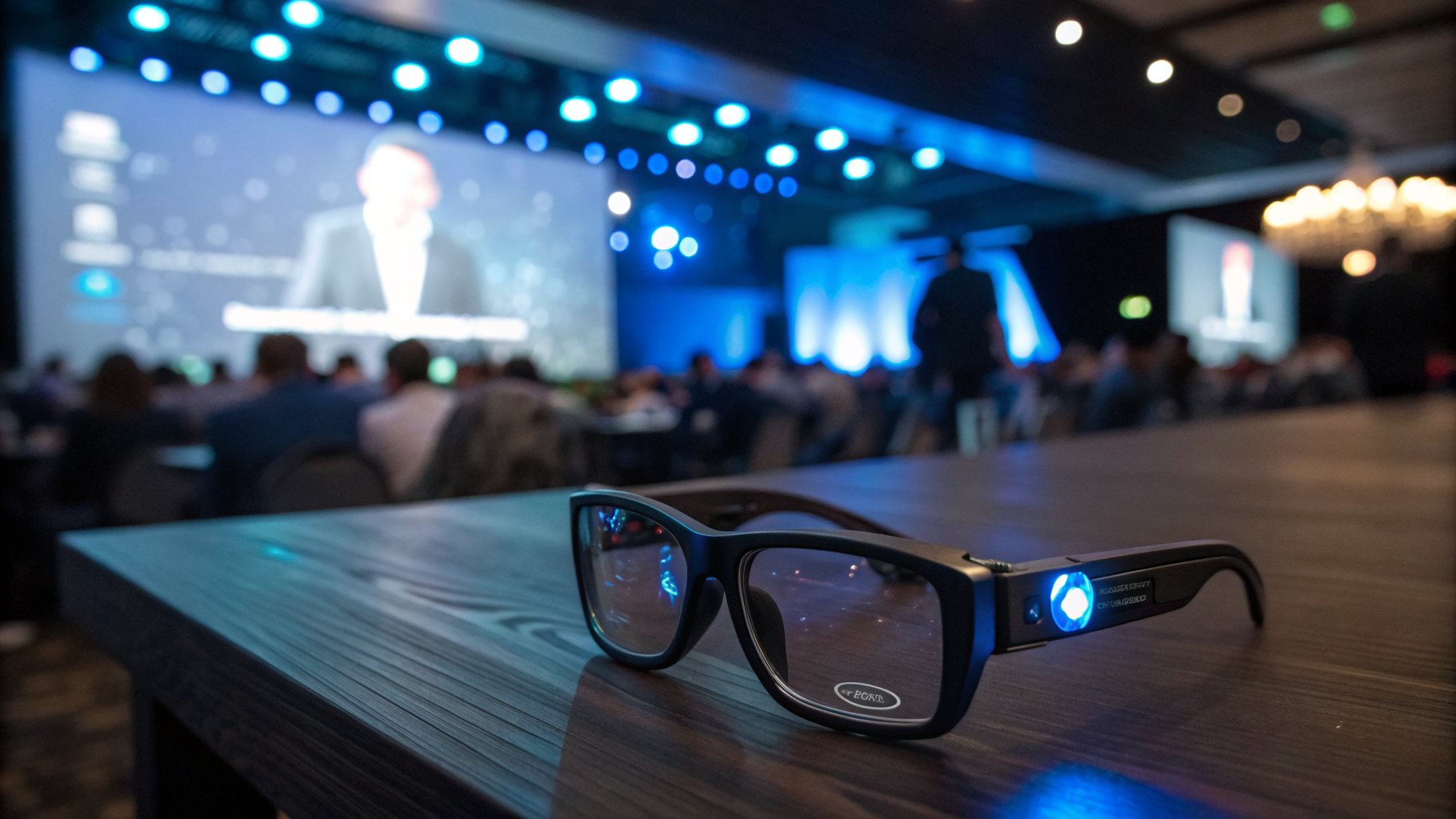
The teaser image Meta released is pure Zuckerberg theater. A moody, dark shot of what looks like a pair of smart glasses, catching a sliver of light like it’s a prop from a sci-fi movie. Could be anything. Could be the next iteration of the Ray-Ban Meta glasses, or maybe a completely new form factor. But let’s be honest—we’ve seen this play before.
Last year’s Ray-Ban Meta glasses were a pleasant surprise. They weren’t trying to be a full AR headset. They were just good smart glasses: decent cameras, reasonable audio, a voice assistant that didn’t make you want to toss them into a lake. They sold okay. Not great, but okay. And that’s the problem. Meta needs a hit. The Quest 3 is solid hardware, but it’s not flying off shelves. Horizon Worlds is still a digital ghost town. And the metaverse? That word now makes investors twitch.
So what do you do when your grand vision is stalling? You pivot to a new shiny object. This year, it’s AI-infused wearables. The rumor mill is churning with whispers of a “neural interface” ring or a pair of glasses with a built-in AI assistant that’s actually useful. But I’ve heard this song before. Remember when Facebook promised us a smartwatch? Yeah, that never materialized. The pattern is clear: Meta Connect 2026 same hype, different hardware. They’ll show you a slick prototype, talk about “breakthroughs,” and then quietly delay the launch until next year.
Horizon Worlds: Still a Ghost Town, But Now With AI Avatars
Let’s talk about the elephant in the room—Horizon Worlds. Meta has poured billions into this platform, and it’s still a digital ghost town. The avatars are creepy, the experiences are shallow, and nobody I know actually uses it. But at Connect 2026, I bet they’ll announce a “major update” that’s supposed to change everything. Spoiler: it won’t.
This year’s twist? AI-powered avatars that can have conversations with you. Sounds cool, right? Except the demo will probably involve a pre-scripted interaction where an avatar tells you about the weather or recommends a restaurant. It’s not a revolution—it’s a chatbot in a digital skin. And the core problem remains: nobody wants to spend time in a virtual world that feels empty and corporate. Meta can’t engineer community. They can only engineer features. And features don’t replace the messy, organic interactions that make real social spaces work.
I’ll be watching the keynote closely, but I’m not holding my breath. The metaverse isn’t dead—it’s just not what Meta wants it to be. It’s Roblox, it’s Minecraft, it’s Fortnite. Those are the places where people actually hang out. Horizon Worlds feels like a sterile mall that nobody visits. And no amount of AI avatars will fix that.
AI: The New Buzzword That’s Actually Worth Paying Attention To
Okay, I’ll admit it—I’m a little excited about the AI stuff. Meta’s LLaMA models have been quietly impressive, and their open-source approach is genuinely refreshing. While Google and OpenAI are locking down their tech, Meta is letting developers tinker. That’s smart. And at Connect 2026, I expect them to double down on this.
Think about it: AI is the one area where Meta can actually win. They have the data, the infrastructure, and the willingness to experiment. Imagine a pair of glasses that can translate conversations in real time, or an AI assistant that actually understands context. Not the “Hey Siri, set a timer” nonsense, but something that can help you navigate a foreign city, summarize a meeting, or even write a quick email. That’s the kind of utility that could make wearables stick.
But here’s the catch: Meta has a terrible track record with privacy. Every time they introduce a new AI feature, there’s a chorus of “what are they doing with my data?” And rightfully so. The company’s reputation is still stained by Cambridge Analytica and years of surveillance capitalism. No matter how cool the AI is, if it feels like a Trojan horse for ads, people will reject it. Meta needs to be transparent, and they need to earn trust. That’s a tall order, especially when their business model depends on mining your attention.
Still, I’m cautiously optimistic. If Meta can pull off a useful AI assistant that doesn’t creep you out, they might actually have something. But that’s a big “if.”
The Quest 3 Is Great, But Nobody Cares
Let’s take a moment to appreciate the Quest 3. It’s a fantastic piece of hardware. The mixed reality passthrough is surprisingly good, the controllers are ergonomic, and the game library is solid. I’ve spent hours in Beat Saber and Half-Life: Alyx, and I genuinely believe VR has a future in gaming and productivity. But the problem isn’t the hardware—it’s the market.
VR is still a niche. Most people don’t want to strap a brick to their face for more than 30 minutes. The Quest 3 is better than its predecessors, but it’s not a mainstream device. And Meta knows this. That’s why they’re pivoting to glasses and AI. They’re trying to make computing invisible, to embed it into everyday life. It’s a noble goal, but it’s also a massive technical challenge.
At Connect 2026, I expect them to show off a “Quest Pro 2” or something similar—maybe with better resolution, lighter weight, and more advanced eye tracking. But it won’t move the needle. The real innovation needs to happen in software and social experiences, not just hardware specs. Until Meta can make VR feel as natural as picking up your phone, it’ll remain a toy for enthusiasts.
- meta connect 2026 same : point clé à retenir
- Fonctionnement et avantages concrets
- Conseils pratiques et mise en œuvre
- Erreurs fréquentes à éviter
So, What’s the Verdict on Meta Connect 2026?
Here’s my honest take: Meta Connect 2026 same old playbook, but with a few new cards up their sleeve. The glasses tease is a distraction from the fact that their core metaverse vision is floundering. The AI push is genuine, but it’s also a hedge—a way to stay relevant in a world that’s moved on from VR hype. And the Quest line is solid, but it’s not a revolution.
I’ll be watching the keynote with a mix of skepticism and hope. I want Meta to succeed, because competition drives innovation. But I also want them to be honest. Stop pretending that Horizon Worlds is the next big thing. Stop teasing hardware that’s years away. Show me something real, something that solves a genuine problem, and I’ll be your biggest cheerleader. Until then, I’ll keep my expectations low and my coffee strong.
Meta Connect 2026 is on September 23 and 24. I’ll be there, live-blogging and rolling my eyes. Join me, won’t you?