

Hypernova: Meta Buries Its First Smart Glasses and Launches the Real AR Revolution
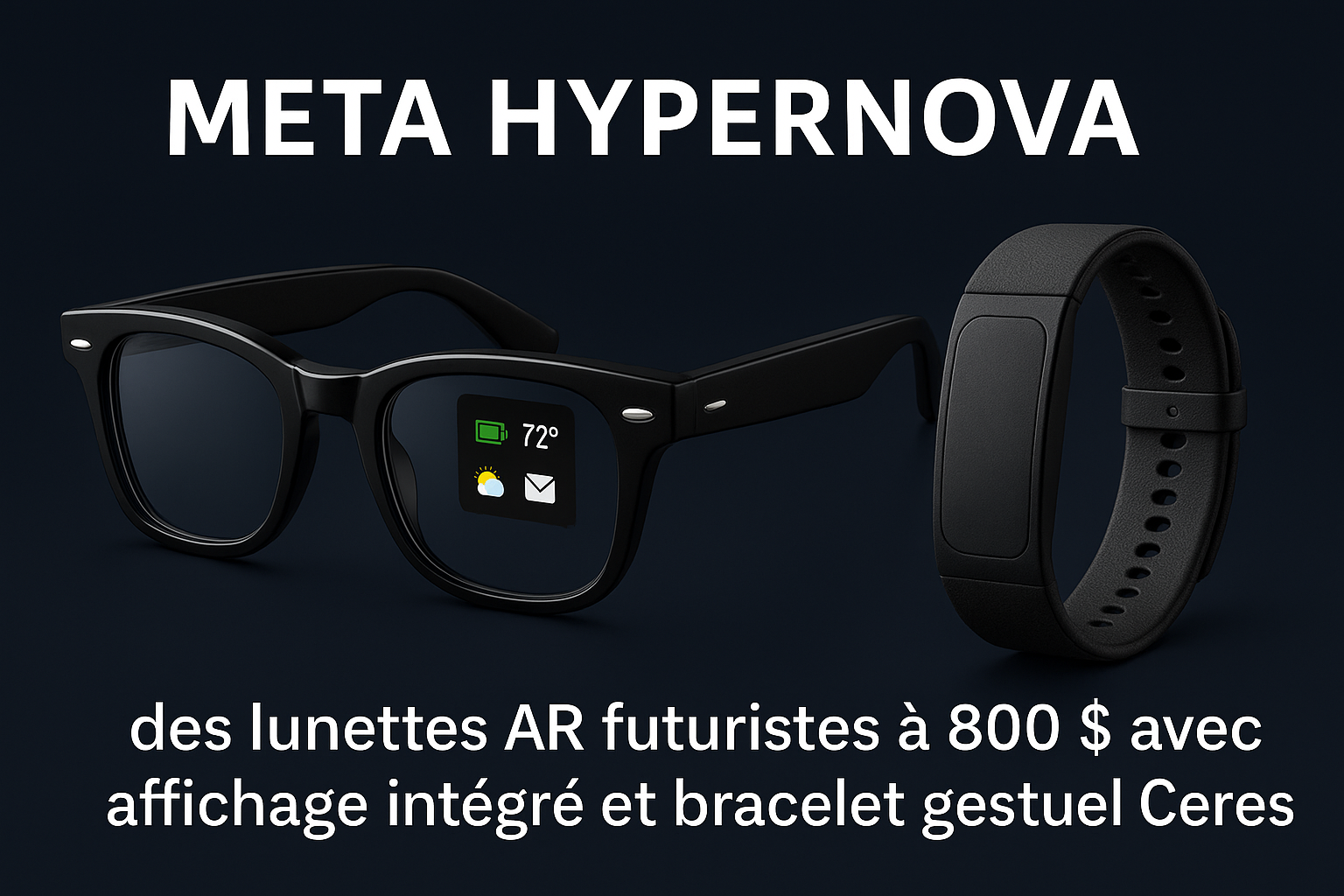
Fast summary — Discreet AR lens in the right eye + Ceres sEMG wristband for natural, silent control. Target price: ~$800 (bundle).
Why Hypernova Is a Real Breakthrough
For years, consumer AR meant bulky headsets—powerful but impractical in public. Hypernova looks and feels like everyday eyewear. Co-developed with EssilorLuxottica, it weighs roughly 70 g and integrates a 20° monocular AR display in the right lens for notifications, navigation, translations, and AI insights without blocking the real world. This blend of style, portability, and subtle functionality is precisely what earlier generations lacked.
Key Features at a Glance
AR for daily use Gesture interface Discreet design AI assistance
The Ceres Wristband: Redefining Human–Computer Interaction
The most radical element may be the wristband. Powered by surface electromyography (sEMG), Ceres reads tiny muscle signals from the forearm to detect micro-gestures—pinch to select, swipe to scroll, or subtle finger movements to navigate. It delivers silent, discreet, and reliable control in noisy or private environments where voice commands fall short. If widely adopted, Ceres could set a new gold standard for wearable interaction.
Price and Strategic Positioning
Early chatter placed Hypernova above $1,000. Current expectations point to a more strategic ~$800 bundle—clearly above photo-first Ray-Ban Meta glasses, but justified by the lens display and advanced input. The initial target audience includes early adopters, professionals, and AR enthusiasts, with broader mainstream options expected in later iterations.
Everyday Use Cases that Matter
- Navigation: head-up directions without pulling out a phone.
- Communication: glanceable messages and quick replies via wrist gestures.
- Productivity: contextual reminders, task nudges, and lightweight notes.
- Language & AI: real-time translation and concise AI assistance in-lens.
- Social settings: subtle enough for meetings, commuting, and retail.
“Useful AR isn’t flashy—it’s there when you need it and invisible the rest of the time.”
Roadmap and Future Versions
Hypernova is part of a longer runway. Reports suggest a binocular ‘Hypernova 2’ around 2027, plus a simpler voice-centric line. This segmentation lets Meta address lifestyle users who want subtle utility as well as power users seeking richer, more immersive AR.
Challenges to Watch
To scale beyond enthusiasts, Meta must deliver strong battery life, a compelling app ecosystem, and robust privacy safeguards. At $800, mass adoption will take time—but if daily usefulness lands, Hypernova could finally break the smart-glasses curse that plagued early efforts like Google Glass.
FAQ
What makes Hypernova different?
A discreet AR lens display combined with the Ceres sEMG wristband for natural control—designed for everyday wear.
How does the Ceres wristband work?
It detects forearm muscle signals to recognize micro-gestures like pinch and swipe, enabling silent, camera-free interaction.
How much will it cost?
Guidance points to around $800 for the glasses + wristband bundle.
When will it launch?
The official reveal is expected at Meta Connect 2025, with availability to follow.
Stay Tuned
Follow Metaverse Virtual World for hands-on testing, comparisons, and buyer’s guides as Hypernova approaches launch.