Another Leak, Another Déjà Vu Moment in XR
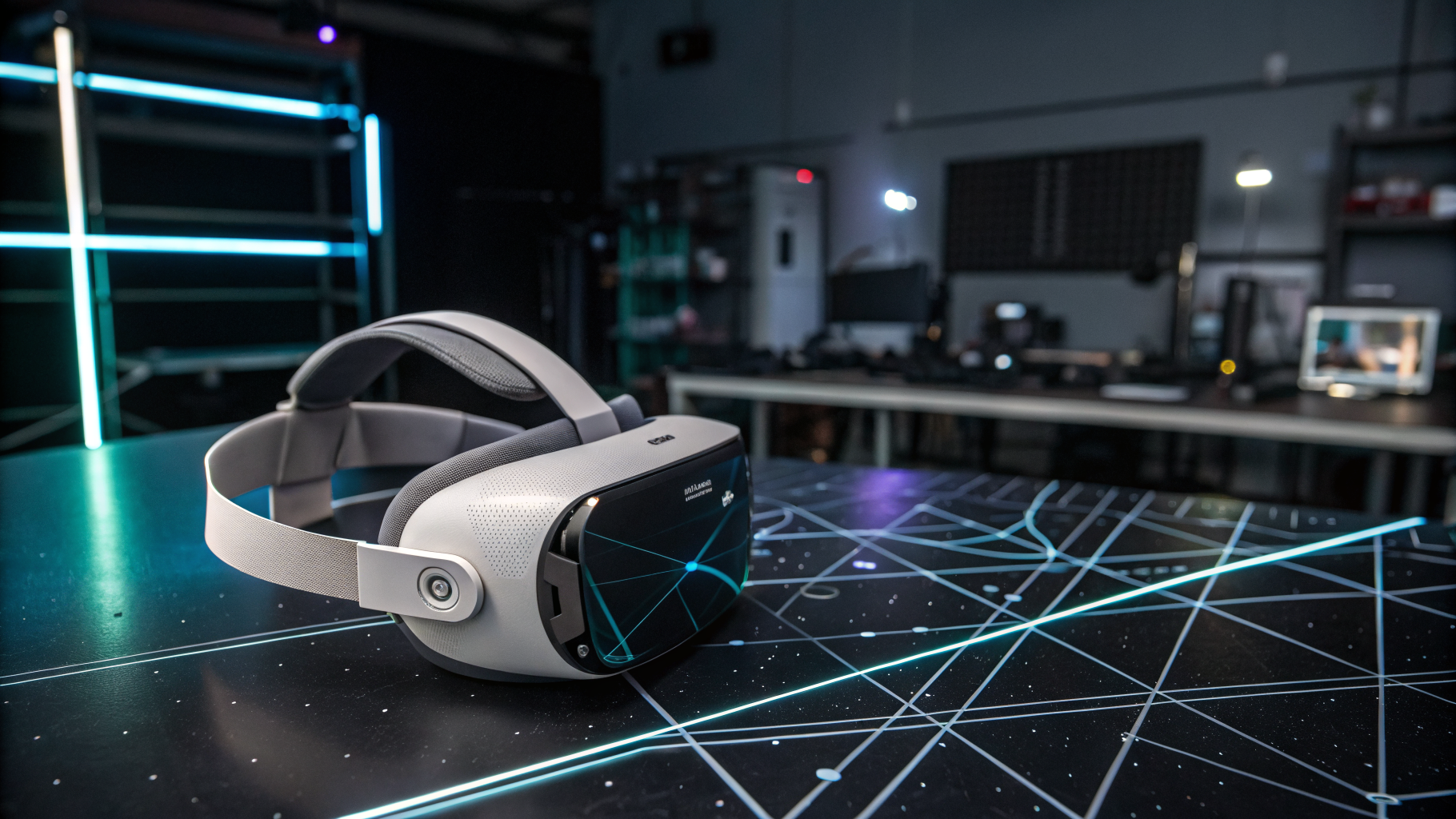
It happened again. A data miner named Luna — a familiar name to anyone who follows XR leaks — dug into Pico’s public SDK and pulled out what appear to be tutorial videos for a device codenamed “Project Swan.” The videos show a headset that, frankly, looks like it was designed by someone who had a picture of the Apple Vision Pro taped to their monitor and a deadline breathing down their neck.
I’ve been covering this industry for over a decade. I’ve seen the rise and fall of Google Glass, the awkward teenage years of the Oculus Rift, and the slow, painful death of countless “metaverse” startups that promised everything and delivered polygons. But what struck me here is not the leak itself — it’s how predictable it has become. Every time a new flagship XR headset surfaces, I half-expect to see a mirror held up to whatever Apple just released.
Let’s be clear: Pico is not alone in this. The entire XR hardware space is suffering from a crisis of imagination. The Vision Pro set a visual benchmark, sure, but it also set a design template that everyone now seems to treat as gospel. Frontal visor? Check. Soft headband? Check. External battery pack? Of course. I’m not saying Pico’s engineers are lazy — I’m saying the industry’s collective ambition has narrowed to a single, expensive point.
What the Leak Actually Shows
The videos, which Luna shared on social media before they were inevitably scrubbed, depict a headset with a curved front panel, a row of external cameras and sensors, and a strap that looks like it was borrowed from a high-end ski goggle. There’s no official name yet, but the community is already calling it the Pico 5 — or, more cynically, the “Pico Vision Pro Lite.”
According to the SDK dump, the device runs on a Snapdragon XR2 Gen 2 chip — the same silicon powering the Meta Quest 3. It features pancake lenses, which are now standard for any headset that wants to claim “flagship” status, and a display resolution that seems to target somewhere between the Quest 3 and the Vision Pro. The controllers shown in the video are ringless, resembling the touch controllers from the Quest Pro.
What I find interesting is not the spec sheet — it’s the tutorial content itself. The videos show a user setting up the headset, drawing boundaries, and navigating a home environment that looks suspiciously familiar. It’s a mixed reality passthrough experience, with virtual windows floating in a real room. Sound familiar? It should. Apple Vision Pro’s “spatial computing” interface is the obvious reference point.
But here’s the thing: Pico has been doing mixed reality longer than Apple. The Pico 4 had colour passthrough before the Quest 3 even shipped. The company knows how to do this. So why does Project Swan look like it’s playing catch-up rather than leading?
The Copycat Comfort Zone
I think I understand the logic. In the boardrooms of ByteDance — Pico’s parent company — someone probably said, “Apple defined the premium XR aesthetic. If we deviate too much, we risk looking like the budget option.” And that’s a real risk. The Vision Pro is a beautiful piece of hardware, even if it weighs as much as a small planet and costs as much as a used car. Mimicking its design language is a safe bet for attracting developers and consumers who want the “Apple experience” without the Apple price tag.
But safety is the enemy of innovation. I’ve watched this pattern before: a category leader releases a bold product, and for the next two years, every competitor releases a slightly cheaper, slightly uglier version of the same thing. Remember the wave of “iPhone killers” that were just iPhones with worse cameras? The XR industry is repeating that mistake in real time.
What makes this worse is that Pico had a chance to differentiate. The Pico 4 was a genuinely good headset — lightweight, comfortable, and with a solid ecosystem for its price point. It wasn’t a Quest killer, but it didn’t need to be. It was a viable alternative. Now, with Project Swan, Pico seems to be saying, “You know what? Let’s just make the thing Apple made, but cheaper.” That’s not a strategy. That’s a surrender.
Why This Matters Beyond the Hardware
I get it — hardware is hard. Supply chains are brutal. Engineering compromises are inevitable. But the lack of original thinking in the industrial design of these headsets reflects a deeper problem in the XR industry: we are still trying to solve problems that don’t exist, while ignoring the ones that do.
Take the external battery pack. Apple put a battery pack on a cable, and everyone gasped at the audacity. Now Pico is reportedly doing the same. Is that really what users want? I’ve spent hundreds of hours in VR headsets, and the main thing I want is less weight on my face. A battery pack on a wire is a compromise, not a feature. It’s a way to shift weight off the head, but it introduces a new annoyance: a cable that gets tangled, snagged, and lost in your couch cushions every single time.
Meanwhile, the Quest 3 manages to pack a battery into the head strap itself. It’s not perfect, but it’s a different approach. Why isn’t anyone else trying something similar? Why is everyone copying the Vision Pro’s most controversial design choice?
I’ll tell you why: because copying is faster than inventing. And in the race to capture the “prosumer” XR market, speed matters more than soul. That’s a dangerous trade-off.
The Leaker Economy and the Death of Surprise
Let’s talk about the leak itself for a moment. Luna — a pseudonym, of course — has been responsible for some of the most accurate XR leaks in the past two years. They leaked the Quest 3’s design months before Meta’s official reveal. They leaked the Pico 4’s specifications. Now they’ve leaked Project Swan.
I have mixed feelings about the leaker economy. On one hand, it builds hype. On the other hand, it robs companies of the ability to control their narrative. Every leak is a small act of sabotage against a carefully orchestrated marketing plan. And yet, I can’t help but feel that some of these leaks are intentional — a way for companies to gauge public reaction without committing to a final design.
If that’s the case here, then the reaction to Project Swan should worry Pico. The community response has been lukewarm at best. People are tired of seeing the same shape, the same features, the same compromises. They want something that feels genuinely new. They want a reason to upgrade.
And that’s the core problem: the XR market is still waiting for its “iPhone moment” — that one product that makes the technology feel essential rather than experimental. The Vision Pro wasn’t it. The Quest 3 wasn’t it. Project Swan, if the leaks are accurate, won’t be it either.
What Pico Should Do Instead
I’m not saying I have all the answers. If I did, I’d be designing headsets instead of writing about them. But I’ve been in this industry long enough to know what doesn’t work: following the leader.
Pico has a unique advantage. It’s owned by ByteDance, which means it has access to TikTok-level social media integration, massive data infrastructure, and a global user base that is already comfortable with short-form video and AR filters. Instead of making a Vision Pro clone, Pico should be building the social XR headset. The one that makes it easy to watch a TikTok video in a floating window, record a mixed reality clip, and share it instantly. The one that understands that most people don’t want a spatial computer — they want a spatial phone.
Imagine a headset that prioritises social presence over productivity. That focuses on lightweight comfort over raw specs. That costs $399 instead of $3,499. That’s a product I would actually recommend to my non-tech-obsessed friends. Project Swan, as leaked, looks like a product I would recommend to someone who already owns a Vision Pro and wants a second, cheaper one. That’s a tiny market.
The Bigger Picture: XR’s Identity Crisis
This leak isn’t just about Pico. It’s a symptom of an industry that has lost its sense of direction. For years, we talked about “the metaverse” as if it were a single, inevitable destination. Now, the hype has faded, and we’re left with hardware that looks great on a spec sheet but feels like a solution in search of a problem.
I’ve said it before, and I’ll say it again: the future of XR is not about making the best headset. It’s about making the best reason to put on a headset. Content, social interaction, utility — those are the drivers. The hardware is just the vessel. And right now, the vessels are all starting to look the same.
Maybe that’s fine. Maybe the industry needs a period of consolidation, where everyone copies everyone else, and the real innovation happens in software and services. But I hope not. I hope Pico — and Meta, and Apple, and everyone else — finds the courage to be weird again. To ship something that doesn’t look like a design committee’s compromise. To take a risk.
Because if all we get are slightly cheaper, slightly lighter versions of the same thing, then the XR industry will never escape its niche. It will remain a toy for enthusiasts and a tool for enterprise, while the rest of the world moves on to the next hype cycle.
And that would be a shame. Because I’ve seen what this technology can do when it’s done right. I’ve been in VR experiences that made me cry, that made me laugh, that made me feel like I was somewhere else entirely. That magic is still there. It’s just buried under a pile of copycat hardware and cautious corporate strategy.
Project Swan might be a good headset. It might even be a great headset. But “great” isn’t enough anymore. We need something that feels inevitable. Something that makes you wonder how you ever lived without it. And from what I’ve seen of this leak, we’re not there yet.
Further Reading
Read the original scoop at Road to VR.
Original source: read the full article