Another Day, Another Leak
Let me be honest with you. When I first saw the headlines about Pico’s next headset leaking via SDK videos, I rolled my eyes. Another VR headset leak. Another grainy render. Another promise of “the next big thing” that will probably launch, get middling reviews, and then quietly disappear into the discount bin. But then I actually watched the footage. And I sat up straighter.
The design, as UploadVR reported, looks like a cross between Apple Vision Pro and Samsung Galaxy XR. That’s not a bad place to start. In fact, it might be the smartest thing Pico has done in years.
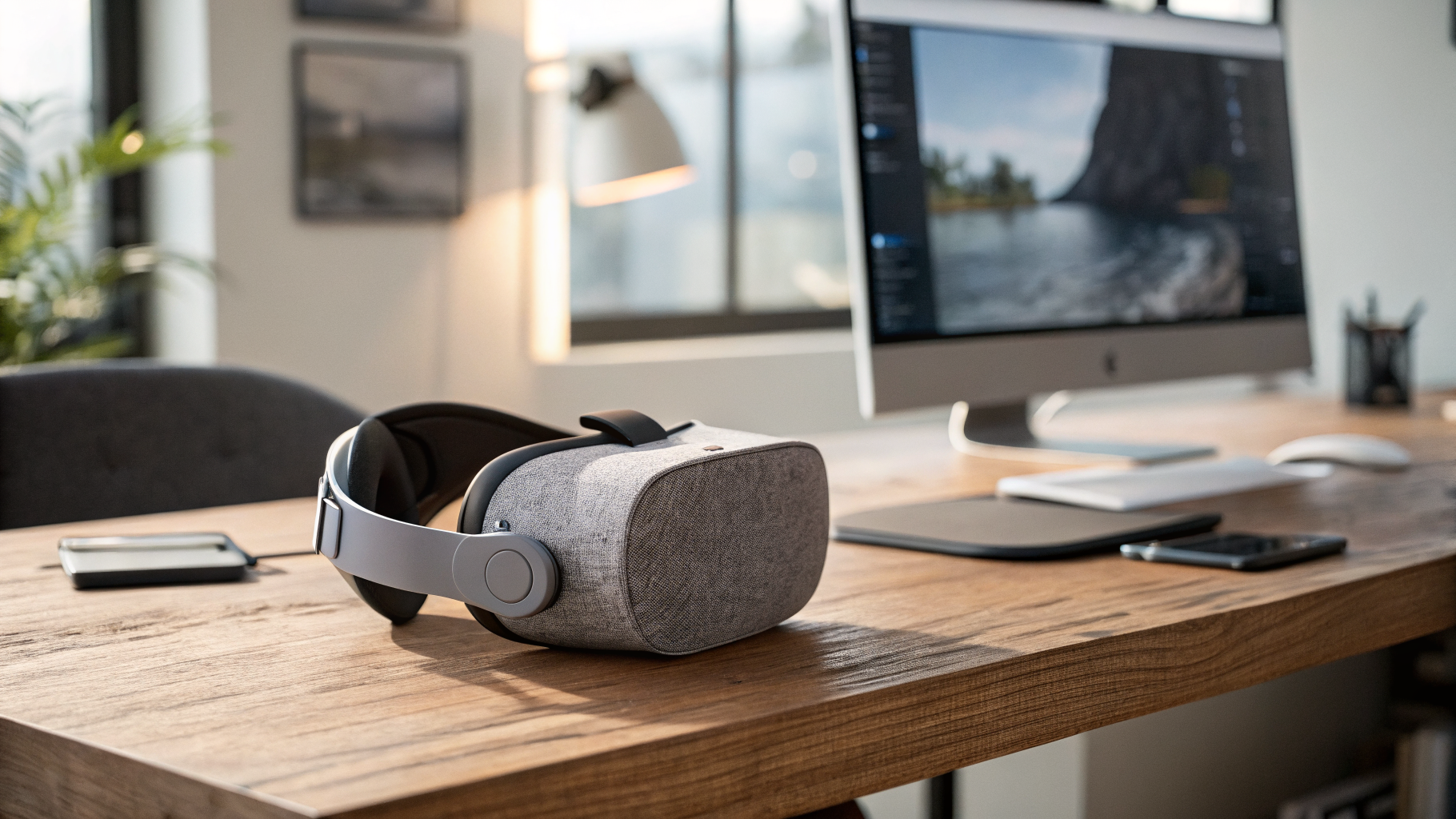
Let’s break this down. The leaked SDK videos show a headset with a curved front display — that signature “ski goggle” silhouette we’ve seen from Apple and Samsung. There are side straps, a front-facing camera array, and what appears to be a dial for adjusting IPD. Nothing revolutionary on paper. But the details matter. The materials look premium. The weight distribution seems balanced. And there’s a noticeable absence of the cheap, glossy plastic that plagued earlier Pico devices.
I think Pico learned a lesson from the Pico 4. That headset was good — really good for the price — but it felt like a gadget, not a device you’d want to wear in public. This new design feels different. It feels intentional. Like someone at Pico finally said, “Let’s stop copying Meta and start competing with Apple.”
The Vision Pro Problem (And How Pico Might Solve It)
Here’s the thing about Apple Vision Pro: it’s a marvel of engineering and a disaster of pricing. At $3,499, it’s not a consumer product. It’s a statement piece for early adopters and developers. The rest of us are left wondering what spatial computing could look like if it didn’t cost a month’s rent.
Enter Pico. The company has always played the value card. Pico 4 undercut Meta Quest Pro by hundreds of dollars while offering similar specs. If this new headset follows that pattern — and I suspect it will — we could see a Vision Pro-like experience for a fraction of the price. How much? I’d guess somewhere between $599 and $899. Maybe less if Pico gets aggressive.
But price alone won’t win this race. The design leak suggests Pico is aiming for a mixed reality sweet spot: high-resolution passthrough, depth sensors, and hand tracking that doesn’t make you want to throw the headset across the room. The SDK videos show a user interacting with virtual objects that seem anchored to the real world. No jitter. No lag. Just smooth, convincing AR.
What struck me here is the camera placement. Pico has put multiple cameras on the front and sides, angled to cover a wider field of view. That’s a subtle but critical choice. Apple Vision Pro uses a similar array to create a seamless blend of real and virtual. If Pico can pull that off at a lower price point, they might actually have a winner.
But Wait — There’s Always a Catch
I don’t want to get carried away. Pico has a history of promising big and delivering… well, almost big. The software ecosystem is still a mess compared to Meta’s. The app store is smaller. The developer incentives are weaker. And the company’s relationship with ByteDance (yes, TikTok’s parent company) raises questions about data privacy that won’t go away.
In my view, the hardware is only half the battle. You can have the most beautiful headset in the world, but if there’s nothing to do with it, it’s a paperweight. Pico needs to convince developers to build for its platform. That means money, support, and a clear vision for where the ecosystem is going. Right now, I’m not sure they have that.
Then there’s the elephant in the room: Meta. The Quest 3 is already on shelves, and it’s good. Really good. The passthrough is solid, the controllers are refined, and the library is vast. Pico is playing catch-up, and leak or no leak, that’s a steep hill to climb.
What the Design Tells Us About Pico’s Strategy
Let’s talk about the aesthetics for a moment. The leaked headset has a fabric-covered front, similar to the Vision Pro’s “EyeSight” display. That’s interesting. It suggests Pico is thinking about social acceptance — how the headset looks to other people, not just the person wearing it. That’s a shift from the “gamer goggles” approach of earlier VR headsets.
I also noticed the strap system. It’s not the halo strap we saw on Pico 4. It’s a dual-strap design with a top band, similar to what Sony uses on PlayStation VR2. That’s a good sign. The halo strap was comfortable for short sessions but became a pain during longer use. This new design should distribute weight better, especially if the headset is as front-heavy as it looks.
Here’s what I think Pico is doing: they’re positioning this as a productivity device, not just a gaming machine. The Vision Pro comparisons aren’t accidental. Pico wants to be the affordable alternative for people who want to try spatial computing without selling a kidney. That’s a smart bet, but it’s a risky one. Productivity headsets have a terrible track record. Remember the Magic Leap? The HoloLens? Great demos, zero adoption.
Pico needs to nail the basics: text legibility, multi-window support, and seamless integration with existing workflows. If they can do that — and keep the price reasonable — they might finally crack the code that everyone else has fumbled.
One More Thing: The Controllers (Or Lack Thereof)
The SDK videos show hand tracking, but I didn’t see any controllers. That’s either a sign of confidence or a huge omission. Hand tracking has improved dramatically in the last two years, but it’s still not good enough for precise interactions like typing or fine-grained manipulation. Apple Vision Pro gets away with it because the eye tracking is so good. Pico’s eye tracking? We’ll have to wait and see.
My guess is that Pico will offer controllers as an optional accessory, or maybe ship them in the box but emphasize hand tracking in marketing. That would be a smart hedge. Let early adopters use their hands for casual browsing and save the controllers for gaming and professional work.
But if Pico launches a $700 headset with no controllers and mediocre hand tracking, they’ll get roasted. And rightfully so.
The Leak Culture Problem
I should also address the elephant on the table: this leak came from a public SDK. That means Pico either has a security problem or someone at the company is playing games with the press. Either way, it’s not a great look. Leaks build hype, sure, but they also set unrealistic expectations. The final product might look completely different. The specs might change. Features might get cut.
I’ve seen this movie before. Remember the “Project Cambria” leaks? Everyone thought it would be a $1,000 productivity headset. Then Meta launched Quest Pro at $1,500, and nobody bought it. Leaks create a narrative that companies can’t always deliver on.
So take this with a grain of salt. The design is impressive. The ambition is clear. But we won’t know if Pico can execute until the headset is actually in reviewers’ hands — and, more importantly, in yours.
What I’m Watching For
- Battery life. If it’s under two hours, that’s a dealbreaker for productivity use.
- Display resolution. Needs to be at least 2K per eye to compete with Quest 3 and Vision Pro.
- Ecosystem. Will there be a killer app at launch? Or will we get another “we’ll add apps later” promise?
- Price. Anything above $899 feels too high for a second-tier platform.
I want Pico to succeed. I really do. Competition is good for everyone. It forces Meta to innovate, it pushes Apple to lower prices, and it gives consumers more choices. But success in VR and mixed reality requires more than good hardware. It requires patience, developer relations, and a willingness to lose money for years. Pico has ByteDance’s deep pockets, but do they have the stomach for that fight?
Final Thoughts: The Headset We Need?
There’s a narrative forming around this leak that Pico is building the “Vision Pro for the rest of us.” I think that’s a fair description, but it’s also a dangerous one. The Vision Pro is an over-engineered luxury product. A cheaper version that cuts the wrong corners could be worse than useless — it could turn people off spatial computing entirely.
Pico has a chance to get this right. The design leak shows they’re thinking about the right things: comfort, social acceptance, and mixed reality fidelity. But I’ve been burned before. I remember the hype around Every headset from the Oculus Rift CV1 to the Vive XR Elite. Most of them delivered on specs but failed on experience.
So I’ll wait. I’ll watch the SDK videos again. I’ll read the rumors. And when Pico finally unveils this thing — assuming it’s real — I’ll be there with a critical eye and an open mind. Because if anyone can build a bridge between today’s VR ghetto and tomorrow’s spatial computing utopia, it might just be the company nobody saw coming.
Or maybe it’s another headset that ends up in a drawer. Time will tell.
Further Reading
Read the original story on UploadVR: The Design Of Pico’s Next Headset Leaked Via SDK Videos
Original source: read the full article