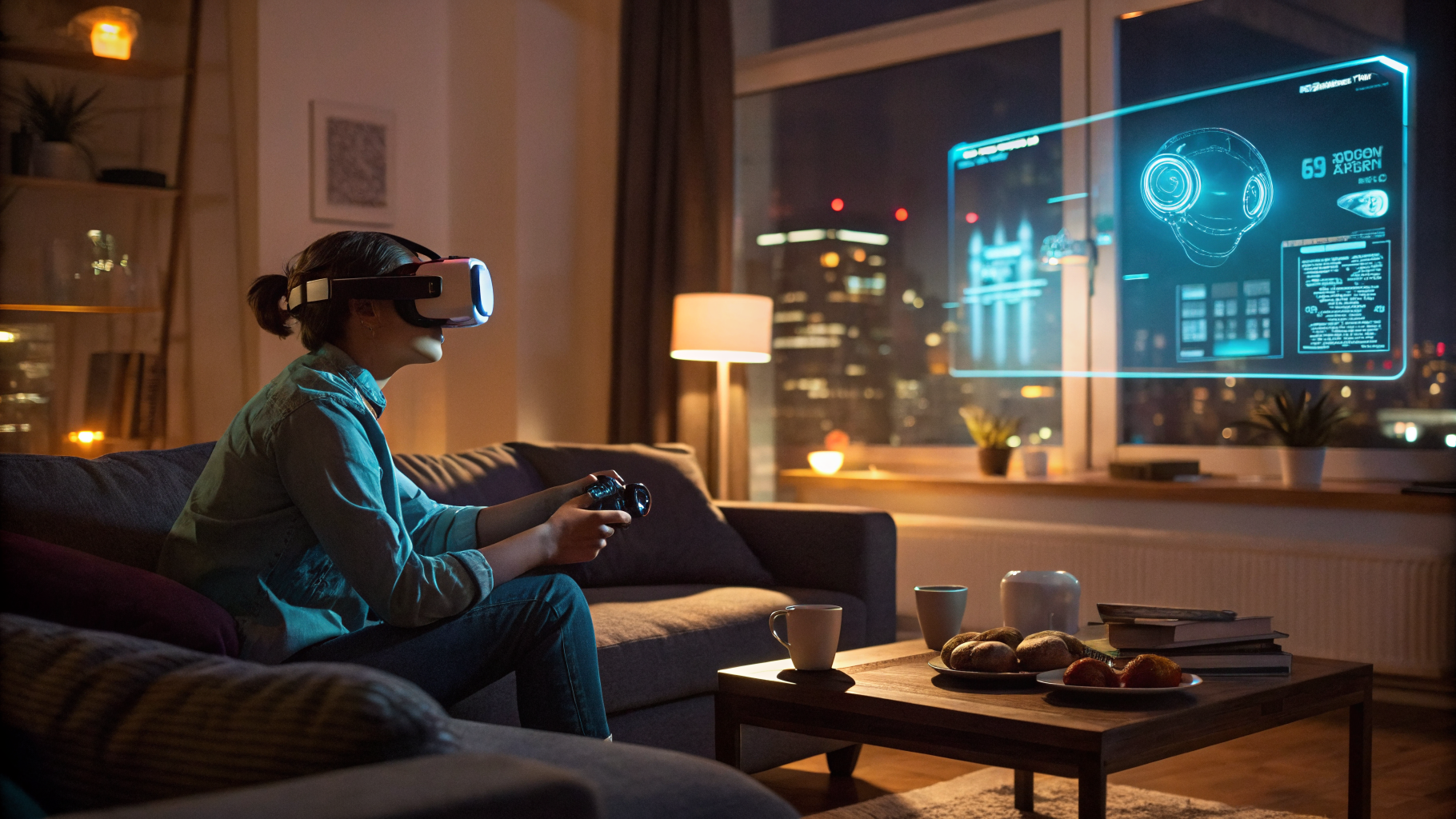
Every few months, a new VR showcase drops, and the industry collectively holds its breath hoping for the next Half-Life: Alyx. That’s a lot of pressure. The Ruff Talk VR Gaming Showcase, now in its latest iteration for May 2026, doesn’t pretend to be that. It’s a curated stream of trailers, reveals, and updates from a podcast run by a father-and-son team who just genuinely love VR. And honestly? That’s refreshing.
I’ve been covering this space since before the original Oculus Rift dev kit shipped. I’ve seen promises, vaporware, and genuine breakthroughs. The Ruff Talk showcase is often a mixed bag, but this year’s lineup had some real surprises. Let’s dive into what stood out, what made me roll my eyes, and what actually might matter.
A Showcase That Knows Its Audience
Damien and Bryan Ruffy, the father-and-son duo behind Ruff Talk VR, aren’t trying to sell you a metaverse real estate plot or a blockchain-powered headset. They’re nerds, in the best sense. The showcase felt like a community event, not a corporate keynote. There was no CEO in a turtleneck talking about “synergy.” Instead, we got a parade of indie studios and a few bigger names showing off their work.
What struck me here was the pacing. The show didn’t linger. Each trailer was a tight minute or two, then onto the next. No filler interviews with developers who clearly hadn’t slept in 72 hours. Just games. It’s a format more showcases should steal.
But let’s not pretend everything was gold. Some trailers were clearly early concept footage, the kind of grey-box environments that make you wonder if the game will ever actually ship. Still, the overall vibe was optimistic. And in 2026, after the crypto winter and the metaverse hangover, optimism in VR is a rare commodity.
The Standouts That Deserve Your Attention
Let’s talk about the games that actually made me lean forward. Not every title was a winner, but a few had that spark.
“Echoes of the Deep” – A Horror Game That Gets It
I’ve played enough VR horror to be numb to jump scares. A door slams, a monster appears, I take off the headset and make tea. But Echoes of the Deep showed something different. The trailer opened with you exploring a sunken submarine, your flashlight flickering in murky water. The sound design — what little we heard — was oppressive. Creaking metal. Distant, wet footsteps.
What made me pause was a moment where the light revealed a reflection in a porthole. Not yours. Something else. It was subtle, and that’s rare in VR horror. Most devs think “loud noise + fast movement” equals fear. No. Fear is anticipation. This trailer understood that. I’ll be watching this one closely.
“Skyforge: Reclaimed” – An MMO That Might Not Suck
I know. An MMO in VR. We’ve been burned before. Orbus tried, and it was charming but janky. Zenith had ambition but crashed under its own weight. Skyforge: Reclaimed seems to be taking a different approach. The trailer showed a persistent world with crafting, flying mounts, and combat that looked more like Dark Souls than Skyrim. Weighty, deliberate, not just flailing your arms.
The hook? It’s designed for cross-play between Quest, PC VR, and PSVR 2. That’s a technical nightmare, but if they pull it off, it could be the first VR MMO that actually sustains a population. Or it could crash and burn. I’m cautiously excited. Emphasis on cautiously.
“Paper Planes” – The Weird One
Sometimes you need a palate cleanser. Paper Planes is a game where you fold paper airplanes in VR and then fly them through increasingly absurd obstacle courses. That’s it. No combat, no story, no loot boxes. Just the satisfying crunch of folding virtual paper and the physics of flight.
Is it a 50-hour epic? No. Will it be a hit in classrooms and with parents who want to show their kids what VR can do without trauma? Absolutely. It’s the kind of simple, well-executed idea that reminds me why I fell in love with this medium in the first place. Not everything needs to be a war simulator.
The Ones That Made Me Wince
Not everything in the showcase was a home run. A few titles made me genuinely concerned for the state of VR game design.
“Battle Royale: Zero Gravity”
I’m going to be blunt: the market does not need another battle royale. And it definitely doesn’t need one where you float around a space station shooting at other players while managing your oxygen levels. The trailer was a blur of UI elements, loot beams, and what looked like pre-rendered explosions. The gameplay snippet showed a player spinning uncontrollably after being hit. That’s not fun. That’s motion sickness waiting to happen.
In my view, this is the kind of game that gets greenlit because someone said “Battle royale but in space!” in a boardroom. No one asked if it should exist. I’ve got a feeling this will be free-to-play with a battle pass, and it’ll be abandoned within six months. Hard pass.
“Farm & Forge” – The Grind Simulator
I love a good farming sim. I have hundreds of hours in Stardew Valley. But Farm & Forge in VR looked like a productivity app dressed up as a game. The trailer showed you planting crops, mining ore, and crafting tools, all in painstakingly realistic motion controls. You had to physically swing a pickaxe, physically lift a watering can, physically carry a sack of potatoes.
That sounds immersive until you realize you’ll be doing these repetitive arm movements for hours. I don’t want to go to the gym and also play a farming sim. I want to relax. The game might have a dedicated audience, but it’s not for me. I’ll stick to my couch and a controller, thanks.
Technical Observations: Quest vs. PSVR 2 vs. PC
One thing that struck me about this showcase is how many games were explicitly targeting Quest as the lead platform. That’s not surprising — Quest has the install base. But it showed. A lot of the trailers had that slightly flat lighting, those simplified textures, the telltale signs of mobile-grade rendering.
Don’t get me wrong. Some of the best VR games run on Quest. Beat Saber. Superhot. But when a game like Skyforge: Reclaimed tries to deliver a sprawling world with dozens of players, the Quest’s limitations become a bottleneck. I hope the devs are optimizing hard, because a blurry MMO is worse than a crisp single-player game.
PSVR 2, meanwhile, got a few exclusive trailers. Echoes of the Deep was clearly built for that headset’s OLED panels and eye-tracking. The blacks were deep, the lighting was dramatic. It reminded me that VR still has a fidelity gap between platforms, and that’s okay. Not every game needs to look photorealistic. But if you’re selling immersion, muddy graphics break the spell.
PC VR, as usual, was the afterthought. A few ports, some upgraded textures. The glory days of PC VR exclusives seem behind us. That’s a shame, but I get it. The money is in standalone. I just wish more developers would offer a high-fidelity PC mode for those of us with the hardware.
What This Showcase Says About VR in 2026
If I had to sum up the state of VR based on this showcase, I’d say: we’re in a settling period. The gold rush is over. The metaverse hype has deflated. What’s left are developers who actually want to make games, not platforms. That’s a good thing.
There were no announcements of a “VR ecosystem” or a “spatial computing platform.” Just games. Some good, some bad, some weird. That’s healthy. The VR industry is maturing into something that looks less like a speculative bubble and more like a niche but sustainable hobbyist market. Like board games, but with more wires.
I still think the hardware needs to get lighter, cheaper, and more comfortable before mainstream adoption happens. But the software? The software is finally getting interesting again. The showcase had at least three games I’ll buy day one, and a few more I’ll wishlist. That’s more than I can say for most AAA flat-screen showcases these days.
The Elephant in the Room: Where Are the Big Studios?
Let’s address it. Meta wasn’t there. Sony wasn’t there. Valve wasn’t there. The Ruff Talk showcase is indie-heavy, and that’s its strength, but also its limitation. The biggest names in VR are still playing it safe, releasing sequels and ports. No one announced a blockbuster $100 million title. No one showed a trailer that made my jaw drop the way Alyx did.
Is that a problem? Not really. The indie scene is where innovation happens. But I worry about the long-term health of VR if the only people making games are small teams with limited budgets. We need a middle ground. We need AA studios taking risks. We need publishers who see VR as more than a side project.
Until then, showcases like Ruff Talk are the lifeblood of the community. They’re not perfect. They’re not polished. But they’re honest. And in an industry full of hype and bullshit, honesty is worth more than a thousand press releases.
Final Thoughts: Should You Watch the Full Showcase?
If you’re a VR enthusiast, yes. The full Ruff Talk VR Gaming Showcase is worth your time. It’s free, it’s under two hours, and it’s packed with more actual games than a typical E3 conference. Skip the battle royale stuff. Pay attention to the horror game, the MMO, and the paper airplanes. That’s where the heart is.
I’ll be writing follow-ups on a few of these titles as they get closer to release. For now, I’m cautiously optimistic. Which, in VR coverage, is about as good as it gets.
Further Reading
Read the original coverage on Road to VR.
Original source: read the full article