
The Future in Plain Sight: Decoding the Next Wave of Smart Glasses
The world of wearable technology is buzzing with renewed energy, and all eyes are on the next frontier: your face. The concept of smart glasses is no longer a sci-fi dream, but a rapidly evolving market poised for a mainstream breakthrough. A potential Apple pivot away from bulky headsets towards sleeker eyewear, combined with an aggressive push from tech giant Samsung, signals a pivotal moment. This isn’t just about another gadget; it’s about fundamentally changing how we interact with digital information and the world around us.
From Sci-Fi Trope to Tech Reality: The Evolution of Smart Eyewear
The journey to create a viable pair of smart glasses has been a long and winding road, paved with ambitious projects and valuable lessons. Early attempts, most notably Google Glass in 2013, introduced the concept to the public but stumbled due to privacy concerns, high cost, and a design that felt more alien than accessible. These early iterations, however, were crucial stepping stones, proving that placing a computer on a person’s face was technologically feasible, if not yet socially acceptable.
Following this, the industry largely split into two camps. On one side, companies like Microsoft with its HoloLens and the secretive Magic Leap focused on high-end, enterprise-level augmented reality (AR), delivering powerful but cumbersome and expensive headsets for professional use. On the other, a few brave companies tried to crack the consumer code. While most of these early consumer products failed to gain traction, they kept the dream alive. We are now witnessing what experts call the journey of augmented reality eyewear reach a new phase of maturity, driven by advancements in miniaturization, battery life, and AI integration.
Analyzing the Landscape: Smart Glasses, the Apple Pivot, and Samsung’s Strategy
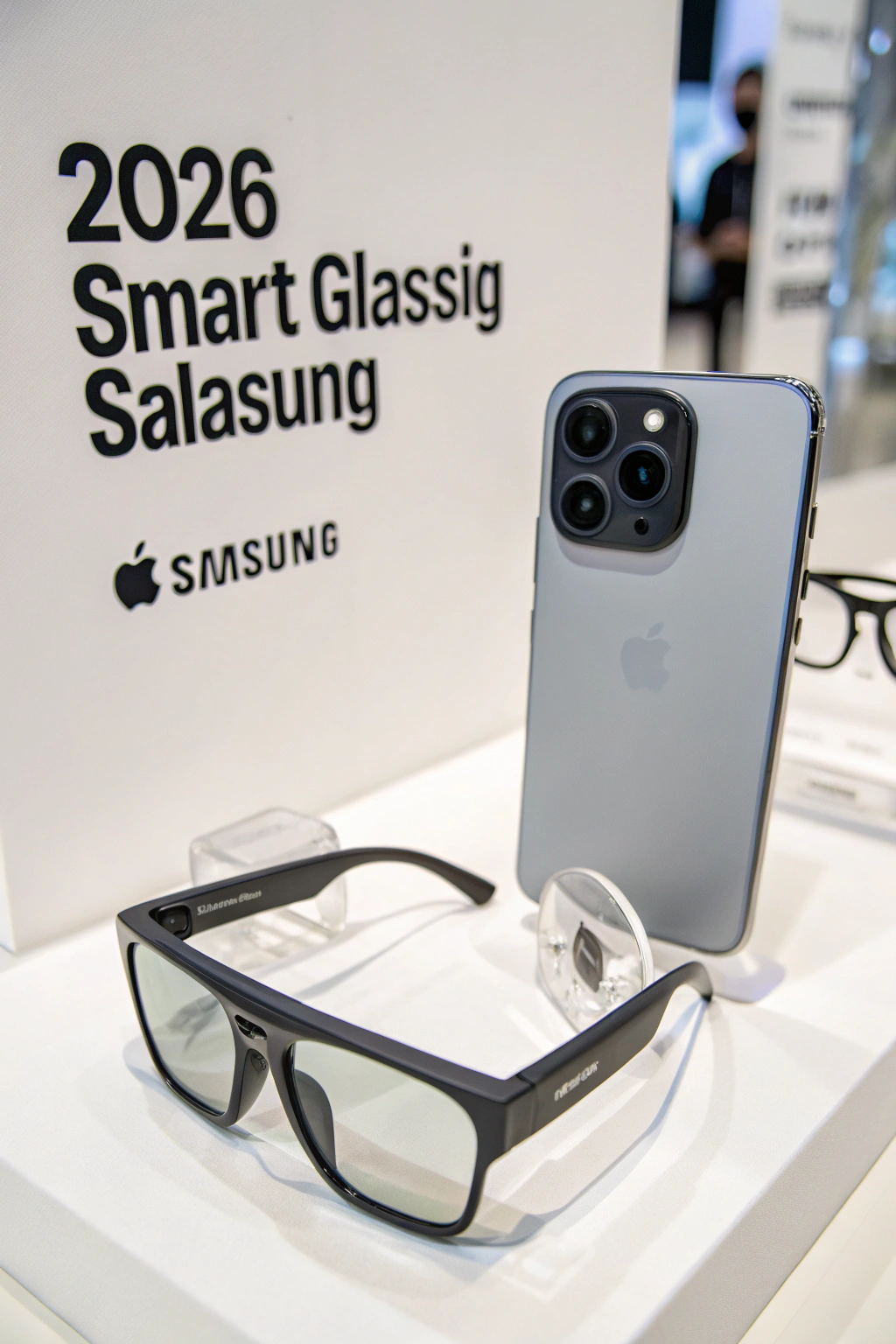
The current market landscape is defined by the strategic maneuvering of tech behemoths. After the launch of the high-end Vision Pro mixed-reality headset, industry insiders are closely watching for an Apple pivot towards a more accessible, glasses-like form factor. The immense R&D that went into Vision Pro—from custom silicon to advanced display technology—could be scaled down to create a device that serves as an all-day companion. Such a product would leverage Apple’s powerful ecosystem, seamlessly integrating with iPhones, Watches, and Macs to deliver notifications, navigation, and Siri-powered interactions directly into the user’s line of sight.
Meanwhile, Samsung is not standing still. Having showcased prototypes and filed numerous patents, the company is clearly preparing a significant push into the smart glasses arena. Samsung’s strategy will likely center on its own ecosystem, creating a powerful synergy between its Galaxy smartphones, smartwatches, and new eyewear. By potentially offering a more affordable and Android-friendly alternative, Samsung could capture a significant market share and create a compelling competitive dynamic with Apple, accelerating innovation and driving down prices for everyone.
Practical Applications: Beyond the Hype
As the technology matures, the practical use cases for smart glasses are becoming clearer and more compelling, extending far beyond simple notifications.
Professional and Enterprise Efficiency
In fields like manufacturing, logistics, and healthcare, smart glasses are already a game-changer. A remote technician can guide a local engineer through a complex repair by seeing exactly what they see and overlaying instructions or diagrams onto their view. Surgeons can have vital patient data displayed in their periphery during an operation without looking away from the task at hand, improving focus and potentially reducing errors.
Everyday Productivity and Convenience
For the average consumer, the benefits lie in seamless integration with daily life. Imagine receiving turn-by-turn walking directions that appear to float on the street ahead of you. Or consider real-time language translation, where you can read subtitles as someone speaks to you in a foreign language. These applications remove the friction of having to constantly pull out your smartphone, making interactions with technology more natural and less intrusive.
Entertainment and Social Interaction
The entertainment possibilities are vast. From playing immersive AR games that transform your living room into a fantasy world to experiencing enhanced concerts where you can see artist information or digital effects, smart glasses promise a new layer of engagement. Socially, devices like the Ray-Ban Meta glasses already allow users to capture photos and videos from a first-person perspective, sharing their experiences more immediately than ever before.
Challenges and Ethical Considerations
Despite the promise, the road to mass adoption is fraught with challenges. Privacy remains the paramount concern. The ability to record video and audio discreetly raises significant ethical questions about consent and surveillance. Manufacturers are addressing this with clear visual indicators, like LED lights, but public trust will be hard-won. Furthermore, the data collected by these devices—from what we see to where we go—is incredibly valuable and must be protected with robust security measures. We must also consider the potential for AI-driven misinformation, where manipulated content could be overlaid onto reality, and the basic safety risks of distracting a user who is walking or driving.
What’s Next? A Glimpse into the Future
The pace of innovation is accelerating, with exciting developments on the horizon. In the short-term, expect more refined versions of existing products, featuring lighter designs, longer battery life, and more powerful onboard AI assistants. Meta is already pushing this with its AI-powered Ray-Ban glasses. In the mid-term (2-4 years), the market awaits the rumored, more conventional smart glasses from Apple and the official entry from Samsung. These launches will likely define the consumer market for the rest of the decade. Innovators like Brilliant Labs are also making waves with open-source, AI-centric devices like Frame, catering to developers and early adopters. Looking long-term, we can envision a future where sleek, socially acceptable smart glasses replace the smartphone as our primary computing device, offering a persistent, helpful layer of augmented reality.
How to Get Involved
The world of spatial computing and AR is more accessible than ever. For those curious to learn more, online communities are a great place to start. Forums like Reddit’s r/augmentedreality and various Discord channels are hubs for developers, enthusiasts, and industry professionals to discuss the latest trends and technologies. For a broader perspective on how these technologies are shaping the future of digital interaction, you can explore the comprehensive resources available on the Metaverse Virtual World portal.
Debunking Common Myths About Smart Glasses
As with any emerging technology, misinformation abounds. Let’s clear up a few common myths.
Myth 1: Smart glasses are just for tech enthusiasts.
Reality: While early versions were clunky and niche, new models from brands like Ray-Ban and Meta are designed with style and mass-market appeal in mind. The focus is shifting to practical, everyday use cases that benefit everyone, not just techies.
Myth 2: They are always recording you.
Reality: To address major privacy concerns, nearly all modern smart glasses have a clear, visible indicator (usually an LED light) that illuminates when the camera or microphone is active. Recording is a user-initiated action, not a constant state.
Myth 3: AR glasses will instantly replace our smartphones.
Reality: The transition will be gradual. For the foreseeable future, smart glasses will function as companion devices that augment the smartphone experience. They will offload certain tasks—like checking notifications or quick navigation—but the phone will remain the central hub for more intensive tasks.
Top Tools & Resources
For those looking to explore the cutting edge of AR and smart eyewear, several platforms and tools stand out.
- Brilliant Labs Frame: These are AI-first smart glasses designed to be lightweight, open-source, and highly customizable. They represent a new wave of thinking, focusing on pairing on-device AI with a minimalist display for developers and creators.
- Snapdragon Spaces XR Developer Platform: Qualcomm’s Snapdragon chips power most of the current and upcoming AR/VR devices. Their Spaces platform provides developers with the tools to create AR experiences that can run across a wide range of hardware, making it a crucial engine for ecosystem growth.
- Tilt Five: A unique take on AR, this system is designed for holographic tabletop gaming. It uses a pair of glasses, a wand controller, and a special gameboard to bring board games and video games to life in 3D, showcasing the diverse applications of the technology beyond daily assistance.
Conclusion
We are at a thrilling inflection point for wearable technology. The renewed focus on smart glasses, driven by the strategic chess moves of an anticipated Apple pivot and Samsung‘s imminent market entry, is set to unleash a wave of innovation. This competition will make the technology more powerful, more stylish, and more accessible than ever before. The question is no longer if we will wear computers on our faces, but when—and whose ecosystem we will choose to see the world through.
🔗 Discover more futuristic insights on our Pinterest!
Frequently Asked Questions (FAQ)
What is the main difference between AR glasses and VR headsets?
The primary difference lies in their relationship with reality. Augmented Reality (AR) glasses overlay digital information—like notifications, maps, or images—onto your real-world view. You remain fully aware of your surroundings. Virtual Reality (VR) headsets, on the other hand, completely block out the external world to immerse you in a fully digital, computer-generated environment.
Is Apple really releasing consumer-friendly smart glasses soon?
While Apple has launched the high-end Vision Pro, which is a mixed-reality headset, persistent rumors and patents suggest the company is actively developing a lighter, more conventional glasses-style device. The “Apple pivot” refers to this potential strategic shift to a mass-market product. However, Apple’s product roadmap is notoriously secret, so there is no official confirmation or release date.
How will Samsung’s smart glasses likely compete in the market?
Samsung’s competitive edge will likely come from its deep integration with the vast Galaxy ecosystem of smartphones, watches, and tablets. By creating a seamless user experience across all its devices, and potentially offering its smart glasses at a more competitive price point than Apple, Samsung aims to provide a compelling and accessible alternative for a massive global user base, particularly those on the Android platform.