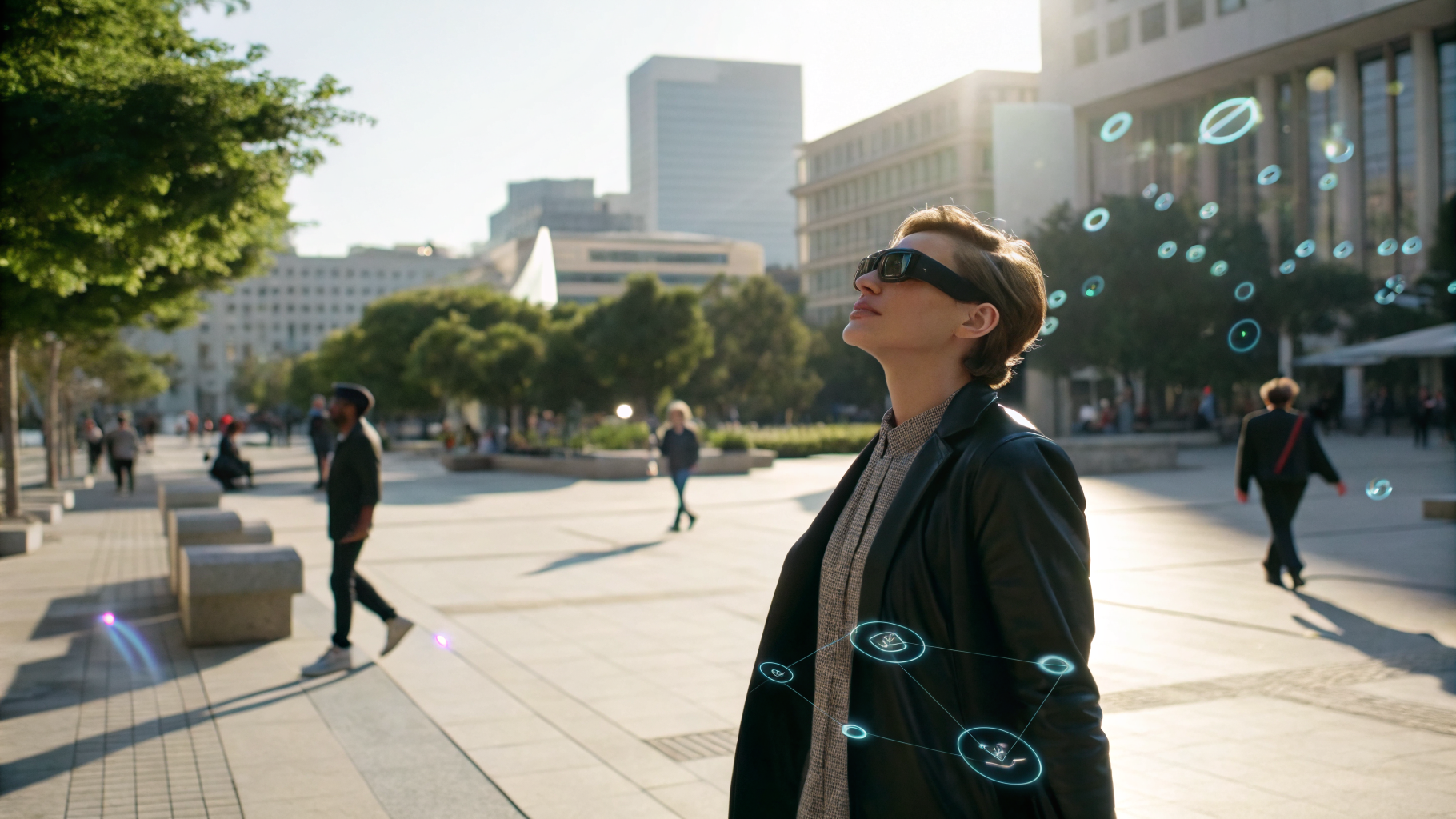
Here’s the thing about augmented reality: it’s been the “next big thing” for so long that the phrase itself has started to feel like a tired joke. But when Snap Evan Spiegel opens the keynote at AWE USA 2026 next month, I don’t think we’ll be rolling our eyes. I think we’ll be leaning forward. Because this time, the company isn’t teasing some far-off vision or showing off another developer kit that costs more than a used car. Snap is promising to actually launch consumer AR glasses this year. Not for coders. Not for early adopters with deep pockets. For you and me.
I’ve been writing about this space long enough to have a healthy dose of skepticism. I remember the original Spectacles launch like it was yesterday — the hype, the pop-up vending machines, the weirdly enthusiastic TikTok reviews. And then… nothing. They were cute, sure. They shot little circular videos. But they didn’t change how anyone interacted with the world. Google Glass had company in the graveyard of overhyped wearables, and for a while, it felt like consumer AR was just a PowerPoint slide that made investors nod sagely before moving on to the next pitch. But something has shifted. The Spectacles 5 developer kit that Snap has been shipping out is getting genuinely positive buzz. The hardware is lighter. The field of view is actually respectable. The waveguide tech? Impressive. But let’s be real: nobody wears developer hardware to brunch. The consumer version needs to solve a much harder equation — price, style, utility, and battery life — all at once.
What’s at Stake When Snap Evan Spiegel Opens AWE 2026
Spiegel is a polished speaker. He knows how to frame a narrative. Last year at AWE, he talked about “augmenting reality without replacing it” — a subtle jab at the VR-is-the-only-path crowd that still dominates certain corners of the industry. This year, I expect more of that framing, but with a harder sales edge. The consumer launch is the endgame. If Spiegel walks on stage and just shows concept renders again, the crowd will feel it. But if he pulls out a pair of glasses that look like, well, glasses — and they work — the entire room will buzz.
The stakes are massive. Apple’s Vision Pro is a technical marvel, but it’s a headset, not glasses. Meta’s Ray-Ban Stories are glasses, but they’re more of a camera accessory than a true AR device. Snap has been quietly iterating for a decade. Their developer ecosystem is real. Their filters and lenses already shape how millions of people see the world through their phones. The leap to glasses that actually overlay digital information onto your field of view in a stylish, wearable form factor is the holy grail. And Spiegel knows that if he doesn’t deliver this year, the window might close. Investors are impatient. Competitors are circling. The narrative that Snap is just a “camera company” needs to die.
Why This Time Feels Different
I’ve been burned before. I bought a pair of Google Glass Explorer Edition in 2013. I wore them exactly three times in public before realizing that “glasshole” wasn’t just a joke — it was a social death sentence. The tech was there, but the culture wasn’t. Fast forward to 2025, and the culture has shifted. People wear AirPods like they’re part of their body. Smartwatches are ubiquitous. The idea of wearing a computer on your face doesn’t feel as alien as it once did. And Snap’s approach is smarter than Google’s ever was. They’re not trying to replace your phone or record your every move. They’re adding a layer of digital whimsy to the world — a dancing hot dog on your friend’s shoulder, a virtual clock floating above your wrist, directions that appear on the sidewalk without you pulling out your phone.
The Spectacles 5 developer kit has been a quiet success. I’ve talked to developers who’ve gotten their hands on it, and the feedback is consistent: the display is bright enough to use outdoors, the tracking is fast, and the form factor is actually something you could imagine wearing to a coffee shop. The battery life still sucks — about 45 minutes of active use — but that’s a software and hardware optimization problem, not a fundamental flaw. The consumer version will need to hit at least two hours to be viable. And if Snap can pull that off while keeping the weight under 50 grams and the price under $500, they might just have a hit.
The AR Market’s Tipping Point
Let’s zoom out for a second. The AR industry has been in a weird limbo for years. We’ve seen incredible demos from Magic Leap, Microsoft, and Meta, but none of them have cracked the consumer code. Magic Leap pivoted to enterprise. Microsoft’s HoloLens is stuck in military contracts and factory floors. Meta’s Quest is great for VR, but their AR efforts are still in the lab. Snap is the only company that has a real shot at making AR a consumer product because they already understand the social layer. They know that AR isn’t about data sheets — it’s about fun, connection, and self-expression. A pair of glasses that lets you see your friend’s Bitmoji waving at you from across the park? That’s the kind of thing that goes viral. That’s the kind of thing that makes people want to buy in.
And the timing couldn’t be better. The smartphone market is saturated. Innovation has plateaued. People are bored. They want something new, something that feels like the future actually arrived. AR glasses could be that thing — if they’re done right. Spiegel’s keynote at AWE 2026 isn’t just a company update. It’s a referendum on whether consumer AR is real or just another mirage. If he delivers, it could be the shot heard ’round the tech world. If he fumbles, it might be years before anyone else tries again.
What I’ll Be Watching For
- Design: Do they look like normal glasses? Or are they still chunky and weird? Style is everything.
- Battery life: If it’s under 2 hours of mixed use, it’s a toy, not a tool.
- Price: Anything above $500 will kill mainstream adoption. $299 is the sweet spot.
- Use cases: Snap needs to show real, everyday utility — not just filters and games. Navigation, notifications, and maybe a killer camera app.
- Ecosystem: Are there third-party apps ready at launch? Or is it a walled garden?
The Quiet Revolution in Waveguide Tech
One of the reasons I’m cautiously optimistic is the progress in waveguide optics. A few years ago, AR displays were either dim, heavy, or both. The Spectacles 5 uses diffractive waveguides that are surprisingly efficient. The image is sharp, the colors are vibrant, and the transparency is good enough that you don’t feel like you’re looking through a dirty window. This isn’t the clunky holographic mess of early prototypes. It’s a legitimate display technology that could scale. And Snap has been investing heavily in manufacturing partnerships to bring costs down. If they can produce millions of units, the per-unit cost drops dramatically. That’s the kind of volume play that makes consumer products possible.
But let’s not get ahead of ourselves. The biggest challenge isn’t the tech — it’s the behavior change. People need to remember to put on glasses in the morning. They need to feel comfortable wearing them all day. They need to not feel like cyborgs. Snap’s marketing has to be pitch-perfect. They need to make AR feel as natural as taking a selfie. And that’s a hard sell, even for a company that made rainbow vomit filters cool.
Conclusion: A Make-or-Break Moment
I’ve been covering this beat for over a decade, and I’ve never felt this mix of excitement and anxiety about a product launch. When Snap Evan Spiegel opens AWE 2026, the entire AR industry will be watching. Not just because he’s a charismatic CEO, but because he’s carrying the torch for a vision that has been promised for too long. If Snap delivers real, stylish, useful AR glasses that people actually want to wear, it could kickstart a new era of computing. If they don’t, it’s back to the drawing board for everyone.
I’ll be in the audience, notebook in hand, hoping to see something that makes me forget about my smartphone for a few minutes. And for the first time in years, I actually think it might happen. The future of AR is coming, and it’s wearing a pair of Snap Spectacles.