Yeah, They Actually Did It
Snap just opened preorders for Specs. Yes, that’s the name — Specs. Not Spectacles anymore, just Specs. Like they’re too cool for full syllables. These are fully standalone augmented reality glasses, shipping this fall in the US, UK, and France for a cool $2,195. I’ve been writing about this space since before most VR headsets had proper straps, and I’ll be honest: I didn’t think Snap would pull the trigger on a real consumer product this soon. But here we are.
The company has been teasing AR hardware for years, first with the camera-focused Spectacles and then with developer-only prototypes. Now they’re selling to anyone with a credit card and a tolerance for being laughed at in public. The price is eyewatering — more than a Quest 3, more than most laptops. But these aren’t a Quest. They’re a bet on a future where the screen disappears and the world becomes the interface.
What Are We Actually Looking At?
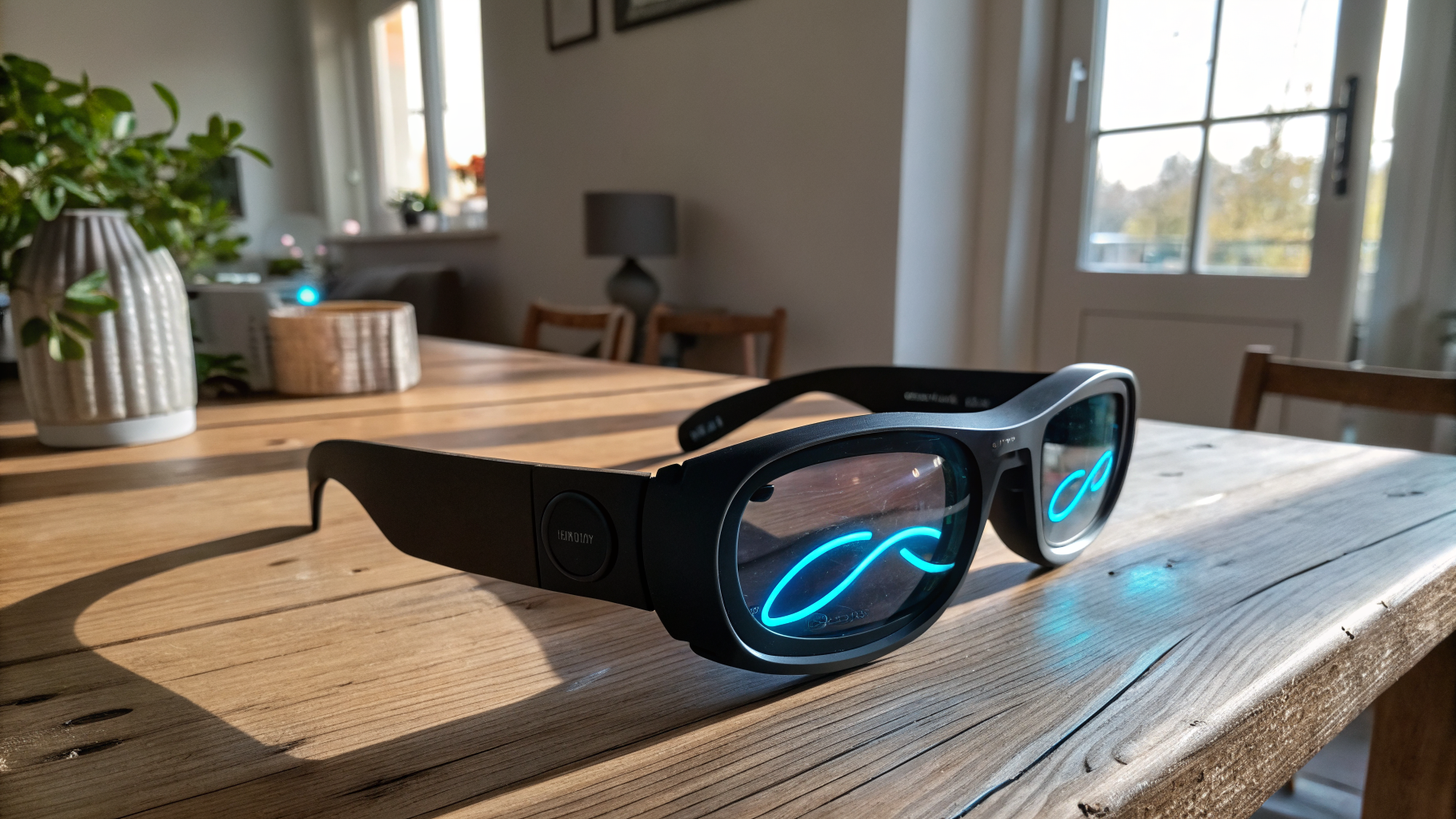
Snap’s Specs are a pair of fairly chunky black glasses with integrated displays, cameras, speakers, and enough processing power to run AR experiences without a phone tether. They’re standalone in the truest sense: no wires, no puck, no iPhone required after setup. The company claims a 46-degree field of view, which is narrow by VR standards but actually respectable for an all-in-one AR form factor. For context, Microsoft’s HoloLens 2 offers about 52 degrees, and Magic Leap 2 sits around 70. So Snap isn’t leading the pack on FOV, but they’re not embarrassing themselves either.
The displays are waveguide-based — that’s the tech that lets light bounce through glass into your eyeballs without blocking your view of the real world. They claim 2000 nits of brightness, which is bright enough to work outdoors in direct sunlight. I haven’t tried them, but if that holds up, it’s a genuine achievement. Most AR glasses look like dim ghosts in daylight. Specs might actually look solid.
What struck me here is the design. They’re not trying to look like normal glasses. They’re thick, angular, and aggressively futuristic — think Kanye’s Yeezy frames crossed with a prop from Minority Report. You will not blend in wearing these. That’s a choice. Snap is betting that people want to look like cyborgs, not just office workers with Ray-Bans.
The Price Is the Story
Let’s talk about that $2,195. That’s more than a Meta Quest 3 ($499), more than an Apple Vision Pro ($3,499, but still). It’s squarely in the “enthusiast early adopter” bracket — the same territory occupied by high-end VR headsets and developer kits. Is it worth it? Honestly, I have no idea. The tech inside is cutting-edge: Qualcomm’s AR1 Gen 2 chip, multiple cameras for hand tracking and world mapping, and a battery that Snap claims lasts for “a full day of intermittent use.” That’s corporate speak for “maybe four hours if you’re lucky,” but we’ll see.
For context, you can buy a used car for that price. Or a very nice bicycle. Or about 110 burritos. The question Snap has to answer is: what can you do with Specs that justifies that kind of cash? The company is pushing social AR — lenses that float in space, games that overlay on your living room, and of course, the ability to record and share Snaps from your eyeballs. That last one is clever: it turns your face into a camera rig. But is it $2,195 clever? I’m skeptical.
I think the real audience here isn’t the average consumer. It’s developers, creators, and the kind of people who bought the first iPhone at full price. Snap is selling a vision, not a mass-market gadget. The question is whether that vision has legs.
How Does It Compare to the Competition?
The AR glasses market is suddenly crowded. Meta has the Ray-Ban Stories and the Quest mixed reality headsets. Apple has the Vision Pro, though it’s more of a spatial computer than true glasses. Then there are startups like Xreal, Vuzix, and even Google, which is quietly working on something called Project Iris. Snap’s Specs sit in a weird middle ground: they’re more capable than Meta’s camera glasses, but less immersive than the Vision Pro. They’re trying to be the Goldilocks option.
Here’s where I’ll give Snap credit: they understand social context better than anyone. Meta’s Ray-Bans are designed to look normal, which means you forget you’re wearing a computer. Snap’s Specs look like a computer, which means you never forget. That’s a trade-off. But Snap’s whole brand is about standing out, being playful, and embracing the weird. So maybe the chunky design is intentional. Maybe they want you to look like a cyborg because that’s the point.
Apple’s approach is different — they want the Vision Pro to disappear into your environment. Snap wants Specs to be a statement. I don’t know which strategy wins, but I know which one is more interesting to write about.
What Can You Actually Do With Them?
Snap has a few demos ready for launch. There’s a game where you defend your coffee table from virtual invaders. A weather app that puts clouds above your actual ceiling. A lens that turns your friend into a cartoon character in real time. It’s all very Snap — playful, ephemeral, and slightly silly. But that’s not a bad thing. The best AR experiences I’ve seen are the ones that don’t take themselves too seriously.
What’s missing, at least for now, is productivity. No word on a spreadsheet app, a virtual monitor, or any kind of work tool. That’s fine — not every device needs to be a workstation. But it does limit the appeal. If you’re spending $2,195, you want something that does more than let you put digital hats on your cat.
- Core apps at launch: Snapchat integration, AR games, weather, photo filters, and a “world lens” that lets you place 3D objects in your room.
- Developer tools: Snap’s Lens Studio will support Specs from day one, meaning anyone can build experiences.
- No native web browser (yet), which feels like a miss — but maybe they’re waiting for the ecosystem to mature.
Hardware: The Good, the Bad, the Bulky
The specs sheet is genuinely impressive in places. The displays use what Snap calls “waveguide optics with liquid crystal on silicon (LCoS) micro-projectors.” That’s a mouthful, but it means the image is sharp and bright. The 46-degree FOV isn’t huge, but it’s enough to place a virtual screen in your peripheral vision. The hand tracking uses on-board cameras and is reportedly fast and accurate — no controller needed. You just pinch, tap, and swipe in the air.
But the battery is a concern. Snap claims “all-day” use, but that’s with the glasses in a powered case that charges them. The actual runtime is probably closer to 3-4 hours of active AR. That’s typical for this class of device — the Vision Pro gets about 2 hours — but it still feels limiting. You’re not going to wear these from morning to night without a break.
Weight is another issue. I haven’t held them, but the promotional images show a thick frame with visible electronics. They look heavier than normal glasses. Snap says they’re “designed for extended wear,” but I’ll believe that when I put them on. AR glasses have a terrible track record of causing fatigue after 20 minutes. If Snap cracked that, they’ve done something remarkable.
Should You Preorder?
I’ll be blunt: unless you’re a developer, a hardcore AR enthusiast, or someone with $2,195 burning a hole in your pocket, probably not. The first generation of any new hardware category is always rough. The software is sparse, the battery life is mediocre, and you’ll look like a total dork on the subway. That’s the price of being early.
But if you are in that camp — if you want to build the future or just experience it before everyone else — Specs might be worth a gamble. Snap has a better track record with hardware than most people give them credit for. The original Spectacles were a flop, but the later versions improved. The company has deep pockets and a dedicated developer community. They’re not going to abandon this product after a year.
What I’m watching for is the software ecosystem. Hardware is hard, but software is where AR lives or dies. If Snap can get a critical mass of developers building compelling experiences, Specs could become the iPod of AR — not the first, but the one that makes it click. If the ecosystem remains a ghost town, then $2,195 buys you a very expensive paperweight.
The Bigger Picture
We’re in a weird moment for spatial computing. Apple, Meta, Google, and now Snap are all betting that glasses will replace phones. But we’ve been hearing that promise for a decade, and phones are still here. The difference this time is that the technology is finally good enough to not be a complete joke. The displays are bright enough for daylight. The tracking is fast enough to feel natural. The chips are efficient enough to fit in a frame. We’re past the prototype phase — now we’re in the “awkward adolescent” phase, where the tech works but the use cases are still fuzzy.
Snap’s Specs are a part of that story. They’re not the final word, but they’re a serious attempt. And at $2,195, they’re a statement of intent: this is real, it’s happening, and we’re not waiting for anyone’s permission. I respect that, even if I’m not ready to buy a pair.
What I wonder is whether the average person will ever want to wear AR glasses in public. I’ve seen the demos, I’ve tried the prototypes, and I still feel self-conscious walking around with a headset. Snap is betting that the next generation — the one that grew up with Snapchat filters and Facemojis — will be fine with it. They might be right. Or they might be selling a solution in search of a problem. That’s the bet every AR company is making right now.
For now, I’ll watch from the sidelines. But I’ll be watching closely.
Further Reading
Read the full announcement at UploadVR: Snap Opens Preorders For Specs, True AR Glasses Shipping This Fall For $2195
Original source: read the full article