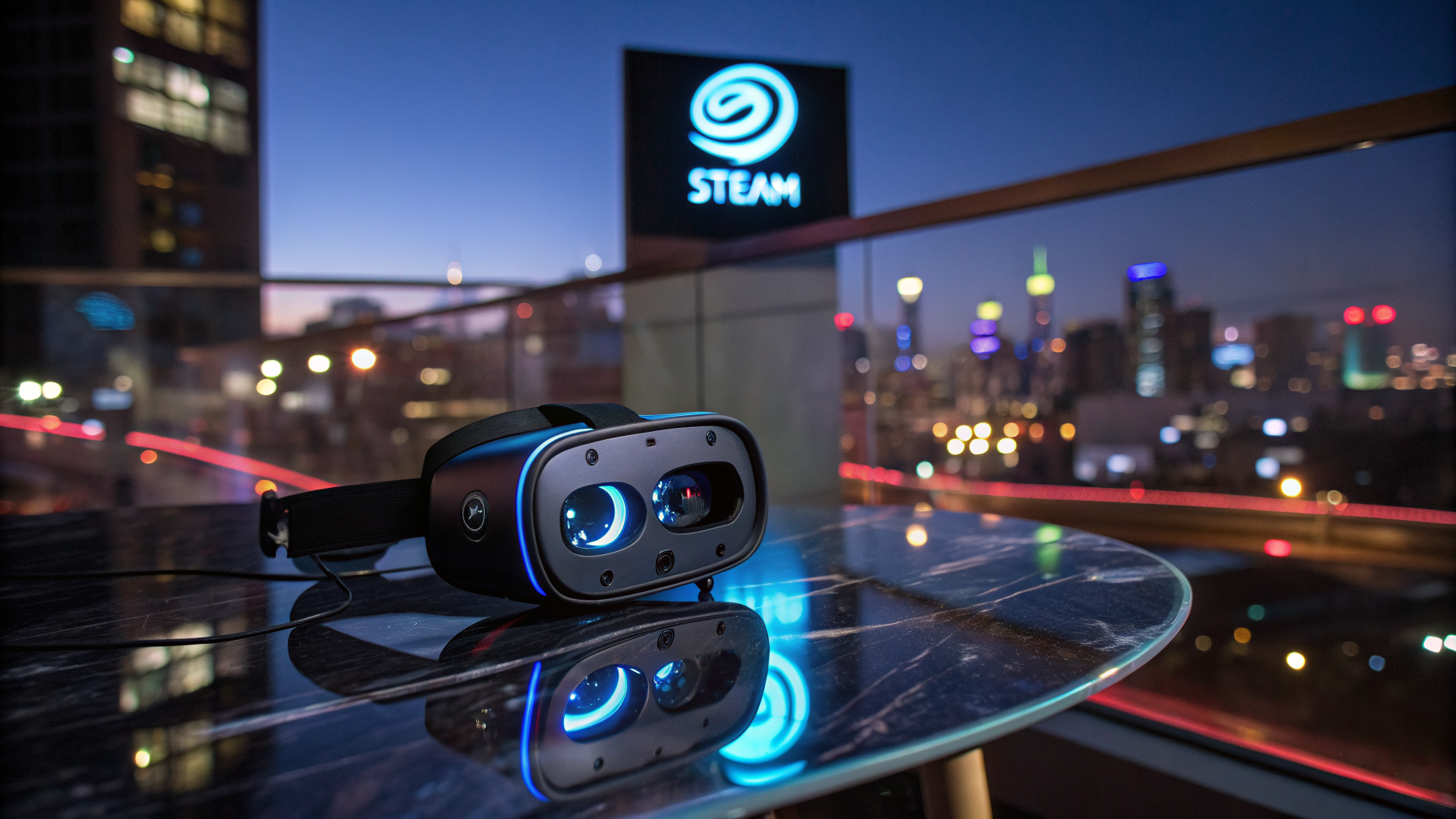
Valve Just Raised the Price of the Steam Deck. That’s a Red Flag.
If you were holding out hope that Valve’s upcoming standalone VR headset, codenamed Steam Frame, would be aggressively priced, I’ve got some bad news. It arrived in the form of a quiet price hike to the Steam Deck, the company’s beloved handheld gaming PC. The 512 GB OLED model jumped from $549 to a staggering $789 in some regions. That’s not a nudge. That’s a shove.
Let me be clear: I love the Steam Deck. It’s a marvel of engineering, a device that turned the portable PC gaming market from a niche curiosity into a legitimate category. But when Valve raises the price of its most visible consumer hardware by nearly 50 percent in one fell swoop, it’s worth asking what that means for the next piece of hardware they’re cooking up. And all signs point to Steam Frame, a standalone VR headset that has been rumored for years, now looking a lot more expensive — or a lot less likely to launch at all.
The official line from Valve? Something about component costs, supply chain pressures, and currency fluctuations. Standard corporate boilerplate. I’m not buying it. Or rather, I’m not buying the idea that this is an isolated move. Valve is a private company, so they don’t have to answer to shareholders in the same way as Meta or Sony. But they do have to answer to the laws of economics. And right now, those laws are telling us that making consumer hardware at a reasonable price is getting brutally hard.
The Steam Deck Was Already a Miracle Price
Let’s rewind a bit. When Valve first announced the Steam Deck in 2021, the starting price of $399 felt like a minor miracle. Here was a device that could play AAA PC games on the go, with a custom AMD APU, a high-refresh-rate screen, and full Linux-based SteamOS support. It was undercutting competitors like the Aya Neo and the GPD Win by hundreds of dollars. Analysts scratched their heads. How were they making money on this thing?
The answer, as it turns out, is that they probably weren’t making much. The Steam Deck was a loss leader, or at best a break-even proposition, designed to sell games on Steam. That strategy works when you’re a platform holder with a massive digital storefront. But it only works if component costs stay stable. And in the post-pandemic world, they haven’t. Memory, storage, and display panels have all gone up. The OLED model, which was already premium, got hit hardest.
Now, $789 for the top-tier model isn’t outrageous compared to a gaming laptop. But it’s a psychological barrier. When you’re paying nearly eight hundred bucks for a handheld, you start comparing it to a PS5 or a mid-range gaming PC. The value proposition shifts. And that’s exactly the kind of shift that worries me for Steam Frame.
What We Think We Know About Steam Frame
Valve has been tight-lipped about Steam Frame, but the rumor mill has been churning for a while. The headset is expected to be a standalone device, meaning it won’t require a PC or a phone to run. It’s supposedly powered by a custom Qualcomm or AMD chip, with inside-out tracking, color passthrough cameras, and a focus on mixed reality. Some leaks suggest it could cost around $1,000, targeting the same sweet spot as the Meta Quest 3.
But here’s the thing: the Quest 3 launched at $499. The Quest 3S is even cheaper. Apple’s Vision Pro is $3,499, but that’s a luxury halo product. The real battle in VR is at the $300 to $600 range. Sony’s PlayStation VR2 is tethered and costs $550, but it’s subsidized by the PS5 ecosystem. If Valve wants to compete, they need to hit that price point. And if the Steam Deck — a device with a smaller screen, fewer sensors, and less complex optics — just jumped by $240, how is Valve going to cram all that VR tech into a sub-$600 headset?
I’ll answer that: they probably can’t. At least not without taking a massive loss per unit. And while Valve can afford to lose money on hardware in the short term, there’s a limit. The Steam Deck price hike suggests that limit is closer than we thought.
It’s Not Just the Price — It’s the Signal
What struck me here is not the dollar amount itself, but what it communicates about Valve’s hardware strategy. The Steam Deck was supposed to be the Trojan horse: a low-cost entry point that gets people into the Steam ecosystem, then hooks them on game sales. If the price goes up, the Trojan horse becomes a luxury carriage. Fewer people buy it. Fewer people get hooked. The whole math breaks down.
Apply that logic to VR. The VR market is still small. It’s growing, but slowly. The biggest barrier to adoption is price, followed by content. Meta has been willing to sell Quest headsets at a loss for years, banking on future revenue from the Quest Store and Horizon Worlds. Valve doesn’t have that luxury in VR — not yet. They have SteamVR, sure, but that’s mostly PC VR content. A standalone headset would need its own app store, its own ecosystem, its own developer relations. That’s expensive. And if the hardware itself is already priced high, you’re asking early adopters to pay a premium for an unproven platform.
I’m not saying Steam Frame is doomed. Valve is one of the few companies with the engineering talent and financial reserves to pull off something impressive. But the price hike on the Steam Deck is a canary in the coal mine. It tells me that Valve is feeling the same cost pressures as everyone else. And in VR, where margins are thinner and the market is more skeptical, that pressure could crush the project before it even launches.
What About the Index 2?
Let’s not forget that Valve also has the Index, their high-end PC VR headset. There have been whispers of an Index 2 for years, but nothing concrete. If the Steam Frame is their standalone play, the Index 2 would be their premium PC VR offering. But again, cost is an issue. The original Index launched at $999 for the full kit, and that was in 2019. Since then, inflation has eaten away at purchasing power, and component costs have risen. A hypothetical Index 2 could easily cost $1,200 or more. That’s a tough sell when the Quest 3 offers a similar experience for less than half the price.
I think Valve is in a bind. They want to be in VR — they’ve said as much. They believe in the platform. But they also have a very specific corporate culture that resists rushing products to market. They’d rather cancel a project than ship something half-baked. That’s admirable, but it also means they’re slow. And in the fast-moving world of consumer electronics, slow can be deadly. The Steam Deck price hike might just be a sign that Valve’s hardware ambitions are hitting a wall of reality.
The Bigger Picture: VR’s Pricing Problem
This isn’t just about Valve. The entire VR industry is struggling with pricing. Meta has been the exception, subsidizing hardware to build a user base. But even Meta raised the price of the Quest 2 by $100 in 2022, citing similar cost pressures. They eventually dropped it again, but the message was clear: making VR affordable is hard. Apple’s Vision Pro showed that a premium headset can exist, but it’s a niche product for developers and early adopters. The mass market still wants cheap.
If Valve can’t deliver Steam Frame at a competitive price, they might as well not bother. A $1,000 standalone headset would compete with the Quest Pro, which flopped. A $1,500 headset would compete with the Vision Pro, which is selling in tiny numbers. The only way to win in VR right now is to be cheap or to be exceptional. Valve can be exceptional — they proved that with the Index’s audio and comfort. But cheap? The Steam Deck price hike suggests that’s no longer in their playbook.
In my view, Valve should take a page from their own history. The original Half-Life was a slow burn. They took their time, iterated, and released a masterpiece. But hardware doesn’t work that way. You can’t iterate in public for years while the market moves on. By the time Steam Frame launches — if it launches — Meta will be on Quest 4 or 5. Sony will have a PSVR3. Apple will have a cheaper Vision. The window is closing.
Look, I want Steam Frame to be great. I want Valve to succeed in VR because they bring a level of polish and gamer-first thinking that the industry desperately needs. But the Steam Deck price hike is a warning shot. It tells me that Valve is not immune to the economic forces that have killed or delayed so many VR projects. If they can’t keep the Steam Deck affordable, what chance does a VR headset have?
I’ll leave you with this: if you’re a VR enthusiast hoping for a budget-friendly Steam Frame, temper your expectations. Maybe start saving now. Because if the trend holds, you’re going to need a bigger wallet.
Further Reading
For more details on the Steam Deck price hike, check out the original article on Road to VR: Steam Deck’s Massive Price Hike May Not Bode Well for Steam Frame.
Original source: read the full article