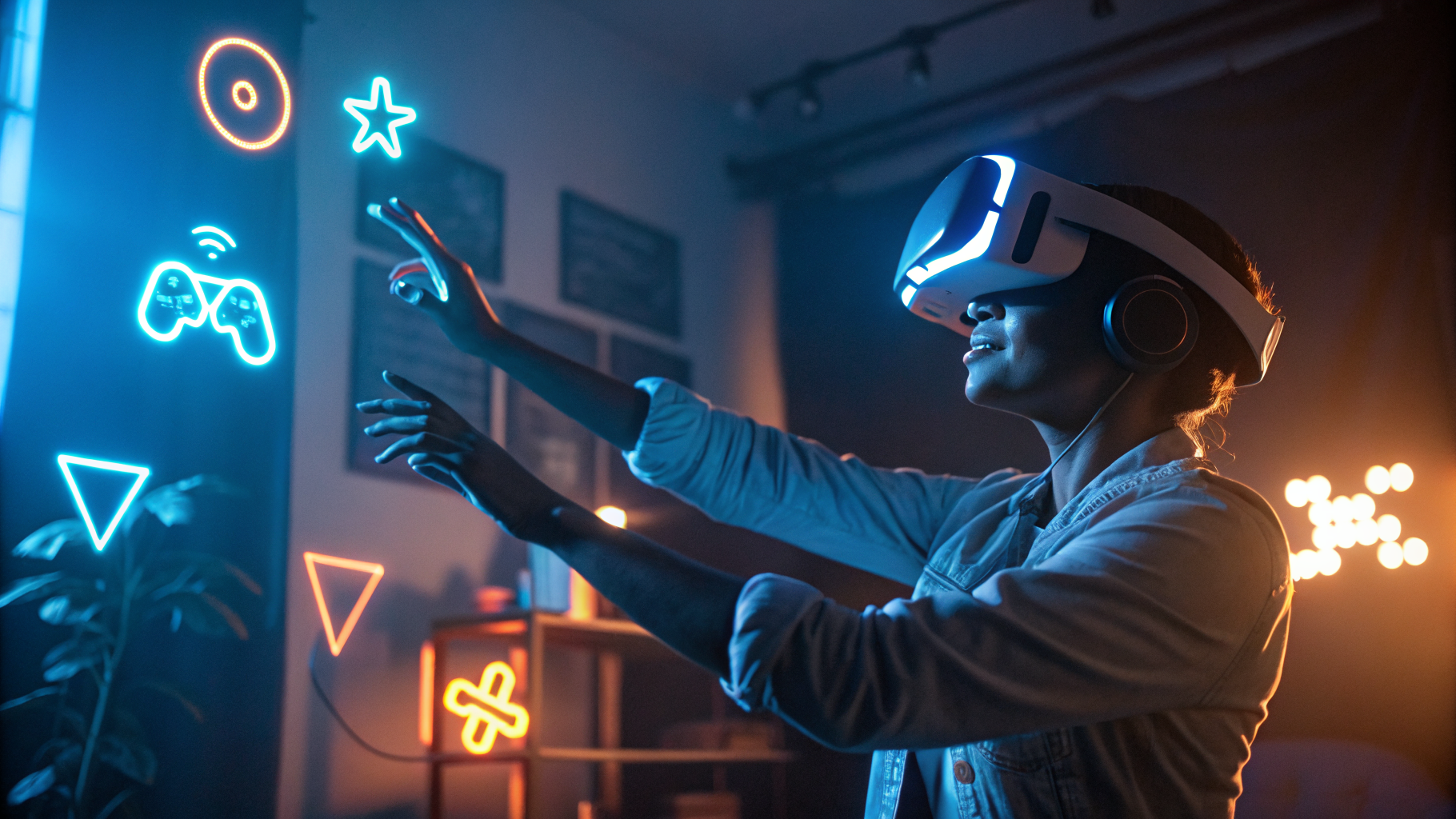
Another summer, another VR Games Showcase. The sixth iteration just wrapped, and I’ve spent the last few hours scrubbing through the stream, taking notes, and trying to separate genuine excitement from the usual pre-rendered promises. Let me save you the two hours of your life I’ll never get back.
Look, I’ve been doing this long enough to remember when a VR showcase meant three tech demos, a meditation app, and a port of a five-year-old flatscreen game. Those days are gone. We’re now in an era where VR gets its own dedicated showcases with real budgets, real studios, and — dare I say it — real games. The Summer 2026 edition was no exception. But not everything that shines in a trailer holds up under scrutiny. Let’s break down what actually matters.
Breachers: Outbreak — More Than Just a Tactical Facelift?
The big reveal of the night was Breachers: Outbreak. If you’ve been living under a rock, the original Breachers was a solid tactical shooter that tried to fill the Rainbow Six-shaped hole in VR. It did a decent job, but it always felt a little… sterile. Clean rooms, clean objectives, clean kills. This new entry, Outbreak, promises a PvE campaign against AI enemies. Which, on paper, sounds like exactly what the original needed.
But here’s my concern: the trailer showed a lot of scripted set pieces. Explosions timed perfectly, enemies emerging from cover in cinematic slow motion. That’s great for a trailer. In practice, PvE in VR is notoriously hard to get right. AI that feels smart in a flatscreen game often feels brain-dead when you’re physically peeking around a corner. I’ve reviewed too many VR shooters where the enemies either stand still or teleport around like they’re having a seizure. Outbreak needs to prove it can handle the spatial complexity of VR combat. I want to be wrong. I really do. But I’m keeping my expectations in check.
What Stood Out
The co-op focus is smart. VR is at its best when you’re in a room with friends, shouting callouts and accidentally punching each other in the face. The trailer showed four-player squads working through a derelict space station (or was it a laboratory? The lighting was very orange). The weapon customization looked deeper than the original — modular attachments that actually change the handling, not just cosmetic reskins. That’s a good sign.
What I didn’t see: any hint of a competitive mode. The original Breachers was built for PvP. If Outbreak is purely PvE, it might alienate the player base that kept the first game alive. Then again, maybe that’s the point. Maybe the developers recognized that the competitive scene was too crowded — Contractors, Pavlov, Onward — and decided to carve a new lane. Risky. But sometimes risk pays off.
DRIFTERS: Blackout Crew — Can a Racing Game Work in VR?
I’ll be honest: I groaned when I saw the title. Another VR racing game. We’ve had Project Cars, Assetto Corsa, Dirt Rally, and about a dozen indie drift sims. What could DRIFTERS: Blackout Crew possibly add?
Turns out, maybe a lot. This isn’t a sim. It’s an arcade racer in the vein of Burnout or Split/Second, but built from the ground up for VR. The trailer showed a nighttime street race through a neon-lit city, with cars sliding around corners, sparks flying, and a sense of speed that made me slightly nauseous just watching it. That’s actually a good sign — nausea in a trailer usually means the sense of presence is strong.
The twist? Crew-based mechanics. You’re not just racing; you’re coordinating with teammates who can deploy power-ups, repair your car, or sabotage opponents. It’s Mario Kart meets Fast & Furious, but in VR. The question is whether the social layer holds up. VR racing has always been a solitary experience for me — you’re in a cockpit, alone with your thoughts and your tire squeal. If Blackout Crew can make me feel like part of a team, it might just carve its own niche.
One worry: the trailer showed a lot of quick cuts. I’d love to see extended gameplay footage before I get excited. Arcade racers in VR have a history of looking great in trailers and feeling like a blurry mess in the headset. Framerates matter. Latency matters. This is a game that absolutely cannot afford to stutter.
Payday: Aces High — The Heist Continues, But Will It Stick?
Payday: Aces High was shown off with a new gameplay trailer, and I have mixed feelings. The original Payday 2 VR was a classic case of a flatscreen port that kind of worked but never felt native. The menus were a nightmare, the interactions were clunky, and you always felt like you were playing a flatscreen game with a headset strapped on. Aces High promises to be built for VR from the ground up.
The trailer showed off some genuinely impressive physics interactions. Prying open a door with a crowbar, zip-tying hostages, and — my personal favorite — physically reloading a shotgun by slamming it against your shoulder. That last one is a small detail, but it’s the kind of tactile feedback that separates good VR from great VR.
But here’s the thing: Payday has always been about teamwork and chaos. In flatscreen, chaos is fun. In VR, chaos can be overwhelming. I’ve played enough VR shooters to know that when four players are all shouting, shooting, and trying to carry a bag of money down a stairwell, the experience can quickly devolve into a sweaty, disorienting mess. The developers need to ensure that the VR version doesn’t lose the strategic depth of the original. Give me tools to communicate. Give me a clear UI. And for the love of god, give me a way to not accidentally grab a hostage’s face when I’m trying to grab a keycard.
Hot Dogs, Horseshoes and Hand Grenades 2 — The Return of the King
If there’s one game that the VR community has been screaming for, it’s a sequel to Hot Dogs, Horseshoes and Hand Grenades (H3VR). The original is a technical marvel — a gun simulation so detailed that it makes America’s Army look like a water pistol fight. But it’s also a niche product. It’s a sandbox, not a game with a traditional campaign. The developer, Anton Hand, has always leaned into the absurdity: hot dogs as enemies, a virtual shooting range, and a level of gun physics that borders on obsessive.
H3VR 2 was shown with a brief teaser, and it looks like more of the same — which is exactly what the fans want. But I’ll admit, I was hoping for something more. The teaser showed a new environment (a snowy mountain range) and some new weapons (including a flamethrower that looked disturbingly realistic). But there was no hint of a story mode, no multiplayer, no structure. At this point, H3VR is the VR equivalent of a high-end Swiss Army knife: incredibly well-made, but you need to know what you’re doing with it.
I think the VR market has matured enough that a game like this can thrive without a campaign. But I also think the developers are missing an opportunity. Imagine a full-fledged campaign where you use these incredible guns to fight through a series of levels. The physics are already there. The mechanics are already there. Just give me a reason to use them. Otherwise, this is a tech demo — a brilliant, beautiful, painstakingly crafted tech demo — but a tech demo nonetheless.
Korea. IL-2 Series — A History Lesson in VR?
This one came out of left field. Korea. IL-2 Series is a new entry in the long-running flight sim franchise, set during the Korean War. The trailer showed vintage aircraft — Sabres, MiGs, prop-driven bombers — duking it out over a beautifully rendered Korean peninsula. If you’re a flight sim enthusiast, this is probably the announcement of the show. The IL-2 series has always been known for its realistic flight models and historical accuracy. Bringing that to VR is a natural fit.
But I have to ask: who is this for? Flight sims in VR are a tiny niche within a tiny niche. You need a powerful PC, a flight stick, and the patience to learn complex systems. The Korean War setting is also less iconic than World War II or modern combat. I worry that this will be a game that gets praised by critics (including me, probably) but played by very few people.
Still, I respect the ambition. The trailer showed off some of the best cockpit detail I’ve ever seen in VR. The instruments were readable, the reflections on the canopy were realistic, and the sense of scale was immense. If you’re one of the dozen people who have been waiting for a Korean War flight sim in VR, your patience has been rewarded.
The Rest of the Show: Quick Hits and Honorable Mentions
No showcase is complete without a few smaller titles that deserve attention. Here’s what else caught my eye:
- Ghosts of Tabor 2.0: The extraction shooter that everyone copied is getting a major update. New map, new weapons, and — finally — a fix for the inventory system that made me want to throw my headset out a window.
- Puzzling Places: Infinite: The most relaxing VR game ever made is getting an endless mode. If you’ve ever wanted to assemble a 3D puzzle of a medieval castle for six hours straight, this is your moment.
- Blade & Sorcery: Nomad: The Quest version is getting a graphics overhaul that makes it look almost as good as the PC version. Almost. But for a standalone headset, it’s impressive.
- Zenith: The Last City 2.0: The MMO that launched with high hopes and mixed reviews is getting a major reboot. New combat system, new zones, and a renewed focus on story. I’m cautiously optimistic.
What I didn’t see: any major announcements from Meta or Apple. No new hardware. No surprise exclusives. The VR Games Showcase is increasingly becoming a third-party affair, which is both good and bad. Good because it means the ecosystem is healthy enough to support independent events. Bad because it means the platform holders are saving their big announcements for their own events. I get it. But I miss the days when a showcase like this would end with a surprise headset reveal.
Final Thoughts: A Solid Show, But Not a Knockout
So where does the Summer 2026 VR Games Showcase leave us? With a handful of genuinely exciting games, a few question marks, and the usual sense that VR is still figuring out what it wants to be when it grows up. The line between flatscreen ports and native VR experiences is blurring, which is a good thing. But we’re still seeing too many trailers that promise more than they can deliver.
What struck me most was the diversity of genres. Tactical shooters, arcade racers, flight sims, puzzle games, sandboxes. VR is no longer just a platform for short experiences and tech demos. These are real games, with real budgets, from real studios. The question is whether they can find an audience large enough to sustain them. The VR player base is growing, but it’s still not huge. A game like H3VR 2 will sell well to the hardcore. A game like DRIFTERS will need to appeal to a broader audience if it wants to break even.
I’ll be watching the launch windows closely. Breachers: Outbreak is slated for late 2026. Payday: Aces High is aiming for a holiday release. H3VR 2 has no date yet, which makes me nervous. And Korea. IL-2 is targeting early 2027. As always, the proof will be in the playing. Until then, I’ll keep my headset charged and my expectations tempered.
See you in the metaverse. Or whatever we’re calling it this week.
Further Reading
Read the original coverage on Road to VR: Everything Announced at the Summer 2026 VR Games Showcase
Original source: read the full article