I’ve spent over a decade watching virtual reality try to convince us it’s the future of music. For every genuinely moving experience like Beat Saber or Electronauts, there are a dozen gimmicks that feel like tech demos dressed up as albums. So when I saw the headline about Theremin’s Ghost Hands — a mixed reality add-on that lets you perform alongside recordings of your own past performances — I braced for hype. But after spending a few hours with an early build, I think this might actually be the real thing. Or at least the most interesting thing to happen to VR music since someone first thought to strap a controller to a guitar.
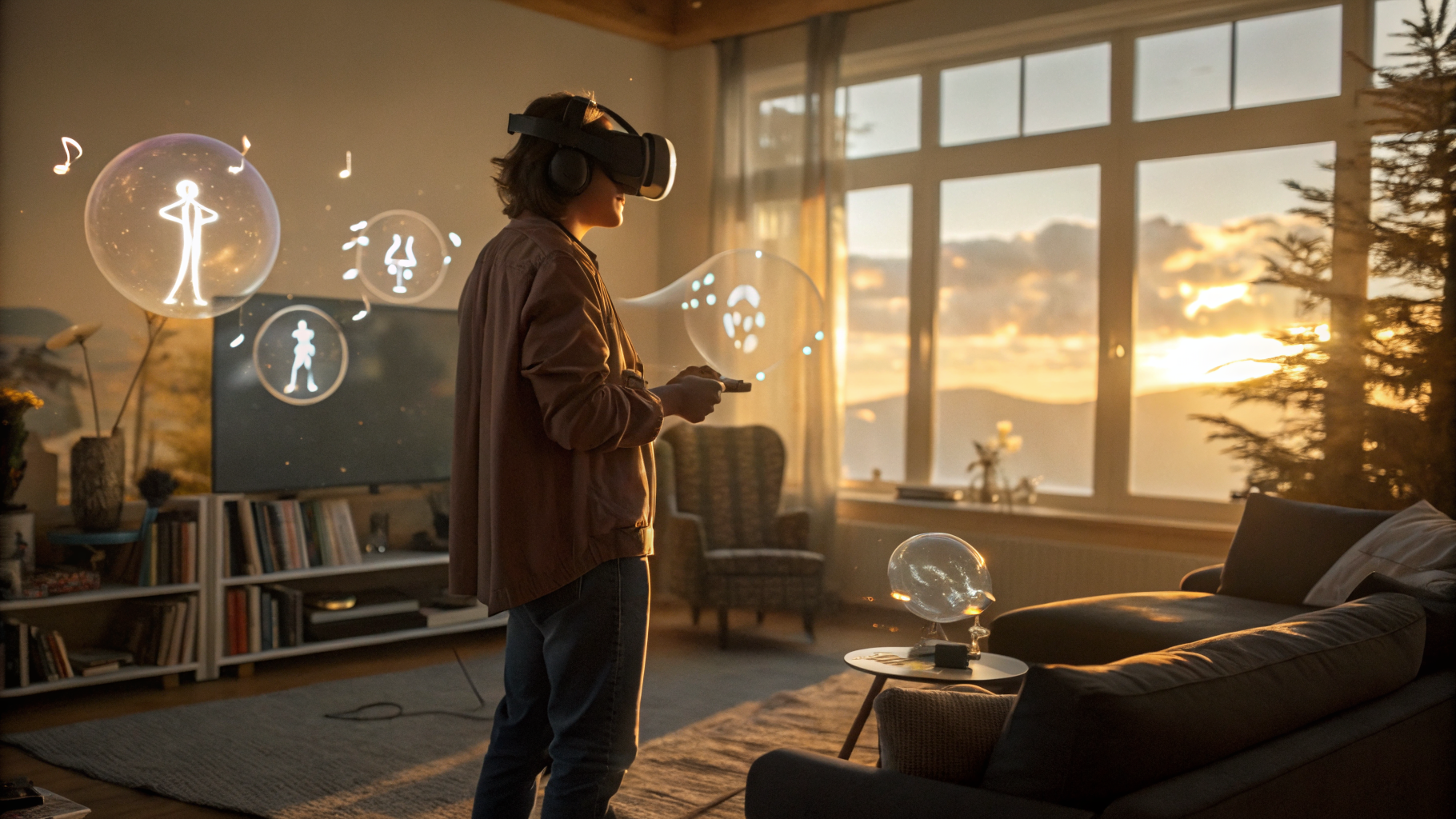
The core idea is deceptively simple. Theremin, already a clever mixed reality app that turns your physical space into a musical instrument, is getting a July update called Ghost Hands. The name is perfect. It captures the eerie, time-bending quality of the feature: you record a performance — waving your hands, stepping through virtual theremin fields, triggering notes with your body — and then the app plays that recording back as a translucent ghost version of yourself. Then you perform alongside it. A duet with your own past. A one-person ensemble that doesn’t require cloning, just a decent internet connection and a tolerance for mild existential vertigo.
Let me be clear: this is not a gimmick. At least not in the way most “multiplayer with yourself” features are. I’ve tried the usual tricks — recording a loop, playing over it, layering tracks — and they always feel like work. Ghost Hands feels like play. The ghost is not a static recording. It moves, breathes, gestures. You can see the exact moment you hesitated on a note, or the flourish you made when you hit a particularly satisfying chord. Performing with it is like dancing with your own shadow, except the shadow has its own ideas about tempo.
What struck me here is the intimacy. Most VR music apps are either solitary (you alone in a void) or social (you and strangers in a digital club). Ghost Hands splits the difference in a way that feels genuinely new. You are alone, but you are also with someone who knows exactly what you’re thinking because that someone is you, from five minutes ago. It’s a conversation across time. It sounds pretentious when I write it out, but in practice it’s more like a really good jam session where the other musician happens to be your doppelgänger.
How Ghost Hands Actually Works
The technical execution matters here because the concept alone could have fallen flat. Theremin uses the passthrough cameras on Quest 3 and Apple Vision Pro to map your physical room. You define zones — a glowing orb here, a wave of light there — and each zone triggers a different note or effect. Move your hand through the orb, you get a C. Sweep across the light wave, you get a rising synth pad. It’s intuitive, almost childlike in its directness.
Ghost Hands extends this by letting you record a sequence of movements. The app captures not just the notes you played but the exact trajectory of your hands, the speed of your gestures, the pauses between motions. Then it renders that as a translucent, glowing avatar that repeats the performance on a loop. You can adjust the playback speed, shift the pitch, or even reverse the ghost. Yes, you can play backwards against your forwards self. It’s as disorienting and beautiful as it sounds.
- Recording is simple: Press a button, perform, press again. No timeline editing, no quantization. The ghost is raw and human.
- Playback is flexible: You can layer multiple ghosts. Imagine a trio of past selves, each playing a different part, while you conduct them like a mad scientist.
- Visuals matter: The ghosts are stylized, not photorealistic. They pulse with color based on the notes they play. It’s functional art.
I tested this in a moderately cluttered living room. The passthrough handled it fine, though I had to clear a coffee table to avoid accidentally triggering notes with my shins. The ghosts tracked smoothly, even when I moved around them. There was one moment where I recorded a slow, melancholic melody, then played a frantic counterpoint against it. Watching my past self remain calm while my present self flailed was unexpectedly moving. It felt like a metaphor for something. I’m still not sure what.
Why This Matters Beyond the Novelty
VR music has a fundamental problem: it’s hard to make something that feels both expressive and accessible. You can give people a virtual piano, but then why not just use a real piano? You can create abstract gesture-based instruments, but they often lack the feedback and precision that musicians crave. Theremin’s approach — using your whole body in mixed reality — sidesteps this by leaning into the weirdness. It doesn’t try to simulate a real instrument. It creates something that only exists in this medium.
Ghost Hands takes that a step further by making the medium social in a way that doesn’t require other people. This is a huge deal for anyone who’s ever wanted to make music but felt intimidated by bands, jam sessions, or even online collaboration. You are your own bandmate. You can practice at 2 AM without waking anyone up. You can make mistakes and your ghost will remember them fondly.
I also think this points toward a broader trend in mixed reality: the use of temporal layers. We’ve seen hints of it in apps that let you leave video notes for future visitors, or in art installations where past performances haunt a space. Ghost Hands is the first consumer-facing version I’ve seen that feels genuinely useful, not just artistic. It’s a tool for creation, not just consumption.
Is it perfect? No. The biggest limitation is the hardware. On Quest 3, the passthrough is good but not great — there’s a slight graininess that can break immersion. On Apple Vision Pro, the visual fidelity is stunning, but the price tag means almost no one owns one. Theremin works on both, but the experience is noticeably better on the pricier device. That’s a frustrating inequality for a tool that should be accessible.
Another issue: the learning curve. Theremin’s core gestures are easy to pick up, but Ghost Hands adds a layer of complexity. You have to think about timing, spacing, and layering in ways that casual users might find daunting. The app includes tutorials, but they’re brief. I suspect many users will record one ghost, play with it for five minutes, and move on. The depth is there for those who dig, but the surface is slippery.
The Bigger Picture for VR Music
I’ve been writing about this space long enough to remember when everyone thought Rock Band was the future of music games. Then Beat Saber came along and proved that rhythm and movement could be just as compelling as simulated guitar heroics. Now we’re in a phase where the line between “game” and “instrument” is blurring. Theremin’s Ghost Hands is firmly on the instrument side, but it borrows the addictive loop of a game: record, play, improve, repeat.
What I’d love to see next is collaboration. Right now, Ghost Hands is solo-only. But imagine sharing your ghost with a friend, so they can perform alongside you even when you’re not online. Or downloading ghosts from famous musicians. Or using AI to generate a ghost that reacts to your playing in real time, instead of repeating a fixed recording. The foundation is solid. The potential is enormous.
There’s also a philosophical angle that I can’t shake. We spend so much of our digital lives trying to erase the past — deleting old posts, editing memories, curating identities. Ghost Hands asks you to embrace your past self, mistakes and all. It’s a surprisingly wholesome message wrapped in a sci-fi interface. I don’t know if the developers intended that, but it’s there.
Will Ghost Hands change the world? Probably not. Will it make you feel like a one-person musical ensemble, as the title promises? Absolutely. For the price of a software update (the Ghost Hands feature is free for existing Theremin owners), you get a tool that’s equal parts toy, instrument, and time machine. That’s a rare combination in any medium.
I’ll be honest: I went into this expecting to write a cynical piece about yet another VR gimmick. Instead, I spent an hour playing a duet with myself and came out feeling like I’d learned something about how I move, how I create, and how I sound when I’m not trying to impress anyone. That’s not bad for a Tuesday afternoon in mixed reality.
If you own a Quest 3 or a Vision Pro, and you have any interest in music, movement, or just seeing your ghost do a little dance, check it out in July. Bring your own existential questions.
Further Reading
Original source: Theremin’s Ghost Hands Add-On Lets You Be A One Person Musical Ensemble This July on UploadVR
Original source: read the full article