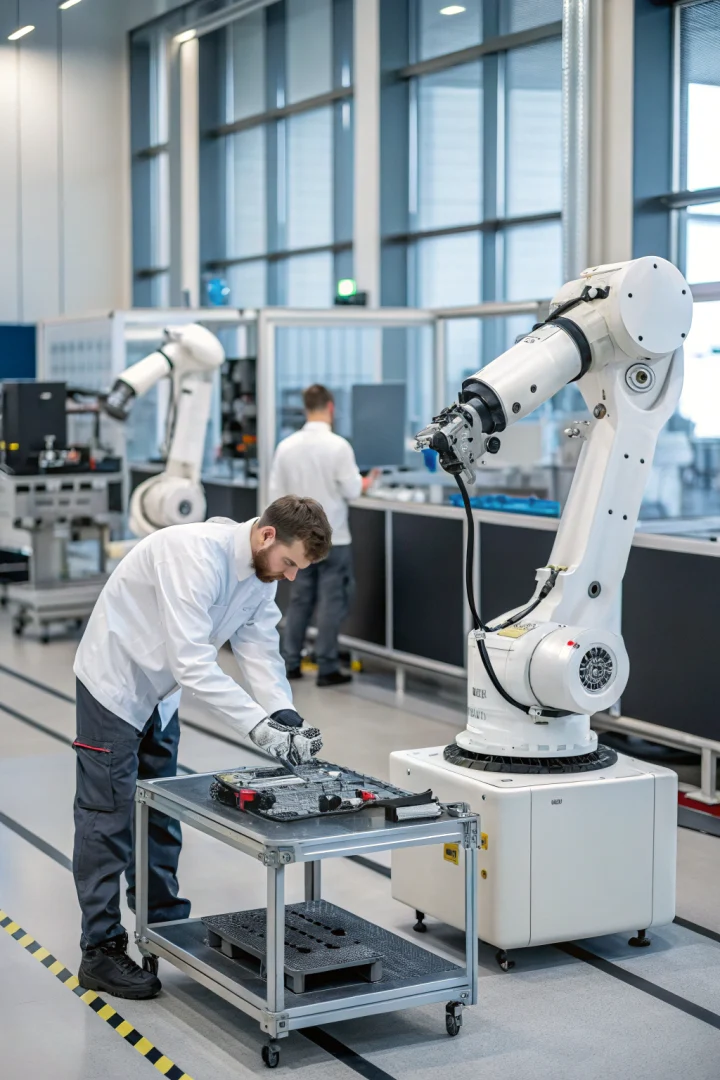
We hear the whispers everywhere—in coffee shops, on LinkedIn, at dinner parties. The conversation always circles back to the same uncomfortable question: are we building our own replacements? Let me tell you, after spending the last few months deep in the weeds of what’s actually shipping in 2026, the answer is a resounding yes. AI replacing jobs, automation tools, and intelligent agents are no longer speculative concepts from a sci-fi novel. They are here, they are working, and they are quietly taking over tasks that used to require a human brain—and a human salary.
I want to be clear from the start: this isn’t a doomsday prediction. It’s a reality check. As a tech journalist who has watched this space evolve from clunky chatbots to eerily competent digital coworkers, I can tell you that the shift happening right now is different. It’s not about robots physically taking factory floors (though that’s happening too). It’s about software that thinks, writes, negotiates, and creates. The market for intelligent automation systems is exploding, and the tools we’re seeing in 2026 are more integrated, more affordable, and frankly, more human-like than anything we’ve seen before. Let’s break down exactly what’s happening, where the rubber is meeting the road, and what it means for your career, your business, and your sense of purpose.
The Rise of the Invisible Employee: Where AI Replacing Jobs, Automation Tools, and Cognitive Agents Collide
If you think automation is still about robotic arms welding car doors, you’re living in the past. The real action in 2026 is happening in the digital realm. We are seeing the rise of what I call « invisible employees »—AI agents that handle entire workflows without a human in the loop. These aren’t just tools that help you do your job faster; they are systems that do the job entirely.
Let me give you a concrete example. I recently spoke with a mid-sized logistics company that replaced their entire customer service team of 12 people with a single AI orchestration layer. The system doesn’t just answer emails—it tracks shipments, initiates refunds, escalates complex issues to a human manager, and even negotiates with carriers when delays happen. The founder told me, straight-faced, that the AI handles 94% of interactions without any human touch. Those 12 people? They were let go. The company kept one human manager to oversee the system. That’s the new math of business in 2026: one human plus one AI equals an entire department.
Creative Destruction: Why Graphic Designers and Writers Are Feeling the Heat
I’ll be honest—this one hits close to home. As a writer myself, watching what generative AI can do in 2026 is both thrilling and terrifying. We’ve moved past the era of clunky, robotic text that needed heavy editing. The latest models can write full articles, design brand kits, generate video scripts, and even compose music that sounds indistinguishable from human work. I’ve tested these tools myself, and I’ve had moments where I genuinely couldn’t tell if the output was written by a colleague or an algorithm.
Take the example of a small e-commerce brand I follow. They used to hire a freelance graphic designer for product packaging, social media assets, and email headers. That cost them around $3,000 a month. In early 2026, they switched to a suite of automation tools that generates on-brand visuals in seconds. The founder told me the AI even learned their color palette and typography from past designs. The freelancer was let go, and the company now produces four times the content for a fraction of the cost. It’s not that the AI is « better » in a creative sense—it’s that it’s fast, cheap, and never complains about revisions. And in a competitive market, that’s often enough.
What This Means for Creatives
Look, I’m not saying creativity is dead. Far from it. But the bar for what counts as « professional » work has dropped dramatically. If you’re a designer or writer, your value today isn’t in the execution—it’s in the strategy, the taste, and the human connection. The AI can generate a hundred logo options, but it can’t tell you which one resonates with your audience’s emotional state. That’s where humans still win. But only if you lean into that role hard.
The White-Collar Shake-Up: Accountants, Paralegals, and Data Analysts on Notice
If you thought blue-collar jobs were the only ones at risk, think again. The biggest wave of AI replacing jobs in 2026 is hitting the white-collar world. I’ve seen it firsthand in the finance and legal sectors. One accounting firm I interviewed automated their entire tax preparation pipeline for individual clients. The AI pulls data from bank statements, categorizes expenses, flags deductions, and even files the return—all without a human accountant touching a single number. The firm reduced their junior accountant headcount by 60% in six months.
Similarly, a legal tech startup I’ve been following offers a paralegal AI that reviews contracts, identifies risky clauses, and drafts standard legal documents. It’s not replacing top-tier lawyers—yet. But it is replacing the junior associates and paralegals who used to do that grunt work. The partner at the firm told me, « Why would I pay a paralegal $60,000 a year when I can pay $500 a month for a tool that works 24/7? » That’s the cold calculus of automation in 2026. The tools aren’t perfect, but they’re good enough to handle the bulk of the workload, and businesses are voting with their wallets.
The Human Cost: What Happens to the People Being Replaced?
This is the part of the conversation that often gets glossed over in tech articles. We love to talk about efficiency gains and cost savings, but we rarely sit with the uncomfortable reality of what it means for the person who just lost their job. I’ve spoken to a few of those people, and their stories are mixed. Some have retrained into roles that manage or supervise AI systems—what I call « AI wranglers. » Others have struggled to find work in a market that increasingly values technical skills over traditional expertise.
One former customer service agent I interviewed now works as a « prompt engineer » for the very system that replaced her. She told me, « It’s weird. I train the AI that took my job. But honestly, the work is more interesting. I’m not just reading scripts anymore—I’m actually solving problems with the system. » That’s one narrative. The other narrative is a former data analyst who spent six months applying for jobs before settling for a role in retail. He told me, « The skills I spent years building are now done by a script. I feel obsolete. »
There’s no sugarcoating it: the transition is brutal for some. But the genie is out of the bottle. Automation tools aren’t going away, and the companies that adopt them are pulling ahead. The question isn’t whether AI will replace jobs—it’s whether you’ll be the one adapting or the one being replaced.
Where the Opportunities Are: Jobs That Are Thriving in 2026
Alright, let’s end on a slightly more optimistic note. Because yes, AI replacing jobs is real, but it’s also creating new roles that didn’t exist five years ago. I’m seeing massive demand for people who can bridge the gap between humans and machines. These roles include:
- AI trainers and prompt engineers – People who fine-tune models and craft the inputs that get the best outputs.
- Automation strategists – Consultants who help companies decide which processes to automate and how to do it ethically.
- Human-in-the-loop managers – Supervisors who oversee AI systems and step in when things go off the rails.
- Data ethicists – Professionals who ensure that AI decisions are fair, transparent, and unbiased.
- Creative directors who use AI – Not just artists, but people who can orchestrate AI tools to produce work that feels human.
The common thread here is that these jobs require judgment, empathy, and strategic thinking—things that current AI models still struggle with. If you can combine domain expertise with a willingness to work alongside AI, you’re not just employable—you’re in high demand. The future isn’t about humans versus machines; it’s about humans with machines. The winners in 2026 are the ones who figured that out early.
The Bottom Line: This Is Not a Drill
So here’s my genuine perspective after months of reporting on this shift: the AI revolution isn’t coming—it’s already here, and it’s rewriting the rules of work as we know them. AI replacing jobs, automation tools, and cognitive agents are reshaping industries from logistics to law, from design to data. The companies that embrace this change are thriving; the ones that resist are struggling to keep up. And for individuals, the message is clear: adapt or get left behind.
I’m not saying this to scare you. I’m saying it because I believe in facing reality head-on. The tools we have in 2026 are powerful, affordable, and only getting smarter. Whether you see them as a threat or an opportunity depends entirely on your willingness to evolve. So take a hard look at your own job. Ask yourself: which parts of what I do could an AI do better, faster, or cheaper? And then ask yourself: what can I offer that no algorithm ever will? The answer to that second question is your future. Go build it.
Lire aussi : Dune Analytics Cuts 25% of Staff in Pivot to AI and Enterprise