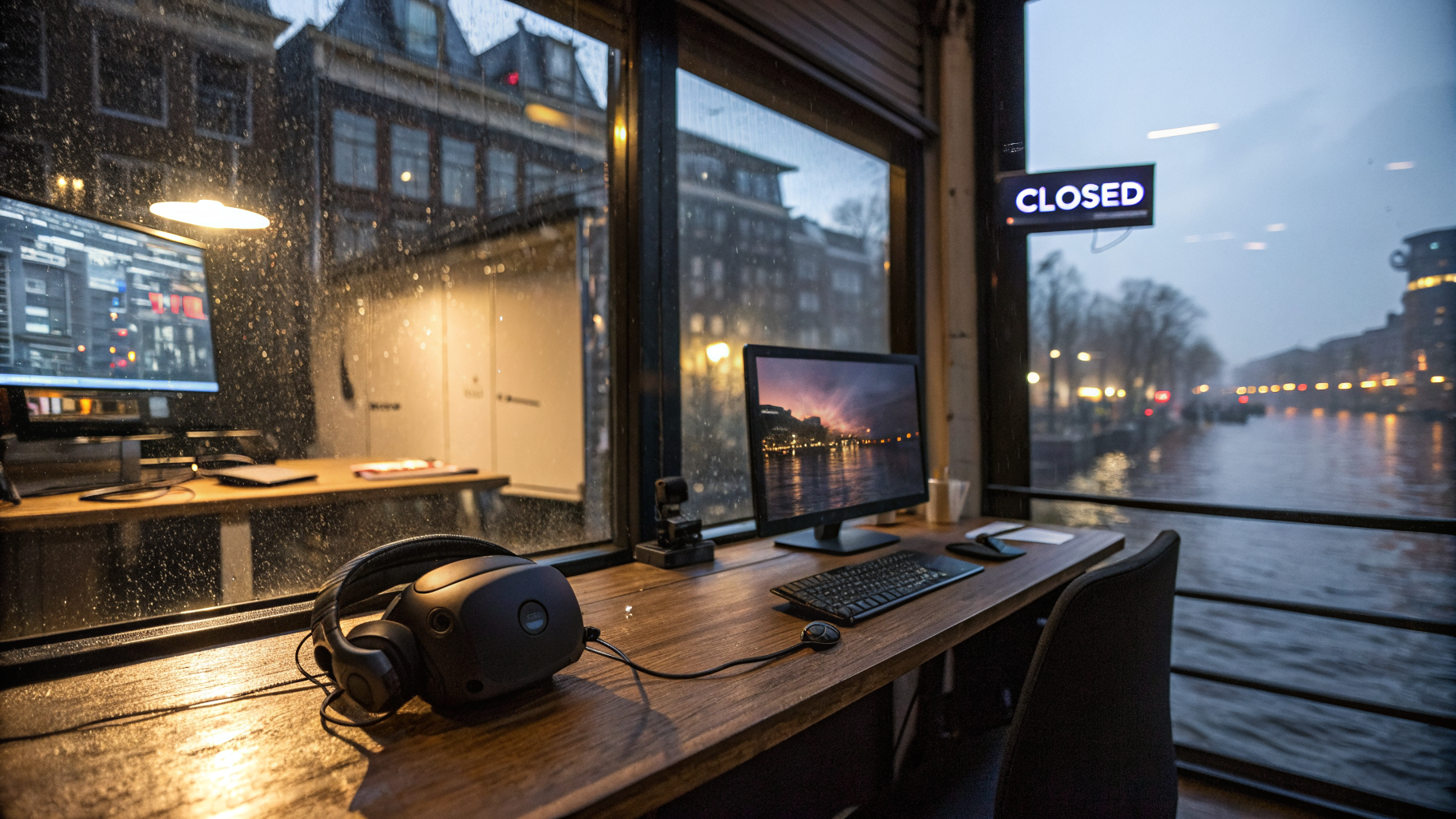
Another one bites the dust. Vertigo Games, the Dutch publisher behind some of the most recognizable names in VR — Arizona Sunshine, The Walking Dead: Saints & Sinners, After the Fall — is closing its Amsterdam development studio. The team that shipped Metro Awakening just a few months ago is being disbanded. CEO Richard Stitselaar put out an open letter blaming “the VR market remains a challenging space.”
No kidding.
I’ve been covering this industry long enough to remember when every other week brought a fresh funding round and a promise that “this is the year VR goes mainstream.” That was years ago. The year never arrived. What we got instead was a slow bleed — studio closures, layoffs, and a creeping sense that maybe the mass-market breakthrough is a mirage. Vertigo’s move is just the latest symptom.
Let’s be clear: this isn’t a failure of talent or craft. Metro Awakening is a good game. It’s atmospheric, it’s tense, it respects the source material. I played it through on a Quest 3 and thought, “This is what high-end VR should feel like.” But good isn’t enough when the audience is too small to sustain a development team of 60-plus people over multiple years. The math just doesn’t work.
The Market That Won’t Quit — But Won’t Grow Either
Vertigo Games has been in VR since the Oculus Rift DK2 days. They survived the trough of disillusionment after 2016. They rode the wave of Quest 2 adoption in 2020-2021. They even managed to score a big IP license with Metro, which should have been a slam dunk. And yet here we are.
Stitselaar’s letter mentions “continued challenges” — a phrase that feels both honest and understated. The VR market isn’t just challenging; it’s structurally broken for most developers. Hardware sales are plateauing. Meta is still subsidizing headsets at a loss, but the install base hovers around 20 million units. For context, that’s roughly the same number of PlayStation 5 consoles Sony sells in a good quarter. The difference is that VR games cost almost as much to make as flat-screen games but sell to a fraction of the audience.
What struck me here is the timing. Metro Awakening launched in November 2024. It got decent reviews — 7s and 8s out of 10. It wasn’t a flop. But it wasn’t a breakout hit either. And in today’s market, “not a flop” isn’t enough to keep the lights on. You need a Beat Saber or a Half-Life: Alyx to move the needle, and those are unicorns. Most VR games sell maybe 50,000 copies over their lifetime. That’s not a business. That’s a hobby with a payroll.
What Does This Mean for Metro Awakening?
For now, the game will remain available. Existing players can still play it. But don’t expect any major post-launch updates or DLC. The studio that built it is gone. The publisher, Vertigo Games, still exists as a publishing entity — they’ll continue to release games from other studios. But the Amsterdam team, the core group that poured years into this project, is being scattered.
This is the part that stings. Game development is a deeply collaborative craft. You don’t just hire a bunch of contractors and get a Metro Awakening. You need a team that understands the vision, that lives and breathes the atmosphere, that iterates on mechanics until they feel right. That trust and continuity is gone. If Vertigo ever wants to make a sequel, they’ll have to rebuild from scratch. And that’s assuming the market improves enough to justify the investment.
I asked a former employee — off the record — what the mood was like in the weeks leading up to the announcement. “We knew something was wrong,” they told me. “Budget meetings got tense. People started looking at job boards. But we all hoped the game would be enough.” It wasn’t.
The VR Indie Scene Is Holding Its Breath
If you’re an independent developer reading this, you’re probably thinking, “Great, another studio closure. What’s new?” And you’d be right to be cynical. The VR indie scene has been a graveyard for years. But Vertigo is different. They were one of the few mid-sized VR specialists. They had a track record. They had IP. They had distribution. If they can’t make it work, what hope is there for a team of five people in a garage?
I think the answer is complicated. On one hand, small teams have lower burn rates. They can survive on modest sales. They can pivot quickly. On the other hand, they don’t have the marketing muscle to break through the noise. The Quest store is a firehose of content — hundreds of games, most of them terrible. How do you get noticed? You don’t, unless you’re lucky or you have a big brand behind you.
Vertigo had the brand. They had Metro. They still failed. That’s a warning sign for everyone.
Is the VR Market Actually Growing?
Depends on who you ask. Meta will tell you that Quest 3 sales are up year-over-year. Apple will tell you that Vision Pro is the future of spatial computing. But the numbers don’t lie. According to industry analysts, VR headset shipments declined in 2023 and only modestly recovered in 2024. The hype cycle has moved on. AI is the new shiny object. Investors who were throwing money at VR five years ago are now funding LLM startups.
And let’s talk about Apple. The Vision Pro is a technical marvel. I tried one at a demo event, and the passthrough is incredible. But it costs $3,500. That’s not a consumer device. That’s a developer kit for rich people. In my view, Apple’s entry into the space has actually hurt the market — it raised expectations for what VR should cost and deliver, but didn’t deliver a mass-market product. Meanwhile, Meta is stuck fighting a price war with itself, cutting Quest 3 prices to move units.
The result? A market that’s bifurcated into low-end standalone headsets and ultra-premium devices, with nothing in between. Vertigo’s games were designed for the middle — they looked great on PC VR but also ran on Quest 2. That middle ground is shrinking.
The Bigger Picture: VR as a Platform Is Stuck
I’ve been writing about VR since 2013. I’ve seen the rise and fall of Oculus, the pivot to mobile VR, the rebirth with Quest, and the current stagnation. The fundamental problem hasn’t changed: VR is isolating. You put on a headset and you’re cut off from the world. That’s fine for a 30-minute session, but it’s hard to build a social ecosystem around it. The metaverse hype was supposed to solve that, but it turned out to be a marketing term, not a product.
Vertigo knew this. They made multiplayer games like After the Fall to try to build communities. It worked, sort of. The game has a loyal player base, but it’s not Fortnite. It’s not even Among Us. The audience for VR multiplayer is a tiny fraction of the overall gaming audience.
What’s frustrating is that the technology keeps getting better. Lenses are sharper. Tracking is more reliable. Wireless is standard. But the content pipeline is struggling. Developers can’t afford to take risks. Publishers are demanding proven IP. And proven IP is expensive to license. Metro Awakening is a prime example: a great game that probably cost $10-15 million to make, selling to maybe 200,000 players. The math doesn’t add up.
What Should Vertigo Have Done Differently?
Hindsight is 20/20, but I’ll venture an opinion. Vertigo should have either gone much bigger or much smaller. A $15 million Metro game is an awkward size — too expensive to recoup on VR alone, but not big enough to compete with AAA flat-screen titles. If they’d made a $5 million game with a shorter campaign and more replayability, they might have broken even. If they’d gone all-in on PC VR with a $30 million budget and a marketing blitz, they might have captured the enthusiast audience. Instead, they ended up in no-man’s-land.
But that’s easy for me to say from my keyboard. The reality is that VR development is a minefield. Every decision is a gamble. And right now, the house is winning.
Where Do We Go From Here?
I don’t have a rosy prediction. The VR market isn’t going to die — Meta will keep funding it because Zuckerberg is personally committed. Sony will keep making PlayStation VR2 games because they need a differentiator. But the middle tier of developers is being squeezed out. We’ll see more consolidation, more closures, and fewer original IPs.
The irony is that Metro Awakening is one of the best VR games I’ve played this year. It’s immersive, it’s scary, it’s respectful of the source material. And it will be remembered as the game that couldn’t save its own studio. That’s the VR industry in a nutshell: brilliant work, unsustainable economics.
I’ll keep playing VR. I’ll keep covering it. But I’m done pretending that the breakthrough is just around the corner. It’s not. The market is what it is — a niche for enthusiasts, sustained by corporate subsidies and the passion of developers who should probably be making more money doing something else. Vertigo’s closure is a reminder that passion doesn’t pay the rent.
Rest in peace, Vertigo Studios Amsterdam. You made some good games. The market just wasn’t good enough.
Original source: read the full article