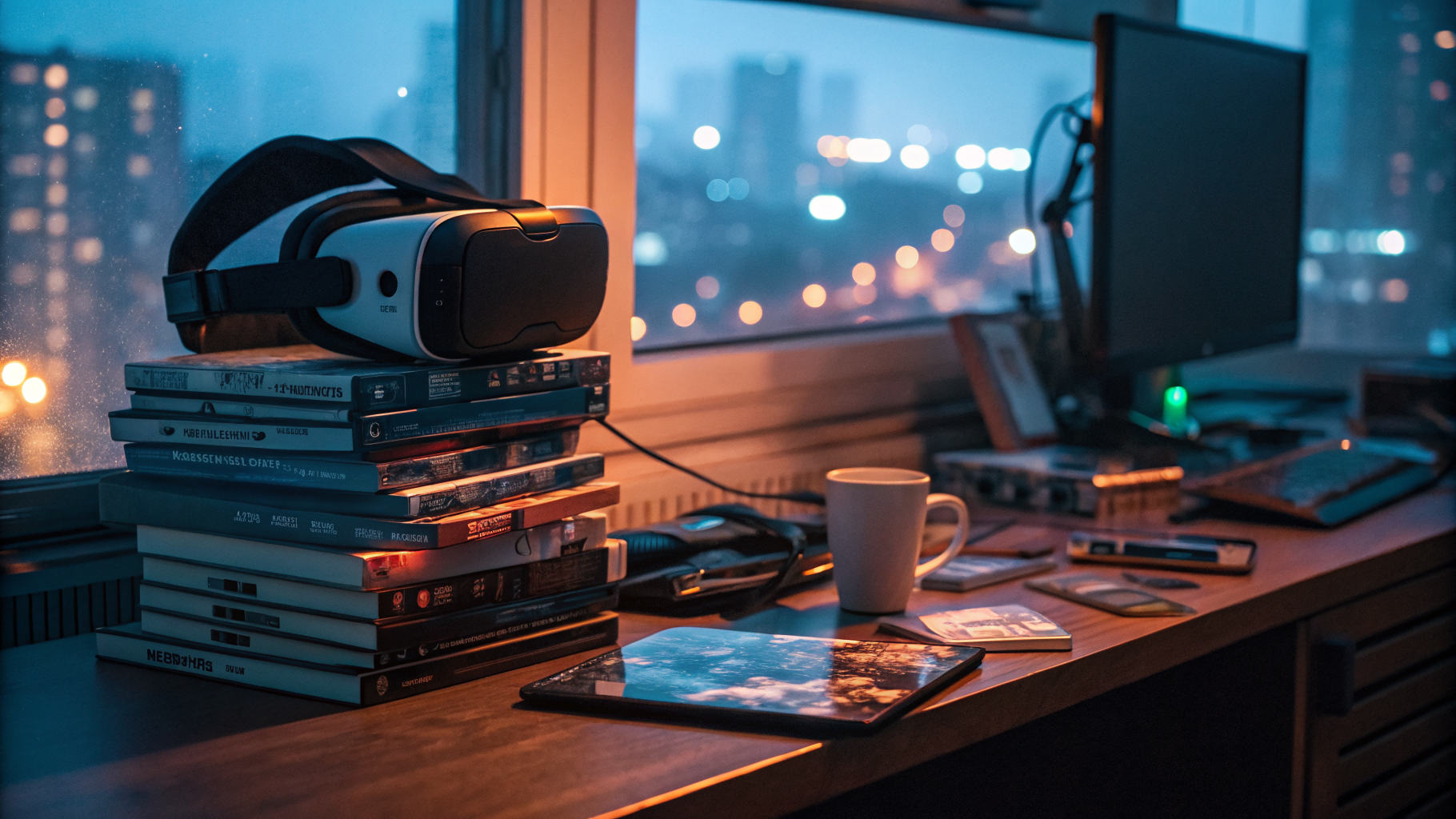
Here we go again. Another year, another list of upcoming VR games, and another round of promises about how this is the year VR finally breaks into the mainstream. Sound familiar? It should. I’ve been writing about this space since before the Quest 2 was a glint in Zuckerberg’s eye, and if there’s one thing I’ve learned, it’s that the gap between a press release and a polished game is often a canyon.
UploadVR has a solid list of what’s coming to Meta Quest, PS VR2, PC VR, Pico, Apple Vision Pro, and even Samsung’s Galaxy XR. It’s a good starting point. But as someone who’s sat through more VR showcases than I care to count, I think we need to talk about what actually matters — not just what’s technically releasing, but what’s worth your time, your money, and your precious living room real estate.
So let’s cut through the corporate fluff. Here’s my take on the VR games you should care about in 2026, the ones that smell like vaporware, and the trends that might actually move the needle.
The Quest Catalog: Quantity Over Quality?
Meta’s Quest platform remains the 800-pound gorilla in the room. In 2026, that’s not changing. The list of upcoming Quest games is long — almost suspiciously long. You’ve got your usual suspects: shooters, horror titles, rhythm games, and the inevitable wave of ports from flatscreen hits.
What struck me here is how many of these games are built on Unreal Engine 5. That’s not a bad thing, but it does mean we’re going to see a lot of games that look similar. Same particle effects. Same lighting quirks. Same performance dips when too many enemies are on screen. Don’t get me wrong: UE5 is a powerful tool. But it’s also a crutch. I’d rather see a smaller game with a distinct visual identity than another generic UE5 dungeon crawler.
Take « Midnight Protocol VR » — a cyberpunk hacking game that uses a text-based interface and a minimalist art style. That’s interesting. That’s taking advantage of VR’s ability to immerse you in a world without needing photorealism. Compare that to « Fortress Siege », which looks like every other medieval combat sim we’ve seen since 2020. More polygons don’t equal more fun.
Meta is also pushing mixed reality harder than ever. Some games now require you to scan your room and blend virtual objects with your actual furniture. I’ve tried a few demos. Sometimes it’s brilliant — a virtual alien crawling over your actual couch is genuinely creepy. Other times, it’s a gimmick that just makes you wish you had a bigger apartment.
Quest’s Hidden Gems
Not every game on the list is a blockbuster. Some of the best VR experiences come from smaller studios. I’m keeping an eye on « Echoes of the Deep », a subnautica-style exploration game that promises a full ocean ecosystem. No combat. Just swimming, discovering, and trying not to hyperventilate when a giant squid drifts past your face. That’s the kind of experience that VR does better than any other medium.
Another one: « Puzzleverse ». It’s a collaborative puzzle game where two players manipulate time in opposite directions. One plays forward, one plays backward, and you have to coordinate to solve environmental riddles. It sounds complicated. It probably is. But if the social mechanics work, this could be the next Keep Talking and Nobody Explodes.
PlayStation VR2: Sony’s Sleeping Giant
Let’s talk about PS VR2. Sony’s headset is technically impressive — OLED displays, eye-tracking, haptic feedback in the headset itself. But the library has been slow to build. 2026 might be the year it finally gets its legs.
The big one is « Horizon: Call of the Mountain », which already launched but is getting a massive expansion. I played the original. It’s beautiful. It’s also a reminder that Sony still thinks VR games need to be short, linear experiences. You climb, you fight a robot dinosaur, you climb some more. It’s a tech demo in designer clothes. The expansion promises more freedom — open-ended areas, crafting, and a day-night cycle. I’ll believe it when I see it.
More interesting to me is « Astro Bot: Rescue Mission 2 ». The first one was a masterpiece of platforming in VR. Tight controls, charming art, and a sense of scale that flat games just can’t match. The sequel is rumored to use the PS VR2’s eye-tracking to let you aim by looking. If done right, that’s not a gimmick — that’s a genuine evolution in how we interact with virtual worlds.
But here’s my concern: Sony seems to be treating PS VR2 like an accessory, not a platform. The headset is expensive. The games are few. And with no clear indication that Sony is willing to subsidize the hardware or fund a steady stream of exclusives, I worry that PS VR2 will end up like the PS Vita — loved by a small group of enthusiasts, ignored by everyone else.
The PC VR Question
PC VR remains the wild west. No single storefront. No curated library. Just Steam, the occasional Epic exclusive, and a bunch of indie developers doing weird, wonderful things.
2026 has some heavy hitters. « Half-Life: Alyx » is still the gold standard, and while there’s no official sequel, modders have been busy. The Return to Ravenholm mod is finally getting a full release this year. If you haven’t played it, it’s essentially a new Half-Life game made by fans, and it’s terrifying. Valve should hire these people.
Then there’s « Boneworks 2 » — or whatever Stress Level Zero ends up calling it. The original was a physics sandbox that felt more like a tech demo than a game, but the physics were so good that it didn’t matter. The sequel promises a proper narrative. I’m skeptical. The studio’s strength is emergent gameplay, not storytelling. But if they can marry the two, this could be the most innovative VR game of the year.
I also want to shout out « VRChat ». It’s not new, but it’s constantly evolving. In 2026, it’s adding built-in support for full-body tracking using just webcams and AI. That’s huge. VRChat is already the most popular social VR platform. Making it easier to express yourself physically will only deepen the weird, wonderful communities that have formed there.
Apple Vision Pro: The Elephant in the Room
I have to talk about Apple, because everyone else is. The Vision Pro is not a gaming device. Apple has been clear about that. But games are coming anyway, because developers see a high-end headset with powerful hardware and an affluent user base, and they want a piece of that pie.
What games? Mostly ports. « Fruit Ninja » in spatial mode. « What the Golf? » with hand tracking. And a handful of exclusive experiences from studios like Resolution Games and Schell Games. They’re fine. They’re polished. But they’re not going to make anyone buy a $3,500 headset.
The one exception might be « Synth Riders », which is getting a Vision Pro-specific mode that uses the headset’s cameras to map your entire room as a play space. You can dance around your actual furniture while neon notes fly at you from every direction. That’s a genuinely new way to play a rhythm game. But is it worth the price of admission? No. Not unless you already own the headset for productivity or media consumption.
In my view, Apple is playing the long game. They’re waiting for the technology to get smaller, cheaper, and more comfortable. The Vision Pro is a developer kit for the masses. The real gaming device might be the rumored cheaper headset coming in 2027 or 2028. Until then, don’t expect Apple to care much about game releases.
Samsung Galaxy XR: The Dark Horse
Samsung is back. After the Gear VR fizzled out, most people wrote off Samsung’s VR ambitions. But the Galaxy XR headset, powered by Qualcomm’s latest XR2 Gen 3 chip, looks legit. It’s lighter than the Quest 3, has better passthrough, and integrates tightly with Samsung phones.
The game list is small but promising. « Spacefolk » is a city-building game where you construct habitats for quirky aliens. It’s colorful, relaxing, and designed for short play sessions — perfect for a device that’s meant to be portable. « Demeter » is a farming sim with a sci-fi twist. Think Stardew Valley in space, but you’re actually standing in your virtual field, pulling weeds with your hands.
What I like about Samsung’s approach is that they’re not trying to compete with Meta on volume. They’re focusing on quality-of-life features: better ergonomics, longer battery life, and games that respect your time. That’s smart. VR is still a pain to set up. Anything that reduces friction is a win.
Pico: Alive, But Barely
Pico is in a weird place. ByteDance (TikTok’s parent company) owns them, and they have deep pockets. But the Pico 4 released to a shrug, and the Pico 5 has been delayed multiple times. The 2026 game list for Pico is mostly ports of Quest games, plus a few Chinese-developed exclusives that haven’t been translated well.
I want Pico to succeed. Competition is good for the market. But right now, they’re a distant third, and their lack of a strong first-party lineup is hurting them. Unless they announce a killer exclusive at GDC or E3 this year, I don’t see them gaining much ground.
Trends That Actually Matter
Stepping back from individual games, I want to talk about three trends that I think will define VR in 2026.
- AI-driven NPCs: Several upcoming games are using large language models to power non-player characters. Instead of scripted dialogue, you can actually talk to NPCs. Ask them questions. Argue with them. Bribe them. The tech is still rough — characters sometimes forget who they are or say weird things — but when it works, it’s magical. “Skyrim VR” with AI NPCs is the closest we’ve come to a living fantasy world.
- Cross-platform play: More games are supporting cross-buy and cross-play across Quest, PC, and PS VR2. This is huge. Nothing kills a multiplayer VR game faster than a small player base. If you can play with your friend on Quest while you’re on PC, the community stays healthy longer.
- Foveated rendering maturity: Eye-tracking is finally good enough that foveated rendering — rendering only where you’re looking in full detail — is becoming standard. This means better graphics on lower-end hardware. The Quest 3 is already benefiting. Expect the Quest 4 to lean heavily on this.
What I’m Not Excited About
Let me be honest: I’m tired of zombie games. Every year, there are a dozen new VR zombie shooters. They’re fine. Some are even good. But can we please move on? VR is capable of so much more than killing the undead in increasingly gory ways. Give me a detective game where I examine evidence in 3D. Give me a cooking game that actually teaches me knife skills. Give me anything that isn’t another headshot simulator.
I’m also skeptical of blockchain games. Yes, they’re still a thing. Several Web3 VR games are in development, promising player-owned economies and NFT assets. I’ve played most of them. They’re either boring or actively bad. The blockchain adds nothing to the gameplay. It’s a solution in search of a problem. If you see a VR game advertising NFTs, run the other way.
The Bottom Line
2026 is a year of consolidation. The big players — Meta, Sony, Apple — are refining their strategies. The indie scene is doing what it always does: experimenting, failing, and occasionally producing something brilliant. The hardware is getting better. The software is slowly catching up.
But let’s not kid ourselves. VR is still a niche. The number of people who own a headset and use it regularly is a fraction of the console or PC gaming audience. That’s okay. Niche doesn’t mean dead. It means the people who are here really want to be here. And that passion is what makes this space worth covering, even after a decade.
So keep an eye on the lists. Try the demos. Support the small studios. And for the love of god, stop buying zombie games.
Further Reading
Check out the full list of upcoming VR games on UploadVR: Upcoming VR Games 2026: New Releases On Meta Quest, PC VR, PlayStation VR2 & More
Original source: read the full article