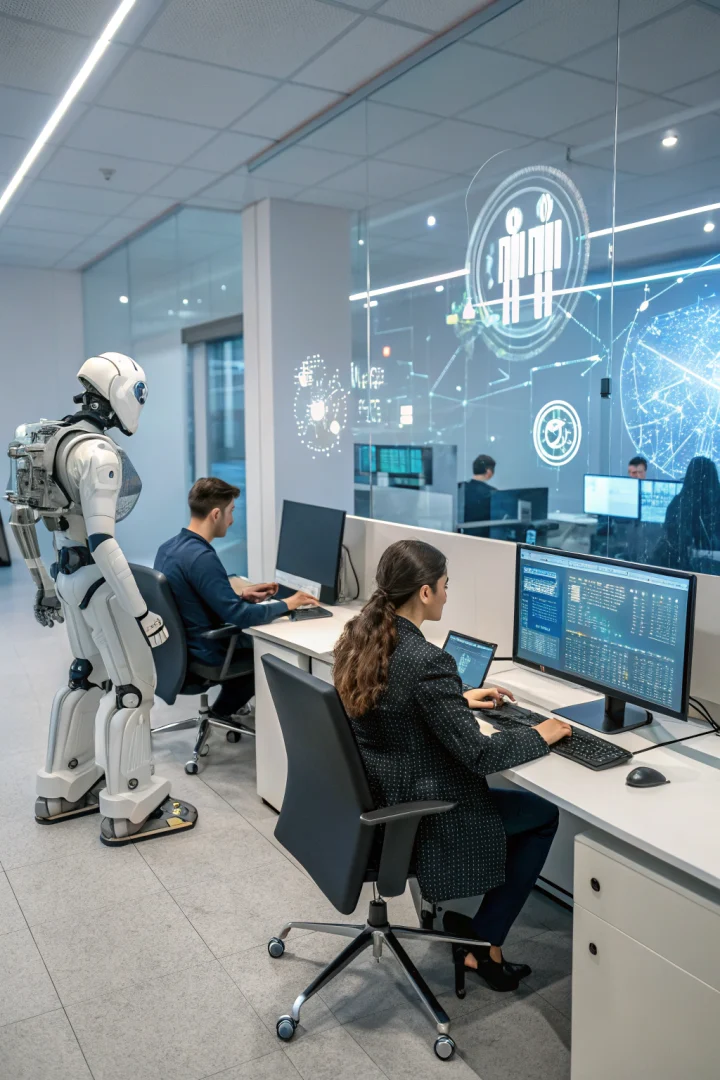
Let’s be real for a second: if you’ve scrolled through LinkedIn or caught a headline in the past year, you’ve probably felt that little knot in your stomach when someone mentions AI jobs 2026, automation, future of work, and how your role might look by then. I get it. The chatter can feel either like a doomsday prophecy or a utopian fantasy. But after digging into the data, talking to developers, and watching how tools like ChatGPT and Midjourney are actually being deployed on the factory floor and in the corner office, I’m here to tell you the truth: it’s not about robots taking your chair. It’s about your chair getting a serious upgrade—or a total redesign. By 2026, we aren’t looking at a job apocalypse; we’re looking at the biggest workplace transformation since the internet went mainstream.
This isn’t some abstract theory from a think tank. It’s happening right now in customer service, legal research, graphic design, and even surgery. The projection that roughly 60% of jobs will be augmented or redesigned by AI isn’t a scare tactic—it’s a call to action. The real question isn’t “Will I have a job?” but “What will my job actually involve?” So, let’s cut through the noise. I’m going to walk you through the concrete shifts, the weird new job titles, and the skills you’ll actually need to thrive in this new landscape. No fluff, just the real talk.
The Great Augmentation: Why Your Job Won’t Disappear (But Will Look Different)
I hear the fear: “AI will replace writers, coders, accountants, customer service reps.” And sure, some tasks will vanish. But here’s the nuance that gets lost: automation eats tasks, not jobs. By 2026, we’ll see a massive wave of job augmentation. Think of it like the shift from using a typewriter to using a word processor. The core skill—writing—didn’t die. The tool just made you faster and better. AI will do the same for most white-collar and many blue-collar roles.
For example, take a marketing manager I spoke with recently. She used to spend three hours a week drafting email copy and another two hours analyzing campaign data. Now, her AI assistant drafts the first version of the email, and a separate tool crunches the numbers in seconds. She doesn’t have less work—she has different work. She now focuses on strategy, creative direction, and client relationships. That’s the pattern I see everywhere. The boring, repetitive stuff gets automated. The human stuff—judgment, empathy, creativity—becomes more valuable. So if you’re in a role heavy on data entry, scheduling, or basic analysis, start thinking about how you can shift toward the parts of your job that require a human touch.
New Job Titles You’ll See on LinkedIn by 2026
I love keeping an eye on weird job postings, and 2026 is going to be a goldmine. Here are a few titles that are already popping up and will be everywhere soon:
- Prompt Engineer: Not just a buzzword. Companies are hiring people who can craft the perfect inputs for AI models to get useful outputs. It’s part linguistics, part psychology, part trial-and-error.
- AI Ethics Officer: As AI makes more decisions—from hiring to loan approvals—someone needs to ensure the algorithms aren’t biased or reckless. This role is exploding.
- Automation Strategist: These folks map out which processes in a business can be automated and how to do it without breaking everything. Think of them as efficiency architects.
- Human-AI Collaboration Manager: Yes, this is real. Someone has to train teams on how to work alongside AI tools, resolve friction, and keep morale up when robots start doing the boring parts.
- Data Storyteller: AI can spit out charts and numbers, but it still struggles to weave a compelling narrative. Humans who can translate raw insights into actionable stories will be in high demand.
These aren’t sci-fi titles. They’re the result of AI jobs 2026, automation, future of work, colliding with real business needs. If you’re looking to future-proof your career, start exploring what these roles actually require. You might be closer to one than you think.
What About the Blue-Collar Workers? The Factory Floor Gets Smarter
It’s easy to focus on desk jobs, but the impact of automation is just as real in warehouses, factories, and farms. I visited a logistics center last year where workers used to manually scan and sort packages for eight hours straight. Today, they wear AR glasses that highlight the correct bin, and a robotic arm does the heavy lifting. The worker’s job shifted from manual labor to quality control and exception handling. They now earn more and have less physical strain.
By 2026, this will be the norm for many trades. Electricians will use AI to diagnose circuit issues faster. Welders will have AI-guided torches that correct mistakes in real time. Truck drivers will see automation handle highway cruising, but they’ll still need to navigate tricky city streets and handle customer interactions. The pattern is the same: the grunt work gets automated, and the human becomes a supervisor, a problem-solver, or a specialist. The key is to embrace the training that comes with these new tools. If your employer offers a course on using AI in your trade, take it. Seriously.
The Skills That Will Actually Matter in 2026
I’ve heard a lot of talk about “learn to code” as the solution to everything. I think that’s oversimplified. By 2026, coding itself will be partially automated. What will matter more are skills that AI still struggles with. Let me break it down:
Critical Thinking and Judgment
AI can generate a thousand options, but it can’t tell you which one is right for your specific context. That requires experience, ethics, and situational awareness. Companies will pay a premium for people who can evaluate AI outputs and make smart calls.
Emotional Intelligence
Robots don’t get sarcasm, they don’t read the room, and they can’t comfort an upset colleague or client. If you’re good at negotiation, team building, or customer relations, you’re golden. These skills become more valuable when everything else is automated.
Adaptability and Learning Agility
The tools you use today might be obsolete in two years. The people who thrive will be those who can learn new systems quickly and aren’t afraid to experiment. That’s a mindset, not a certification.
AI Literacy
You don’t need to be a machine learning engineer, but you should understand what AI can and can’t do. Know how to prompt it, how to spot its mistakes, and how to integrate it into your workflow. This is the new “computer literacy.”
I’ve seen accountants who now spend their days interpreting AI-generated financial forecasts rather than crunching numbers. They love it. The job got more interesting. The same can happen for you if you invest in these skills.
The Ugly Side: What We Should Be Worried About
I’m not here to paint a perfect picture. There are real downsides. The biggest one? Inequality. Not everyone has access to retraining programs or the luxury of time to learn new skills. By 2026, we could see a split between those who ride the wave and those who get left behind. Companies that automate without investing in their people will create resentment and instability.
Another concern is surveillance. AI tools that monitor productivity can easily cross the line into micromanagement. I’ve heard stories of call center workers being dinged for taking a two-second pause between calls. That’s not efficiency; that’s burnout waiting to happen. We need guardrails—laws, union agreements, and company policies—that protect workers from being treated like machines.
And let’s not ignore bias. If your company uses AI to screen resumes or evaluate performance, and the data it was trained on is flawed, it can perpetuate discrimination. This isn’t a future problem; it’s happening now. The good news is that awareness is growing, and roles like AI Ethics Officers are being created to address it. But it’s a slow fix.
So, What Do You Do Right Now?
I’m not going to tell you to panic or to relax. I’ll tell you to get curious. Start by looking at your own daily tasks. Which ones are repetitive? Which ones require a human brain? That’s your roadmap. Spend 15 minutes a week playing with an AI tool relevant to your field. Talk to your manager about how automation might change your team. Volunteer for projects that involve new technology.
The future of work isn’t something that happens to you. By 2026, the landscape will be shaped by the choices we make today—as individuals, as companies, and as a society. Yes, AI jobs 2026, automation, future of work, are big, scary topics. But they’re also opportunities. The chair isn’t being pulled out from under you. It’s being redesigned. And you get a say in what that new chair looks like.
So take a breath. Then take action. Because the one thing AI can’t do—yet—is care about your career more than you do.
Lire aussi : Dune Analytics Cuts 25% of Staff in Pivot to AI and Enterprise