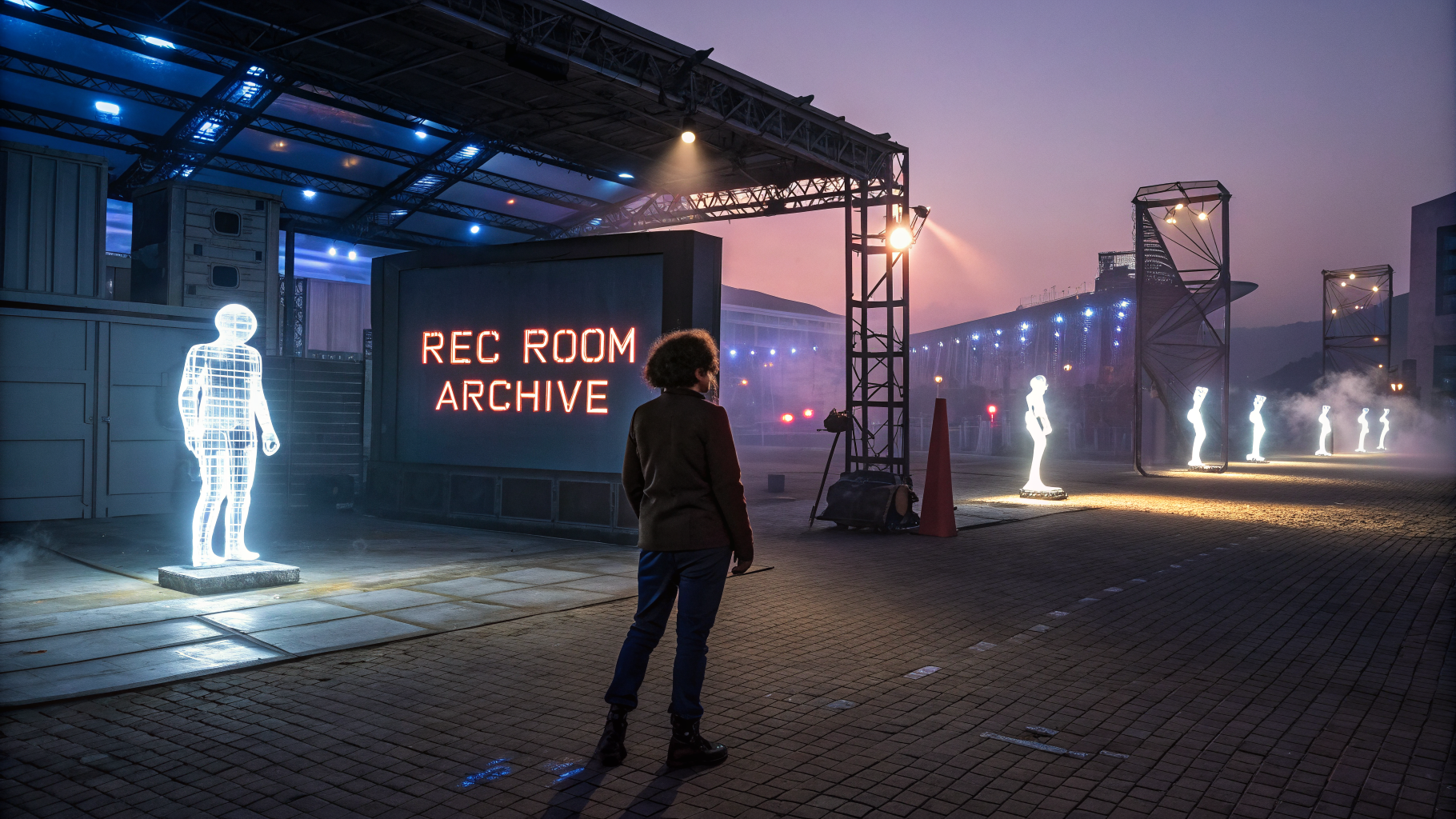
I’ve been writing about virtual worlds for over a decade. I’ve watched Second Life refuse to die, seen Facebook pivot to Meta, and sat through more metaverse keynotes than any human should. But the story that keeps me up at night isn’t about the next big launch. It’s about what happens when the lights go out.
Virtual worlds close all the time. Some fade quietly, their servers unplugged after a brief notice. Others collapse with a bang, taking millions of dollars and thousands of hours of user-created content with them. But something strange is happening now. Communities in Rec Room, Meta’s Horizon Worlds, and a handful of other platforms are refusing to go gentle into that good night. They’re building lifeboats.
This piece is based on a guest article by Julian Reyes, founder of the Virtual Worlds Museum, who has spent two decades in immersive media. He’s seen the cycle before. But what he describes in his piece — and what I’ve observed myself — feels different this time. It’s not just nostalgia. It’s survival.
The Graveyard of Virtual Worlds
Let’s be honest: the metaverse has a body count. AltspaceVR was acquired by Microsoft, then quietly euthanized. VRChat is still kicking, but it’s a chaotic mess of copyright violations and questionable moderation. Sansar pivoted, shrunk, and became a ghost town. The list goes on.
What strikes me is not the closures themselves — that’s the nature of tech — but how little the industry learns from them. Every new platform promises it will be different. “We’re building for the long term,” they say. Then the quarterly earnings call happens, the parent company gets cold feet, and another digital city becomes a digital Pompeii.
But here’s the thing: the people who built those cities didn’t get the memo. They’re still around.
Rec Room’s Quiet Resilience
Take Rec Room. It’s often dismissed as a kids’ hangout, a sort of Roblox-lite for people who prefer avatars without legs. But look closer. The platform has been running since 2016, and while it hasn’t set the world on fire, it hasn’t burned out either. Its community has developed something I’d call “institutional memory.”
When a popular room or event gets shut down — sometimes by moderation, sometimes by creator burnout — the community doesn’t just move on. They preserve. They archive. They rebuild in another world, or they set up Discord servers that function as digital museums. I’ve seen spreadsheets tracking lost rooms, complete with screenshots and creator credits. It’s obsessive. It’s beautiful.
One creator told me, “We know the platform might die. So we treat every build like it’s going in a time capsule.” That pragmatism is rare in a space usually dominated by hype. Rec Room users are not waiting for a saviour. They’re saving themselves.
Horizon Worlds: Meta’s Empty Mall Problem
Then there’s Horizon Worlds, Meta’s flagship virtual world. I’ve been critical of it before, and I won’t apologise. The platform launched with all the gravitational pull of a wet paper bag. Early users reported empty worlds, clunky interfaces, and a general sense of “why am I here?”
But something shifted in the last year. Not because Meta fixed the core issues — the avatars still look like mannequins who’ve seen things — but because a small, stubborn community started treating Horizon Worlds like a blank canvas rather than a finished product. They held poetry readings. They built art galleries. They organised dance parties that were, by all accounts, terrible and wonderful in equal measure.
When Meta announced layoffs and cut back on metaverse investment, the typical response would have been panic. Instead, I saw creators sharing backup plans. “If Horizon goes, we’ll meet in VRChat,” one user posted. “I’ve already exported my builds.” That’s not loyalty to a brand. That’s loyalty to each other.
What’s the lesson here? I think it’s this: platforms are disposable. Communities are not. And the moment a platform forgets that, it’s already dead — it just doesn’t know it yet.
The Museum of Lost Worlds
Julian Reyes’ Virtual Worlds Museum is the closest thing we have to a digital archaeology department. He’s been documenting closed worlds, interviewing creators, and preserving assets that would otherwise vanish. In his article, he describes how communities are creating “survival kits” — guides that explain how to migrate to other platforms, how to back up your creations, how to keep your social graph intact.
I asked him once if he thought any current platform would last a decade. He paused, then said, “Probably not. But the people will.” That stuck with me.
It’s easy to mock the metaverse. I’ve done it plenty. But the people who actually live in these spaces — who spend real time and real money building virtual homes — they’re not deluded. They know the risks. They’ve just decided that the value of connection outweighs the risk of loss. And honestly, isn’t that what every community does?
Why Platforms Keep Failing Their Users
Let’s talk about the elephant in the server room: corporate incentives. Virtual worlds are expensive to run. They require constant moderation, content updates, and server maintenance. Most don’t make money. The ones that do — like Roblox — do so by exploiting their creators with unfavourable revenue splits.
When a platform shuts down, the loss is asymmetrical. The company moves on to the next project. The users lose years of work. There’s no severance package for a digital treehouse you built over three weekends.
What would a better model look like? I don’t have a perfect answer, but I have some thoughts. Decentralised platforms like Voxels (formerly Cryptovoxels) offer blockchain-based ownership, but they’re clunky and niche. Open-source alternatives exist, but they lack the polish to attract mainstream users. The real solution might be simpler: portable identities and portable assets. If your avatar, your friends list, and your creations could move between worlds, the platform becomes a hotel, not a prison.
Some projects are trying this. Ready Player Me offers cross-world avatars. Webaverse is building open-source tools. But adoption is slow, and the big players have little incentive to make leaving easy.
So we’re stuck in a cycle: hype, build, abandon, repeat. And the communities are the ones left holding the bag.
The Irony of Digital Preservation
Here’s the ironic part. We have better tools than ever to preserve digital history. We can archive websites, save screenshots, record video walkthroughs. But virtual worlds are inherently ephemeral. They’re not static pages — they’re live, interactive environments. A screenshot of Horizon Worlds is like a photo of a concert. It captures the moment, not the feeling.
What the communities in Reyes’ article are doing is more ambitious: they’re trying to preserve the context. The social dynamics. The in-jokes. The weird rituals that make a virtual world feel alive. That’s almost impossible to automate. It requires human effort, human memory, and a lot of spreadsheets.
I think that’s beautiful. I also think it’s a warning. If we keep building worlds that vanish, we’re not building a metaverse — we’re building a series of digital ghost towns.
What Comes Next
I don’t want to end on a downer. There’s real hope in the stories Reyes collected. In Rec Room, a group of creators built a “survival network” that helps displaced users find new homes. In Horizon Worlds, a weekly meetup called “The Last Dance” has become a rotating party that changes venue every month, as if preparing for the inevitable eviction.
These are not grand gestures. They’re small, messy, human responses to a system that treats users as numbers. And they work, at least for now.
If I have one piece of advice for anyone building in virtual worlds today, it’s this: don’t trust the platform. Trust the people. Build for the community, not the quarterly report. And for god’s sake, back up your stuff.
The metaverse might be a flop. But the people inside it? They’re the real thing.
Further Reading
Read the original article on Road to VR: As Virtual Worlds Close, Communities in ‘Rec Room’, Meta’s ‘Horizon Worlds’, and Others Create Ways to Survive
Original source: read the full article