I’ve been inside the metaverse hype cycle long enough to know when I’m being sold a problem dressed as a solution. And for the last few years, every pair of smart glasses that crossed my desk came with a tiny, unblinking eye. A camera. Sometimes two. Always pointed at the world, and by extension, at you.
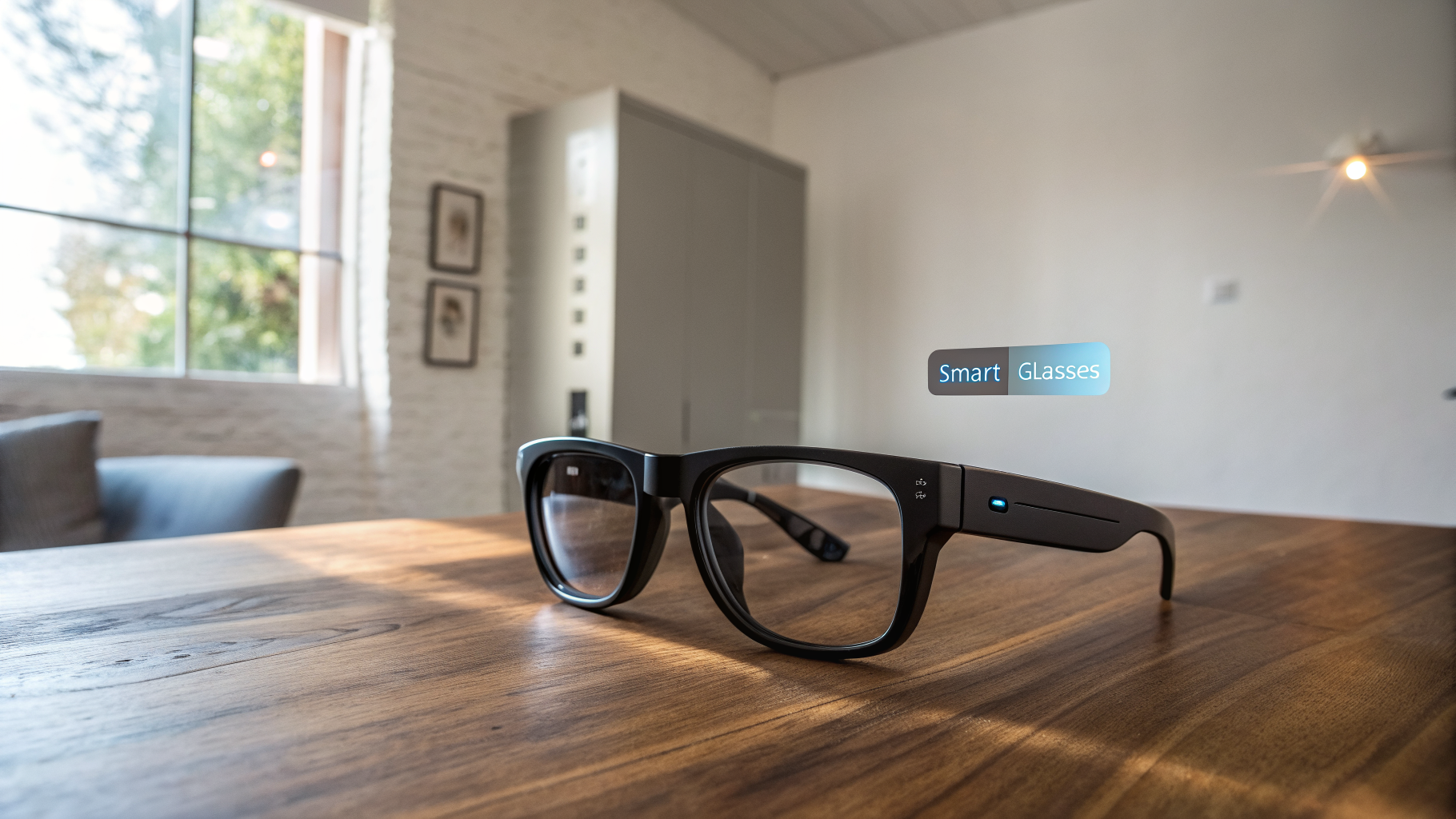
So when Xgimi, the Chinese company best known for making projectors that turn your living room wall into a cinema, handed me the MemoMind One at CES 2026, I did what any paranoid tech journalist would do: I turned them over, looked for the lens, and found nothing. No camera bump. No pinhole. No LED that glows ominously when it’s recording. Just a smooth, dark frame that looks like something Tony Stark would wear to a coffee meeting before saving the world.
And honestly? That absence of a camera is the most interesting thing about these glasses. It’s also, in my view, the only reason they might actually work.
The Privacy Pitch That Isn’t a Pitch
Let’s get the obvious out of the way. Xgimi is not the first company to try camera-free smart glasses. But they are the first to make it feel intentional rather than like a cost-cutting measure. The MemoMind One, which launched on Kickstarter this week after a teaser at CES, is a pair of prescription-ready glasses that display information, translate text in real time, and act as a second brain for your daily life. They do not take photos. They do not record video. They do not livestream your awkward conversation with a barista to a server in some data center.
Why does this matter? Because the single biggest barrier to mainstream smart glasses adoption isn’t the tech. It’s the creep factor. I’ve worn Meta’s Ray-Ban Stories. I’ve tried Snap’s Spectacles. Every time, I felt like I was wearing a surveillance device that I had to apologise for. “Don’t worry, I’m not recording,” I’d say, which is exactly the kind of thing a person who is recording would say. The MemoMind One sidesteps that entire conversation. You look at someone, they look at you, and neither of you has to wonder if this moment is being uploaded to the cloud.
Is that enough to sell a pair of $399 glasses? Maybe. Let’s dig into what they actually do.
What’s Under the Hood (Or the Frame)
The MemoMind One runs on a custom AI chip that Xgimi developed in-house. It’s paired with a micro-OLED display that projects a 30-degree field of view into your right eye. That’s not huge — Meta’s Quest 3 gives you over 100 degrees — but for a pair of glasses that don’t look like a cyberpunk cosplay prop, it’s respectable. The display is bright enough to read in daylight, which is the first test any smart glasses have to pass. I tried them in a sun-drenched conference room at CES, and the text was legible without me having to squint or cup my hands around the frame.
What can you actually see? A heads-up display that shows notifications, calendar alerts, navigation arrows, and live translations. The translation feature is the standout. Point your gaze at a menu in Japanese, and the glasses will overlay the English translation directly onto the text. It’s not perfect — I tested it with a French menu that included “poulet rôti” and got back “roasted chicken,” which is fine, but the system struggled with handwritten signs. Still, for a Kickstarter product, it’s remarkably polished.
The AI assistant, which Xgimi calls “Memo,” is voice-activated. You say “Hey Memo” and ask it to summarise an article, set a reminder, or read your messages aloud. It works offline for basic tasks, which is a nice touch for privacy purists. But the real-time translation and more complex queries require a cloud connection. You can’t have everything.
Design: Finally, Glasses That Look Like Glasses
I’m going to say something that might get me yelled at by the AR enthusiast community: most smart glasses look ridiculous. They’re thick. They’re bulky. They have visible sensors that make you look like a cyborg who’s about to scan someone’s credit card. The MemoMind One is not that. It’s 38 grams — lighter than a typical pair of aviators — and the frame is a matte black that wouldn’t look out of place in a Warby Parker catalog.
There are no external batteries. No cables dangling down your neck. The processing unit is tucked into the right temple, and the battery lives in the left. It’s a clever bit of engineering that keeps the weight balanced. I wore them for about two hours during my demo, and I forgot they were smart glasses. They just felt like glasses. That’s the highest compliment I can pay.
But here’s the catch: they’re not available with prescription lenses yet. Xgimi says they’ll offer custom lenses later this year, but for now, you get a fixed set of frames with a demo prescription insert. If you wear progressive lenses or have a strong astigmatism, you’re out of luck until the Kickstarter ships. And Kickstarter, as we all know, is a promise, not a product.
The Kickstarter Reality Check
Let’s talk about the elephant in the room. The MemoMind One is crowdfunding. That means it’s not shipping tomorrow. That means the specs might change. That means the software might not be ready. I’ve been covering hardware Kickstarters since 2012, and I’ve seen glorious demos turn into shipping delays, feature cuts, and in some cases, total vaporware. Xgimi has a track record — they’ve shipped actual products, including projectors and soundbars — but smart glasses are a different beast. The software stack alone is a nightmare of real-time rendering, eye tracking, and AI inference.
Xgimi is promising delivery by November 2026. That’s ambitious. I’d be surprised if early backers see these before Q1 2027. But the company has been transparent about the challenges. In a briefing, the product lead told me, “We’re not promising everything on day one. The glasses will get better over time.” That’s honest, and I appreciate it, but it’s also a hedge. “Better over time” is the mantra of every hardware startup that launched before the software was finished.
Should you back it? If you’re a early adopter who’s excited about the privacy-first approach and you have $399 to spare, sure. But if you’re looking for a polished, everyday device that replaces your phone, wait for the reviews. Wait for the second generation. That’s my advice.
How It Compares to the Competition
Meta’s Ray-Ban Stories are the obvious comparison. They have cameras, they take photos, and they integrate with Instagram. They also cost $299 and are available right now. The MemoMind One is $100 more expensive and won’t ship for at least a year. But the Meta glasses are, in my view, a solution in search of a problem. Who actually needs to take hands-free photos of their brunch? The Xgimi glasses, by contrast, solve a real problem: information overload. They put data in your field of view without demanding your attention. They’re ambient, not intrusive.
Snap’s Spectacles are even worse. They’re aimed at creators who want to record first-person content, but they’re bulky, expensive, and the social stigma of wearing a camera on your face is real. Xgimi’s bet is that people want utility without the surveillance. I think that bet is smart.
Then there’s Apple. The Vision Pro is a masterpiece of engineering, but it’s not glasses. It’s a headset. You don’t wear it to a coffee shop. You wear it in your living room. The MemoMind One is trying to be something you wear all day, like a watch or a ring. That’s a harder problem, but if anyone can solve it, it might be a company that started with projectors and learned how to make light small.
The Bigger Picture: AR Without the Creep Factor
What struck me most about the MemoMind One is not the tech. It’s the philosophy. For years, the AR industry has been obsessed with capturing the world. Mapping it. Recording it. Owning it. Every pair of smart glasses was a data collection device first and a tool second. Xgimi is saying, “What if we just give you information and get out of the way?”
That’s a refreshing take. It’s also a risky one. Without a camera, the glasses can’t do object recognition. They can’t identify a landmark and overlay historical data. They can’t scan a QR code. They can’t take a photo of your kids. They are, in a sense, deliberately limited. But limitations, when chosen wisely, create focus. The MemoMind One is focused on being a personal assistant that respects your privacy. That’s a niche, but it’s a growing one.
I think about the people who will actually buy these. Not tech reviewers or YouTubers. I think about the lawyer who needs to glance at case notes during a deposition. The surgeon who wants vital signs in their peripheral vision. The tourist who doesn’t want to pull out their phone every time they see a sign in a foreign language. These are real use cases, and they don’t require a camera. They require a display and a good AI. That’s what Xgimi is selling.
The Verdict (For Now)
I’m not going to tell you to pre-order the MemoMind One. Kickstarter is a gamble, and I’ve been burned before. But I am going to tell you that Xgimi has asked the right question: what if smart glasses didn’t make everyone around you feel like they’re being watched? The answer might be a pair of glasses that does less, but does it better. In a world where every device is trying to extract data from you, a device that simply gives you data feels almost radical.
I felt like Tony Stark wearing them, sure. But more importantly, I felt like a normal person wearing glasses. That’s the real breakthrough. Now let’s see if they can ship.
Further Reading
Read the original hands-on at The Verge: These camera-free smart glasses made me feel like Tony Stark
Original source: read the full article