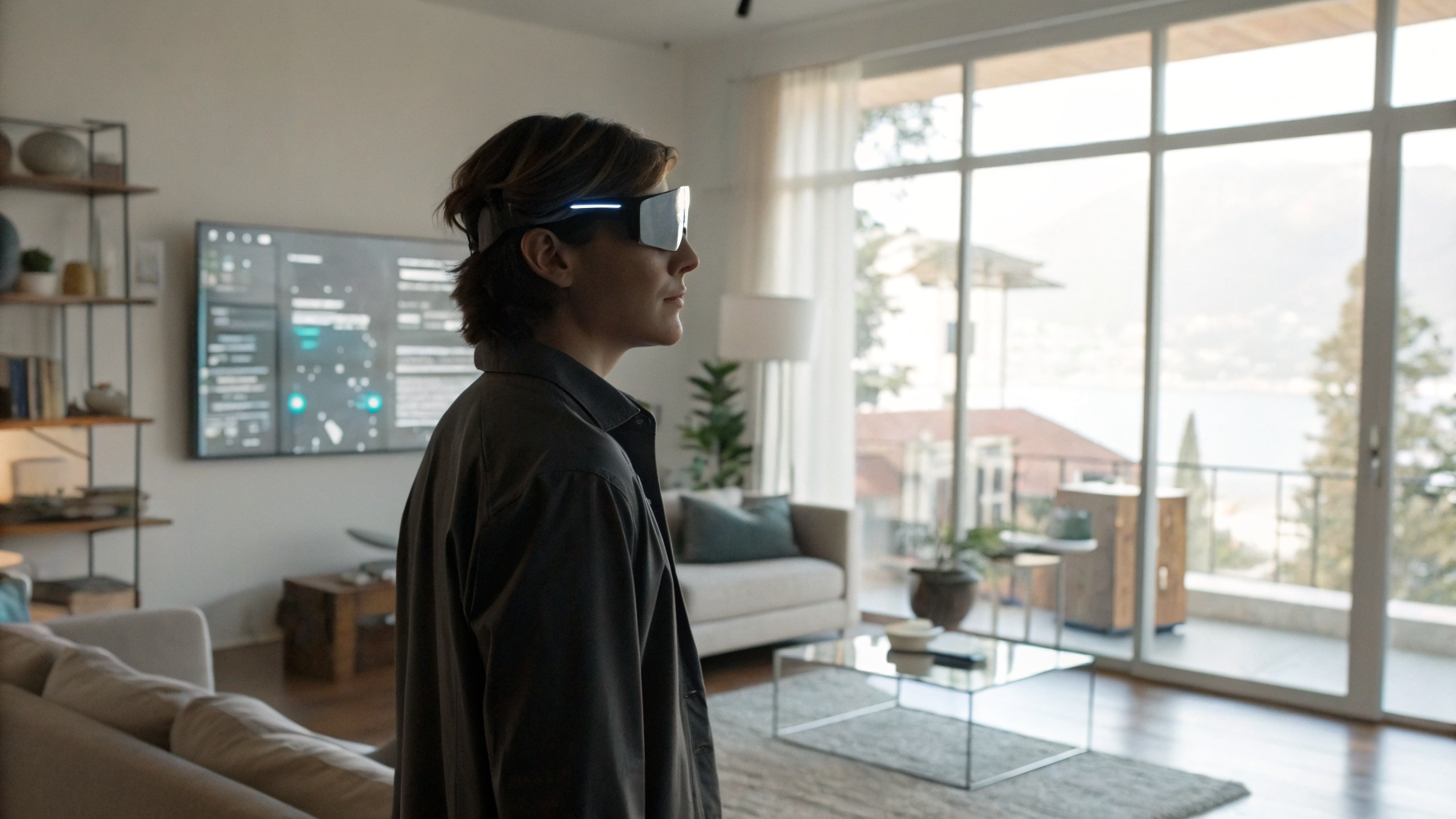
I’ve been writing about augmented reality for over a decade. I’ve seen the hype cycles, the vaporware, the demos that work only in perfectly lit rooms with a $10,000 prototype tethered to a workstation in the next building. So when XREAL announced its next flagship AR glasses — the XREAL Aura, built with Google and Qualcomm — and slapped a price ceiling of $1,500 on them, I didn’t get excited. I got curious. And a little skeptical.
Let’s start with what we know. The Aura, formerly codenamed Project Aura, is coming this fall. XREAL says the price will “not exceed $1,500, excluding applicable taxes.” That’s a ceiling, not a floor. But in consumer AR, $1,500 is already a serious ask. It’s more than a high-end smartphone. More than a Quest 3. More than most people spend on a single piece of tech unless it’s a laptop or a TV. So what’s inside this thing that justifies that number?
The Chip That Changes Everything — Or Doesn’t
The headline spec is the Snapdragon Reality Elite chipset. Qualcomm just announced it, and the Aura is one of the first devices to ship with it. That’s meaningful. The Snapdragon XR2 in the Quest 2 is getting long in the tooth. The XR2 Gen 2 in the Quest 3 is better, but still built for all-in-one VR. The Reality Elite is purpose-built for AR — lower latency, better spatial awareness, dedicated AI processing for things like hand tracking and environment understanding.
But here’s the thing: a chip doesn’t make a product. I’ve seen plenty of devices with great silicon and terrible software. Google’s involvement gives me some hope. Google has been quietly investing in AR for years, from Google Glass to the more recent partnerships with Samsung and Qualcomm. But Google also has a habit of building interesting things and then abandoning them when the quarterly numbers don’t pop. Remember Daydream? Google Glass Explorer Edition? The company’s consumer AR track record is, let’s say, mixed.
What struck me here is that the Aura isn’t trying to be an all-in-one headset. It’s a pair of glasses that likely tethers to a phone or a compute pack. That’s the right call for 2025. Battery life, heat dissipation, and weight are still the enemies of comfortable AR. Offloading processing to a device in your pocket is the pragmatic choice. But it also means the experience is only as good as the ecosystem it connects to.
And that’s the real question: what will you actually do with these glasses?
Use Case Roulette
AR has been stuck in a loop for years. Every new device promises to replace your monitor, enhance your commute, or overlay GPS directions on your windshield. In practice, most end up as expensive toys or developer kits that gather dust. The Aura needs a clear, compelling use case out of the box. Not a vision. Not a roadmap. Something you can do on day one that makes you think, “Okay, I get it now.”
XREAL has been better than most at this. Their Air series found a niche as a personal media viewer — a portable, private screen for watching movies or playing games on a plane. It’s a narrow use case, but it works. The Aura, with Google and Qualcomm’s help, seems aimed at a broader vision: spatial computing that blends digital content with your physical environment. Think virtual monitors that stay where you put them, real-time translations, contextual information overlays.
I want that. I really do. But I’ve been burned before. Remember Magic Leap? Remember the HoloLens 2? Both had incredible demos. Both cost thousands of dollars. Both failed to find a mass audience. The difference is that XREAL is pricing the Aura at $1,500, not $3,500. That’s still a lot, but it’s within striking distance of enthusiast gear. The question is whether the software and ecosystem justify the leap.
Let’s talk about Google’s role specifically. Google has Android, which is the obvious OS foundation for these glasses. It has Google Maps, Google Lens, Google Assistant, and a million other services that could be reimagined for AR. But Android as a platform is a mess of fragmentation, and AR requires tight hardware-software integration. If the Aura ships with a Google-built AR interface that feels polished and consistent, that’s a big win. If it ships with a half-baked launcher and a promise to update later, it’s dead on arrival.
The $1,500 Ceiling — Smart Pricing or Dangerous Precedent?
I like the ceiling. It’s honest. XREAL is saying, “We don’t know the exact price yet, but it won’t be more than this.” That’s better than the typical tech launch where a company reveals a price at the event and you realize it’s way out of your budget. But $1,500 is still a psychological barrier. At that price, you’re competing with a used car, a vacation, or a down payment on a new laptop. The audience is early adopters, developers, and enterprise users — not the mainstream.
Is that a problem? Not necessarily. The iPhone was expensive when it launched. The first Oculus Rift was $600 and needed a $1,000 PC. New categories always start expensive. But AR has been “almost ready” for a decade. Consumers are tired of waiting. They’re tired of promises. If the Aura launches at $1,500 and the experience is mediocre, it could set the category back another few years.
I think XREAL knows this. They’ve been in the AR game longer than most, shipping actual products to actual customers. The Air series sold well enough to keep the company alive. The Aura is their shot at moving upmarket. But moving upmarket means higher expectations. A $1,500 pair of glasses needs to feel premium in every way — optics, build quality, software, battery life, comfort. If any one of those is off, the whole thing collapses.
What I’m watching for is the field of view. Most AR glasses today have a tiny FOV — like 45 degrees diagonally. That’s enough for a small virtual screen, but not for immersive spatial computing. If the Aura can hit 60 degrees or more, that’s a real step forward. If it’s stuck in the 40s, it’s just an expensive media viewer with better chips.
Competition Is Coming from All Sides
The Aura won’t launch in a vacuum. Apple’s Vision Pro is out there, priced at $3,500 and aimed at a different audience. Meta is working on AR glasses with Ray-Ban. Samsung and Google are reportedly co-developing their own headset. Even Snap has been teasing AR hardware for years. The field is getting crowded, and the window for XREAL to establish itself is narrowing.
But here’s where I think XREAL has an advantage: they’re not trying to be everything to everyone. The Vision Pro is a full computer strapped to your face. The Aura is a pair of glasses that complements your phone. That’s a fundamentally different philosophy. If you already carry a smartphone, why carry a second computer on your face? The Aura’s approach is lighter, cheaper, and potentially more practical for everyday use.
That said, the Ray-Ban Meta glasses have proven that a simple, stylish, socially acceptable form factor can sell. They’re not full AR — they’re camera-and-audio glasses with a few smart features. But they’re flying off shelves. XREAL needs to make the Aura look good enough to wear in public. The Air glasses were fine, but they still looked like tech. The Aura needs to look like eyewear. That’s a design challenge, not just a technical one.
Qualcomm’s Reality Elite chip is also going to power devices from other manufacturers. XREAL has an exclusive window, but it won’t last. They need to use that window to build a software ecosystem that locks users in. Otherwise, they’re just selling hardware that someone else will undercut next year.
What I’ll Be Looking For at Launch
I’m not going to pre-order the Aura. I’ve learned my lesson. I’ll wait for reviews, for hands-on impressions, for the honest takes from people I trust. Here’s my checklist:
- Field of view — If it’s under 50 degrees diagonal, I’m out.
- Weight and comfort — Can you wear it for two hours without a headache?
- Software polish — Does the interface feel like a finished product or a beta?
- Battery life — If it needs recharging every 90 minutes, it’s not ready.
- Use case clarity — Can the marketing pitch be explained in one sentence?
I also want to see how XREAL handles the developer ecosystem. Google’s ARCore is mature, but it’s not designed for these kinds of glasses. If developers can easily port their apps or build new ones, the platform has a chance. If it’s a walled garden with limited APIs, it’ll fizzle out.
The Bottom Line (For Now)
The XREAL Aura has all the right ingredients: a strong chip, big-name partners, a reasonable price ceiling, and a company that’s actually shipped products before. But ingredients don’t make a meal. The execution has to be flawless, and the timing has to be right. Fall 2025 is still months away. A lot can change between now and then.
I’m rooting for XREAL. I want AR to succeed. I want glasses that actually enhance my life instead of just adding another screen to my face. But I’ve been burned before, and I suspect I’m not alone. So I’ll watch, I’ll wait, and I’ll write about it honestly when the time comes. For now, color me cautiously optimistic — with a healthy dose of side-eye.
What do you think? Is $1,500 too much for AR glasses that might change how we use our phones? Or is it the price of admission for the next computing paradigm? Drop your thoughts in the comments — I actually read them.
Further Reading
Original article on Road to VR
Original source: read the full article