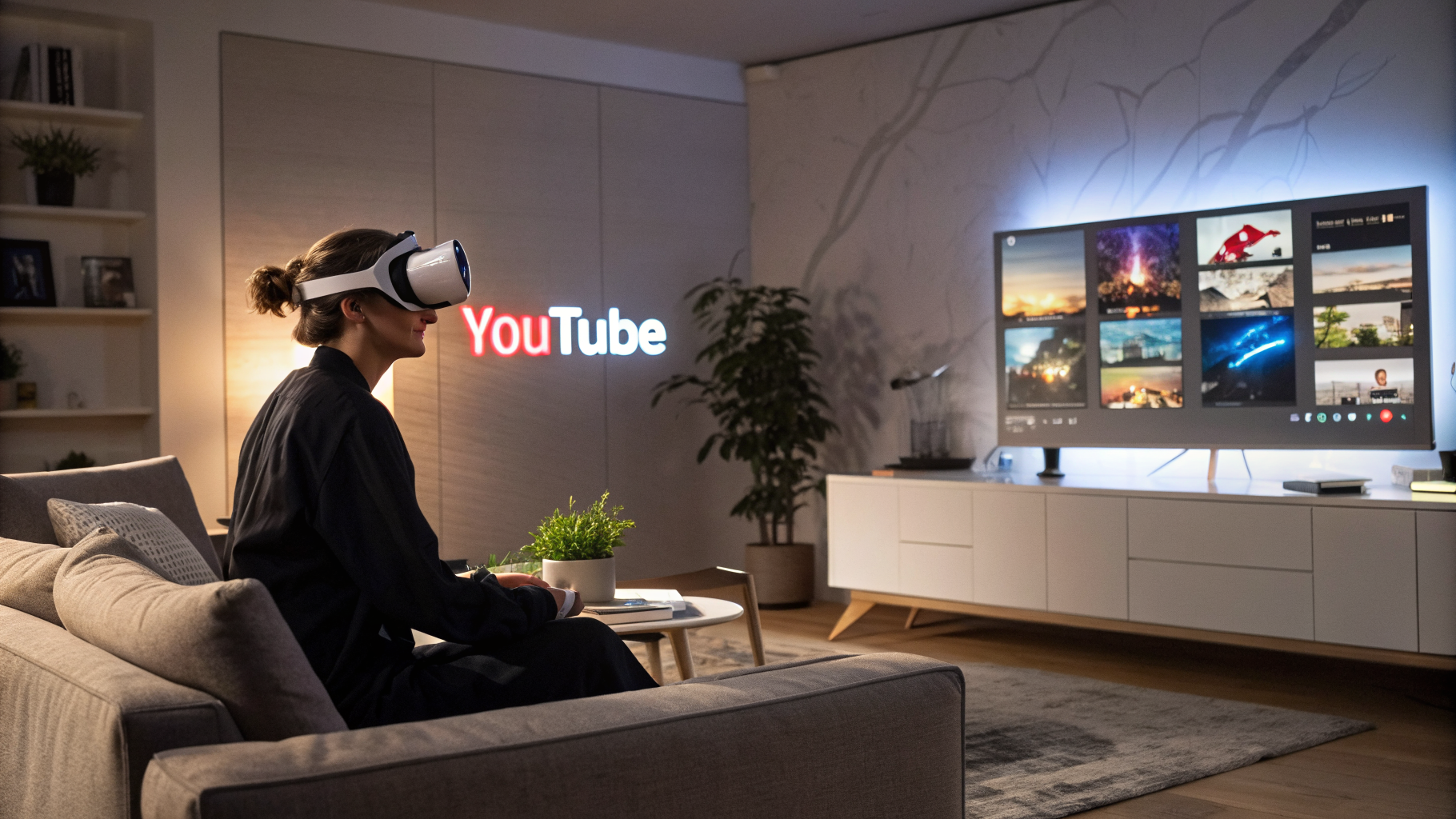
Google Finally Notices Quest Owners Exist
I’ve been covering VR for over a decade, and I’ve lost count of how many times I’ve opened the YouTube app on Quest, sighed, and closed it again. The interface felt like a blown-up phone app from 2016. Clunky, cramped, and utterly oblivious to the fact that you’re wearing a headset. So when UploadVR spotted evidence that Google is working on a major overhaul of YouTube’s immersive view on Quest, my first reaction was: finally. My second reaction was: what took them so long?
The report points to a redesign that brings the Quest experience closer to what you get on Android XR and visionOS. In other words, Google is finally treating VR as a first-class platform rather than an afterthought. That’s a low bar, but it’s a bar nonetheless. And if the result is anything like the visionOS version, Quest users are in for a genuine upgrade.
What We Know So Far (And What We Don’t)
Let’s be clear about the sourcing here. This isn’t an official announcement. UploadVR dug up evidence — likely code strings or UI assets — suggesting a revamp is in the works. Google hasn’t confirmed anything publicly. So we’re in rumor territory, albeit the credible kind. I’ve seen enough of these leaks over the years to know that some turn into shipping products and some die in a Google graveyard. Remember Google’s VR ambitions? Daydream? Cardboard? The company has a habit of dipping a toe in and then retreating to the warm bath of its core advertising business.
But this feels different. The metaverse hype has cooled, yes, but the hardware has quietly gotten better. Quest 3 is a legitimately good device. Apple Vision Pro, for all its faults, proved that spatial computing can feel premium. And Android XR is Google’s latest attempt to plant a flag in the space. A redesigned YouTube app that works consistently across all these platforms isn’t just a nice-to-have — it’s table stakes for making VR feel like a real computing platform rather than a novelty.
The Immersive View Problem
Here’s the thing that has always bugged me about YouTube in VR: the immersive view felt like a demo, not a product. You’d get a giant floating screen, maybe a virtual environment, and then a bunch of controls that were clearly designed for a touchscreen. The whole experience screamed « we ported this in a weekend. » Meanwhile, the visionOS version actually feels like someone thought about how people use video in spatial computing. The UI is cleaner, the environments are more thoughtfully integrated, and the whole thing feels less like a 2D app slapped onto a 3D canvas.
If the Quest redesign brings it closer to that standard, I’m all for it. But I’m also skeptical. Google has a long history of fragmenting its own products across platforms. Will the Quest version get the same features as Android XR? Will it get updated at the same cadence? Or will it become the red-headed stepchild of the YouTube VR family? These are the questions that matter, and the leak doesn’t answer them.
Why This Matters More Than You Think
Video consumption is the killer app for VR. Not gaming. Not social. Video. Think about it: what’s the one thing people do on every screen they own? Watch stuff. If VR headsets want to graduate from niche gadget to mainstream device, they need a video experience that doesn’t make you want to take the headset off after ten minutes. YouTube is the world’s biggest video platform. Its VR app should be a showcase, not an embarrassment.
And yet, for years, it’s been the latter. The Quest app felt like it was designed by someone who had never worn a headset. The navigation was awkward, the search was clunky, and the immersive environments felt like afterthoughts. I’ve had friends try VR for the first time, open YouTube, and immediately ask how to get back to the home screen. That’s not a good look.
A proper redesign could change that. Imagine a YouTube app on Quest that feels as polished as the visionOS version. Imagine being able to browse your subscriptions in a virtual living room, with thumbnails that are actually readable and controls that make sense. Imagine watching a 4K video on a massive virtual screen without feeling like you’re fighting the interface. That’s the promise. Whether Google delivers is another question.
The Android XR Connection
What struck me about the UploadVR report is the mention of Android XR. Google is clearly positioning Android XR as its big play in spatial computing, and YouTube is one of its flagship apps. It makes sense that the company would want a consistent experience across Quest, Android XR, and visionOS. But consistency is hard. Each platform has its own input methods, its own UI conventions, its own hardware quirks. Google has never been great at this kind of cross-platform polish. Just look at how long it took YouTube to get a decent iPad app.
Still, there’s reason for optimism. The visionOS version of YouTube is genuinely good. It shows that Google can build a thoughtful spatial video experience when it wants to. If the Quest redesign borrows heavily from that work, it could be a win. The question is whether Google will treat Quest as a priority or as a checkbox. Given that Meta’s headset is the market leader by a wide margin, you’d think the former. But Google’s incentives are complicated. It’s building Android XR to compete with Meta. Why would it make the Quest version as good as its own platform’s version?
That’s the cynical read, and I think it’s worth taking seriously. Google has a history of keeping the best features for its own hardware. Remember when Google Maps was better on Android than iOS? Or when Google Assistant was exclusive to Pixel phones? The company plays favorites. If Android XR takes off, don’t be surprised if the YouTube app on Quest starts to feel like a second-class citizen.
What I Want to See
Let’s get specific. A good YouTube VR app needs a few things. First, a UI that’s designed for spatial input, not touch. That means gaze tracking, hand tracking, and controller support that feels natural. Second, environments that enhance the viewing experience rather than distract from it. I don’t need a virtual cinema with popcorn animations. I need a comfortable, adjustable space that makes watching video feel immersive without being gimmicky. Third, and this is the big one, seamless access to my subscriptions, playlists, and recommendations. The current app makes me feel like I’m using a different service.
I’d also love to see better support for 360-degree and VR180 content. YouTube has a huge library of immersive video, but the Quest app doesn’t do a great job of surfacing it. A redesign could fix that. Imagine a dedicated section for VR content, with curated playlists and easy discovery. That would be a genuine improvement, not just a cosmetic refresh.
And please, for the love of all that is holy, fix the search. The current search experience on Quest is painful. Typing with a virtual keyboard is a chore, and the results are often irrelevant. Voice search would be a welcome addition. So would better filtering and sorting options. These aren’t glamorous features, but they matter.
The Bigger Picture: VR’s Content Problem
Step back for a second. This whole story is a symptom of a larger issue: VR still doesn’t have a killer content experience. Gaming is great, but it’s not enough. Social is interesting, but it’s niche. Video is the one thing that could appeal to everyone, and yet the experience has been mediocre at best. A redesigned YouTube app won’t solve VR’s problems on its own, but it’s a step in the right direction.
The metaverse hype has faded, and that’s probably a good thing. The companies that are still standing are the ones that are actually shipping useful products. Meta is iterating on Quest. Apple is iterating on Vision Pro. Google is iterating on Android XR. The competition is heating up, and that’s good for consumers. But competition also means platform holders have to decide where to invest. Google’s decision to redesign YouTube for Quest is a signal that it sees VR as a real platform, not a science experiment. That’s encouraging.
Of course, I’ve been burned before. I remember when Google promised a VR future with Daydream. I remember when Facebook promised the metaverse. I remember when every company on earth was going to build a virtual world. Most of those promises evaporated. So forgive me if I’m not popping champagne over a rumor. But I am cautiously optimistic. If Google actually ships a good YouTube app for Quest, it will make the headset more useful for millions of people. And that’s worth paying attention to.
What Happens Next
For now, we wait. Google hasn’t announced anything, and the leak could be months away from becoming a real product. In the meantime, Quest users are stuck with the current app. If you’re one of them, you know the pain. If you’re not, imagine using a video app that feels like it was designed for a phone from 2015. That’s what we’re dealing with.
I’ll be watching this story closely. If Google delivers a meaningful redesign, I’ll be the first to say so. If it’s another half-baked port, I’ll say that too. That’s the job. And for the record, I’m rooting for the former. VR needs good video apps. YouTube is the biggest video platform in the world. It’s time the two got along.
In the end, this is about more than a UI refresh. It’s about whether Google is serious about VR as a platform. The company has a habit of abandoning projects when they don’t immediately pay off. But the Quest is a success. Android XR is a bet. YouTube is the test. If Google can’t be bothered to make a decent video app for the leading VR headset, what does that say about its commitment to the space? I think it says a lot. Let’s hope the redesign proves me wrong.
Original source: read the full article