Let’s Talk About the Elephant in the Server Room
If you’ve been paying attention to the AI discourse over the past six months, you’ve probably noticed a familiar pattern: a new Chinese model drops, the benchmarks look impressive, and then a chorus of pundits starts screaming about national security, data theft, and the end of Western civilization as we know it. I’ve been covering this beat long enough to remember when the same thing was said about Japanese robotics in the ’80s and Korean semiconductors in the ’00s. The script hasn’t changed much — only the villains have.
So when Arcee, a U.S.-based open-source AI lab, came out this week and said something refreshingly rational — that Chinese models are not inherently dangerous — I sat up. The company’s position is simple: open-source models from China, like those from anywhere else, carry risks, but those risks aren’t baked into the nationality of the code. The danger is in how the models are deployed, not where they were trained.
Now, before you dismiss that as naive techno-optimism, hear me out. Arcee’s argument isn’t that we should ignore geopolitical realities. It’s that the current panic is doing more harm than good — especially to American companies that actually want to use these models for legitimate business purposes.
Why the Panic? A Quick History Lesson
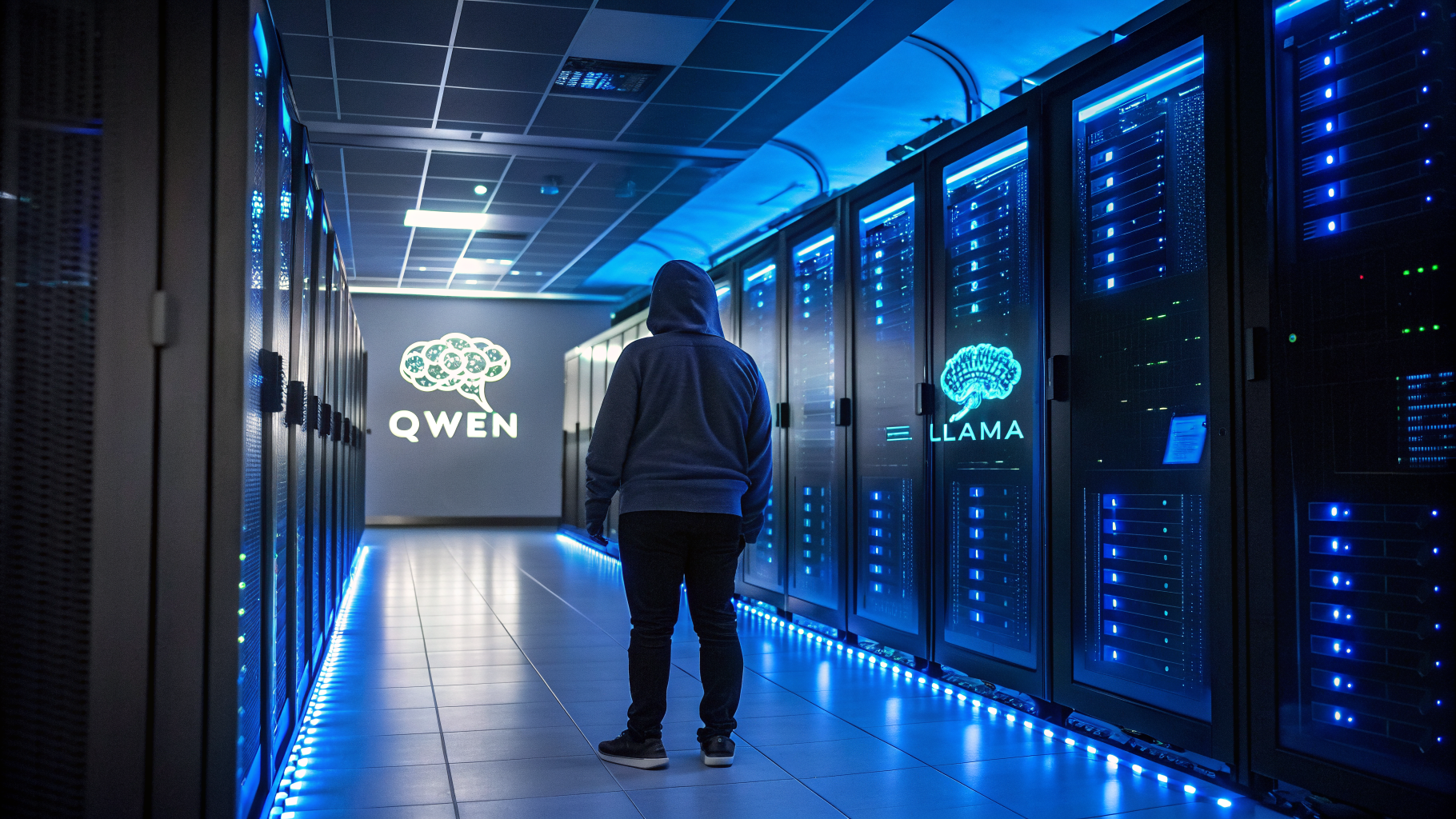
The fear isn’t entirely unfounded. Over the last two years, Chinese AI labs like Baidu, Alibaba, and a dozen smaller players have released models that rival — and in some cases surpass — their American counterparts. DeepSeek’s R1, for instance, gave GPT-4 a run for its money on reasoning tasks. Qwen 2.5 now competes head-to-head with Llama 3. And the price? Often a fraction of what U.S. vendors charge.
That’s great for innovation. It’s also terrifying for policymakers who see AI as the next nuclear arms race. The result has been a flurry of proposed regulations: bans on using Chinese models in government systems, blacklists for cloud providers that host them, and even whispers of criminal penalties for companies that download certain weights.
But here’s the thing I think gets lost in the noise: open-source models are not spyware. Unless you specifically fine-tune them to exfiltrate data, they don’t phone home. They’re just matrices of numbers. The idea that a Chinese model is inherently more dangerous than a U.S. model because of its country of origin is like saying a hammer made in China is more likely to hit you on the head than one made in Germany. It’s the hand that swings it that matters.
What Arcee Actually Said
Arcee’s CEO, who cut his teeth at Hugging Face and later at a major defense contractor, laid it out in a blog post and subsequent interviews. His key points, paraphrased but faithful:
- Source code is not ideology. A transformer architecture is a transformer architecture, whether it was written in Beijing or Boston. The weights are just numbers. The danger lies in the data used to train or fine-tune a model, and that’s something every responsible developer should audit regardless of origin.
- Banning Chinese models won’t stop bad actors. Adversaries will just use encrypted channels, decentralized networks, or simply run the models on their own hardware. A ban hurts law-abiding companies more than it hurts attackers.
- Open-source competition is good for everyone. If U.S. companies can’t use Chinese models, they lose access to some of the best-performing open-weight systems available. That slows down innovation in medicine, education, and logistics — areas where the U.S. still leads.
What struck me here is the timing. Arcee is not some ivory-tower think tank. They’re a commercial lab building their own open-source models. They have a dog in this fight. And yet they’re taking a stance that could easily be painted as unpatriotic by the more hawkish corners of the AI policy world. That takes guts.
The Real Risk Isn’t Where You Think
Let’s be honest for a second: the biggest risk from Chinese AI models right now is not that they’ll turn into some kind of CCP-controlled botnet. It’s that they’re often poorly documented, trained on data with questionable consent, and can produce outputs that are subtly biased in ways that are hard to detect unless you speak Mandarin and understand Chinese internet culture.
I’ve tested a few of these models myself. Qwen 2.5, for example, handles Mandarin flawlessly but sometimes makes odd cultural assumptions when prompted in English. That’s not malice — it’s a training data artifact. But if you’re using that model to power a customer service chatbot in Texas, you might get some baffling responses.
Then there’s the question of censorship. Chinese models are often fine-tuned to avoid certain topics — Tiananmen, Xinjiang, Taiwan’s sovereignty. That’s a real issue if you’re building a tool for journalists or human rights researchers. But again, that’s a deployment decision. You can use a Chinese base model and then fine-tune it yourself with your own data to strip out those filters. It’s extra work, but it’s not impossible.
Compare that to the risks of using a proprietary U.S. model. You don’t know what data it was trained on. You can’t inspect the weights. You’re trusting a corporation — which has its own incentives and biases — to handle your data responsibly. Remember when a major U.S. AI company accidentally leaked user chat histories? I do. It happened. So let’s not pretend that “Made in USA” is a guarantee of safety.
The Economic Angle Nobody’s Talking About
Here’s where it gets personal for a lot of my readers. I’ve been talking to startup founders who are quietly using Chinese models because they can’t afford Llama 3.1’s licensing or OpenAI’s API rates. One founder told me, “If they ban Chinese models, I’m dead. My entire product is built on Qwen. I don’t have the money to retrain on a U.S. model.”
That’s not an edge case. That’s the reality for hundreds of small and medium businesses. The AI world is not just Google and Anthropic. It’s also a guy in a garage in Omaha who needs a small language model for his inventory management tool and finds that a Chinese model does the job at a fraction of the cost.
Arcee’s call is essentially: don’t cut off your nose to spite your face. Regulate the use, not the origin. If a Chinese model is used in a critical infrastructure system, yes, that warrants extra scrutiny. But if it’s used to generate marketing copy or analyze soil samples? Let the market decide.
But What About the Espionage Risk?
I can already hear the pushback: “But what if the model has a backdoor?” It’s a legitimate question, and I’ve asked it myself. The short answer is that open-source models get audited by the community. If there were a hidden data exfiltration layer in a popular Chinese model, someone would have found it by now. The weights are just floating-point numbers. You can check them.
The bigger risk is the training pipeline. If a model was trained on data that was secretly labeled by a foreign intelligence service, the model could be subtly biased to produce outputs that favor that service’s interests. That’s a real concern — but it’s equally true for models trained anywhere. The solution is transparency in training data, not blanket bans.
And let’s be real: if a state actor wants to spy on you, they’re not going to do it by hiding code in an open-source model that thousands of researchers will inspect. They’ll use more traditional methods — phishing, compromised hardware, insider threats. The AI model panic is a convenient distraction from the boring but real cybersecurity problems we still haven’t solved.
What This Means for the Open-Source Ecosystem
Arcee’s intervention comes at a critical moment. The open-source AI community is increasingly split along geopolitical lines. Hugging Face, the largest model repository, has already faced pressure to remove Chinese models from its platform. Some U.S. cloud providers are refusing to host Chinese AI repositories. The fragmentation is real.
If this trend continues, we end up with two separate AI ecosystems — one Chinese, one Western — with very little cross-pollination. That would be a disaster for innovation. The best open-source models have always emerged from global collaboration. Linux was built by developers in Finland, the U.S., India, and Brazil. PyTorch came from Facebook, but its core contributors are spread across the world. AI should be no different.
I think Arcee is right to push back against the hysteria. That doesn’t mean we should be naive. We need robust export controls on hardware (GPUs, for instance) and careful vetting of models used in sensitive domains. But treating Chinese AI models as inherently dangerous is both inaccurate and counterproductive. It plays into the hands of politicians who want to score points by being tough on China, while actual security experts are busy trying to fix real vulnerabilities.
The Bottom Line for Developers and Founders
If you’re building on top of a Chinese model today, don’t panic. Do your due diligence: check the model card, look at the training data, run your own red-teaming tests. If you’re in a heavily regulated industry like healthcare or defense, consult your legal team. But if you’re a solo dev or a small startup, the odds are that the Chinese model you’re using is no more dangerous than any other open-source tool in your stack.
What matters is what you do with it. Fine-tune it responsibly. Monitor its outputs. Have a fallback plan. That’s the same advice I’d give for any AI model, regardless of where it comes from.
The real threat to AI safety isn’t a Chinese language model. It’s the idea that we can solve complex geopolitical problems with simple technical bans. That’s a comforting fantasy, but it’s not a strategy. And it’s certainly not going to stop the next wave of innovation — or the next panic.
I’ll leave you with this: the next time you see a headline screaming about the “Chinese AI threat,” ask yourself who benefits from that narrative. Usually, it’s not the engineers building useful tools. It’s the people selling fear. And we’ve seen where that road leads.
Original source: read the full article