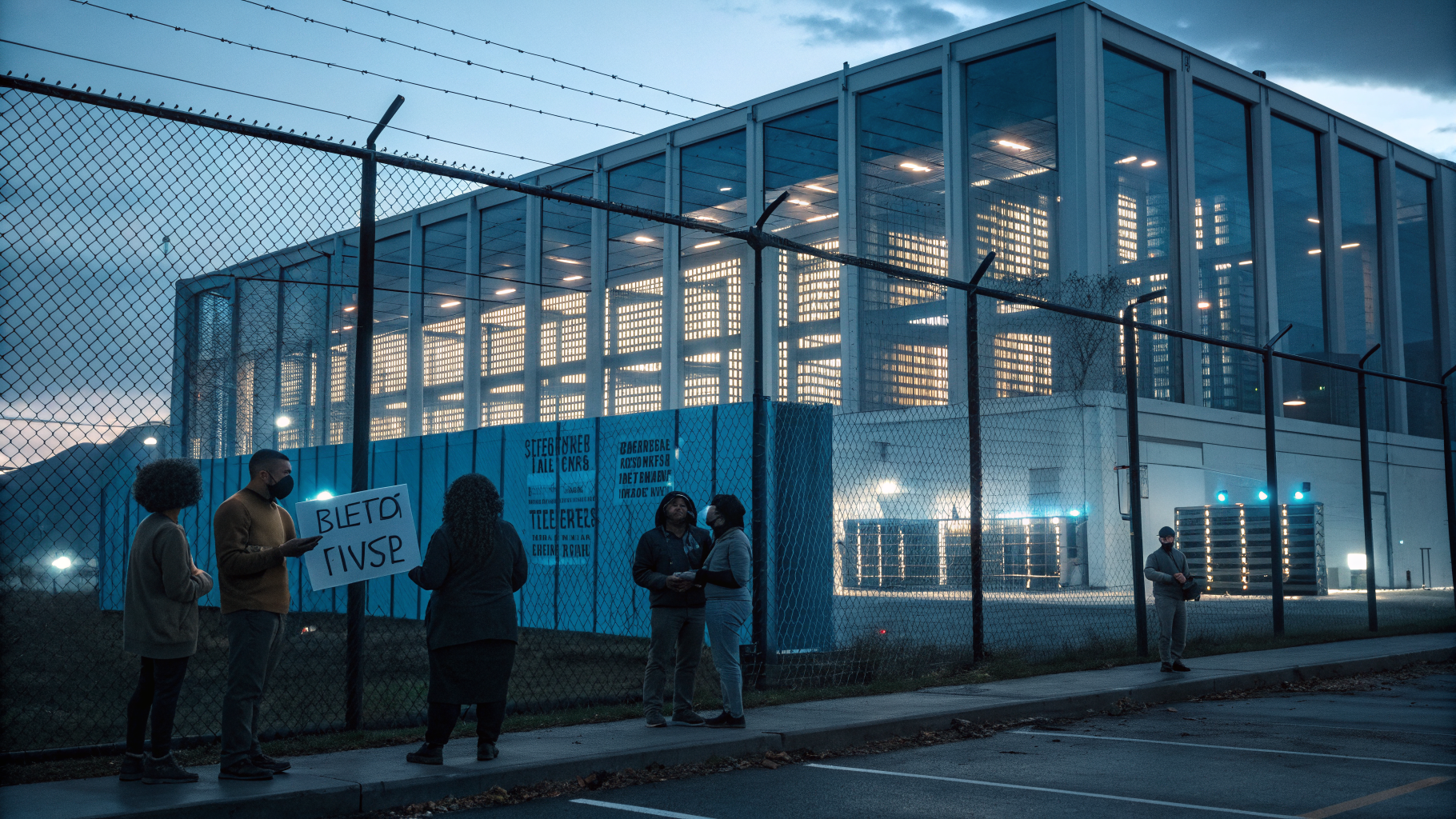
The Week the Voters Said ‘Not in My Backyard’—and OpenAI Listened
I’ve been covering the collision of AI ambition and local politics for years, and I can’t remember a week quite like this one. On Tuesday, voters across the country sent a message that data centers aren’t the unalloyed economic blessing they’ve been sold as. By Thursday, OpenAI had announced it would stop using non-disclosure agreements with public officials involved in its data center projects. That’s a hell of a turnaround.
Let’s be clear: this isn’t philanthropy. It’s damage control. The midterms were a bloodbath for data center expansion in several key districts, and OpenAI—the company that brought you ChatGPT and, more recently, a string of massive infrastructure promises—suddenly found itself on the wrong side of public opinion. The NDA policy was always a stinker. Hiding discussions with elected officials behind confidentiality agreements isn’t just bad optics; it’s fundamentally anti-democratic. So when OpenAI says it’s stepping back from NDAs, I say: good. But I also say: what took you so long?
What struck me here is the timing. The Verge reported that OpenAI’s announcement came after the midterms, not before. If this were a principled stance, wouldn’t it have come earlier? Instead, it reads like a company that got caught with its hand in the cookie jar and is now trying to look contrite. I’ve seen this movie before—in the crypto world, in the metaverse hype cycle, and now in the AI infrastructure gold rush. Companies don’t change their ways until the political heat becomes unbearable. That’s not leadership; that’s survival.
Why NDAs in Data Center Deals Are a Red Flag
For the uninitiated, NDAs with public officials might sound like standard business practice. They’re not. When a company asks a mayor or a county commissioner to sign a non-disclosure agreement before discussing a data center project, it’s effectively asking them to keep secrets from the very constituents they were elected to serve. That’s a problem.
I’ve spoken to local reporters and activists in Virginia, Oregon, and Texas who’ve been stonewalled by these agreements. They can’t get basic information about water usage, energy consumption, or tax incentives because the officials are bound by NDAs. The result is a public debate conducted in the dark, with residents finding out about massive industrial facilities only after the deals are done. That’s not how democracy works. And it’s certainly not how you build trust.
OpenAI’s new commitment—that it won’t use NDAs with public officials—is a step in the right direction. But let’s not pretend it’s enough. The company also said it would be more transparent about its data center projects, but the details are vague. What does ‘more transparent’ actually mean? Will they release water usage data? Will they commit to public hearings before breaking ground? Will they stop lobbying for tax breaks that starve local schools? The press release doesn’t say. And that’s the problem with corporate commitments: they’re often long on optics and short on specifics.
The Midterm Wake-Up Call
Let’s talk about those midterms for a minute. I’ve been covering VR, AI, and Web3 for over a decade, and I’ve never seen voters this fired up about infrastructure. In several districts, data center expansion was on the ballot—sometimes literally, sometimes as a shadow issue—and the results were brutal for the industry. In Virginia’s Data Center Alley, candidates who pushed back on unchecked growth won seats. In Oregon, a ballot measure to restrict tax breaks for data centers gained serious traction. Even in Texas, where the business-friendly rhetoric is gospel, local races turned on water rights and energy grids.
This isn’t a fluke. It’s a reckoning. For years, tech companies have treated local communities as passive recipients of their grand visions. They’ve promised jobs, tax revenue, and ‘innovation’ while quietly consuming massive amounts of water and electricity. And for a while, it worked. But the bill is coming due. Climate change is making water scarcity real. Energy prices are rising. And people are tired of being told that a handful of temporary construction jobs are worth sacrificing their quality of life.
OpenAI’s NDA retreat is a recognition of that reality. But it’s also a sign that the company knows it needs to change the narrative. The question is whether it’s willing to go beyond PR and actually engage with communities in good faith. I’m skeptical. I’ve seen too many tech companies promise transparency and then revert to form the moment the spotlight moves on.
What Real Transparency Would Look Like
If OpenAI is serious about turning over a new leaf, here’s what I’d want to see. First, a binding commitment to no NDAs with public officials—not just a press release, but a policy written into contracts. Second, full disclosure of water and energy usage for every data center project, updated quarterly. Third, public hearings before any tax incentives are approved, with real opportunities for community input. Fourth, a commitment to fund independent environmental impact studies. And fifth, a willingness to walk away from projects that don’t have community support.
That last one is the hardest. Tech companies are used to getting their way. They’re not used to hearing ‘no.’ But if OpenAI wants to avoid the kind of backlash that hit the metaverse and crypto, it needs to learn that ‘no’ is a valid answer. You can’t build the future on a foundation of resentment.
I’ll give credit where it’s due: OpenAI’s announcement is a positive step. It’s better late than never. But I’ve been around long enough to know that one policy change doesn’t make a culture shift. The company needs to prove it’s willing to be a good neighbor, not just a good PR machine. And that means more than dropping NDAs—it means embracing the messy, slow, frustrating work of democracy.
The Bigger Picture: AI’s Infrastructure Problem
Here’s the thing that keeps nagging at me. The AI boom is built on a physical foundation that most people never see. Data centers are the factories of the AI economy, and they’re hungry. They consume massive amounts of electricity and water, and they’re being built at a pace that’s outstripping local infrastructure. In some areas, data centers are already straining power grids and depleting aquifers. And the companies building them—OpenAI, Microsoft, Google, Amazon—are all competing to build faster and bigger.
That competition is only going to intensify. As AI models get larger and more complex, the demand for compute will skyrocket. We’re talking about facilities that require hundreds of megawatts of power and millions of gallons of water per day. And they’re being sited in communities that often have no say in the matter. That’s a recipe for conflict.
OpenAI’s NDA retreat is a small acknowledgment of that conflict. But it doesn’t solve the underlying problem: the AI industry is externalizing its costs onto local communities. And until that changes, we’re going to see more midterm surprises, more protests, and more backlash. The companies that figure out how to be genuine partners—not just extractive neighbors—will be the ones that survive.
The Metaverse and Crypto Parallels
I can’t help but see the parallels to the metaverse and crypto hype cycles. Remember when Facebook rebranded to Meta and promised a virtual world that would revolutionize everything? Remember when crypto companies promised to bank the unbanked and then imploded in a sea of fraud and speculation? The pattern is always the same: grandiose promises, followed by a rush to extract value, followed by a reckoning when the public realizes it’s been sold a bill of goods.
AI is different in one important way: it’s actually delivering on some of its promises. But that doesn’t exempt it from the same rules of accountability. If anything, the stakes are higher. AI data centers are physical infrastructure that will be with us for decades. They’re not just lines of code; they’re concrete and steel and water and power. And the decisions about where they go and how they operate will shape communities for generations.
That’s why OpenAI’s NDA policy matters. It’s a small thing, but it’s a signal. It says that the company is at least aware that it can’t operate in secrecy anymore. The question is whether it’s willing to go further. I hope it is. But I’ve been disappointed before.
The Bottom Line
OpenAI’s decision to drop NDAs for data center projects is a win for transparency, and I’ll take it. But it’s a reactive move, not a proactive one. The company is responding to political pressure, not leading on principle. And that means the real test is still ahead. Will OpenAI follow through with concrete transparency measures? Will it engage with communities in good faith? Will it accept that some projects shouldn’t happen?
I’ll be watching. And so should you. Because the AI industry is at a crossroads. It can either learn from the mistakes of the metaverse and crypto, or it can repeat them. The NDA retreat is a small step in the right direction. But it’s just a step. The journey is long, and the road is uphill. Let’s hope OpenAI is ready to walk it.
Original source: read the full article