Claude Just Accepted Your Calendar Invite. Now What?
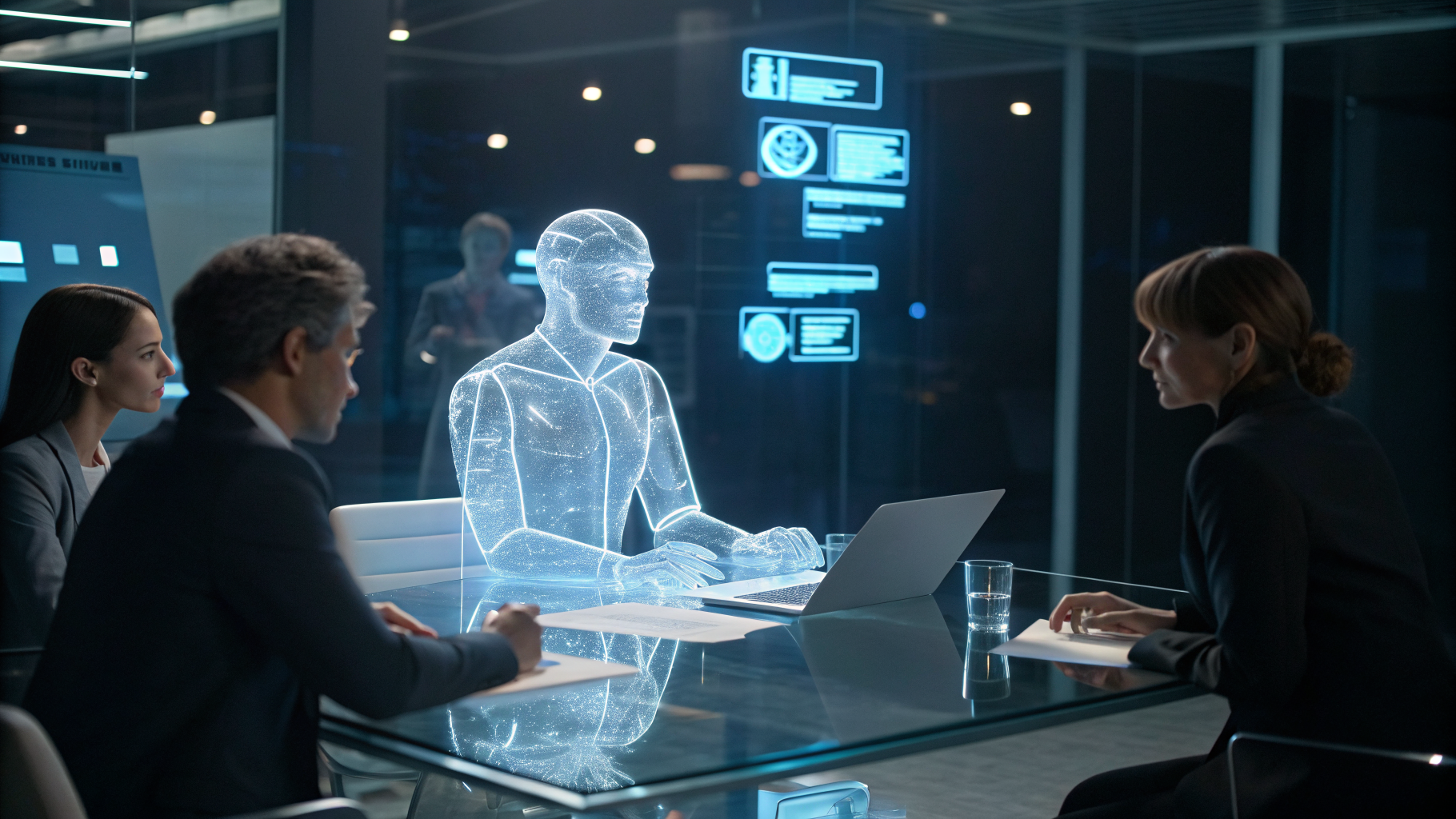
I’ve been covering enterprise AI long enough to remember when « AI assistant » meant a chatbot that could summarize a PDF without hallucinating too badly. This week, Anthropic announced that Claude can join your team meetings — or at least, it’s getting close. According to ZDNET, Claude is now responding « Yes » to calendar invites, with some limitations. Plus, Anthropic launched two more features available right now.
My first reaction? Here we go again. Another vendor promising to fix meetings by inserting more software into them. But the more I dug into this, the more I realized this isn’t just another feature drop. It’s a signal about where the productivity layer is heading — and it raises questions that Anthropic hasn’t fully answered.
The Intern Analogy Is Load-Bearing (and a Little Damning)
The source article frames Claude’s meeting participation like an intern. That’s a telling comparison, and not entirely flattering. Interns take notes. Interns ask clarifying questions. Interns sometimes sit silently and you forget they’re there. If Claude is the intern, then the promise is modest: it won’t run the meeting, but it might save you from writing the follow-up email.
What struck me here is how carefully Anthropic is positioning this. The company isn’t saying Claude will lead your standup or replace your PM. It’s saying Claude will attend — with limitations. That word « limitations » is doing a lot of work. It’s the corporate equivalent of a shrug. It means: don’t expect magic, expect a competent note-taker that occasionally mishears a joke.
Is that enough to justify the hype cycle that’s already forming? I don’t think so. Not yet. But it’s a reasonable first step, and I’d rather see Anthropic under-promise than over-promise. The AI industry has had enough of the latter.
Two New Features You Can Actually Use Today
Buried beneath the meeting announcement are two features that are available now. That’s the part I care about more, because « soon » is a word that has burned me too many times in this beat. I’ve lost count of how many « coming this quarter » features slipped into the next fiscal year and then quietly disappeared.
Anthropic isn’t being terribly specific in the source summary, which is frustrating. ZDNET mentions two new features but doesn’t give me the granular detail I want. So let me be clear about what I’d want to know as a user: does the meeting integration work with Google Meet, Zoom, and Teams? Does it require a specific enterprise tier? What happens to the transcript — where is it stored, who can access it, and does Anthropic train on it?
Those aren’t nitpicks. They’re the difference between a useful tool and a compliance nightmare. Any team lead who’s dealt with GDPR or SOC 2 will tell you the same thing. If Claude is sitting in your meeting, it’s a data processor. That’s not a small thing.
The Real Question: Do We Need AI in Every Meeting?
Here’s where I get skeptical. The assumption behind this entire product category is that meetings are a problem to be optimized. And sure, plenty of them are. But the solution isn’t always more automation. Sometimes it’s fewer meetings. Sometimes it’s a clearer agenda. Sometimes it’s just letting people skip the call and read the doc.
Claude joining your meetings doesn’t fix bad meeting culture. It just adds a silent participant who never gets bored. And that’s fine — but let’s not pretend it’s transformation. It’s convenience. Convenience is valuable, but it’s not the same thing as solving the underlying problem.
I’ve seen this pattern before in VR and the metaverse. Every few years, a new tool promises to make collaboration seamless, and every few years, we learn that the hard part was never the technology. It was the humans. The same is true here. Claude can take perfect notes. It can’t stop your colleague from talking over everyone else for forty minutes.
What Anthropic Gets Right (and Where It’s Playing Catch-Up)
Credit where it’s due: Anthropic has been more cautious than its competitors about shoving AI into every workflow. That caution shows here. The meeting feature is framed as collaborative, not autonomous. Claude is an attendee, not a decision-maker. That’s the right posture for a company whose brand is built on safety.
But cautious positioning doesn’t change the competitive reality. Microsoft has been embedding Copilot into Teams for over a year. Google has Gemini in Meet. Zoom has its own AI companion. Anthropic is late to this party, and being late means it has to be meaningfully better to matter. Is Claude’s meeting presence better? I can’t tell from the source material, and that’s a problem for Anthropic’s marketing team.
What I can tell you is that the bar is higher than it was six months ago. Users have tried AI meeting notes. Many of them found the summaries shallow, the action items generic, and the integration clunky. If Claude is just another note-taker with a nicer interface, it’ll get ignored. The only way this works is if Claude does something the others can’t — maybe better reasoning across long transcripts, maybe stronger follow-up drafting, maybe actual synthesis instead of transcription.
The Privacy Elephant in the Room
Let’s talk about the thing every enterprise buyer will ask about and every vendor will try to gloss over: data. A meeting is one of the most sensitive spaces in a company. Strategy discussions, personnel issues, legal risk, half-formed ideas that shouldn’t leave the room. Putting an AI in that space requires trust — and trust requires transparency.
Anthropic has a decent reputation on safety, but reputation isn’t a contract. I want to see clear documentation on retention, on opt-out, on whether meeting data feeds model training by default. If those answers aren’t obvious and easy to find, the feature will stall in pilot purgatory. I’ve watched that happen to plenty of promising tools.
And here’s a rhetorical question for Anthropic: if Claude is an intern, would you let an intern record every meeting and store the recording on a third-party server without telling anyone? No. You’d have a policy. So where’s the policy?
My Verdict: Promising, Underwhelming, Worth Watching
I’ll be blunt. This announcement doesn’t excite me. It’s a logical next step for an AI assistant, and it’s arriving later than it should. The « intern » framing is honest but modest. The two available features are the real story, and the source material doesn’t give me enough to judge them properly.
But I’m not writing this off. Anthropic has a habit of shipping quietly and improving fast. If Claude’s meeting presence is genuinely better at synthesis than the competition — if it can connect a decision from Tuesday’s call to a document from last month — that’s valuable. That’s the kind of thing an intern can’t do, and a good chief of staff can.
So here’s my advice to teams considering this: pilot it, but pilot it with eyes open. Ask the privacy questions first. Test it on a low-stakes meeting before you let it into your boardroom. And don’t expect it to fix your meeting culture. That’s still on you.
The AI meeting assistant race is getting crowded. Claude just entered the room. Whether it earns a seat at the table is a question only users can answer — and I suspect the answer will depend less on Anthropic’s model and more on how much companies are willing to trust a silent participant with their most candid conversations.
Original source: read the full article