
Introduction
The way we move people and goods is on the brink of a monumental shift, driven by the powerful synergy of transport, innovation, and artificial intelligence. This is not science fiction; it is the reality unfolding on our roads, railways, and in our skies. From self-driving cars to intelligent traffic systems, AI is redefining mobility, promising a future that is safer, more efficient, and seamlessly connected. This article explores the core of this transformation, examining how advanced algorithms and machine learning are becoming the new engines of progress in the world of transportation.
Background and Evolution
The concept of automated transport has been a human dream for decades. Early automation began with simple features like cruise control and anti-lock brakes, which laid the foundational groundwork for more complex systems. However, the true leap forward arrived with the convergence of powerful onboard computing, vast datasets from sensors, and sophisticated AI algorithms. The evolution of this modern transport innovation has been a story of incremental gains leading to exponential breakthroughs.
Early experiments in the 20th century were promising yet limited by the technology of the era. It was the DARPA Grand Challenges in the early 2000s that truly ignited the race for full autonomy, proving that driverless vehicles could navigate complex environments. As detailed in comprehensive analyses of the industry, the journey to self-driving cars has been far more complex than initially predicted, with software and real-world edge cases proving to be monumental hurdles. Today, we are moving beyond simple automation to predictive, adaptive systems that can learn, reason, and react to the world with near-human intuition.
The Core of Transport, Innovation: Practical Applications
Artificial intelligence is not just a futuristic concept; it is already being deployed in tangible ways that enhance efficiency, safety, and sustainability across the transportation sector. These applications demonstrate the practical power of AI-driven solutions in solving long-standing mobility challenges.
Autonomous Vehicles (AVs)
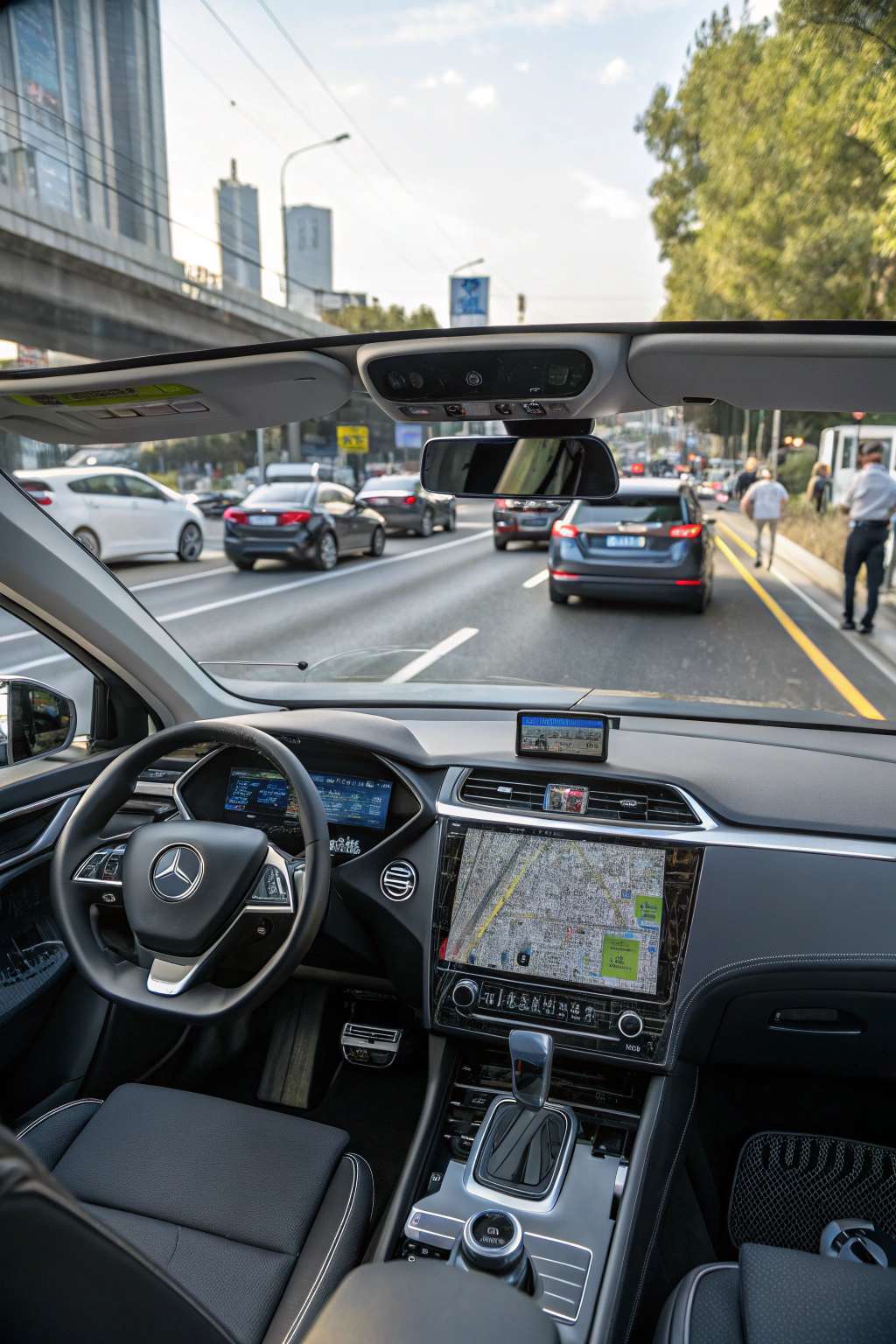
The most visible application is the development of autonomous cars, trucks, and delivery drones. Companies like Waymo and Cruise are already operating commercial robotaxi services in select cities, offering a glimpse into a future without human drivers. In logistics, autonomous trucking promises to revolutionize supply chains by enabling 24/7 operation, reducing fuel consumption through optimized driving patterns, and mitigating driver shortages. This level of transport innovation aims to drastically reduce accidents caused by human error, which currently accounts for the vast majority of collisions.
Smart Traffic Management
In congested urban centers, AI is becoming an essential tool for city planners. Smart traffic management systems use networks of cameras and sensors to analyze traffic flow in real-time. The AI can then dynamically adjust traffic signal timing to reduce bottlenecks, reroute vehicles around accidents, and prioritize emergency responders. By predicting traffic patterns based on historical data and current events, these systems can prevent congestion before it starts, leading to smoother commutes, lower emissions, and less driver frustration.
Predictive Maintenance and Fleet Optimization
For airlines, railway operators, and shipping companies, vehicle downtime is incredibly costly. AI-powered predictive maintenance is a game-changer. By analyzing data from thousands of sensors on an airplane engine or a locomotive, machine learning models can predict when a component is likely to fail. This allows maintenance to be scheduled proactively, preventing catastrophic failures and minimizing service disruptions. It’s a prime example of practical transport innovation that boosts safety and operational efficiency behind the scenes.
Challenges and Ethical Considerations
The road to a fully autonomous future is paved with significant challenges. From a technical standpoint, ensuring AI systems can handle unpredictable “edge cases”—like erratic human behavior or extreme weather—remains a primary concern for safety. Beyond the technology, there are profound ethical dilemmas to resolve. For instance, how should an autonomous vehicle be programmed to react in an unavoidable accident scenario? These ethical challenges in transport innovation require a broad societal consensus that we have yet to achieve.
Data privacy is another major concern. Connected and autonomous vehicles generate enormous amounts of data, including location, driving habits, and even in-cabin conversations. Protecting this data from misuse and cyberattacks is paramount. Furthermore, regulatory frameworks are struggling to keep pace with the technology’s rapid advancement, creating uncertainty for developers and the public. Finally, the societal impact, particularly the potential displacement of millions of professional drivers, necessitates proactive planning for retraining and economic transition.
What’s Next? The Future Roadmap
The pace of transport, innovation, and AI integration will only accelerate. In the short term (1-3 years), we can expect to see wider adoption of Level 3 autonomous driving features in consumer vehicles and more robotaxi services launching in geofenced urban areas. Companies like Tesla will continue to push software updates that enhance driver-assist capabilities.
In the mid-term (4-8 years), autonomous trucking is likely to become mainstream on major highway corridors, operating in “hub-to-hub” models. Urban air mobility, or “flying taxis,” from companies like Joby Aviation and Wisk, will move from prototype to initial commercial trials in regulated airspace. Drone delivery, led by innovators like Zipline and Amazon Prime Air, will become a common sight for last-mile logistics.
Long-term (10+ years), we may see fully integrated smart city ecosystems where personal car ownership declines in favor of shared, autonomous mobility-as-a-service (MaaS) fleets. Public transport will become personalized and on-demand, with AI orchestrating a seamless network of pods, buses, and trains to create a truly efficient and sustainable urban transit system.
How to Get Involved
Ready to dive deeper into this evolving landscape? You do not need a Ph.D. in robotics to get involved. Online communities like Reddit’s r/SelfDrivingCars or dedicated industry forums provide daily news and vibrant discussions among experts and enthusiasts alike. For those looking to learn, platforms like Coursera and edX offer free introductory courses on artificial intelligence, machine learning, and smart city technology. By engaging with these resources, you can better understand the forces shaping our future, much like how you can explore the future of digital worlds and their societal impact.
Debunking Common Myths
Myth 1: AI-powered transport is 100% foolproof and will never make mistakes.
Reality: While AI aims to be significantly safer than human drivers, it is not infallible. Systems are trained on data and can struggle with novel situations not present in their training. The goal is a drastic reduction in accidents, not a complete impossibility.
Myth 2: AI will instantly eliminate all driving and logistics jobs.
Reality: The transition will be gradual. New roles, such as remote fleet operators, AV maintenance technicians, and AI developers, will be created. The shift will be a multi-decade process requiring workforce adaptation, not an overnight collapse.
Myth 3: Autonomous transport is only about self-driving cars.
Reality: This field is incredibly broad. It encompasses autonomous ships, AI-optimized air traffic control, smart railway systems, and delivery drones. Cars are just the most visible part of a much larger ecosystem of transport innovation.
Top Tools & Resources
- NVIDIA DRIVE: This is a full-stack, end-to-end platform for developing and deploying autonomous vehicles. It includes hardware and software that allows automakers and developers to build AI-powered driving systems, making it a crucial enabler for the entire industry.
- CARLA Simulator: An open-source simulator for autonomous driving research. CARLA provides a realistic virtual environment where developers can safely test their AI models against a variety of scenarios, weather conditions, and traffic situations before real-world deployment.
- Baidu Apollo: An open-source autonomous driving platform that aims to accelerate innovation through collaboration. It provides a comprehensive set of tools, from perception and sensor fusion to planning and control, allowing companies to build their own autonomous driving solutions on a shared foundation.
Conclusion
The fusion of transport, innovation, and artificial intelligence is more than just an upgrade; it’s a fundamental reinvention of mobility. From making our roads safer to building more efficient and sustainable cities, the applications are vast and transformative. While significant challenges remain, the momentum is undeniable. The journey ahead requires careful navigation between technological progress, ethical responsibility, and public acceptance. The world is on the move, and AI is in the driver’s seat.
🔗 Discover more futuristic insights on our Pinterest!
FAQ
What is the difference between Level 4 and Level 5 autonomy?
Level 4 (High Driving Automation) means the vehicle can perform all driving functions under specific conditions, such as within a geofenced area or on a highway. A human driver does not need to pay attention in these conditions. Level 5 (Full Driving Automation) means the vehicle can operate completely on its own under all conditions and on any road, with no need for a human driver at all.
How will transport innovation driven by AI impact urban planning?
AI-driven transport innovation will dramatically change cities. With fewer private cars needed due to autonomous ride-sharing, vast areas currently used for parking can be repurposed into parks, housing, or commercial spaces. Traffic flow will be optimized, reducing congestion and the need for wider roads. Urban planning will shift towards a more people-centric model, with integrated public and on-demand transit systems.
Is my data safe in a connected car?
Data security is a top priority and a major challenge for the industry. Connected cars use encryption and secure protocols to protect data. However, like any connected device, they are a potential target for hackers. Automakers and cybersecurity firms are continuously working to strengthen defenses, but it remains an ongoing battle. Owners should always use strong passwords and keep their vehicle’s software updated.