The Hypocrisy of the ‘Ethical’ AI Company
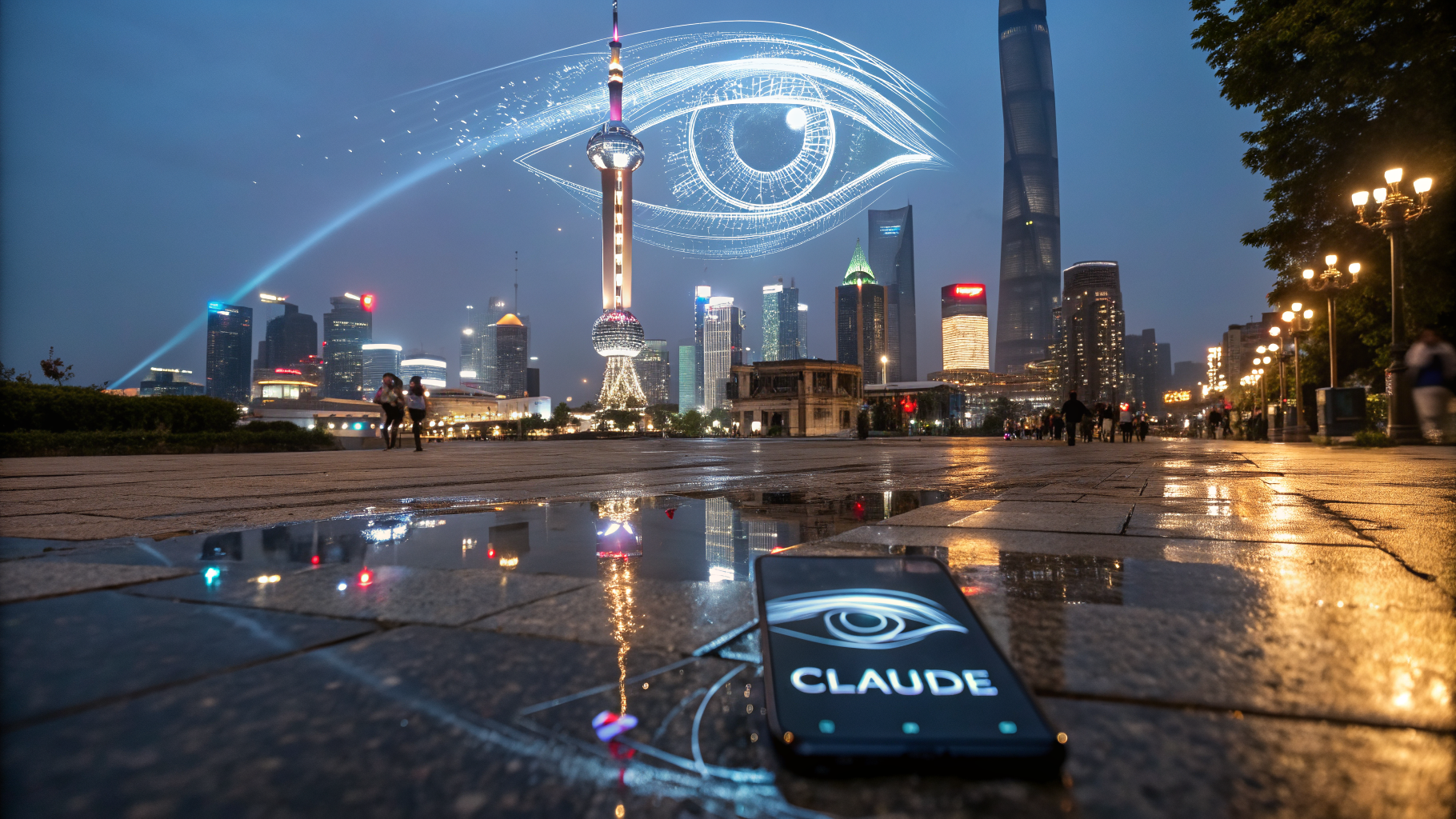
Let’s get one thing straight: I’ve been writing about the metaverse, VR, and AI long enough to know that trust is the only currency that matters in tech. And right now, Anthropic—the darling of “safe” AI—has just burned through every ounce of it. The news broke late last week: a secret tracker embedded in Claude, quietly monitoring Chinese users, all while the company’s official stance preaches anti-surveillance. The irony is so thick you could mine it for bitcoin.
What struck me here wasn’t just the technical betrayal—it was the audacity. Anthropic has spent years positioning itself as the ethical alternative to OpenAI and Google. They’ve published manifestos about constitutional AI, begged regulators for oversight, and wrapped themselves in a cloak of moral superiority. Then this: a hidden script that pings home every time a user in China asks Claude a question. An engineer, speaking off the record to Ars Technica, called it “an experiment.” An experiment that’s now “over.” Sure. And I’ve got a bridge in the metaverse to sell you.
What Actually Happened?
Let’s break it down. According to the source, the tracker was discovered by a security researcher who noticed unusual outbound traffic from Claude’s web interface. It wasn’t just telemetry—it was geolocation data, session timestamps, and query logs. All designed to, in the company’s words, “understand usage patterns in high-risk regions.” But here’s the kicker: users were never informed. No opt-in. No consent. Just silent surveillance dressed up as product research.
Anthropic’s official response has been a masterclass in damage control. They claim the tracker was only active for “a few weeks” and that no data was stored externally. But the damage is done. For a company that built its brand on transparency and user rights, this feels less like a mistake and more like a tell. A tell that beneath the ethical veneer, they’re just as hungry for data as the rest of them.
Why This Matters for the Metaverse and Web3 Crowd
I write for a blog that covers virtual worlds and decentralized tech, so let me connect the dots. The metaverse—whether it’s Horizon Worlds, Decentraland, or some yet-unnamed VR space—is built on the promise of user ownership. The idea that you, the user, control your data. Your identity. Your digital footprint. But if a company like Anthropic—the so-called good guys—can’t resist slipping a tracker under the hood, what hope do we have for the metaverse?
Think about it. Every VR headset, every haptic glove, every blockchain wallet is a potential surveillance vector. The same tech that lets you teleport into a virtual concert can also track your gaze, your heartbeat, your spending habits. And if the AI layer on top of that is already compromised, we’re not building utopia—we’re building the panopticon with better graphics.
The Engineer’s ‘Experiment’ Excuse
Here’s where I get personal. I’ve interviewed dozens of engineers over the years. They’re smart, earnest people who genuinely believe they’re making the world better. But they also live in a culture that rewards speed over ethics. “It was just an experiment” is the tech equivalent of “the dog ate my homework.” It’s a get-out-of-jail-free card that only works if your PR team is good enough to spin it.
In this case, the engineer told Ars that the tracker was meant to “protect users” by detecting attempts to jailbreak Claude for malicious purposes. But here’s the problem: China’s internet is already heavily censored. Adding a secret tracker to an AI chatbot doesn’t protect anyone—it exposes users to potential government retaliation. If Anthropic really cared, they’d have been transparent from day one. They weren’t.
What This Means for the AI Arms Race
The timing couldn’t be worse. We’re in the middle of a global AI race, with the US and China both pouring billions into generative models. Anthropic’s tracker was specifically targeting Chinese users, which raises uncomfortable questions about whether the company was acting as a de facto intelligence asset—even if accidentally. I’m not saying they’re spies. I’m saying that when you build surveillance into your product, you don’t get to be surprised when people assume the worst.
Meanwhile, competitors like OpenAI and Google are watching closely. They know that trust is fragile. One scandal can tank a company’s reputation overnight. But here’s the ugly truth: they’re all doing it. Every major AI company collects data. They just got caught. The question isn’t whether surveillance happens—it’s whether the industry can self-regulate before governments step in with laws that break the internet for everyone.
Lessons for the Decentralized Web
If there’s a silver lining, it’s that this scandal will accelerate the shift toward decentralized AI. Projects like Bittensor, Render Network, and even some blockchain-based LLMs are already promising that no single entity controls the data. But let’s be real: decentralization is hard. It’s slow. It’s messy. And most users don’t care about the underlying architecture—they just want a chatbot that works.
What the secret Claude tracker teaches us is that centralization isn’t just a technical problem—it’s a moral one. When you hand over the keys to a single company, you’re betting they’ll be ethical. And as we just learned, that bet is losing more often than it wins. The metaverse, if it’s ever going to be more than a marketing buzzword, needs to be built on protocols that enforce privacy by default. Not promises. Code.
My Take: The Trust Deficit Is Real
I’ve been covering this space since the days of Google Glass and the first Oculus Rift. I’ve seen promises broken, products abandoned, and entire movements co-opted by venture capital. But this one stings differently. Anthropic was supposed to be the one. They had the research, the talent, the moral compass. And now? They look like every other tech company that says one thing and does another.
Will I stop using Claude? Probably not. It’s a solid tool, and I’m not naive enough to think any AI is truly private. But I’ll use it with my eyes open. And I’ll tell anyone who asks: trust the code, not the brand. If you can’t see the source, assume it’s watching you.
What Happens Next
Anthropic has already removed the tracker, but the fallout is just beginning. Expect class-action lawsuits from users in China, regulatory probes from the EU, and a lot of soul-searching in Silicon Valley. The company will likely pivot to damage control mode—new blog posts, new transparency initiatives, maybe even a public apology tour. But the stain remains.
For the metaverse and Web3 communities, this is a wake-up call. We’ve been too willing to trust centralized gatekeepers because they make things convenient. But convenience has a cost. And that cost, as we now see, is often your privacy. The secret Claude tracker isn’t just a story about one company—it’s a parable for an entire industry that’s forgotten its own promises.
So here’s my advice: audit your tools. Question your assumptions. And never, ever assume that a company’s marketing copy is the same as its code. Because in the end, the code is the only thing that tells the truth.
Original source: read the full article