Another One Bites the Dust
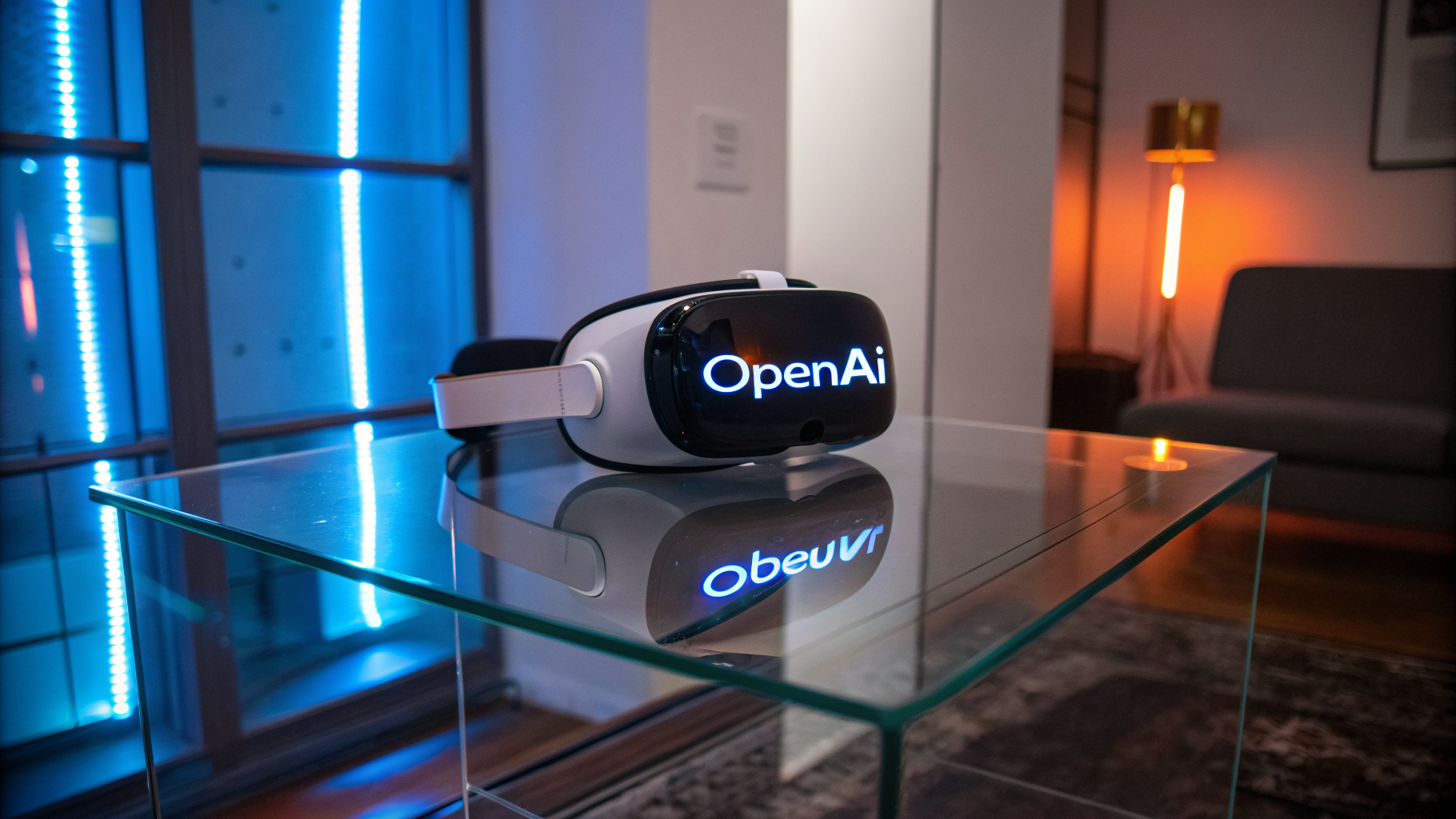
Let me tell you, when a key Apple hardware executive walks out the door, it’s rarely just a quiet retirement in the Caymans. This time it’s Mike Rockwell, the man who shepherded the Vision Pro from a secret skunkworks project to the polished (if absurdly priced) headset you can buy today. He was promoted last year to lead Apple’s entire headsets and smart glasses hardware group. Now he’s leaving for OpenAI. Yes, the same OpenAI that wants to put AI in everything, including, presumably, a pair of glasses that don’t look like a diving mask.
What struck me here isn’t just the departure—it’s the timing. Apple’s Vision Pro launched to a mix of awe and skepticism. Awe because the passthrough video is genuinely stunning. Skepticism because $3,499 is a lot for a device that mostly lets you watch movies in a virtual theater while your cat judges you. Rockwell’s move suggests that even the internal champion of this hardware sees the writing on the wall. Or maybe he just got a better offer. I’d bet on the former.
Let’s rewind a bit. Rockwell spent nearly a decade at Apple working on what eventually became the Vision Pro. He was the engineering backbone behind the R1 chip, the micro-OLED displays, and the weirdly convincing EyeSight feature that lets people see your eyes—or a creepy digital version of them. He was promoted in 2023 to lead the whole headsets and smart glasses group, making him the de facto czar of Apple’s spatial computing ambitions. And now he’s jumping ship to OpenAI, where he’ll likely work on hardware for AI—maybe a pair of smart glasses, maybe something weirder.
This is a big deal. Not because one executive leaving collapses Apple’s AR/VR empire—it won’t. But because it signals a shift in where the smartest hardware talent thinks the future is. And right now, that future is in AI, not in standalone headsets.
The Vision Pro: A Technical Marvel That Didn’t Sell
I’ve been covering VR and AR since the Oculus DK1 days. I’ve strapped everything from the HTC Vive to the Magic Leap One to my face. The Vision Pro is, objectively, the most impressive piece of consumer headset hardware I’ve ever used. The hand tracking is witchcraft. The screen resolution makes you forget you’re looking at screens. The build quality is classic Apple: aluminum, glass, and a price tag that makes your wallet cry.
But here’s the thing: it’s still a headset. You put it on your face. It isolates you from the world. Even with EyeSight and the passthrough cameras, you’re wearing a computer on your face. And that’s a hard sell for most people. Apple sold somewhere between 500,000 and 1 million units in the first year—respectable for a luxury gadget, but a drop in the bucket compared to iPhones or even AirPods. The rumored cheaper Vision model, which was supposed to launch in 2025, is now reportedly delayed. Coincidence? I think not.
Rockwell leaving is a signal that Apple’s internal roadmap for affordable AR glasses—the kind you’d actually wear outside—is probably still years away. And for a hardware chief who spent a decade on this, waiting another five years for the “real” product might not have been appealing. Especially when OpenAI is offering a blank check to build the hardware that runs the next generation of AI assistants.
OpenAI’s Hardware Gambit
Let’s not pretend OpenAI is a hardware company. They’re a software and research outfit that struck gold with ChatGPT. But they’ve been dabbling in hardware for a while. They hired a former Apple design chief, Jony Ive, to consult on a mysterious AI device. They’ve been rumored to be working on a pair of AI-powered glasses with a start-up called Humane, though that partnership seems rocky. Now they’ve got Rockwell, a guy who actually shipped a complex, high-end wearable.
What does OpenAI want with a hardware exec? Simple: they need someone who can build the physical shell for their AI brain. The current wave of AI is all about chatbots and APIs. The next wave will be about ambient AI—devices you wear, talk to, and forget about. Think something like the Meta Ray-Ban smart glasses, but powered by GPT-5 instead of a mediocre assistant. Rockwell knows how to miniaturize components, manage supply chains, and design something that doesn’t look like a prop from a 90s sci-fi movie. That’s exactly what OpenAI lacks.
I’ve seen this movie before. Remember when Google hired Scott Huffman to lead their hardware division? Or when Amazon poached a bunch of Apple engineers for the Echo? It rarely ends with a smash hit. But OpenAI is playing a different game. They’re not trying to sell a million units of a single device. They’re trying to own the interface between humans and AI. And that interface might be a pair of glasses, a pendant, or even an earpiece. Rockwell will help them figure out which one sticks.
What This Means for Apple
Apple is not in trouble. They have a trillion-dollar war chest, the best supply chain on Earth, and a culture that churns out products like the iPad and Apple Watch. But the Vision Pro division is now leaderless at a critical moment. The company was already struggling to justify the Vision Pro’s price to developers, who haven’t exactly flocked to build killer apps. Without Rockwell, the internal push for a cheaper model might lose steam.
I’ve heard from sources that Apple’s AR glasses project—the one that’s supposed to be a lightweight, all-day wearable—is still in early prototype stages. They’re aiming for 2027 or later. That’s a long time in tech. By then, Meta will have shipped its fourth or fifth generation of Ray-Ban Stories. Google will have rebranded Google Glass for the third time. And OpenAI might have a device that actually makes you feel like you’re living in the future, not just looking at a screen strapped to your face.
The most telling detail from the UploadVR report is that Rockwell was promoted last year to lead “broader headsets and smart glasses hardware.” That means he was the guy responsible for both the Vision Pro and whatever comes next. Now that guy is gone. Apple will promote someone internally, likely from the engineering ranks, but the vision—pun intended—will shift. New leaders always want to put their own stamp on things. That could mean delays, changes in direction, or even a pivot to something completely different.
The Bigger Picture: AR vs. AI
Here’s the core tension I see playing out. The metaverse and AR/VR were the hot narrative of 2021-2022. Then ChatGPT launched in late 2022, and suddenly everyone forgot about virtual worlds. The money, the talent, the hype—all of it flowed to AI. Apple’s Vision Pro launch was a brave attempt to reignite interest in spatial computing, but it arrived at a party where the DJ had already packed up and gone home.
Rockwell’s move crystallizes this shift. He’s not leaving because Apple’s hardware is bad. He’s leaving because the biggest opportunities in tech are now in AI, not in headsets. Think about it: OpenAI’s valuation is north of $80 billion. Apple’s market cap is $2.7 trillion. But OpenAI is growing at a pace that Apple hasn’t seen since the iPhone launch. The upside for a hardware executive at OpenAI is potentially enormous—stock options that could make him a billionaire if they go public. At Apple, he’s just another executive in a giant machine.
Does this mean the Vision Pro is dead? No. But it means Apple will have a harder time attracting top hardware talent for their AR/VR division. Why would a brilliant engineer want to spend five years miniaturizing a battery for a headset that might sell a few million units, when they could join OpenAI and build the hardware that powers the next computing paradigm? The answer is obvious to anyone who isn’t wearing Apple’s reality distortion field goggles.
What I’m Watching For
I’ll be following two things closely. First, what does Rockwell actually do at OpenAI? If he’s tasked with building a pair of smart glasses that integrate directly with ChatGPT, that’s a direct shot at Apple’s long-term AR ambitions. If he’s working on something weirder—like a brain-computer interface or a wearable AI pin—then OpenAI is thinking even bigger than I expected.
Second, how does Apple respond? They’ll likely issue a bland statement thanking Rockwell for his contributions and promising to continue the Vision Pro journey. But actions speak louder. If they accelerate the timeline for a cheaper Vision model or announce a partnership with a major content studio, that’s a sign they’re doubling down. If they go quiet and let the Vision Pro fade into a niche product like the Mac Pro, then we’ll know the magic is gone—at least for now.
I’ve been writing about this space long enough to know that one executive leaving doesn’t kill a product line. But it’s a signal. And in an industry driven by signals, it’s a loud one. The best hardware minds in the world are looking at AI and seeing a gold rush. Apple’s Vision Pro, for all its technical brilliance, is starting to look like a beautiful sideshow.
So here’s my take: if you’re an Apple shareholder, don’t panic. But if you’re a fan of spatial computing, start lowering your expectations for the next few years. The person who built the most advanced headset on Earth just decided the future is somewhere else. And he’s probably right.
Original source: read the full article