
Generative AI: The New Frontier of Digital Art and Creativity
In a world where technology and imagination are increasingly intertwined, a new revolution is quietly reshaping the very essence of human expression. Generative AI is no longer a futuristic concept from science fiction; it has become a powerful, accessible tool that is redefining the boundaries of art and creativity. For artists, designers, and hobbyists alike, this technology represents not a replacement for human ingenuity, but a collaborative partner, a digital muse capable of translating a simple text prompt into a breathtaking visual masterpiece. This fusion of human intent and machine intelligence is sparking a new renaissance in the digital age.
The Evolution from Code to Canvas
The journey of AI in art began long before the current hype. In the 1970s, pioneers like Harold Cohen developed AARON, a computer program that could create original drawings based on a set of programmed rules. These early systems were fascinating but limited by their rigid code. The real paradigm shift arrived with the development of machine learning models, specifically Generative Adversarial Networks (GANs) in 2014 and, more recently, diffusion models. These models learn from vast datasets of existing images and text, enabling them to understand complex concepts, styles, and aesthetics. As explained by leading researchers, this evolution from rule-based systems to learning-based systems has democratized the creation process, allowing anyone with an idea to become a creator. For a deeper technical dive, expert analysis on generative models highlights how they are fundamentally changing digital interaction.
Practical Applications in the Creative Industries
Generative AI is not just for creating novel images; it’s a practical tool being integrated into professional workflows across various sectors. Its impact on the landscape of art and creativity is already profound and continues to expand.
Concept Art and Rapid Ideation
For video game developers, filmmakers, and product designers, the initial concept phase is critical but time-consuming. AI tools can generate hundreds of visual variations for characters, environments, and props in minutes. An artist can input a prompt like “a futuristic cyberpunk city at night in a rainy, neon-drenched style,” and receive dozens of high-quality starting points. This accelerates brainstorming, allowing creators to focus on refining the best ideas rather than starting from a blank canvas.
Personalized and Dynamic Art Experiences
Imagine an art installation that changes based on the emotions of the viewers or a children’s storybook where the illustrations are uniquely generated based on the child’s name and favorite things. AI makes this possible. Museums are beginning to use interactive AI art that responds to visitor movement, while online platforms can create personalized music playlists or visual avatars that are truly one-of-a-kind. This creates a more engaging and intimate connection between the audience and the art.
Augmenting the Digital Artist’s Toolkit
Beyond simple text-to-image generation, AI is being integrated into existing software as a powerful assistant. Tools like Adobe Firefly allow designers to seamlessly extend backgrounds, remove objects, or change the style of a specific layer within Photoshop. This “co-piloting” approach enhances productivity and empowers artists to experiment with complex edits that would have previously taken hours of manual labor, pushing the envelope of digital art and creativity.
Challenges and Ethical Considerations
The rapid rise of generative AI also brings a host of complex ethical questions. The conversation around copyright is paramount: who owns an AI-generated image? Is it the user who wrote the prompt, the company that developed the AI, or is it a derivative work of the countless artists whose work was used in the training data? Furthermore, AI models can inherit and amplify biases present in their training data, leading to stereotypical or non-inclusive outputs. The threat of deepfakes and AI-generated misinformation poses a significant risk to information integrity. Navigating these challenges requires a thoughtful approach involving regulation, transparent development, and a public discourse on the value of human skill in an increasingly automated world.
What’s Next? The Future of AI in Art
The trajectory of generative AI suggests an even deeper integration into our creative lives. In the short-term, we can expect more powerful and intuitive AI features embedded directly into our favorite apps. In the mid-term, innovators like OpenAI and startups are developing multimodal models that can understand and generate content from a mix of text, images, and sound, leading to AI-directed short films or fully interactive virtual characters. Looking further ahead, the long-term vision involves AI agents that can develop their own unique artistic styles, moving from mimicry to genuine, emergent art and creativity.
How to Get Involved and Start Creating
Diving into the world of AI art has never been easier. You don’t need a powerful computer or coding skills to start. Several platforms offer free access to their tools, allowing you to experiment with prompts and discover your own style. Communities on Reddit (like r/Midjourney) and Discord servers dedicated to specific tools are fantastic places to learn prompt engineering, share your creations, and get feedback. This journey of digital creation can be a fantastic source of inspiration while exploring virtual worlds and their emerging aesthetics.
Debunking Common Myths About AI Art
As with any disruptive technology, misconceptions abound. It’s important to separate the hype from reality.
Myth 1: AI will make human artists obsolete.
Correction: AI is a tool, not a replacement. Just as the camera did not eliminate painters, AI will not eliminate artists. It augments their abilities and creates new roles focused on curation, prompt-craft, and conceptual direction. The core of art and creativity remains human intent.
Myth 2: Creating AI art requires no skill.
Correction: While the barrier to entry is low, creating high-quality, intentional AI art requires skill. Prompt engineering—the art of writing precise, evocative text descriptions—is a new craft. Furthermore, many professionals use AI as just one step in a longer process that includes composition, editing, and digital painting.
Myth 3: AI creates art from nothing.
Correction: AI models are not sentient creators. They are sophisticated pattern-recognition systems that learn from vast datasets of human-created images and text. Their “creativity” is a complex remix and recombination of the styles, subjects, and concepts they have been trained on.
Top Tools & Resources to Ignite Your Creativity
Ready to start your journey? Here are three of the most influential tools in the AI art space today.
- Midjourney: Operating primarily through the chat app Discord, Midjourney is renowned for producing highly artistic, stylized, and often beautiful images. It excels at interpreting nuanced prompts to create cohesive and aesthetically pleasing compositions, making it a favorite among artists and designers.
- Stable Diffusion: As an open-source model, Stable Diffusion offers unparalleled flexibility. You can run it on your own computer for free (with a suitable GPU) or use it through web platforms like Playground AI. Its strength lies in its customizability, allowing users to train the model on their own images to develop unique styles.
- Adobe Firefly: Designed for commercial safety, Firefly is trained exclusively on Adobe Stock’s licensed content and public domain images. Its key advantage is the seamless integration into Adobe’s Creative Cloud suite, making it a powerful and ethically-minded tool for professionals already in that ecosystem.
Conclusion
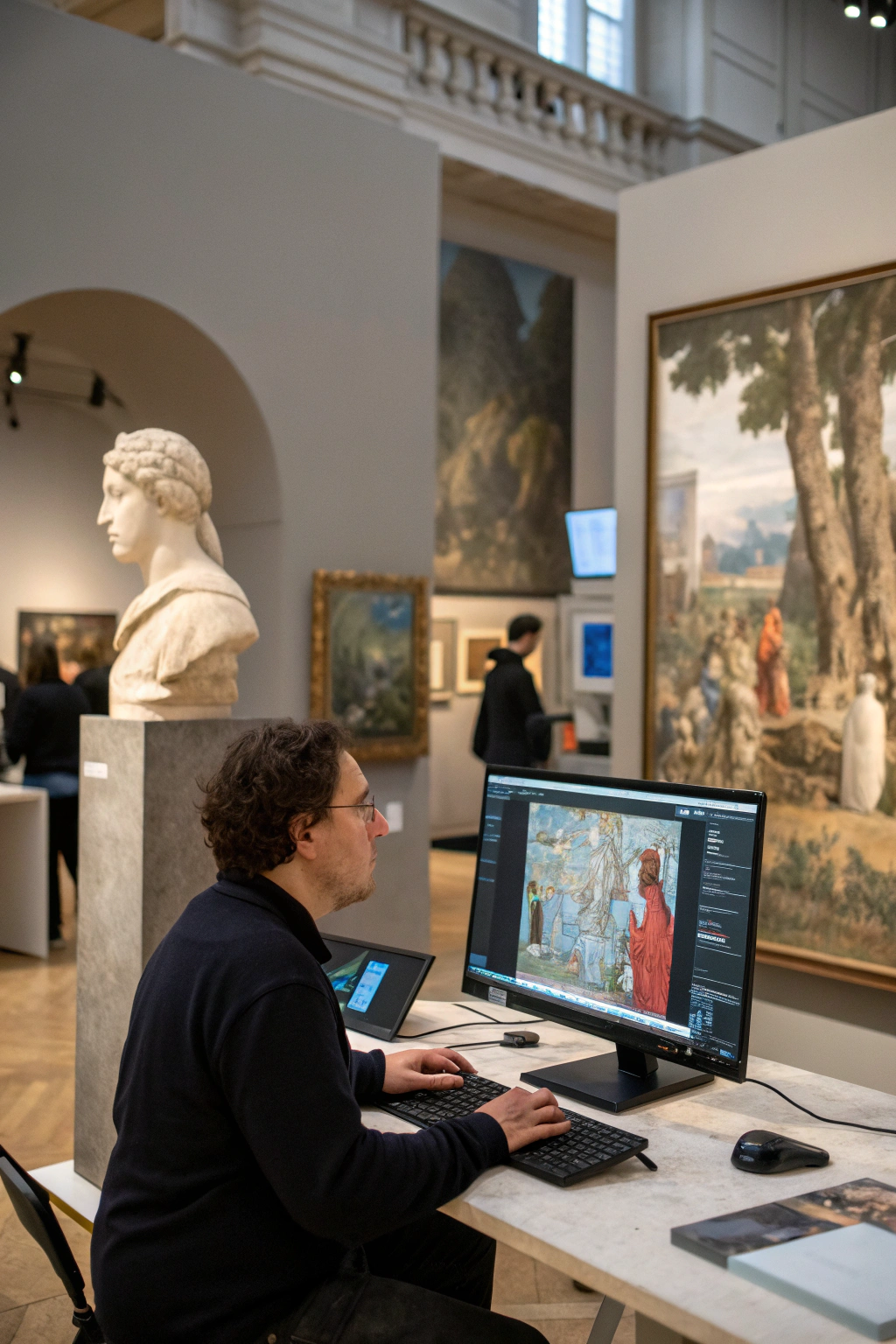
Generative AI represents a monumental shift in the landscape of digital art and creativity. It is a powerful collaborator that lowers the barrier to creation, accelerates professional workflows, and opens up entirely new forms of expression. While we must carefully navigate the ethical and societal challenges it presents, its potential to augment human ingenuity is undeniable. The future of art is not one of human versus machine, but of human with machine, exploring new creative frontiers together.
🔗 Discover more futuristic insights on our Pinterest!
Frequently Asked Questions (FAQ)
What is generative AI in the context of art?
Generative AI for art refers to artificial intelligence models that can create new, original visual content—such as images, illustrations, and animations—based on text descriptions or other inputs. These systems learn artistic styles and concepts from massive datasets of existing images to generate their own unique works.
Is AI-generated art considered “real” art?
This is a topic of ongoing debate. Art is subjective, and its definition has evolved throughout history. Many argue that because AI-generated works require human intent, curation, and often significant post-processing, they are a valid form of artistic expression. The skill shifts from physical technique to conceptual direction and prompt engineering, representing a new mode of art and creativity.
How can I start making AI art for free?
You can start immediately by using free-tier services on platforms like Leonardo.Ai, Playground AI, or Microsoft’s Image Creator (powered by DALL-E 3). These websites provide user-friendly interfaces where you can simply type a description of the image you want to create and see the results in seconds.