
Introduction
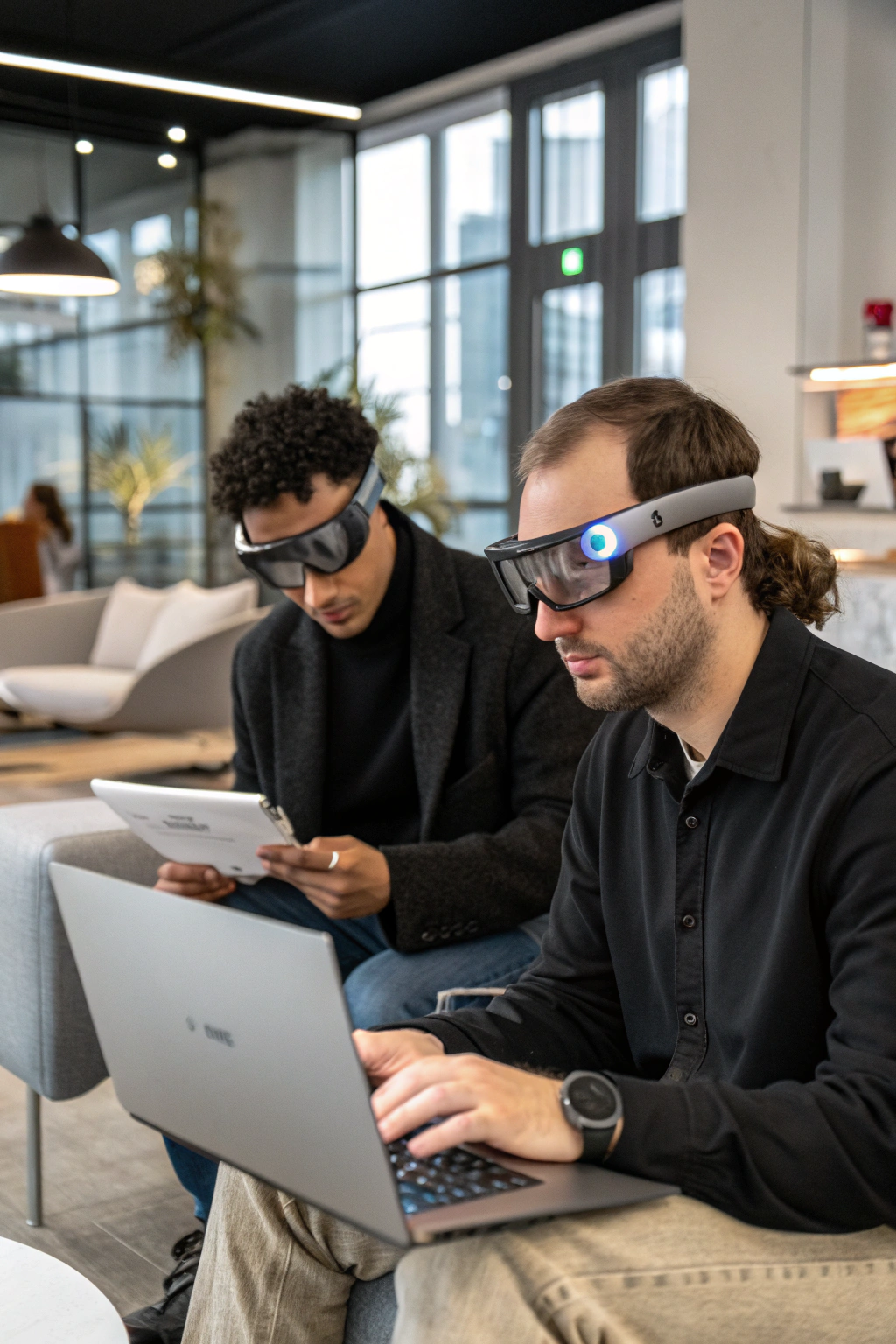
Imagine a world where your glasses do more than just correct your vision. Picture them whispering real-time language translations in your ear, overlaying navigation arrows onto the sidewalk, or identifying plant species on your afternoon hike. This is not a scene from a sci-fi blockbuster; it is the tangible future being built today through groundbreaking AI eyewear innovation. These intelligent devices are poised to merge our digital and physical worlds seamlessly, transforming how we learn, work, and interact with our surroundings. They represent the next frontier in personal computing, moving technology from our pockets to our line of sight.
Background and Evolution
The journey of smart eyewear began over a decade ago with pioneering, albeit socially awkward, devices like Google Glass. While early models faced hurdles with privacy concerns, battery life, and limited functionality, they laid the essential groundwork for today’s sophisticated technology. The evolution from clunky head-mounted displays to sleek, fashionable frames has been remarkable. This progress is fueled by advancements in micro-processing, battery efficiency, and, most importantly, on-device artificial intelligence.
Modern AI-powered glasses are now capable of complex tasks thanks to powerful, miniaturized neural processing units (NPUs). These chips allow for real-time computer vision and language processing without constant reliance on a cloud connection. As highlighted in extensive tech analysis, the focus has shifted from simple notifications to creating a truly contextual and assistive experience. This technological leap is the core driver behind the current wave of AI eyewear innovation, making these devices more practical and appealing than ever before.
A Closer Look at AI Eyewear Innovation and Its Practical Applications
The potential for intelligent eyewear spans nearly every industry, promising to enhance productivity, safety, and daily convenience. This isn’t just about overlaying data; it’s about providing contextual intelligence at the precise moment it’s needed. Here are a few compelling use cases where this technology is already making an impact.
Healthcare and Surgical Precision
In the high-stakes environment of an operating room, access to information is critical. AI-powered glasses can overlay a patient’s vital signs, 3D medical scans, or anatomical charts directly into a surgeon’s field of view. This hands-free approach allows them to remain focused on the procedure without glancing away at monitors. The result is enhanced precision, reduced surgical time, and potentially better patient outcomes. This specific area of AI eyewear innovation is revolutionizing medical training and live procedures.
Manufacturing and Field Services
Technicians assembling complex machinery or performing repairs in the field can benefit immensely from smart eyewear. These devices can display step-by-step instructions, digital schematics, and remote expert assistance in real-time. A junior technician can follow a guided workflow or even stream their point-of-view to a senior engineer for immediate guidance. This application of AI eyewear innovation boosts efficiency, reduces errors, and improves worker safety by keeping their hands free for the task at hand.
Personal Assistance and Accessibility
For everyday life, the possibilities are endless. Imagine your glasses providing instant translation of foreign signs and menus, offering discreet social cues by analyzing body language, or helping visually impaired individuals navigate their environment by identifying obstacles and reading text aloud. Companies are developing AI eyewear that acts as a personal memory aid, remembering faces and conversations. This evolution transforms glasses from a simple tool into a true life co-pilot.
Challenges and Ethical Considerations
Despite the exciting potential, the path to mass adoption is paved with significant challenges. Privacy remains a paramount concern. The ability for eyewear to discreetly record audio and video raises profound questions about consent and surveillance. How do we ensure that these devices are not used for surreptitious data collection in public or private spaces? Addressing this requires both technological safeguards and clear regulatory frameworks.
Furthermore, the risk of AI bias is a serious issue. If the datasets used to train these devices are not diverse and representative, the AI could perpetuate harmful stereotypes or fail to perform accurately for certain demographics. Ensuring fairness and equity in AI eyewear innovation is crucial for it to be a tool for all. Misinformation and the potential for creating hyper-realistic augmented realities also present ethical dilemmas that society must proactively address.
What’s Next? The Future Roadmap
The trajectory of AI eyewear innovation points towards an even more integrated future. In the short-term (1-2 years), we can expect devices like Meta’s Ray-Ban Stories and Brilliant Labs’ Frame to become more capable, with improved AI assistants and richer multimodal inputs. The focus will be on refining core features like translation, search, and real-time information retrieval.
Looking ahead to the mid-term (3-5 years), we will likely see the emergence of true all-day wearable augmented reality glasses. These will feature more advanced display technology, allowing for persistent, context-aware digital overlays. Startups and tech giants alike are racing to solve the optical and battery challenges required for this leap. The goal is a device that is socially acceptable, comfortable, and powerful enough to begin offloading tasks from our smartphones.
In the long-term (5+ years), AI eyewear could become a primary interface for interacting with the world, much like the smartphone is today. This future involves seamless integration with other smart devices, brain-computer interfaces for thought-based commands, and a persistent, shared augmented layer over our reality. This long-term vision of AI eyewear innovation is the ultimate goal for many in the field.
How to Get Involved
The world of AI eyewear is dynamic and community-driven. If you’re excited by these advancements, there are several ways to get involved. For developers and enthusiasts, platforms like Reddit’s r/augmentedreality and various Discord channels offer vibrant forums for discussion, showcasing projects, and sharing resources. Following the work of key researchers and companies on platforms like X (formerly Twitter) provides a real-time pulse on the industry. For a broader perspective on how this technology connects to larger digital worlds, we recommend exploring the metaverse and its underlying principles.
Debunking Common Myths About AI Eyewear
Myth 1: They are always recording everything.
Fact: Most current AI glasses are designed with clear privacy indicators, such as an LED light, to show when they are recording or taking a picture. Furthermore, on-device processing means much of the data is handled locally, and continuous recording would drain the battery in minutes. The design trend is toward user-initiated actions, not constant surveillance.
Myth 2: They will replace smartphones immediately.
Fact: For the foreseeable future, AI eyewear will act as a companion to smartphones, not a replacement. The smartphone will likely remain the primary hub for intensive tasks, charging, and data management. The glasses will serve as a convenient, heads-up interface for quick interactions and contextual information.
Myth 3: They are only for tech enthusiasts and nerds.
Fact: A major focus of current AI eyewear innovation is on design and social acceptability. Companies are partnering with iconic fashion brands like Ray-Ban and EssilorLuxottica to create frames that are indistinguishable from normal, stylish glasses. The goal is to make the technology invisible and integrate it into everyday life for everyone.
Top Tools & Resources
- Brilliant Labs’ Frame: This open-source AI eyewear is built for developers and creators. It offers a unique combination of a high-resolution display, camera, and microphone, allowing tinkerers to build their own custom AI applications directly onto the glasses. Its open nature makes it a vital tool for community-driven AI eyewear innovation.
- Snapdragon Spaces XR Developer Platform: Developed by Qualcomm, this platform provides developers with the tools to create headworn AR experiences. It supports multiple devices and is crucial for building the next generation of 3D applications that will run on future AI eyewear.
- Niantic’s 8th Wall: While focused on WebAR (Augmented Reality in a web browser), this platform is essential for creating accessible AR experiences that can eventually be ported to eyewear. It allows developers to build AR applications that don’t require a dedicated app, lowering the barrier to entry for users and creators alike. This is a significant part of the journey toward always-on AR.
Conclusion
The field of AI eyewear innovation is rapidly moving from concept to reality, promising to fundamentally alter our relationship with technology and the world around us. While challenges in privacy and ethics must be navigated carefully, the benefits in productivity, accessibility, and convenience are too significant to ignore. These devices are not just gadgets; they are the next evolution of a connected, intelligent, and augmented human experience. The view ahead is clearer than ever, and it’s being powered by AI.
🔗 Discover more futuristic insights on our Pinterest!
Frequently Asked Questions (FAQ)
What is the main difference between AR glasses and AI glasses?
While the terms are often used interchangeably, there’s a key distinction. AR (Augmented Reality) glasses are primarily focused on overlaying digital visuals onto the real world. AI glasses may or may not have a display; their core function is using artificial intelligence to understand the user’s environment and provide audio feedback, real-time translations, or other intelligent assistance. The most advanced devices combine both, using AI eyewear innovation to power a truly contextual AR experience.
Are current AI glasses safe to wear all day?
Yes, current models from major brands are designed to meet international safety standards for radiation (SAR levels) and are as safe to wear as any other electronic device like a smartphone or wireless earbuds. The technology is encased in standard, lightweight eyeglass frames, making them comfortable for extended wear. Battery life, not safety, is currently the main limitation for all-day use.
How much do AI glasses cost?
The price varies widely depending on the features. Consumer models like the Meta Ray-Ban Stories start around $300, offering camera and audio features. More advanced, developer-focused devices with displays, like the Brilliant Labs Frame, are in a similar price range. High-end enterprise or true AR glasses like the Microsoft HoloLens 2 can cost several thousand dollars. As AI eyewear innovation continues, prices for consumer-grade models are expected to become more accessible.
According to The Verge, AI-powered eyewear could redefine how we interact with augmented reality in everyday life.