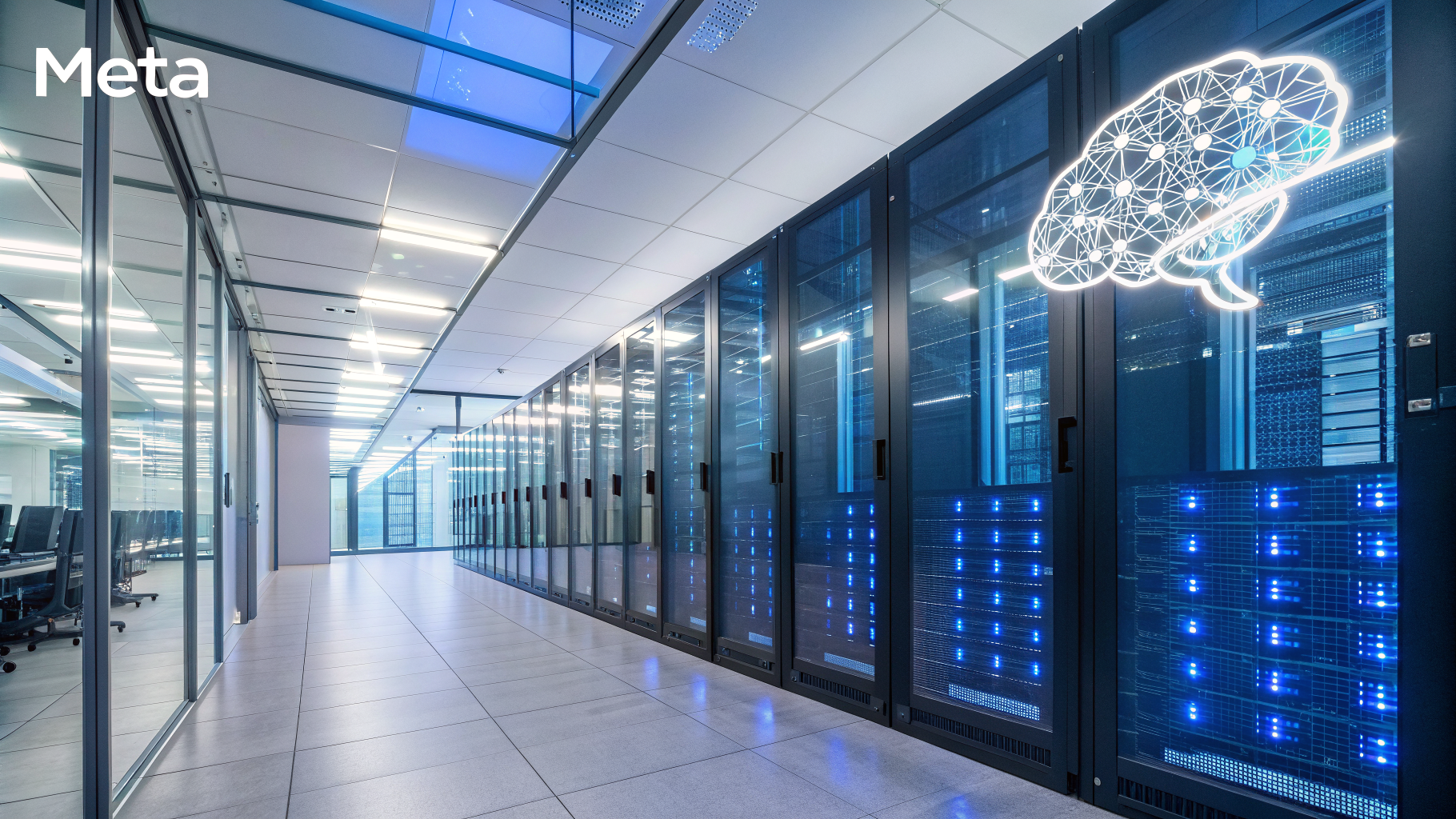
Mark Zuckerberg wants to sell you AI. Not just serve you ads inside a VR headset while you ignore your family. Actually sell you compute, raw brainpower in server racks. That’s the signal buried in the news that Meta is reportedly in talks with Anthropic over a multibillion-dollar data center deal. And I think it changes everything about how we read Meta’s so-called “metaverse pivot.”
Let me be blunt: Meta doesn’t need another data center for Instagram Reels. They already have the largest private cloud infrastructure on the planet, outside maybe Amazon. So what’s this about? A new business line. A pivot within a pivot. Meta wants to become the landlord of the AI gold rush, renting out server space to one of the hottest startups in the game.
The Numbers That Made Me Blink
We’re talking billions. Not millions. The Engadget report cites sources saying the deal could run into the tens of billions over several years. That’s not pocket change even for a company that burns cash on the metaverse like it’s kindling. For context, Anthropic raised something like $7.6 billion from Amazon and others, but this is different. This is infrastructure-as-a-service, not equity. Meta would build or repurpose data centers specifically optimized for Anthropic’s training workloads.
What struck me here is the timing. Meta just reported a $4.5 billion loss in its Reality Labs division last quarter. The stock is up anyway because ad revenue is still a gusher, but investors are getting twitchy. They want a story about monetization, not just more VR goggles nobody asked for. This Anthropic deal is that story. It says: “We can make money off the AI boom without building our own ChatGPT rival from scratch.”
Wait, Isn’t Meta Building Its Own AI?
Yes. They have LLaMA, their open-source large language model. They’re pushing generative AI into Facebook, Instagram, and WhatsApp. But here’s the thing nobody says out loud: training frontier models is insanely expensive, and Meta’s own AI efforts are still largely internal tools. They’re not selling access to LLaMA the way OpenAI sells GPT-4. So why not rent out the GPUs to someone who is? It’s like owning a gold mine and letting a rival dig while you take a cut of every nugget.
I’d argue this is smarter than building a separate AI product. Meta tried that with its own chatbot in 2023 and it was… fine. Remember BlenderBot? Exactly. Anthropic, on the other hand, has Claude, which is genuinely competitive with GPT-4 and has a reputation for safety. Meta doesn’t need to own the model. They can own the pipes.
The Metaverse Connection Nobody’s Talking About
Here’s where it gets interesting for my readers. You know, the ones who’ve been watching Meta’s VR and AR dreams sputter. A data center deal with Anthropic isn’t just about AI. It’s about the compute layer for the metaverse. Because what is the metaverse if not a massive real-time simulation running on distributed servers? You need low-latency inference, massive parallelism, and AI agents that can interact with users in natural language.
Think about it. Horizon Worlds is still a ghost town, but imagine if every NPC in that world was powered by Claude-level intelligence. Not scripted dialogue trees, but actual conversations. That would make the metaverse compelling, maybe even addictive. Meta can’t build that AI alone—they’ve tried. So they partner with Anthropic, get first access to the best models, and install them directly into their own data centers. It’s a twofer: they make money renting out capacity, and they get privileged access to the technology that could finally make their VR bet pay off.
But Will Regulators Let This Happen?
Ah, the elephant in the server room. Meta is already under antitrust scrutiny in the EU and US. A deal that gives them a stake in—or even just a tight partnership with—another AI powerhouse might raise eyebrows. But here’s the trick: it’s not an acquisition. It’s a customer-supplier relationship. Meta sells compute, Anthropic pays cash. No equity changes hands. That’s the narrative they’ll push, and it might hold.
Still, I’m cynical. Meta has a habit of buying or cozying up to promising AI startups. They acquired a bunch of small AI shops over the years. This feels like a way to get close to Anthropic without triggering merger review. If I were a European regulator, I’d be watching this one closely.
The Technical Side: Why Meta’s Data Centers Matter
Meta has been quietly building some of the most advanced data centers in the world. They’re designed for AI training, with custom silicon (the MTIA chip), liquid cooling, and massive power budgets. They’ve got facilities in Wyoming, Texas, and a new one in Denmark. Renting out that capacity to Anthropic is like a hotel chain letting a rock band stay in the penthouse suite. It’s spare capacity that Meta can monetize immediately.
And spare capacity is real. Meta’s AI workloads are spiky. When they’re not training a new version of LLaMA, those H100 GPUs sit idle. A long-term deal with Anthropic smooths that utilization curve. It’s a classic infrastructure play. Amazon Web Services started the same way: excess server capacity rented out to third parties. Look at AWS now. Meta might be trying to pull an Amazon inside itself.
What This Means for the AI Industry
If this deal goes through, it sets a precedent. Google has its own AI (Gemini, DeepMind). Microsoft has OpenAI. Amazon has Anthropic (partially). Now Meta becomes Anthropic’s landlord. That means the AI arms race isn’t just about models anymore. It’s about who owns the compute. And Meta, despite its metaverse stumbles, has some of the best compute in the world.
I think we’ll see more of these “infrastructure partnerships” in the next two years. AI startups will gravitate toward the companies with the deepest pockets and the most available GPUs. It’s a land grab, and Meta is claiming a big plot.
The Risk: Putting All Eggs in One AI Basket
But here’s the worry. Anthropic is still a young company. Its valuation is sky-high, but revenue is tiny compared to its burn rate. If Anthropic stumbles—if Claude fails to gain traction, if safety concerns slow its deployment, if a competitor like Mistral or Cohere eats its lunch—Meta is left with a half-empty data center and an awkward contract. That’s a lot of risk for a company that’s already juggling VR losses, advertising headwinds, and regulatory heat.
On the other hand, Meta can afford it. They have $65 billion in cash and equivalents. They can take a swing. And if it pays off, they secure a decade of revenue from the AI boom without having to compete directly with OpenAI or Google. It’s a hedge, and a clever one.
My Take, for What It’s Worth
I’ve been covering Meta since the Oculus acquisition in 2014. I’ve seen them pivot from social network to VR company to metaverse evangelist to AI wannabe. Each time, they spend billions and the market yawns. But this Anthropic deal feels different. It’s not about building a new product. It’s about becoming the platform under everyone else’s product. That’s the Zuckerberg move: own the infrastructure, let others take the creative risk.
Will it work? Maybe. The metaverse still needs a killer app, and AI might be it. But I’m not holding my breath. Meta has a long track record of overpromising and underdelivering on futuristic visions. Remember the “metaverse” hype in 2021? Yeah. So I’m watching this deal with cautious optimism. If it closes, Meta becomes a serious player in AI infrastructure. If it doesn’t, we’ll be back to talking about why Horizon Worlds is still empty.
Either way, this is the most interesting thing Meta has done in years. And I’ll be here, writing about it, as long as they keep making moves that matter.
Original source: read the full article